1993 Edition
CIA World Factbook 1993 (Project Gutenberg)
Geography
Area
total area: 356,910 km2 land area: 349,520 km2 comparative area: slightly smaller than Montana note: includes the formerly separate Federal Republic of Germany, the German Democratic Republic, and Berlin following formal unification on 3 October 1990
Climate
temperate and marine; cool, cloudy, wet winters and summers; occasional warm, tropical foehn wind; high relative humidity
Coastline
2,389 km
Environment
air and water pollution; groundwater, lakes, and air quality in eastern Germany are especially bad; significant deforestation in the eastern mountains caused by air pollution and acid rain
International disputes
none
Irrigated land
4,800 km2 (1989 est.)
Land boundaries
total 3,621 km, Austria 784 km, Belgium 167 km, Czech Republic 646 km, Denmark 68 km, France 451 km, Luxembourg 138 km, Netherlands 577 km, Poland 456 km, Switzerland 334 km
Land use
arable land: 34% permanent crops: 1% meadows and pastures: 16% forest and woodland: 30% other: 19%
Location
Western Europe, bordering the North Sea between France and Poland
Map references
Arctic Region, Europe, Standard Time Zones of the World
Maritime claims
continental shelf: 200 m depth or to depth of exploitation exclusive fishing zone: 200 nm territorial sea: 3 nm in North Sea and Schleswig-Holstein coast of Baltic Sea (extends, at one point, to 16 nm in the Helgolander Bucht); 12 nm in remainder of Baltic Sea
Natural resources
iron ore, coal, potash, timber, lignite, uranium, copper, natural gas, salt, nickel
Note
strategic location on North European Plain and along the entrance to the Baltic Sea
Terrain
lowlands in north, uplands in center, Bavarian Alps in south
People and Society
Birth rate
11 births/1,000 population (1993 est.)
Death rate
11 deaths/1,000 population (1993 est.)
Ethnic divisions
German 95.1%, Turkish 2.3%, Italians 0.7%, Greeks 0.4%, Poles 0.4%, other 1.1% (made up largely of people fleeing the war in the former Yugoslavia)
Infant mortality rate
7 deaths/1,000 live births (1993 est.)
Labor force
36.75 million by occupation: industry 41%, agriculture 6%, other 53% (1987)
Languages
German
Life expectancy at birth
total population: 76 years male: 73 years female: 79 years (1993 est.)
Literacy
age 15 and over can read and write (1977 est.) total population: 99% male: NA% female: NA%
Nationality
noun: German(s) adjective: German
Net migration rate
4 migrant(s)/1,000 population (1993 est.)
Population
80,767,591 (July 1993 est.)
Population growth rate
0.4% (1993 est.)
Religions
Protestant 45%, Roman Catholic 37%, unaffiliated or other 18%
Total fertility rate
1.4 children born/woman (1993 est.)
Government
Administrative divisions
16 states (laender, singular - land); Baden-Wuerttemberg, Bayern, Berlin, Brandenburg, Bremen, Hamburg, Hessen, Mecklenburg-Vorpommern, Niedersachsen, Nordrhein-Westfalen, Rheinland-Pfalz, Saarland, Sachsen, Sachsen-Anhalt, Schleswig-Holstein, Thuringen
Capital
Berlin note: the shift from Bonn to Berlin will take place over a period of years with Bonn retaining many administrative functions and several ministries
Chief of State
President Dr. Richard von WEIZSACKER (since 1 July 1984)
Constitution
23 May 1949, provisional constitution known as Basic Law
Digraph
GM
Diplomatic representation in US
chief of mission: Ambassador Juergen RUHFUS chancery: 4645 Reservoir Road NW, Washington, DC 20007 telephone: (202) 298-4000 consulates general: Atlanta, Boston, Chicago, Detroit, Houston, Los Angeles, Miami, New York, San Francisco, Seattle consulates: Manila (Trust Territories of the Pacific Islands) and Wellington (America Samoa)
Executive branch
president, chancellor, Cabinet
FAX
[49] (228) 339-2663 branch office: Berlin consulates general: Frankfurt, Hamburg, Leipzig, Munich, and Stuttgart
Federal Diet
last held 2 December 1990 (next to be held October 1994); results - CDU 36.7%, SPD 33.5%, FDP 11.0%, CSU 7.1%, Green Party (West Germany) 3.9%, PDS 2.4%, Republikaner 2.1%, Alliance 90/Green Party (East Germany) 1.2%, other 2.1%; seats - (662 total, 656 statutory with special rules to allow for slight expansion) CDU 268, SPD 239, FDP 79, CSU 51, PDS 17, Alliance 90/Green Party (East Germany) 8; note - special rules for this election allowed former East German parties to win seats if they received at least 5% of vote in eastern Germany
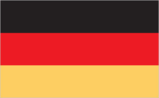
Flag
three equal horizontal bands of black (top), red, and yellow
Head of Government
Chancellor Dr. Helmut KOHL (since 4 October 1982)
Independence
18 January 1871 (German Empire unification); divided into four zones of occupation (UK, US, USSR, and later, France) in 1945 following World War II; Federal Republic of Germany (FRG or West Germany) proclaimed 23 May 1949 and included the former UK, US, and French zones; German Democratic Republic (GDR or East Germany) proclaimed 7 October 1949 and included the former USSR zone; unification of West Germany and East Germany took place 3 October 1990; all four power rights formally relinquished 15 March 1991
Judicial branch
Federal Constitutional Court (Bundesverfassungsgericht)
Legal system
civil law system with indigenous concepts; judicial review of legislative acts in the Federal Constitutional Court; has not accepted compulsory ICJ jurisdiction
Legislative branch
bicameral parliament (no official name for the two chambers as a whole) consists of an upper chamber or Federal Council (Bundesrat) and a lower chamber or Federal Diet (Bundestag)
Member of
AfDB, AG (observer), AsDB, Australian Group, BDEAC, BIS, CBSS, CCC, CDB (non-regional), CE, CERN, COCOM, CSCE, EBRD, EC, ECE, EIB, ESA, FAO, G-5, G-7, G-10, GATT, IADB, IAEA, IBRD, ICAO, ICC, ICFTU, IDA, IEA, IFAD, IFC, ILO, IMF, IMO, INMARSAT, INTELSAT, INTERPOL, IOC, IOM, ISO, ITU, LORCS, MTCR, NACC, NAM (guest), NATO, NEA, NSG, OAS (observer), OECD, PCA, UN, UNCTAD, UNESCO, UNIDO, UNHCR, UNTAC, UPU, WEU, WHO, WIPO, WMO, WTO, ZC
Names
conventional long form: Federal Republic of Germany conventional short form: Germany local long form: Bundesrepublik Deutschland local short form: Deutschland
National holiday
German Unity Day, 3 October (1990)
Other political or pressure groups
expellee, refugee, and veterans groups
Political parties and leaders
Christian Democratic Union (CDU), Helmut KOHL, chairman; Christian Social Union (CSU), Theo WAIGEL, chairman; Free Democratic Party (FDP), Klaus KINKEL, chairman; Social Democratic Party (SPD); Green Party, Ludger VOLMER, Christine WEISKE, co-chairmen (after the 2 December 1990 election the East and West German Green Parties united); Alliance 90 united to form one party in September 1991, Petra MORAWE, chairwoman; Party of Democratic Socialism (PDS), Gregor GYSI, chairman; Republikaner, Franz SCHOENHUBER; National Democratic Party (NPD), Walter BACHMANN; Communist Party (DKP), Rolf PRIEMER
Suffrage
18 years of age; universal
Type
federal republic
US diplomatic representation
chief of mission: Ambassador Robert M. KIMMITT embassy: Deichmanns Avenue, 5300 Bonn 2, Unit 21701 mailing address: APO AE 09080 telephone: [49] (228) 3391
Economy
Agriculture
western: accounts for about 2% of GDP (including fishing and forestry); diversified crop and livestock farming; principal crops and livestock include potatoes, wheat, barley, sugar beets, fruit, cabbage, cattle, pigs, poultry; net importer of food; fish catch of 202,000 metric tons in 1987 eastern: accounts for about 10% of GDP (including fishing and forestry); principal crops - wheat, rye, barley, potatoes, sugar beets, fruit; livestock products include pork, beef, chicken, milk, hides and skins; net importer of food; fish catch of 193,600 metric tons in 1987
Budget
western (federal, state, local): revenues $684 billion; expenditures $704 billion, including capital expenditures $NA (1990) eastern: revenues $NA; expenditures $NA, including capital expenditures of $NA
Currency
1 deutsche mark (DM) = 100 pfennige
Economic aid
western: donor - ODA and OOF commitments (1970-89), $75.5 billion eastern: donor - $4.0 billion extended bilaterally to non-Communist less developed countries (1956-89)
Electricity
134,000,000 kW capacity; 580,000 million kWh produced, 7,160 kWh per capita (1992)
Exchange rates
deutsche marks (DM) per US$1 - 1.6158 (January 1993), 1.5617 (1992), 1.6595 (1991), 1.6157 (1990), 1.8800 (1989), 1.7562 (1988)
Exports
$378.0 billion (f.o.b., 1991) commodities: manufactures 86.6% (including machines and machine tools, chemicals, motor vehicles, iron and steel products), agricultural products 4.9%, raw materials 2.3%, fuels 1.3% partners: EC 54.3% (France 12.9%, Netherlands 8.3%, Italy 9.3%, UK 7.7%, Belgium-Luxembourg 7.4%), other Western Europe 17.0%, US 6.4%, Eastern Europe 5.6%, OPEC 3.4% (1992)
External debt
$NA
Fiscal year
calendar year
Germany
- GDP - purchasing power equivalent - $1.398 trillion (1992) western: GDP - purchasing power equivalent - $1.294 trillion (1992) eastern: GDP - purchasing power equivalent - $104 billion (1992)
- 1.5% (1992) western: 0.9% (1992) eastern: 8% (1992)
- $17,400 (1992) western: $20,000 (1992) eastern: $6,500 (1992)
Illicit drugs
source of precursor chemicals for South American cocaine processors
Imports
$354.5 billion (f.o.b., 1991) commodities: manufactures 68.5%, agricultural products 12.0%, fuels 9.7%, raw materials 7.1% partners: EC 52.0 (France 12.0%, Netherlands 9.6%, Italy 9.2%, UK 6.8%, Belgium-Luxembourg 7.0%), other Western Europe 15.2%, US 6.6%, Eastern Europe 5.5%, OPEC 2.4% (1992)
Industrial production
western: growth rates -5% (1992 est.) eastern: $NA
Industries
western: among world's largest producers of iron, steel, coal, cement, chemicals, machinery, vehicles, machine tools, electronics; food and beverages eastern: metal fabrication, chemicals, brown coal, shipbuilding, machine building, food and beverages, textiles, petroleum refining
Inflation rate (consumer prices)
western: 4% (1992) eastern: NA%
Overview
- With the collapse of communism in Eastern Europe in 1989, prospects seemed bright for a fairly rapid incorporation of East Germany into the highly successful West German economy. The Federal Republic, however, continues to experience difficulties in integrating and modernizing eastern Germany, and the tremendous costs of unification have sunk western Germany deeper into recession. The western German economy grew by less than 1% in 1992 as the Bundesbank set high interest rates to offset the inflationary effects of large government deficits and high wage settlements. Eastern Germany grew by 6.8% in 1992 but this was from a shrunken base. Despite government transfers to the east amounting to nearly $110 billion annually, a self-sustaining economy in the region is still some years away. The bright spots are eastern Germany's construction, transportation, telecommunications, and service sectors, which have experienced strong growth. Western Germany has an advanced market economy and is a world leader in exports. It has a highly urbanized and skilled population that enjoys excellent living standards, abundant leisure time, and comprehensive social welfare benefits. Western Germany is relatively poor in natural resources, coal being the most important mineral. Western Germany's world-class companies manufacture
- manufacturing account for the dominant share of economic activity, and raw materials and semimanufactured goods constitute a large portion of imports. In recent years, manufacturing has accounted for about 31% of GDP, with other sectors contributing lesser amounts. Gross fixed investment in 1992 accounted for about 21.5% of GDP. GDP in the western region is now $20,000 per capita, or 85% of US per capita GDP. Eastern Germany's economy appears to be changing from one anchored on manufacturing into a more service-oriented economy. The German government, however, is intent on maintaining a manufacturing base in the east and is considering a policy for subsidizing industrial cores in the region. Eastern Germany's share of all-German GDP is only 7% and eastern productivity is just 30% that of the west even though eastern wages are at roughly 70% of western levels. The privatization agency for eastern Germany, Treuhand, has privatized more than four-fifths of the almost 12,000 firms under its control and will likely wind down operations in 1994. Private investment in the region continues to be lackluster, resulting primarily from the deepening recession in western Germany and excessively high eastern wages. Eastern Germany has one of the world's largest reserves of low-grade lignite coal but little else in the way of mineral resources. The quality of statistics from eastern Germany is improving, yet many gaps remain; the federal government began producing all-German data for select economic statistics at the start of 1992. The most challenging economic problem is promoting eastern Germany's economic reconstruction - specifically, finding the right mix of fiscal, monetary, regulatory, and tax policies that will spur investment in eastern Germany - without destabilizing western Germany's economy or damaging relations with West European partners. The government hopes a "solidarity pact" among labor unions, business, state governments, and the SPD opposition will provide the right mix of wage restraints, investment incentives, and spending cuts to stimulate eastern recovery. Finally, the homogeneity of the German economic culture has been changed by the admission of large numbers of immigrants.
- technologically advanced goods. The region's economy is mature
- services and
Unemployment rate
western: 7.1% (1992) eastern: 13.5% (December 1992)
Communications
Airports
total: 499 usable: 492 with permanent-surface runways: 271 with runways over 3,659 m: 5 with runways 2,440-3,659 m: 59 with runways 1,220-2,439 m: 67
Highways
western: 466,305 km total; 169,568 km primary, includes 6,435 km autobahn, 32,460 km national highways (Bundesstrassen), 65,425 km state highways (Landesstrassen), 65,248 km county roads (Kreisstrassen); 296,737 km of secondary communal roads (Gemeindestrassen) eastern: 124,604 km total; 47,203 km concrete, asphalt, stone block, of which 1,855 km are autobahn and limited access roads, 11,326 km are trunk roads, and 34,022 km are regional roads; 77,401 km municipal roads (1988)
Inland waterways
western: 5,222 km, of which almost 70% are usable by craft of 1,000-metric-ton capacity or larger; major rivers include the Rhine and Elbe; Kiel Canal is an important connection between the Baltic Sea and North Sea eastern: 2,319 km (1988)
Merchant marine
565 ships (1,000 GRT or over) totaling 4,928,759 GRT/6,292,193 DWT; includes 5 short-sea passenger, 3 passenger, 303 cargo, 10 refrigerated cargo, 134 container, 28 roll-on/roll-off cargo, 5 railcar carrier, 7 barge carrier, 9 oil tanker, 21 chemical tanker, 17 liquefied gas tanker, 5 combination ore/oil, 6 combination bulk, 12 bulk; note - the German register includes ships of the former East and West Germany; during 1991 the fleet underwent major restructuring as surplus ships were sold off
Pipelines
crude oil 3,644 km; petroleum products 3,946 km; natural gas 97,564 km (1988)
Ports
coastal - Bremerhaven, Brunsbuttel, Cuxhaven, Emden, Bremen, Hamburg, Kiel, Lubeck, Wilhelmshaven, Rostock, Wismar, Stralsund, Sassnitz; inland - 31 major on Rhine and Elbe rivers
Railroads
western: 31,443 km total; 27,421 km government owned, 1.435-meter standard gauge (12,491 km double track, 11,501 km electrified); 4,022 km nongovernment owned, including 3,598 km 1.435-meter standard gauge (214 km electrified) and 424 km 1.000-meter gauge (186 km electrified) eastern: 14,025 km total; 13,750 km 1.435-meter standard gauge, 275 km 1.000-meter or other narrow gauge; 3,830 (est.) km 1.435-meter standard gauge double-track; 3,475 km overhead electrified (1988)
Telecommunications
western: highly developed, modern telecommunication service to all parts of the country; fully adequate in all respects; 40,300,000 telephones; intensively developed, highly redundant cable and microwave radio relay networks, all completely automatic; broadcast stations - 80 AM, 470 FM, 225 (6,000 repeaters) TV; 6 submarine coaxial cables; satellite earth stations - 12 Atlantic Ocean INTELSAT antennas, 2 Indian Ocean INTELSAT antennas, EUTELSAT, and domestic systems; 2 HF radiocommunication centers; tropospheric links eastern: badly needs modernization; 3,970,000 telephones; broadcast stations - 23 AM, 17 FM, 21 TV (15 Soviet TV repeaters); 6,181,860 TVs; 6,700,000 radios; 1 satellite earth station operating in INTELSAT and Intersputnik systems
Military and Security
Branches
Army, Navy, Air Force
Defense expenditures
exchange rate conversion - $42.4 billion, 2.2% of GDP (1992)
Manpower availability
males age 15-49 20,295,655; fit for military service 17,577,570; reach military age (18) annually 411,854 (1993 est.)