1990 Edition
CIA World Factbook 1990 (Project Gutenberg)
Geography
Climate
temperate and marine; cool, cloudy, wet winters and summers; occasional warm, tropical foehn wind; high relative humidity
Coastline
1,488 km
Comparative area
slightly smaller than Oregon
Continental shelf
200 meters or to depth of exploitation;
Disputes
it is US policy that the final borders of Germany have not been established
Environment
air and water pollution
Exclusive fishing zone
200 nm;
Land boundaries
4,256 km total; Austria 784 km, Belgium 167 km, Czechoslovakia 356 km, Denmark 68 km, France 451 km, GDR 1,381 km; Luxembourg 138 km, Netherlands 577 km, Switzerland 334 km
Land use
30% arable land; 1% permanent crops; 19% meadows and pastures; 30% forest and woodland; 20% other; includes 1% irrigated
Natural resources
iron ore, coal, potash, timber
Note
West Berlin is an exclave (about 116 km by air or 176 km by road from FRG)
Terrain
lowlands in north, uplands in center, Bavarian Alps in south
Territorial sea
3 nm (extends, at one point, to 16 nm in the Helgolander Bucht)
Total area
248,580 km2; land area: 244,280 km2; includes West Berlin
People and Society
Birth rate
11 births/1,000 population (1990)
Death rate
11 deaths/1,000 population (1990)
Ethnic divisions
primarily German; Danish minority
Infant mortality rate
6 deaths/1,000 live births (1990)
Labor force
27,790,000; 41.6% industry, 35.4% services and other, 18.2% trade and transport, 4.8% agriculture (1987)
Language
German
Life expectancy at birth
73 years male, 81 years female (1990)
Literacy
99%
Nationality
noun--German(s); adjective--German
Net migration rate
5 migrants/1,000 population (1990)
Organized labor
9,300,000 total; 7,760,000 in German Trade Union Federation (DGB); union membership constitutes about 40% of union-eligible labor force, 34% of total labor force, and 35% of wage and salary earners (1986)
Population
62,168,200 (July 1990), growth rate 0.5% (1990)
Religion
45% Roman Catholic, 44% Protestant, 11% other
Total fertility rate
1.4 children born/woman (1990)
Government
Administrative divisions
10 states (lander, singular--land); Baden-Wurttemberg, Bayern, Bremen, Hamburg, Hessen, Niedersachsen, Nordrhein-Westfalen, Rheinland-Pfalz, Saarland, Schleswig-Holstein
Capital
Bonn
Communists
about 40,000 members and supporters
Constitution
23 May 1949, provisional constitution known as Basic Law
Diplomatic representation
Ambassador Jeurgen RUHFUS; Chancery at 4645 Reservoir Road NW, Washington DC 20007; telephone (202) 298-4000; there are FRG Consulates General in Atlanta, Boston, Chicago, Detroit, Houston, Los Angeles, San Francisco, Seattle, and New York, and Consulates in Miami and New Orleans; US--Ambassador Vernon WALTERS; Embassy at Deichmanns Avenue, 5300 Bonn 2 (mailing address is APO New York 09080); telephone 49 (228) 3391; there are US Consulates General in Frankfurt, Hamburg, Munich, and Stuttgart
Elections
National Assembly--last held 25 January 1987 (next to be held by 18 January 1991); results--SPD 37.0%, CDU 34.5%, CSU 9.8%, FDP 9.1%, Green Party 8.2%, others 1.4%; seats--(497 total, 22 are elected by the West Berlin House of Representatives and have limited voting rights) SPD 186, CDU 174, CSU 49, FDP 46, Green Party 42
Executive branch
president, chancellor, Cabinet
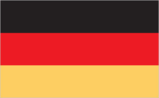
Flag
three equal horizontal bands of black (top), red, and yellow; similar to the flag of the GDR which has a coat of arms in the center
Judicial branch
Federal Constitutional Court (Bundesverfassungsgericht)
Leaders
Chief of State--President Dr. Richard von WEIZSACKER (since 1 July 1984); Head of Government--Chancellor Dr. Helmut KOHL (since 4 October 1982)
Legal system
civil law system with indigenous concepts; judicial review of legislative acts in the Federal Constitutional Court; has not accepted compulsory ICJ jurisdiction
Legislative branch
bicameral Parliament (Parlament) consists of an upper chamber or Federal Assembly (Bundesrat) and a lower chamber or National Assembly (Bundestag)
Long-form name
Federal Republic of Germany; abbreviated FRG
Member of
ADB, CCC, Council of Europe, DAC, EC, EIB, EMS, ESA, FAO, GATT, IAEA, IBRD, ICAC, ICAO, ICES, ICO, IDA, IDB--Inter-American Development Bank, IFAD, IEA, IFC, IHO, ILO, ILZSG, IMF, IMO, INTELSAT, INTERPOL, IPU, ITC, ITU, NATO, OAS (observer), OECD, UN, UNESCO, UPU, WEU, WHO, WIPO, WMO, WSG, WTO
National holiday
NA
Other political or pressure groups
expellee, refugee, and veterans groups
Political parties and leaders
Christian Democratic Union (CDU), Helmut Kohl; Christian Social Union (CSU), Theo Waigel; Free Democratic Party (FDP), Otto Lambsdorff; Social Democratic Party (SPD), Hans-Jochen Vogel; National Democratic Party (NPD), Martin Mussgnug; Republikaner, Franz Schoerhuber; Communist Party (DKP), Herbert Mies; Green Party--Realos faction, Joschka Fischer; Green Party--Fundis faction, Jutta Ditfurth
Suffrage
universal at age 18
Type
federal republic
Economy
Agriculture
accounts for about 2% of GDP (including fishing and forestry); diversified crop and livestock farming; principal crops and livestock include potatoes, wheat, barley, sugar beets, fruit, cabbage, cattle, pigs, poultry; net importer of food; fish catch of 202,000 metric tons in 1987
Aid
donor--ODA and OOF commitments (1970-87), $60.0 billion
Budget
revenues $539 billion; expenditures $563 billion, including capital expenditures of $11.5 billion (1988)
Currency
deutsche mark (plural--marks); 1 deutsche mark (DM) = 100 pfennige
Electricity
(including West Berlin) 110,075,000 kW capacity; 452,390 million kWh produced, 7,420 kWh per capita (1989)
Exchange rates
deutsche marks (DM) per US$1--1.6918 (January 1990), 1.8800 (1989), 1.7562 (1988), 1.7974 (1987), 2.1715 (1986), 2.9440 (1985)
Exports
$323.4 billion (f.o.b., 1988); commodities--manufactures 86.6% (including machines and machine tools, chemicals, motor vehicles, iron and steel products), agricultural products 4.9%, raw materials 2.3%, fuels 1.3%; partners--EC 52.7% (France 12%, Netherlands 9%, Italy 9%, UK 9%, Belgium-Luxembourg 7%), other West Europe 18%, US 10%, Eastern Europe 4%, OPEC 3% (1987)
External debt
$500 million (June 1988)
Fiscal year
calendar year
GDP
$945.7 billion, per capita $15,300; real growth rate 4.3% (1989 est.)
Imports
$250.6 billion (f.o.b., 1988); commodities--manufactures 68.5%, agricultural products 12.0%, fuels 9.7%, raw materials 7.1%; partners--EC 52.7% (France 12%, Netherlands 11%, Italy 10%, UK 7%, Belgium-Luxembourg 7%), other West Europe 15%, US 6%, Japan 6%, Eastern Europe 5%, OPEC 3% (1987)
Industrial production
growth rate 3.3% (1988)
Industries
among world's largest producers of iron, steel, coal, cement, chemicals, machinery, ships, vehicles, and machine tools; electronics, food and beverages
Inflation rate (consumer prices)
3.0% (1989)
Overview
West Germany, a major economic power and a leading exporter, has a highly urbanized and skilled population that enjoys excellent living standards and comprehensive social welfare benefits. The FRG is poor in natural resources, coal being the most important mineral. The FRG's comparative advantage lies in the technologically advanced production stages. Thus manufacturing and services dominate economic activity, and raw materials and semimanufactures constitute a large proportion of imports. In 1988 manufacturing accounted for 35% of GDP, with other sectors contributing lesser amounts. The major economic problem in 1989 is persistent unemployment of over 8%. The FRG is well poised to take advantage of the increasing economic integration of the European Community. The dramatic opening of the boundary with East Germany in late 1989 poses new economic challenges that could tax even this powerful economy.
Unemployment rate
8.4% (1989)
Communications
Airports
466 total, 457 usable; 240 with permanent-surface runways; 3 with runways over 3,659 m; 41 with runways 2,440-3,659 m; 55 with runways 1,220-2,439 m
Civil air
194 major transport aircraft
Highways
466,305 km total; 169,568 km primary, includes 6,435 km autobahn, 32,460 km national highways (Bundesstrassen), 65,425 km state highways (Landesstrassen), 65,248 km county roads (Kreisstrassen); 296,737 km of secondary communal roads (Gemeindestrassen)
Inland waterways
5,222 km, of which almost 70% are usable by craft of 1,000-metric ton capacity or larger; major rivers include the Rhine and Elbe; Kiel Canal is an important connection between the Baltic Sea and the North Sea
Merchant marine
422 ships (1,000 GRT or over) totaling 3,436,568 GRT/4,297,520 DWT; includes 2 passenger, 7 short-sea passenger, 218 cargo, 4 refrigerated cargo, 95 container, 20 roll-on/roll-off cargo, 2 railcar carrier, 7 barge carrier, 2 multifunction large-load carrier, 12 petroleum, oils, and lubricants (POL) tanker, 21 chemical tanker, 15 liquefied gas, 5 combination ore/oil, 13 combination bulk
Pipelines
crude oil, 2,343 km; refined products, 3,446 km; natural gas, 95,414 km
Ports
maritime--Bremerhaven, Brunsbuttel, Cuxhaven, Emden, Bremen, Hamburg, Kiel, Lubeck, Wilhelmshaven; inland--27 major
Railroads
31,443 km total; 27,421 km government owned, 1.435-meter standard gauge (12,491 km double track, 11,501 km electrified); 4,022 km nongovernment owned, including 3,598 km 1.435-meter standard gauge (214 km electrified) and 424 km 1.000-meter gauge (186 km electrified)
Telecommunications
highly developed, modern telecommunication service to all parts of the country; fully adequate in all respects; 40,300,000 telephones; stations--87 AM, 205 (376 relays) FM, 300 (6,400 relays) TV; 6 submarine coaxial cables; satellite earth stations operating in INTELSAT (12 Atlantic Ocean, 2 Indian Ocean), EUTELSAT, and domestic systems
Military and Security
Branches
Army, Navy, Air Force
Defense expenditures
2.9% of GDP (1989 est.)
Military manpower
males 15-49, 16,006,352; 13,883,536 fit for military service; 326,666 reach military age (18) annually