1994 Edition
CIA World Factbook 1994 (Project Gutenberg)
Introduction
Administrative divisions
- 2 autonomous republics (avtomnoy respubliki, singular - avtom respublika); Abkhazia (Sokhumi), Ajaria (Bat'umi) note: the administrative centers of the autonomous republics are included in parentheses; there are no oblasts - the rayons around T'bilisi are under direct republic jurisdiction
- none (dependent territory of the UK)
Agriculture
accounts for 41% of GDP; accounted for 97% of former USSR citrus fruits and 93% of former USSR tea; important producer of grapes; also cultivates vegetables and potatoes; dependent on imports for grain, dairy products, sugar; small livestock sector
Airports
- total: 37 usable: 27 with permanent-surface runways: 14 with runways over 3,659 m: with runways 2,440-3,659 m: 10 with runways 1,060-2,439 m: 4 note: a C-130 can land on a 1,060-m airstrip
- total: 5 usable: 5 with permanent-surface runways: 2 with runways over 3,659 m: with runways 2,440-3,659 m: 1 with runways 1,220-2,439 m:
Area
- total area: 69,700 sq km land area: 69,700 sq km comparative area: slightly larger than South Carolina
- total area: 4,066 sq km land area: 4,066 sq km comparative area: slightly larger than Rhode Island note: includes Shag Rocks, Clerke Rocks, Bird Island
Birth rate
16.11 births/1,000 population (1994 est.)
Branches
Army, Air Force, Navy, Interior Ministry Troops, Border Guards
Budget
- revenues: $NA expenditures: $NA, including capital expenditures of $NA
- revenues: $291,777 expenditures: $451,000, including capital expenditures of $NA (1988 est.)
Capital
- T'bilisi
- none; Grytviken on South Georgia is the garrison town
Climate
- warm and pleasant; Mediterranean-like on Black Sea coast
- variable, with mostly westerly winds throughout the year, interspersed with periods of calm; nearly all precipitation falls as snow
Coastline
- 310 km
- NA km
Constitution
- adopted NA February 1921; currently amending constitution for Parliamentary and popular review by late 1995
- 3 October 1985
Currency
coupons introduced in April 1993 to be followed by introduction of the lari at undetermined future date; in July 1993 use of the Russian ruble was banned
Death rate
8.69 deaths/1,000 population (1994 est.)
Defense expenditures
$NA, NA% of GNP
Digraph
- GG
- SX
Diplomatic representation in US
chief of mission: Ambassador Petr CHKHEIDZE chancery: (temporary) Suite 424, 1511 K Street NW, Washington, DC telephone: (202) 393-6060
Economic aid
recipient: heavily dependent on US for humanitarian grain shipments; EC granted around $70 million in trade credits in 1992 and another $40 million in 1993; Turkey granted $50 million in 1993; smaller scale credits granted by Russia and China
Electricity
- capacity: 4,875,000 kW production: 15.8 billion kWh consumption per capita: 2,835 kWh (1992)
- capacity: 900 kW production: 2 million kWh consumption per capita: NA (1992)
Environment
- current issues: air pollution, particularly in Rust'avi; heavy pollution of Mtkvari River and the Black Sea; inadequate supplies of safe drinking water; soil pollution from toxic chemicals natural hazards: NA international agreements: NA
- current issues: NA natural hazards: the South Sandwich Islands are subject to active volcanism international agreements: NA
Ethnic divisions
Georgian 70.1%, Armenian 8.1%, Russian 6.3%, Azeri 5.7%, Ossetian 3%, Abkhaz 1.8%, other 5%
Exchange rates
NA
Executive branch
- chief of state: Chairman of Parliament Eduard Amvrosiyevich SHEVARDNADZE (since 10 March 1992); election last held 11 October 1992 (next to be held NA 1995); results - Eduard SHEVARDNADZE 95% head of government: Prime Minister Otar PATSATSIA (since September 1993); Deputy Prime Ministers Avtandil MARGIANI, Zurab KERVALISHVILI (since NA), Tamaz NADARISHVILI (since September 1993), Teimuraz BASILIA (since NA) cabinet: Council of Ministers
- chief of state: Queen ELIZABETH II (since 6 February 1952), represented by Commissioner David Everard TATHAM (since August 1992; resident at Stanley, Falkland Islands)
Exports
$NA commodities: citrus fruits, tea, wine, other agricultural products; diverse types of machinery; ferrous and nonferrous metals; textiles; chemicals; fuel re-exports partners: Russia, Turkey, Armenia, Azerbaijan (1992)
External debt
$100 million to $200 million (1993 est.)
FAX
(7) 8832-93-37-59
Fiscal year
calendar year
Flag
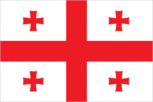
maroon field with small rectangle in upper hoist side corner; rectangle divided horizontally with black on top, white below
Georgian Parliament (Supreme Soviet)
elections last held 11 October 1992 (next to be held NA 1995); results - percent of vote by party NA; seats - (225 total) number of seats by party NA; note - representatives of 26 parties elected; Peace Bloc, October 11, Unity, National Democratic Party, and the Greens Party won the largest representation
Highways
- total: 33,900 km paved and gravelled: 29,500 km unpaved: earth 4,400 km (1990)
- total: NA paved: NA unpaved: NA
Illicit drugs
illicit cultivator of cannabis and opium poppy; mostly for domestic consumption; used as transshipment point for illicit drugs to Western Europe
Imports
$NA commodities: fuel, grain and other foods, machinery and parts, transport equipment partners: Russia, Azerbaijan, Turkey (1993)
Independence
- 9 April 1991 (from Soviet Union)
- none (dependent territory of the UK)
Industrial production
growth rate -27% (1993); accounts for 36% of GDP
Industries
heavy industrial products include raw steel, rolled steel, airplanes; machine tools, foundry equipment, electric locomotives, tower cranes, electric welding equipment, machinery for food preparation and meat packing, electric motors, process control equipment, instruments; trucks, tractors, and other farm machinery; light industrial products, including cloth, hosiery, and shoes; chemicals; wood-working industries; the most important food industry is wine
Infant mortality rate
23.4 deaths/1,000 live births (1994 est.)
Inflation rate (consumer prices)
40.5% per month (2nd half 1993 est.)
International disputes
- none
- administered by the UK, claimed by Argentina
Irrigated land
- 4,660 sq km (1990)
- 0 sq km
Judicial branch
- Supreme Court
- none
Labor force
2.763 million by occupation: industry and construction 31%, agriculture and forestry 25%, other 44% (1990)
Land boundaries
- total 1,461 km, Armenia 164 km, Azerbaijan 322 km, Russia 723 km, Turkey 252 km
- 0 km
Land use
- arable land: NA% permanent crops: NA% meadows and pastures: NA% forest and woodland: NA% other: NA%
- arable land: 0% permanent crops: 0% meadows and pastures: 0% forest and woodland: 0% other: 100% (largely covered by permanent ice and snow with some sparse vegetation consisting of grass, moss, and lichen)
Languages
Armenian 7%, Azeri 6%, Georgian 71% (official), Russian 9%, other 7%
Legal system
- based on civil law system
- English common law
Legislative branch
- unicameral
- no elections
Life expectancy at birth
total population: 72.84 years male: 69.16 years female: 76.7 years (1994 est.)
Literacy
age 9-49 can read and write (1970) total population: 100% male: 100% female: 100%
Location
- Southwestern Asia, bordering the Black Sea, between Turkey and Russia
- Southern South America, in the South Atlantic Ocean, off the south Argentine coast, southeast of the Falkland Islands
Manpower availability
males age 15-49 1,362,818; fit for military service 1,081,624; reach military age (18) annually 42,881 (1994 est.)
Map references
- Africa, Asia, Commonwealth of Independent States - European States, Middle East, Standard Time Zones of the World
- Antarctic Region
Maritime claims
- note: 12 nm in 1973 USSR-Turkish Protocol concerning the sea boundary between the two states in the Black Sea; Georgia claims the coastline along the Black Sea as its international waters, although it cannot control this area and the Russian navy and commercial ships transit freely
- territorial sea: 12 nm
Member of
BSEC, CIS, CSCE, EBRD, ECE, IBRD, IDA, ILO, IMF, IMO, INMARSAT, IOC, ITU, NACC, UN, UNCTAD, UNESCO, UNIDO, UPU, WHO
Merchant marine
41 ships (1,000 GRT or over) totaling 575,823 GRT/882,110 DWT, bulk cargo 14, oil tanker 27
Names
- conventional long form: Republic of Georgia conventional short form: Georgia local long form: Sak'art'velos Respublika local short form: Sak'art'velo former: Georgian Soviet Socialist Republic
- conventional long form: South Georgia and the South Sandwich Islands conventional short form: none
National holiday
- Independence Day, 9 April (1991)
- Liberation Day, 14 June (1982)
National product
GDP - purchasing power equivalent - $7.8 billion (1993 estimate from the UN International Comparison Program, as extended to 1991 and published in the World Bank's World Development Report 1993; and as extrapolated to 1993 using official Georgian statistics, which are very uncertain because of major economic changes since 1990)
National product per capita
$1,390 (1993 est.)
National product real growth rate
-35% (1993 est.)
Nationality
noun: Georgian(s) adjective: Georgian
Natural resources
- forest lands, hydropower, manganese deposits, iron ores, copper, minor coal and oil deposits; coastal climate and soils allow for important tea and citrus growth
- fish
Net migration rate
0.65 migrant(s)/1,000 population (1994 est.)
Note
- Georgia is currently besieged by interethnic strife in its Abkhazian and South Ossetian enclaves.
- transportation network is disrupted by ethnic conflict, criminal activities, and fuel shortages
- Georgian forces are poorly organized and not fully under the government's control
- the north coast of South Georgia has several large bays, which provide good anchorage; reindeer, introduced early in this century, live on South Georgia; weather conditions generally make it difficult to approach the South Sandwich Islands
- defense is the responsibility of the UK
Other political or pressure groups
supporters of ousted President Zuiad GAMSAKHURDIA (deceased 1 January 1994) boycotted the October elections and remain a source of opposition and instability
Overview
- Georgia's economy has traditionally revolved around Black Sea tourism; cultivation of citrus fruits, tea, and grapes; mining of manganese and copper; and a small industrial sector producing wine, metals, machinery, chemicals, and textiles. The country imports the bulk of its energy needs, including natural gas and coal. Its only sizable domestic energy resource is hydropower. Since 1990, widespread conflicts, e.g., in Abkhazia, South Ossetia, and Mengrelia, severely aggravated the economic crisis resulting from the disintegration of the Soviet command economy in December 1991. Throughout 1993, much of industry was functioning at only 20% of capacity; heavy disruptions in agricultural cultivation were reported; and tourism was shut down. The country is precariously dependent on US and EU humanitarian grain shipments, as most other foods are priced beyond reach of the average citizen. Georgia is also suffering from an acute energy crisis, as it is having problems paying for even minimal imports. Georgia is pinning its hopes for recovery on reestablishing trade ties with Russia and on developing international transportation through the key Black Sea ports of P'ot'i and Bat'umi.
- Some fishing takes place in adjacent waters. There is a potential source of income from harvesting fin fish and krill. The islands receive income from postage stamps produced in the UK.
Pipelines
crude oil 370 km; refined products 300 km; natural gas 440 km (1992)
Political parties and leaders
Merab Kostava Society, Vazha ADAMIA, chairman; Traditionalists' Union, Akaki ASATIANI, chairman; Georgian Social Democratic Party, Guram MUCHAIDZE, chairman; Green Party, Zurab ZHVANIA, chairman; Georgian Popular Front (GPF), Nodar NATADZE, chairman; National Democratic Party (NDP), Gia CHANTURIA, chairman; National Independence Party (NIP), Irakliy TSERETELI, chairmen; Charter 1991 Party, Tedo PATASHVILI, chairman; Peace Bloc; Unity; October 11
Population
- 5,681,025 (July 1994 est.)
- no indigenous population; there is a small military garrison on South Georgia, and the British Antarctic Survey has a biological station on Bird Island; the South Sandwich Islands are uninhabited
Population growth rate
0.81% (1994 est.)
Ports
- coastal - Bat'umi, P'ot'i, Sokhumi
- Grytviken on South Georgia
Railroads
1,570 km, does not include industrial lines (1990)
Religions
Georgian Orthodox 65%, Russian Orthodox 10%, Muslim 11%, Armenian Orthodox 8%, unknown 6%
Suffrage
18 years of age; universal
Telecommunications
- poor telephone service; as of mid-1993, 672,000 telephone lines providing 14 lines per 100 persons; 339,000 unsatisfied applications for telephones (31 December 1990); international links via landline to CIS members and Turkey; low capacity satellite earth station and leased international connections via the Moscow international gateway switch with other countries; international electronic mail and telex service available
- coastal radio station at Grytviken; no broadcast stations
Terrain
- largely mountainous with Great Caucasus Mountains in the north and Lesser Caucasus Mountains in the south; Kolkhida Lowland opens to the Black Sea in the west; Mtkvari River Basin in the east; good soils in river valley flood plains, foothills of Kolkhida Lowland
- most of the islands, rising steeply from the sea, are rugged and mountainous; South Georgia is largely barren and has steep, glacier-covered mountains; the South Sandwich Islands are of volcanic origin with some active volcanoes
Total fertility rate
2.18 children born/woman (1994 est.)
Type
- republic
- dependent territory of the UK
Unemployment rate
officially less than 5% but real unemployment may be up near 20%, with even larger numbers of underemployed workers; real unemployment may be up near 20% with even larger numbers of underemployed workers
US diplomatic representation
chief of mission: Ambassador Kent N. BROWN embassy: #25 Antoneli Street, T'bilisi 380026 mailing address: use embassy street address telephone: (7) 8832-98-99-68