1987 Edition
CIA World Factbook 1987 (Internet Archive)
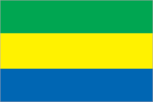
Geography
Airfields
41 total, 41 usable; 25 with Total area: 267,670 km? land area: permanent-surface runways, 2 with run957 670 km? ways 2,440-3,659 m, 14 with runways y 1,220-2,439 m Comparative area: about the size of Colorado
Budget
$180 million in 1979; ODA and OOF commitments from Western (non-US countries)
Civil air
about 6 major transport aircraft
Climate
tropical; always hot, humid
Defense Forces Boundary disputes
none; maritime disDefense is responsibility of France pute with Equatorial Guinea
Environment
deforestation
Highways
600 km (1982) See regional map VII
Imports
$419 million (1977); fuels, foodstuffs, equipment —150km
Inland waterways
none
Land use
1% arable land; 1% permanent crops; 18% meadows and pastures; 78% forest and woodland; 2% other
Major trade partners
imports—59% France, 14% US; exports—86% France
Monetary conversion rate
127.05 Colonial Francs Pacifique (CFP)=US$1 (February 1984) Communications es
Ports
1 major (Papeete), 6 minor Geography
Railroads
none Guinea
Special notes
none
Telecommunications
33,200 telephones Land boundaries: 2,422 km total (18.8 per 100 popl.); 80,000 radio and Coastline: 885 km 26,000 TV sets; 5 AM, 2 FM, 6 TV staMaritime claims: tions; ] satellite ground station Exclusive fishing zone: 150 nm
Terrain
narrow coastal plain; hilly interior; savanna in east and south
Territorial sea
100 nm
People and Society
Ethnic divisions
about 40 Bantu tribes, including 4 major tribal groupings (Fang, Eshira, Bapounou, Bateke); about 100,000 expatriate Africans and Europeans, including 35,000 French Gabon (continued)
Infant mortality rate
117/1,000 (1983)
Labor force
120,000 salaried (1983); 65.0% agriculture, 30.0% industry and commerce, 2.5% services, 2.5% government
Language
French (official), Fang, Myene, Bateke, Bapounou/Eschira, Bandjabi
Life expectancy
50
Literacy
65%
Nationality
noun—Gabonese (sing., pl.); adjective—Gabonese
Organized labor
there are 38,000 members of the national trade union, the Gabonese Trade Union Confederation (COSYGA)
Population
1,039,006 (July 1987), average annual growth rate 1.31%
Religion
55-75%°Christian, less than 1% Muslim, remainder animist
Government
Administrative divisions
nine provinces subdivided into 36 prefectures
Branches
power centralized in President, elected by universal suffrage for sevenyear term; unicameral legislature (98member National Assembly, including nine members chosen by Omar Bongo) has limited powers; constitution amended in 1979 so that Assembly deputies will serve five-year terms; independent judiciary
Capital
Libreville
Communists
no organized party; probably some Communist sympathizers
Elections
presidential election last held autumn 1986; parliamentary election last held February-March 1985; constitutional change separates dates for presidential and parliamentary elections Politica] party and leader: Gabonese Democratic Party (PDG) led by President Bongo is only legal party
Government leader
El Hadj Omar BONGO, President (since December 1967)
Legal system
based on French civil law system and customary law; constitution adopted 196]; judicial review of legislative acts in Constitutional Chamber of the Supreme Court; legal education at Center of Higher and Legal Studies at Libreville; compulsory ICJ jurisdiction not accepted
Member of
AfDB, African Wood Organization, Conference of East and Central African States, BDECA (Central African Development Bank), EAMA, EIB (associate), FAO, G-77, GATT, IAEA, IBRD, ICAO, ICCO, ICO, IDA, IDB—Islamic Development Bank, IFAD, IFC, ILO, IMF, IMO, INTELSAT, INTERPOL, 1PU, ITU, NAM, OAU, OIC, OPEC, UDEAC, UN, UNESCO, UPU, WHO, WIPO, WMO, WTO
National holidays
Renovation Day, 12 March; Independence Day, 17 August; major Islamic and Christian holidays
Official name
Gabonese Republic
Suffrage
universal over age 18
Type
republic; one-party presidential regime since 1964
Economy
Agriculture
commercial—cocoa, coffee, wood, palm oil, rice; main food crops— pineapples, bananas, manioc, peanuts, root crops; imports food
Budget
revenues, $1.25 billion; current expenditures, $1.31 billion (1984)
Electric power
280,000 kW capacity; 981 million kWh produced, 960 kWh per capita (1986)
Exports
$2.0 billion (f.0.b., 1984); crude petroleum, wood and wood products, minerals (manganese, uranium concentrates, gold)
Fiscal year
calendar year
Fishing
catch 52,638 metric tons (1982)
GDP
$3.3 billion, $3,800 per capita; real growth rate - 5.0% (1985)
Imports
$0.9 billion (c.i.f., 1985); mining, roadbuilding machinery, electrical equipment, transport vehicles, foodstuffs, textiles
Major industries
petroleum production, sawmills, petroleum refinery, food and beverage processing; mining of increasing importance; major minerals—manganese, uranium, iron (not produced)
Major trade partners
France, US, FRG
Monetary conversion rate
331.24 Communauté Financiére Africaine (CFA) francs=US$1 (November 1986)
Natural resources
oil, manganese, uranium, gold, wood, iron ore
Communications
Airfields
80 total, 74 usable; 9 with permanent-surface runways; 2 with runways 2,440-3,659 m, 22 with runways 1,220-2,439 m
Civil air
7 major transport aircraft
Highways
7,393 km total; 300 km paved, 8,493 km gravel and improved, 3,600 km unimproved
Inland waterways
about 1,600 km perennially navigable
Pipelines
crude oil, 270 km; refined products, 14 km
Ports
2 major (Owendo and Port-Gentil), 3 minor
Railroads
970 km 1.437-meter standard gauge under construction; 338 km are completed
Telecommunications
adequate system of open-wire, radio-relay, tropospheric scatter links and radiocommunication stations; 13,800 telephones (1.4 per 100 popl.); 6 AM, 6 FM, 8 TV stations; 2 Atlantic Ocean satellite stations
Military and Security
Branches
Army, Navy, Air Force, paramilitary Gendarmerie
Military budget
for fiscal year ending 31 December 1984, $67.2 million; 4.9% of central government budget
Military manpower
males 15-49, 269,000; 134,000 fit for military service; 8,000 reach military age (20) annually