1994 Edition
CIA World Factbook 1994 (Project Gutenberg)
Introduction
Administrative divisions
none (overseas territory of France); there are no first-order administrative divisions as defined by the US Government, but there are 5 archipelagic divisions named Archipel des Marquises, Archipel des Tuamotu, Archipel des Tubuai, Iles du Vent, and Iles Sous-le-Vent note: Clipperton Island is administered by France from French Polynesia
Affiliation
(overseas territory of France)
Agriculture
coconut and vanilla plantations; vegetables and fruit; poultry, beef, dairy products
Airports
total: 43 usable: 41 with permanent-surface runways: 23 with runways over 3,659 m: with runways 2,440-3,659 m: 2 with runways 1,220-2,439 m: 12
Area
total area: 3,941 sq km land area: 3,660 sq km comparative area: slightly less than one-third the size of Connecticut
Birth rate
27.75 births/1,000 population (1994 est.)
Branches
French forces (including Army, Navy, Air Force), Gendarmerie
Budget
revenues: $614 million expenditures: $957 million, including capital expenditures of $NA (1988)
Capital
Papeete
Climate
tropical, but moderate
Coastline
2,525 km
Constitution
28 September 1958 (French Constitution)
Currency
1 CFP franc (CFPF) = 100 centimes
Death rate
5.27 deaths/1,000 population (1994 est.)
Digraph
FP
Diplomatic representation in US
none (overseas territory of France)
Economic aid
recipient: Western (non-US) countries, ODA and OOF bilateral commitments (1970-88), $3.95 billion
Electricity
capacity: 75,000 kW production: 275 million kWh consumption per capita: 1,330 kWh (1992)
Environment
current issues: NA natural hazards: occasional cyclonic storms in January international agreements: NA
Ethnic divisions
Polynesian 78%, Chinese 12%, local French 6%, metropolitan French 4%
Exchange rates
Comptoirs Francais du Pacifique francs (CFPF) per US$1 - 107.63 (January 1994), 102.96 (1993), 96.24 (1992), 102.57 (1991), 99.00 (1990), 115.99 (1989); note - linked at the rate of 18.18 to the French franc
Executive branch
chief of state: President Francois MITTERRAND (since 21 May 1981); High Commissioner of the Republic Michel JAU (since NA February 1992) head of government: President of the Territorial Government of French Polynesia Gaston FLOSSE (since 10 May 1991); Deputy to the French Assembly and President of the Territorial Assembly Jean JUVENTIN (since NA November 1992); Territorial Vice President and Minister of Health Michel BUILLARD (since 12 September 1991) cabinet: Council of Ministers; president submits a list of members of the Assembly for approval by them to serve as ministers
Exports
$88.9 million (f.o.b., 1989) commodities: coconut products 79%, mother-of-pearl 14%, vanilla, shark meat partners: France 54%, US 17%, Japan 17%
External debt
$NA
Fiscal year
calendar year
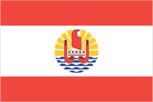
Flag
the flag of France is used
French National Assembly
elections last held 21 and 28 March 1993 (next to be held NA March 1998); results - percent of vote by party NA; seats - (2 total) People's Rally for the Republic (Gaullist) 2
French Senate
elections last held 24 September 1989 (next to be held September 1998); results - percent of vote by party NA; seats - (1 total) party NA
Highways
total: 600 km (1982) paved: NA unpaved: NA
Imports
$765 million (c.i.f., 1989) commodities: fuels, foodstuffs, equipment partners: France 53%, US 11%, Australia 6%, NZ 5%
Independence
none (overseas territory of France)
Industrial production
growth rate NA%
Industries
tourism, pearls, agricultural processing, handicrafts
Infant mortality rate
14.8 deaths/1,000 live births (1994 est.)
Inflation rate (consumer prices)
-0.6% (1991)
International disputes
none
Irrigated land
NA sq km
Judicial branch
Court of Appeal, Court of the First Instance, Court of Administrative Law
Labor force
76,630 employed (1988)
Land boundaries
0 km
Land use
arable land: 1% permanent crops: 19% meadows and pastures: 5% forest and woodland: 31% other: 44%
Languages
French (official), Tahitian (official)
Legal system
based on French system
Legislative branch
unicameral
Life expectancy at birth
total population: 70.54 years male: 68.14 years female: 73.06 years (1994 est.)
Literacy
age 14 and over but definition of literacy not available (1977) total population: 98% male: 98% female: 98%
Location
Oceania, Polynesia halfway between Australia and South America
Map references
Oceania
Maritime claims
exclusive economic zone: 200 nm territorial sea: 12 nm
Member of
ESCAP (associate), FZ, ICFTU, SPC, WMO
Merchant marine
3 ships (1,000 GRT or over) totaling 4,127 GRT/6,710 DWT, passenger-cargo 2, refrigerated cargo 1 note: a captive subset of the French register
Names
conventional long form: Territory of French Polynesia conventional short form: French Polynesia local long form: Territoire de la Polynesie Francaise local short form: Polynesie Francaise
National holiday
National Day, Taking of the Bastille, 14 July (1789)
National product
GDP - exchange rate conversion - $1.5 billion (1993 est.)
National product per capita
$7,000 (1993 est.)
National product real growth rate
NA%
Nationality
noun: French Polynesian(s) adjective: French Polynesian
Natural resources
timber, fish, cobalt
Net migration rate
0 migrant(s)/1,000 population (1994 est.)
Note
- includes five archipelagoes; Makatea in French Polynesia is one of the three great phosphate rock islands in the Pacific Ocean - the others are Banaba (Ocean Island) in Kiribati and Nauru
- defense is responsibility of France
Overview
Since 1962, when France stationed military personnel in the region, French Polynesia has changed from a subsistence economy to one in which a high proportion of the work force is either employed by the military or supports the tourist industry. Tourism accounts for about 20% of GDP and is a primary source of hard currency earnings.
Political parties and leaders
People's Rally for the Republic (Tahoeraa Huiraatira), Gaston FLOSSE; Polynesian Union Party includes Te Tiarama, Alexandre LEONTIEFF, and Pupu Here Ai'a Te Nuneao Ia Ora, Jean JUVENTIN; New Fatherland Party (Ai'a Api), Emile VERNAUDON; Polynesian Liberation Front (Tavini Huiraatira), Oscar TEMARU; Independent Party (Ia Mana Te Nunaa), James SALMON; other small parties
Population
215,129 (July 1994 est.)
Population growth rate
2.25% (1994 est.)
Ports
Papeete, Bora-bora
Religions
Protestant 54%, Roman Catholic 30%, other 16%
Suffrage
18 years of age; universal
Telecommunications
33,200 telephones; 84,000 radio receivers; 26,400 TV sets; broadcast stations - 5 AM, 2 FM, 6 TV; 1 Pacific Ocean INTELSAT earth station
Terrain
mixture of rugged high islands and low islands with reefs
Territorial Assembly
elections last held 17 March 1991 (next to be held March 1996); results - percent of vote by party NA; seats - (41 total) People's Rally for the Republic (Gaullist) 18, Polynesian Union Party 12, New Fatherland Party 7, other 4
Total fertility rate
3.31 children born/woman (1994 est.)
Type
overseas territory of France since 1946
Unemployment rate
10% (1990 est.)
US diplomatic representation
none (overseas territory of France)