2016 Edition
CIA World Factbook 2016 Archive (HTML)
Introduction
Background
France today is one of the most modern countries in the world and is a leader among European nations. It plays an influential global role as a permanent member of the United Nations Security Council, NATO, the G-8, the G-20, the EU, and other multilateral organizations. France rejoined NATO's integrated military command structure in 2009, reversing DE GAULLE's 1966 decision to withdraw French forces from NATO. Since 1958, it has constructed a hybrid presidential-parliamentary governing system resistant to the instabilities experienced in earlier, more purely parliamentary administrations. In recent decades, its reconciliation and cooperation with Germany have proved central to the economic integration of Europe, including the introduction of a common currency, the euro, in January 1999. In the early 21st century, five French overseas entities - French Guiana, Guadeloupe, Martinique, Mayotte, and Reunion - became French regions and were made part of France proper.
Geography
Area
- 643,801 sq km; 551,500 sq km (metropolitan France) 640,427 sq km; 549,970 sq km (metropolitan France) 3,374 sq km; 1,530 sq km (metropolitan France) the first numbers include the overseas regions of French Guiana, Guadeloupe, Martinique, Mayotte, and Reunion
- land
- 640,427 sq km; 549,970 sq km (metropolitan France)
- note
- the first numbers include the overseas regions of French Guiana, Guadeloupe, Martinique, Mayotte, and Reunion
- total
- 643,801 sq km; 551,500 sq km (metropolitan France)
- water
- 3,374 sq km; 1,530 sq km (metropolitan France)
Area - comparative
slightly more than four times the size of Georgia; slightly less than the size of Texas
Climate
- generally cool winters and mild summers, but mild winters and hot summers along the Mediterranean; occasional strong, cold, dry, north-to-northwesterly wind known as mistral tropical; hot, humid; little seasonal temperature variation subtropical tempered by trade winds; moderately high humidity; rainy season (June to October); vulnerable to devastating cyclones (hurricanes) every eight years on average tropical; marine; hot, humid, rainy season during northeastern monsoon (November to May); dry season is cooler (May to November) tropical, but temperature moderates with elevation; cool and dry (May to November), hot and rainy (November to April)
- French Guiana
- tropical; hot, humid; little seasonal temperature variation
- Guadeloupe and Martinique
- subtropical tempered by trade winds; moderately high humidity; rainy season (June to October); vulnerable to devastating cyclones (hurricanes) every eight years on average
- Mayotte
- tropical; marine; hot, humid, rainy season during northeastern monsoon (November to May); dry season is cooler (May to November)
- metropolitan France
- generally cool winters and mild summers, but mild winters and hot summers along the Mediterranean; occasional strong, cold, dry, north-to-northwesterly wind known as mistral
- Reunion
- tropical, but temperature moderates with elevation; cool and dry (May to November), hot and rainy (November to April)
Coastline
- 4,853 km 3,427 km
- metropolitan France
- 3,427 km
- total
- 4,853 km
Elevation
- 375 m lowest point: Rhone River delta -2 m highest point: Mont Blanc 4,807 m to assess the possible effects of climate change on the ice and snow cap of Mont Blanc, its surface and peak have been extensively measured in recent years; these new peak measurements have exceeded the traditional height of 4,807 m and have varied between 4,808 m and 4,811 m; the actual rock summit is 4,792 m and is 40 m away from the ice-covered summit
- elevation extremes
- lowest point: Rhone River delta -2 m
- highest point
- Mont Blanc 4,807 m
- mean elevation
- 375 m
- note
- to assess the possible effects of climate change on the ice and snow cap of Mont Blanc, its surface and peak have been extensively measured in recent years; these new peak measurements have exceeded the traditional height of 4,807 m and have varied between 4,808 m and 4,811 m; the actual rock summit is 4,792 m and is 40 m away from the ice-covered summit
Environment - current issues
some forest damage from acid rain; air pollution from industrial and vehicle emissions; water pollution from urban wastes, agricultural runoff
Environment - international agreements
- Air Pollution, Air Pollution-Nitrogen Oxides, Air Pollution-Persistent Organic Pollutants, Air Pollution-Sulfur 85, Air Pollution-Sulfur 94, Air Pollution-Volatile Organic Compounds, Antarctic-Environmental Protocol, Antarctic-Marine Living Resources, Antarctic Seals, Antarctic Treaty, Biodiversity, Climate Change, Climate Change-Kyoto Protocol, Desertification, Endangered Species, Hazardous Wastes, Law of the Sea, Marine Dumping, Marine Life Conservation, Ozone Layer Protection, Ship Pollution, Tropical Timber 83, Tropical Timber 94, Wetlands, Whaling none of the selected agreements
- party to
- Air Pollution, Air Pollution-Nitrogen Oxides, Air Pollution-Persistent Organic Pollutants, Air Pollution-Sulfur 85, Air Pollution-Sulfur 94, Air Pollution-Volatile Organic Compounds, Antarctic-Environmental Protocol, Antarctic-Marine Living Resources, Antarctic Seals, Antarctic Treaty, Biodiversity, Climate Change, Climate Change-Kyoto Protocol, Desertification, Endangered Species, Hazardous Wastes, Law of the Sea, Marine Dumping, Marine Life Conservation, Ozone Layer Protection, Ship Pollution, Tropical Timber 83, Tropical Timber 94, Wetlands, Whaling
- signed, but not ratified
- none of the selected agreements
Geographic coordinates
- 46 00 N, 2 00 E 4 00 N, 53 00 W 16 15 N, 61 35 W 14 40 N, 61 00 W 12 50 S, 45 10 E 21 06 S, 55 36 E
- French Guiana
- 4 00 N, 53 00 W
- Guadeloupe
- 16 15 N, 61 35 W
- Martinique
- 14 40 N, 61 00 W
- Mayotte
- 12 50 S, 45 10 E
- metropolitan France
- 46 00 N, 2 00 E
- Reunion
- 21 06 S, 55 36 E
Geography - note
largest West European nation; most major French rivers - the Meuse, Seine, Loire, Charente, Dordogne, and Garonne - flow northward or westward into the Atlantic Ocean, only the Rhone flows southward into the Mediterranean Sea
Irrigated land
- 26,420 sq km 26,950 sq km 26,000 sq km (2012)
- metropolitan France
- 26,000 sq km (2012)
- total
- 26,420 sq km 26,950 sq km
Land boundaries
- 2,751 km Andorra 55 km, Belgium 556 km, Germany 418 km, Italy 476 km, Luxembourg 69 km, Monaco 6 km, Spain 646 km, Switzerland 525 km 1,205 km Brazil 649 km, Suriname 556 km
- border countries (2)
- Brazil 649 km, Suriname 556 km
- border countries (8)
- Andorra 55 km, Belgium 556 km, Germany 418 km, Italy 476 km, Luxembourg 69 km, Monaco 6 km, Spain 646 km, Switzerland 525 km
- French Guiana - total
- 1,205 km
- metropolitan France - total
- 2,751 km
Land use
- 52.7% arable land 33.4%; permanent crops 1.8%; permanent pasture 17.5% 29.2% 18.1% (2011 est.)
- agricultural land
- 52.7%
- forest
- 29.2%
- other
- 18.1% (2011 est.)
Location
- Western Europe, bordering the Bay of Biscay and English Channel, between Belgium and Spain, southeast of the UK; bordering the Mediterranean Sea, between Italy and Spain Northern South America, bordering the North Atlantic Ocean, between Brazil and Suriname Caribbean, islands between the Caribbean Sea and the North Atlantic Ocean, southeast of Puerto Rico Caribbean, island between the Caribbean Sea and North Atlantic Ocean, north of Trinidad and Tobago Southern Indian Ocean, island in the Mozambique Channel, about halfway between northern Madagascar and northern Mozambique Southern Africa, island in the Indian Ocean, east of Madagascar
- French Guiana
- Northern South America, bordering the North Atlantic Ocean, between Brazil and Suriname
- Guadeloupe
- Caribbean, islands between the Caribbean Sea and the North Atlantic Ocean, southeast of Puerto Rico
- Martinique
- Caribbean, island between the Caribbean Sea and North Atlantic Ocean, north of Trinidad and Tobago
- Mayotte
- Southern Indian Ocean, island in the Mozambique Channel, about halfway between northern Madagascar and northern Mozambique
- metropolitan France
- Western Europe, bordering the Bay of Biscay and English Channel, between Belgium and Spain, southeast of the UK; bordering the Mediterranean Sea, between Italy and Spain
- Reunion
- Southern Africa, island in the Indian Ocean, east of Madagascar
Map references
- Europe South America Central America and the Caribbean Central America and the Caribbean Africa World
- French Guiana
- South America
- Guadeloupe
- Central America and the Caribbean
- Martinique
- Central America and the Caribbean
- Mayotte
- Africa
- metropolitan France
- Europe
- Reunion
- World
Maritime claims
- 12 nm 24 nm 200 nm (does not apply to the Mediterranean Sea) 200-m depth or to the depth of exploitation
- contiguous zone
- 24 nm
- continental shelf
- 200-m depth or to the depth of exploitation
- exclusive economic zone
- 200 nm (does not apply to the Mediterranean Sea)
- territorial sea
- 12 nm
Natural hazards
- flooding; avalanches; midwinter windstorms; drought; forest fires in south near the Mediterranean hurricanes (cyclones); flooding; volcanic activity (Guadeloupe, Martinique, Reunion)
- metropolitan France
- flooding; avalanches; midwinter windstorms; drought; forest fires in south near the Mediterranean
- overseas departments
- hurricanes (cyclones); flooding; volcanic activity (Guadeloupe, Martinique, Reunion)
Natural resources
- coal, iron ore, bauxite, zinc, uranium, antimony, arsenic, potash, feldspar, fluorspar, gypsum, timber, arable land, fish gold deposits, petroleum, kaolin, niobium, tantalum, clay
- French Guiana
- gold deposits, petroleum, kaolin, niobium, tantalum, clay
- metropolitan France
- coal, iron ore, bauxite, zinc, uranium, antimony, arsenic, potash, feldspar, fluorspar, gypsum, timber, arable land, fish
Population - distribution
much of the population is concentrated in the north and southeast; although there are many urban agglomerations throughout the country, Paris is by far the largest city, with Lyon ranked a distant second
Terrain
- mostly flat plains or gently rolling hills in north and west; remainder is mountainous, especially Pyrenees in south, Alps in east low-lying coastal plains rising to hills and small mountains Basse-Terre is volcanic in origin with interior mountains; Grande-Terre is low limestone formation; most of the seven other islands are volcanic in origin mountainous with indented coastline; dormant volcano generally undulating, with deep ravines and ancient volcanic peaks mostly rugged and mountainous; fertile lowlands along coast
- French Guiana
- low-lying coastal plains rising to hills and small mountains
- Guadeloupe
- Basse-Terre is volcanic in origin with interior mountains; Grande-Terre is low limestone formation; most of the seven other islands are volcanic in origin
- Martinique
- mountainous with indented coastline; dormant volcano
- Mayotte
- generally undulating, with deep ravines and ancient volcanic peaks
- metropolitan France
- mostly flat plains or gently rolling hills in north and west; remainder is mountainous, especially Pyrenees in south, Alps in east
- Reunion
- mostly rugged and mountainous; fertile lowlands along coast
People and Society
Age structure
- 18.59% (male 6,354,241/female 6,070,971) 11.8% (male 4,035,407/female 3,853,153) 38.04% (male 12,799,923/female 12,625,781) 12.44% (male 4,011,853/female 4,303,261) 19.12% (male 5,510,337/female 7,271,227) (2016 est.)
- 0-14 years
- 18.59% (male 6,354,241/female 6,070,971)
- 15-24 years
- 11.8% (male 4,035,407/female 3,853,153)
- 25-54 years
- 38.04% (male 12,799,923/female 12,625,781)
- 55-64 years
- 12.44% (male 4,011,853/female 4,303,261)
- 65 years and over
- 19.12% (male 5,510,337/female 7,271,227) (2016 est.)
Birth rate
12.3 births/1,000 population (2016 est.)
Contraceptive prevalence rate
- 76.4% percent of women aged 20-49 (2008)
- note
- percent of women aged 20-49 (2008)
Death rate
9.3 deaths/1,000 population (2016 est.)
Dependency ratios
- 60.3% 29.6% 30.6% 3.3% (2015 est.)
- elderly dependency ratio
- 30.6%
- potential support ratio
- 3.3% (2015 est.)
- total dependency ratio
- 60.3%
- youth dependency ratio
- 29.6%
Drinking water source
- urban: 100% of population rural: 100% of population total: 100% of population urban: 0% of population rural: 0% of population total: 0% of population (2015 est.)
- rural
- 0% of population
- total
- 0% of population (2015 est.)
- urban
- 0% of population
Education expenditures
5.5% of GDP (2012)
Ethnic groups
- Celtic and Latin with Teutonic, Slavic, North African, Indochinese, Basque minorities black, white, mulatto, East Indian, Chinese, Amerindian
- overseas departments
- black, white, mulatto, East Indian, Chinese, Amerindian
Health expenditures
11.5% of GDP (2014)
HIV/AIDS - adult prevalence rate
NA
HIV/AIDS - deaths
1,500 (2013 est.)
HIV/AIDS - people living with HIV/AIDS
NA
Hospital bed density
6.4 beds/1,000 population (2011)
Infant mortality rate
- 3.3 deaths/1,000 live births 3.6 deaths/1,000 live births 2.9 deaths/1,000 live births (2016 est.)
- female
- 2.9 deaths/1,000 live births (2016 est.)
- male
- 3.6 deaths/1,000 live births
- total
- 3.3 deaths/1,000 live births
Languages
- French (official) 100%, rapidly declining regional dialects and languages (Provencal, Breton, Alsatian, Corsican, Catalan, Basque, Flemish) French, Creole patois, Mahorian (a Swahili dialect)
- overseas departments
- French, Creole patois, Mahorian (a Swahili dialect)
Life expectancy at birth
- 81.8 years 78.7 years 85.1 years (2016 est.)
- female
- 85.1 years (2016 est.)
- male
- 78.7 years
- total population
- 81.8 years
Major urban areas - population
PARIS (capital) 10.843 million; Lyon 1.609 million; Marseille-Aix-en-Provence 1.605 million; Lille 1.027 million; Nice-Cannes 967,000; Toulouse 938,000 (2015)
Maternal mortality rate
8 deaths/100,000 live births (2015 est.)
Median age
- 41.2 years 39.5 years 42.9 years (2016 est.)
- female
- 42.9 years (2016 est.)
- male
- 39.5 years
- total
- 41.2 years
Mother's mean age at first birth
28.1 (2010 est.)
Nationality
- Frenchman(men), Frenchwoman(women) French
- adjective
- French
- noun
- Frenchman(men), Frenchwoman(women)
Net migration rate
1.1 migrant(s)/1,000 population (2016 est.)
Obesity - adult prevalence rate
25.7% (2014)
Physicians density
3.19 physicians/1,000 population (2013)
Population
- 66,836,154 the above figure is for metropolitan France and five overseas regions; the metropolitan France population is 62,814,233 (July 2016 est.)
- note
- the above figure is for metropolitan France and five overseas regions; the metropolitan France population is 62,814,233 (July 2016 est.)
Population distribution
much of the population is concentrated in the north and southeast; although there are many urban agglomerations throughout the country, Paris is by far the largest city, with Lyon ranked a distant second
Population growth rate
0.41% (2016 est.)
Religions
- Christian (overwhelmingly Roman Catholic) 63-66%, Muslim 7-9%, Buddhist 0.5-0.75%, Jewish 0.5-0.75%, other 0.5-1.0%, none 23-28% France maintains a tradition of secularism and has not officially collected data on religious affiliation since the 1872 national census, which complicates assessments of France's religious composition; an 1872 law prohibiting state authorities from collecting data on individuals' ethnicity or religious beliefs was reaffirmed by a 1978 law emphasizing the prohibition of the collection or exploitation of personal data revealing an individual's race, ethnicity, or political, philosophical, or religious opinions; a 1905 law codified France's separation of church and state (2015 est.)
- note
- France maintains a tradition of secularism and has not officially collected data on religious affiliation since the 1872 national census, which complicates assessments of France's religious composition; an 1872 law prohibiting state authorities from collecting data on individuals' ethnicity or religious beliefs was reaffirmed by a 1978 law emphasizing the prohibition of the collection or exploitation of personal data revealing an individual's race, ethnicity, or political, philosophical, or religious opinions; a 1905 law codified France's separation of church and state (2015 est.)
Sanitation facility access
- urban: 98.6% of population rural: 98.9% of population total: 98.7% of population urban: 1.4% of population rural: 1.1% of population total: 1.3% of population (2015 est.)
- rural
- 1.1% of population
- total
- 1.3% of population (2015 est.)
- urban
- 1.4% of population
School life expectancy (primary to tertiary education)
- 16 years 16 years 17 years (2014)
- female
- 17 years (2014)
- male
- 16 years
- total
- 16 years
Sex ratio
- 1.05 male(s)/female 1.05 male(s)/female 1.05 male(s)/female 1.01 male(s)/female 0.93 male(s)/female 0.75 male(s)/female 0.96 male(s)/female (2016 est.)
- 0-14 years
- 1.05 male(s)/female
- 15-24 years
- 1.05 male(s)/female
- 25-54 years
- 1.01 male(s)/female
- 55-64 years
- 0.93 male(s)/female
- 65 years and over
- 0.75 male(s)/female
- at birth
- 1.05 male(s)/female
- total population
- 0.96 male(s)/female (2016 est.)
Total fertility rate
2.07 children born/woman (2016 est.)
Unemployment, youth ages 15-24
- 23.2% 24.1% 22.1% (2014 est.)
- female
- 22.1% (2014 est.)
- male
- 24.1%
- total
- 23.2%
Urbanization
- 79.5% of total population (2015) 0.84% annual rate of change (2010-15 est.)
- rate of urbanization
- 0.84% annual rate of change (2010-15 est.)
- urban population
- 79.5% of total population (2015)
Government
Administrative divisions
- 18 regions (regions, singular - region); Auvergne-Rhone-Alpes, Bourgogne-Franche-Comte (Burgundy-Free County), Bretagne (Brittany), Centre-Val de Loire (Center-Loire Valley), Corse (Corsica), Grand Est (Grand East), Guadeloupe, Guyane (French Guiana), Hauts-de-France (Upper France), Ile-de-France, Martinique, Mayotte, Normandie (Normandy), Nouvelle-Aquitaine (New Aquitaine), Occitanie (Occitania), Pays de la Loire (Lands of the Loire), Provence-Alpes-Cote d'Azur, Reunion France is divided into 13 metropolitan regions (including the "territorial collectivity" of Corse or Corsica) and 5 overseas regions (French Guiana, Guadeloupe, Martinique, Mayotte, and Reunion) and is subdivided into 96 metropolitan departments and 5 overseas departments (which are the same as the overseas regions)
- note
- France is divided into 13 metropolitan regions (including the "territorial collectivity" of Corse or Corsica) and 5 overseas regions (French Guiana, Guadeloupe, Martinique, Mayotte, and Reunion) and is subdivided into 96 metropolitan departments and 5 overseas departments (which are the same as the overseas regions)
Capital
- Paris 48 52 N, 2 20 E UTC+1 (6 hours ahead of Washington, DC, during Standard Time) +1hr, begins last Sunday in March; ends last Sunday in October applies to metropolitan France only, not to its overseas departments, collectivities, or territories
- daylight saving time
- +1hr, begins last Sunday in March; ends last Sunday in October
- geographic coordinates
- 48 52 N, 2 20 E
- name
- Paris
- note
- applies to metropolitan France only, not to its overseas departments, collectivities, or territories
- time difference
- UTC+1 (6 hours ahead of Washington, DC, during Standard Time)
Citizenship
- no at least one parent must be a citizen of France yes 5 years
- citizenship by birth
- no
- citizenship by descent only
- at least one parent must be a citizen of France
- dual citizenship recognized
- yes
- residency requirement for naturalization
- 5 years
Constitution
many previous; latest effective 4 October 1958; amended many times, last in 2008 (2016)
Country name
- French Republic France Republique francaise France name derives from the Latin "Francia" meaning "Land of the Franks"; the Franks were a group of Germanic tribes located along the middle and lower Rhine River in the 3rd century A.D. who merged with Gallic-Roman populations in succeeding centuries and to whom they passed on their name
- conventional long form
- French Republic
- conventional short form
- France
- etymology
- name derives from the Latin "Francia" meaning "Land of the Franks"; the Franks were a group of Germanic tribes located along the middle and lower Rhine River in the 3rd century A.D. who merged with Gallic-Roman populations in succeeding centuries and to whom they passed on their name
- local long form
- Republique francaise
- local short form
- France
Dependent areas
- Clipperton Island, French Polynesia, French Southern and Antarctic Lands, New Caledonia, Saint Barthelemy, Saint Martin, Saint Pierre and Miquelon, Wallis and Futuna the US does not recognize claims to Antarctica; New Caledonia has been considered a "sui generis" collectivity of France since 1998, a unique status falling between that of an independent country and a French overseas department
- note
- the US does not recognize claims to Antarctica; New Caledonia has been considered a "sui generis" collectivity of France since 1998, a unique status falling between that of an independent country and a French overseas department
Diplomatic representation from the US
- Ambassador Jane D. HARTLEY (since 5 November 2014); note - also accredited to Monaco 2 Avenue Gabriel, 75382 Paris Cedex 08 PSC 116, APO AE 09777 [33] (1) 43-12-22-22 [33] (1) 42 66 97 83 Marseille, Strasbourg
- chief of mission
- Ambassador Jane D. HARTLEY (since 5 November 2014); note - also accredited to Monaco
- consulate(s) general
- Marseille, Strasbourg
- embassy
- 2 Avenue Gabriel, 75382 Paris Cedex 08
- FAX
- [33] (1) 42 66 97 83
- mailing address
- PSC 116, APO AE 09777
- telephone
- [33] (1) 43-12-22-22
Diplomatic representation in the US
- Ambassador Gerard ARAUD (since 18 September 2014) 4101 Reservoir Road NW, Washington, DC 20007 [1] (202) 944-6000 [1] (202) 944-6166 Atlanta, Boston, Chicago, Houston, Los Angeles, Miami, New Orleans, New York, San Francisco, Washington DC
- chancery
- 4101 Reservoir Road NW, Washington, DC 20007
- chief of mission
- Ambassador Gerard ARAUD (since 18 September 2014)
- consulate(s) general
- Atlanta, Boston, Chicago, Houston, Los Angeles, Miami, New Orleans, New York, San Francisco, Washington DC
- FAX
- [1] (202) 944-6166
- telephone
- [1] (202) 944-6000
Executive branch
- President Francois HOLLANDE (since 15 May 2012) Prime Minister Manuel VALLS (since 31 March 2014) Council of Ministers appointed by the president at the suggestion of the prime minister president directly elected by absolute majority popular vote in 2 rounds if needed for a 5-year term (eligible for a second term); election last held on 22 April and 6 May 2012 (next to be held in the spring of 2017); prime minister appointed by the president Francois HOLLANDE elected president; percent of vote in first round - Francois HOLLANDE (PS) 28.6%, Nicolas SARKOZY (UMP) 27.2%, Marine LE PEN (FN) 17.9%, Jean-Luc MELENCHON (PG) 11.1%, Francois BAYROU (moDem) 9.1%, other 6.1%; percent of vote in second round - HOLLANDE 51.6%, SARKOZY 48.4%
- cabinet
- Council of Ministers appointed by the president at the suggestion of the prime minister
- chief of state
- President Francois HOLLANDE (since 15 May 2012)
- election results
- Francois HOLLANDE elected president; percent of vote in first round - Francois HOLLANDE (PS) 28.6%, Nicolas SARKOZY (UMP) 27.2%, Marine LE PEN (FN) 17.9%, Jean-Luc MELENCHON (PG) 11.1%, Francois BAYROU (moDem) 9.1%, other 6.1%; percent of vote in second round - HOLLANDE 51.6%, SARKOZY 48.4%
- elections/appointments
- president directly elected by absolute majority popular vote in 2 rounds if needed for a 5-year term (eligible for a second term); election last held on 22 April and 6 May 2012 (next to be held in the spring of 2017); prime minister appointed by the president
- head of government
- Prime Minister Manuel VALLS (since 31 March 2014)
Flag description
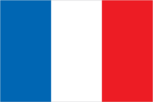
- three equal vertical bands of blue (hoist side), white, and red; known as the "Le drapeau tricolore" (French Tricolor), the origin of the flag dates to 1790 and the French Revolution when the "ancient French color" of white was combined with the blue and red colors of the Parisian militia; the official flag for all French dependent areas the design and/or colors are similar to a number of other flags, including those of Belgium, Chad, Cote d'Ivoire, Ireland, Italy, Luxembourg, and Netherlands
- note
- the design and/or colors are similar to a number of other flags, including those of Belgium, Chad, Cote d'Ivoire, Ireland, Italy, Luxembourg, and Netherlands
Government type
semi-presidential republic
Independence
- no official date of independence: 486 (Frankish tribes unified under Merovingian kingship); 10 August 843 (Western Francia established from the division of the Carolingian Empire); 14 July 1789 (French monarchy overthrown); 22 September 1792 (First French Republic founded); 4 October 1958 (Fifth French Republic established)
- no official date of independence
- 486 (Frankish tribes unified under Merovingian kingship); 10 August 843 (Western Francia established from the division of the Carolingian Empire); 14 July 1789 (French monarchy overthrown); 22 September 1792 (First French Republic founded); 4 October 1958 (Fifth French Republic established)
International law organization participation
has not submitted an ICJ jurisdiction declaration; accepts ICCt jurisdiction
International organization participation
ADB (nonregional member), AfDB (nonregional member), Arctic Council (observer), Australia Group, BDEAC, BIS, BSEC (observer), CBSS (observer), CE, CERN, EAPC, EBRD, ECB, EIB, EITI (implementing country), EMU, ESA, EU, FAO, FATF, FZ, G-5, G-7, G-8, G-10, G-20, IADB, IAEA, IBRD, ICAO, ICC (national committees), ICCt, ICRM, IDA, IEA, IFAD, IFC, IFRCS, IGAD (partners), IHO, ILO, IMF, IMO, IMSO, InOC, Interpol, IOC, IOM, IPU, ISO, ITSO, ITU, ITUC (NGOs), MIGA, MINURSO, MINUSMA, MINUSTAH, MONUSCO, NATO, NEA, NSG, OAS (observer), OECD, OIF, OPCW, OSCE, Pacific Alliance (observer), Paris Club, PCA, PIF (partner), Schengen Convention, SELEC (observer), SPC, UN, UNCTAD, UNESCO, UNHCR, UNIDO, UNIFIL, Union Latina, UNMIL, UNOCI, UNRWA, UNSC (permanent), UNTSO, UNWTO, UPU, WCO, WFTU (NGOs), WHO, WIPO, WMO, WTO, ZC
Judicial branch
- Court of Cassation or Cour de Cassation (consists of the court president, 6 divisional presiding judges, 120 trial judges, and 70 deputy judges organized into 6 divisions - 3 civil, 1 commercial, 1 labor, and 1 criminal); Constitutional Council (consists of 9 members) Court of Cassation judges appointed by the president of the republic from nominations from the High Council of the Judiciary, presided by the Court of Cassation and 15 appointed members; judges appointed for life; Constitutional Council members appointed - 3 by the president of the republic and 3 each by the National Assembly and Senate presidents; members serve 9-year, non-renewable terms with one third of the membership renewed every 3 years appellate courts or Cour d'Appel; regional courts or Tribunal de Grande Instance; first instance courts or Tribunal d'instance
- highest court(s)
- Court of Cassation or Cour de Cassation (consists of the court president, 6 divisional presiding judges, 120 trial judges, and 70 deputy judges organized into 6 divisions - 3 civil, 1 commercial, 1 labor, and 1 criminal); Constitutional Council (consists of 9 members)
- judge selection and term of office
- Court of Cassation judges appointed by the president of the republic from nominations from the High Council of the Judiciary, presided by the Court of Cassation and 15 appointed members; judges appointed for life; Constitutional Council members appointed - 3 by the president of the republic and 3 each by the National Assembly and Senate presidents; members serve 9-year, non-renewable terms with one third of the membership renewed every 3 years
- subordinate courts
- appellate courts or Cour d'Appel; regional courts or Tribunal de Grande Instance; first instance courts or Tribunal d'instance
Legal system
civil law; review of administrative but not legislative acts
Legislative branch
- bicameral Parliament or Parlement consists of the Senate or Senat (348 seats - 328 for metropolitan France and overseas departments and regions of Guadeloupe, Martinque, French Guiana, Reunion, and Mayotte, 2 for New Caledonia, 2 for French Polynesia, 1 for Saint-Pierre and Miquelon, 1 for Saint-Barthelemy, 1 for Saint-Martin, 1 for Wallis and Futuna, and 12 for French nationals abroad; members indirectly elected by departmental electoral colleges using absolute majority vote in two rounds if needed for departments with 1-3 members and proportional representation vote in departments with 4 or more members; members serve 6-year terms with one-half of the membership renewed every 3 years) and the National Assembly or Assemblee Nationale (577 seats - 556 for metropolitan France, 10 for overseas departments, and 11 for citizens abroad; members directly elected by absolute majority vote in two rounds if needed to serve 5-year terms) Senate - last held on 28 September 2014 (next to be held in September 2017); National Assembly - last held on 10 and 17 June 2012 (next to be held in June 2017) Senate - percent of vote by party - NA; seats by party - UMP 187, PS 152, other 9; National Assembly - percent of vote by party - PS 48.5%, UMP 33.6%, miscellaneous left wing parties 3.8%, Greens 3.0%, miscellaneous right wing parties 2.6%, NC 2.1%, PRG 2.1%, FDG 1.7%, other 2.6%; seats by party - PS 280, UMP 194, miscellaneous left wing parties 22, Greens 17, miscellaneous right wing parties 15, NC 12, PRG 12, FDG 10, other 15
- description
- bicameral Parliament or Parlement consists of the Senate or Senat (348 seats - 328 for metropolitan France and overseas departments and regions of Guadeloupe, Martinque, French Guiana, Reunion, and Mayotte, 2 for New Caledonia, 2 for French Polynesia, 1 for Saint-Pierre and Miquelon, 1 for Saint-Barthelemy, 1 for Saint-Martin, 1 for Wallis and Futuna, and 12 for French nationals abroad; members indirectly elected by departmental electoral colleges using absolute majority vote in two rounds if needed for departments with 1-3 members and proportional representation vote in departments with 4 or more members; members serve 6-year terms with one-half of the membership renewed every 3 years) and the National Assembly or Assemblee Nationale (577 seats - 556 for metropolitan France, 10 for overseas departments, and 11 for citizens abroad; members directly elected by absolute majority vote in two rounds if needed to serve 5-year terms)
- election results
- Senate - percent of vote by party - NA; seats by party - UMP 187, PS 152, other 9; National Assembly - percent of vote by party - PS 48.5%, UMP 33.6%, miscellaneous left wing parties 3.8%, Greens 3.0%, miscellaneous right wing parties 2.6%, NC 2.1%, PRG 2.1%, FDG 1.7%, other 2.6%; seats by party - PS 280, UMP 194, miscellaneous left wing parties 22, Greens 17, miscellaneous right wing parties 15, NC 12, PRG 12, FDG 10, other 15
- elections
- Senate - last held on 28 September 2014 (next to be held in September 2017); National Assembly - last held on 10 and 17 June 2012 (next to be held in June 2017)
National anthem
- "La Marseillaise" (The Song of Marseille) Claude-Joseph ROUGET de Lisle adopted 1795, restored 1870; originally known as "Chant de Guerre pour l'Armee du Rhin" (War Song for the Army of the Rhine), the National Guard of Marseille made the song famous by singing it while marching into Paris in 1792 during the French Revolutionary Wars
- lyrics/music
- Claude-Joseph ROUGET de Lisle
- name
- "La Marseillaise" (The Song of Marseille)
- note
- adopted 1795, restored 1870; originally known as "Chant de Guerre pour l'Armee du Rhin" (War Song for the Army of the Rhine), the National Guard of Marseille made the song famous by singing it while marching into Paris in 1792 during the French Revolutionary Wars
National holiday
Fete de la Federation, 14 July (1790); note - although often incorrectly referred to as Bastille Day, the celebration actually commemorates the holiday held on the first anniversary of the storming of the Bastille (on 14 July 1789) and the establishment of a constitutional monarchy; other names for the holiday are Fete Nationale (National Holiday) and quatorze juillet (14th of July)
National symbol(s)
- Gallic rooster, fleur-de-lis, Marianne (female personification); national colors: blue, white, red
- Gallic rooster, fleur-de-lis, Marianne (female personification); national colors
- blue, white, red
Political parties and leaders
Europe Ecology - The Greens or EELV [Emmanuelle COSSE] French Communist Party or PCF [Pierre LAURENT] Left Front Coalition or FDG [Jean-Luc MELENCHON] Left Party or PG [Jean-Luc MELENCHON and Martine BILLARD] Left Radical Party or PRG [Jean-Michel BAYLET] (previously Radical Socialist Party or PRS and the Left Radical Movement or MRG) Movement for France or MPF [Philippe DE VILLIERS] National Front or FN [Marine LE PEN] New Anticapitalist Party or NPA [collective leadership; main spokesperson Christine POUPIN] New Center or NC [Herve MORIN] Radical Party [Jean-Louis BORLOO] Rally for France or RPF [Charles PASQUA] Republican and Citizen Movement or MRC [Jean-Luc LAURENT] Socialist Party or PS [Haerlem DESIR] The Republicans (formerly Union for a Popular Movement or UMP) [Nicolas SARKOZY] Union des Democrates et Independants or UDI [Jean-Louis BORLOO] and Democratic Movement or MoDem [Francois BAYROU] (previously Union for French Democracy or UDF); together known as UDI-Modem United Republic or RS [Dominique DE VILLEPIN] Worker's Struggle (Lutte Ouvriere) or LO [collective leadership; spokespersons Nathalie ARTHAUD and Arlette LAQUILLER]
Political pressure groups and leaders
Confederation francaise de l'encadrement - Confederation generale des cadres (French Confederation of Management - General Confederation of Executives) or CFE-CGC [Carole COUVERT, president] (independent white-collar union with 140,000 members) Confederation Francaise Democratique du Travail (French Democratic Confederation of Labor) or CFDT [Laurent BERGER, secretary general] (left-leaning labor union with approximately 875,000 members) Confederation francaise des travailleurs chretiens (French Confederation of Christian Workers) or CFTC [Philippe LOUIS, president] (independent labor union founded by Catholic workers that claims 142,000 members) Confederation generale du travail (General Confederation of Labor) or CGT [Bernard THIBAULT, secretary general] (historically communist labor union with approximately 710,000 members) Confederation generale du travail - Force ouvriere (General Confederation of Labor - Worker's Force) or FO [Jean-Claude MAILLY, secretary general] (independent labor union with an estimated 300,000 members) Mouvement des entreprises de France or MEDEF [Pierre GATTAZ, president] (employers' union with claimed 750,000 companies as members) conservationists; gold mining pressure groups; hunting pressure groups Christian Movement for the Liberation of Guadeloupe or KLPG General Federation of Guadeloupe Workers or CGT-G General Union of Guadeloupe Workers or UGTG Movement for an Independent Guadeloupe or MPGI The Socialist Renewal Movement Caribbean Revolutionary Alliance or ARC Central Union for Martinique Workers or CSTM Frantz Fanon Circle League of Workers and Peasants Proletarian Action Group or GAP NA
Suffrage
18 years of age; universal
Economy
Agriculture - products
wheat, cereals, sugar beets, potatoes, wine grapes; beef, dairy products; fish
Budget
- $1.294 trillion $1.38 trillion (2015 est.)
- expenditures
- $1.38 trillion (2015 est.)
- revenues
- $1.294 trillion
Budget surplus (+) or deficit (-)
-3.6% of GDP (2015 est.)
Central bank discount rate
- 0.05% (31 December 2014) 0.25% (31 December 2013) this is the European Central Bank's rate on the marginal lending facility, which offers overnight credit to banks in the euro area
- note
- this is the European Central Bank's rate on the marginal lending facility, which offers overnight credit to banks in the euro area
Commercial bank prime lending rate
1.93% (31 December 2015 est.) 2.6% (31 December 2014 est.)
Current account balance
-$3.041 billion (2015 est.) -$26.24 billion (2014 est.)
Debt - external
$5.496 trillion (31 December 2014 est.) $5.549 trillion (31 December 2013 est.)
Distribution of family income - Gini index
30.1 (2013) 30.5 (2012)
Economy - overview
The French economy is diversified across all sectors. The government has partially or fully privatized many large companies, including Air France, France Telecom, Renault, and Thales. However, the government maintains a strong presence in some sectors, particularly power, public transport, and defense industries. With more than 84 million foreign tourists per year, France is the most visited country in the world and maintains the third largest income in the world from tourism. France's leaders remain committed to a capitalism in which they maintain social equity by means of laws, tax policies, and social spending that mitigate economic inequality. France's real GDP increased by 1.1% in 2015. The unemployment rate (including overseas territories) increased from 7.8% in 2008 to 9.9% in the fourth quarter of 2014. Youth unemployment in metropolitan France decreased from a high of 25.4% in the fourth quarter of 2012 to 24.3% in the fourth quarter of 2014. Lower-than-expected growth and high spending have strained France's public finances. The budget deficit rose sharply from 3.3% of GDP in 2008 to 7.5% of GDP in 2009 before improving to 4% of GDP in 2014 and 2015, while France's public debt rose from 68% of GDP to more than 98% in 2015, and may hit 100% in 2016. Elected on a conventionally leftist platform, President Francois HOLLANDE surprised and angered many supporters with a January 2014 speech announcing a sharp change in his economic policy, recasting himself as a liberalizing reformer. The government's budget for 2014 shifted the balance of fiscal consolidation from taxes to a total of $24 billion in spending cuts. In December 2014, HOLLANDE announced additional reforms, including a plan to extend commercial business hours, liberalize professional services, and sell off $6.2-12.4 billion in state owned assets. France’s tax burden remains well above the EU average and income tax cuts over the past decade are being partly reversed, particularly for higher earners. The top rate of income tax is 41%. The government is allowing a 75% payroll tax on salaries over $1.24 million to lapse.
Exchange rates
euros (EUR) per US dollar - 0.885 (2015 est.) 0.7525 (2014 est.) 0.7634 (2013 est.) 0.7752 (2012 est.) 0.7185 (2011 est.)
Exports
$510.5 billion (2015 est.) $584.5 billion (2014 est.)
Exports - commodities
machinery and transportation equipment, aircraft, plastics, chemicals, pharmaceutical products, iron and steel, beverages
Exports - partners
Germany 15.9%, Spain 7.3%, US 7.2%, Italy 7.1%, UK 7.1%, Belgium 6.8% (2015)
Fiscal year
calendar year
GDP - composition, by end use
- 55.1% 23.9% 21.5% 0.8% 30% -31.4% (2015 est.)
- exports of goods and services
- 30%
- government consumption
- 23.9%
- household consumption
- 55.1%
- imports of goods and services
- -31.4% (2015 est.)
- investment in fixed capital
- 21.5%
- investment in inventories
- 0.8%
GDP - composition, by sector of origin
- 1.7% 19.5% 78.8% (2015 est.)
- agriculture
- 1.7%
- industry
- 19.5%
- services
- 78.8% (2015 est.)
GDP - per capita (PPP)
- $41,200 (2015 est.) $40,900 (2014 est.) $41,000 (2013 est.) data are in 2015 US dollars
- note
- data are in 2015 US dollars
GDP - real growth rate
1.1% (2015 est.) 0.2% (2014 est.) 0.7% (2013 est.)
GDP (official exchange rate)
$2.422 trillion (2015 est.)
GDP (purchasing power parity)
- $2.647 trillion (2015 est.) $2.617 trillion (2014 est.) $2.612 trillion (2013 est.) data are in 2015 US dollars
- note
- data are in 2015 US dollars
Gross national saving
22.1% of GDP (2015 est.) 21.5% of GDP (2014 est.) 21.5% of GDP (2013 est.)
Household income or consumption by percentage share
- 3.6% 25.4% (2013)
- highest 10%
- 25.4% (2013)
- lowest 10%
- 3.6%
Imports
$537.5 billion (2015 est.) $631.1 billion (2014 est.)
Imports - commodities
machinery and equipment, vehicles, crude oil, aircraft, plastics, chemicals
Imports - partners
Germany 19.5%, Belgium 10.7%, Italy 7.7%, Netherlands 7.5%, Spain 6.8%, US 5.5%, China 5.4%, UK 4.3% (2015)
Industrial production growth rate
0.8% (2015 est.)
Industries
machinery, chemicals, automobiles, metallurgy, aircraft, electronics; textiles, food processing; tourism
Inflation rate (consumer prices)
0.1% (2015 est.) 0.6% (2014 est.)
Labor force
30.41 million (2015 est.)
Labor force - by occupation
- 3% 21.3% 75.7% (2013 est.)
- agriculture
- 3%
- industry
- 21.3%
- services
- 75.7% (2013 est.)
Market value of publicly traded shares
$1.762 trillion (31 December 2015 est.) $1.538 trillion (31 December 2014 est.) $1.983 trillion (31 December 2013 est.)
Population below poverty line
8.1% (2012 est.)
Public debt
- 96.2% of GDP (2015 est.) 95.3% of GDP (2014 est.) data cover general government debt and include debt instruments issued (or owned) by government entities other than the treasury; the data include treasury debt held by foreign entities; the data include debt issued by subnational entities, as well as intra-governmental debt; intra-governmental debt consists of treasury borrowings from surpluses in the social funds, such as for retirement, medical care, and unemployment; debt instruments for the social funds are not sold at public auctions
- note
- data cover general government debt and include debt instruments issued (or owned) by government entities other than the treasury; the data include treasury debt held by foreign entities; the data include debt issued by subnational entities, as well as intra-governmental debt; intra-governmental debt consists of treasury borrowings from surpluses in the social funds, such as for retirement, medical care, and unemployment; debt instruments for the social funds are not sold at public auctions
Reserves of foreign exchange and gold
$138.2 billion (31 December 2015 est.) $143.4 billion (31 December 2014 est.)
Stock of broad money
$2.541 trillion (31 December 2014 est.) $2.771 trillion (31 December 2013 est.)
Stock of direct foreign investment - abroad
$1.316 trillion (31 December 2015 est.) $1.279 trillion (31 December 2014 est.)
Stock of direct foreign investment - at home
$773.3 billion (31 December 2015 est.) $729.2 billion (31 December 2014 est.)
Stock of domestic credit
$3.528 trillion (31 December 2015 est.) $3.831 trillion (31 December 2014 est.)
Stock of narrow money
- $1.079 trillion (31 December 2015 est.) $1.08 trillion (31 December 2014 est.) see entry for the European Union for money supply for the entire euro area; the European Central Bank (ECB) controls monetary policy for the 18 members of the Economic and Monetary Union (EMU); individual members of the EMU do not control the quantity of money circulating within their own borders
- note
- see entry for the European Union for money supply for the entire euro area; the European Central Bank (ECB) controls monetary policy for the 18 members of the Economic and Monetary Union (EMU); individual members of the EMU do not control the quantity of money circulating within their own borders
Taxes and other revenues
53.4% of GDP (2015 est.)
Unemployment rate
- 10.1% (2015 est.) 9.9% (2014 est.) includes overseas territories
- note
- includes overseas territories
Energy
Carbon dioxide emissions from consumption of energy
385.6 million Mt (2013 est.)
Crude oil - exports
21,960 bbl/day (2015 est.)
Crude oil - imports
1.174 million bbl/day (2015 est.)
Crude oil - production
16,670 bbl/day (2015 est.)
Crude oil - proved reserves
84.08 million bbl (1 January 2016 es)
Electricity - consumption
431 billion kWh (2014 est.)
Electricity - exports
75 billion kWh (2014 est.)
Electricity - from fossil fuels
20.3% of total installed capacity (2012 est.)
Electricity - from hydroelectric plants
14.2% of total installed capacity (2012 est.)
Electricity - from nuclear fuels
48.8% of total installed capacity (2012 est.)
Electricity - from other renewable sources
11.2% of total installed capacity (2012 est.)
Electricity - imports
7.9 billion kWh (2014 est.)
Electricity - installed generating capacity
129 million kW (2014 est.)
Electricity - production
534 billion kWh (2014 est.)
Electricity access
- 100% (2016)
- electrification - total population
- 100% (2016)
Natural gas - consumption
36.72 billion cu m (2014 est.)
Natural gas - exports
7.077 billion cu m (2014 est.)
Natural gas - imports
45.13 billion cu m (2014 est.)
Natural gas - production
17 million cu m (2014 est.)
Natural gas - proved reserves
8.75 billion cu m (1 January 2016 es)
Refined petroleum products - consumption
1.691 million bbl/day (2015 est.)
Refined petroleum products - exports
444,900 bbl/day (2015 est.)
Refined petroleum products - imports
866,500 bbl/day (2015 est.)
Refined petroleum products - production
1.277 million bbl/day (2015 est.)
Communications
Broadcast media
a mix of both publicly operated and privately owned TV stations; state-owned France television stations operate 4 networks, one of which is a network of regional stations, and has part-interest in several thematic cable/satellite channels and international channels; a large number of privately owned regional and local TV stations; multi-channel satellite and cable services provide a large number of channels; public broadcaster Radio France operates 7 national networks, a series of regional networks, and operates services for overseas territories and foreign audiences; Radio France Internationale, under the Ministry of Foreign Affairs, is a leading international broadcaster; a large number of commercial FM stations, with many of them consolidating into commercial networks (2008)
Internet country code
metropolitan France - .fr; French Guiana - .gf; Guadeloupe - .gp; Martinique - .mq; Mayotte - .yt; Reunion - .re
Internet users
- 56.367 million 84.7% (July 2015 est.)
- percent of population
- 84.7% (July 2015 est.)
- total
- 56.367 million
Telephone system
- highly developed extensive cable and microwave radio relay; extensive use of fiber-optic cable; domestic satellite system country code - 33; numerous submarine cables provide links throughout Europe, Asia, Australia, the Middle East, and US; satellite earth stations - more than 3 (2 Intelsat (with total of 5 antennas - 2 for Indian Ocean and 3 for Atlantic Ocean), NA Eutelsat, 1 Inmarsat - Atlantic Ocean region); HF radiotelephone communications with more than 20 countries country codes: French Guiana - 594; Guadeloupe - 590; Martinique - 596; Mayotte - 262; Reunion - 262 (2015)
- domestic
- extensive cable and microwave radio relay; extensive use of fiber-optic cable; domestic satellite system
- general assessment
- highly developed
- international
- country code - 33; numerous submarine cables provide links throughout Europe, Asia, Australia, the Middle East, and US; satellite earth stations - more than 3 (2 Intelsat (with total of 5 antennas - 2 for Indian Ocean and 3 for Atlantic Ocean), NA Eutelsat, 1 Inmarsat - Atlantic Ocean region); HF radiotelephone communications with more than 20 countries
- overseas departments
- country codes: French Guiana - 594; Guadeloupe - 590; Martinique - 596; Mayotte - 262; Reunion - 262 (2015)
Telephones - fixed lines
- 38.929 million 58 (July 2015 est.)
- subscriptions per 100 inhabitants
- 58 (July 2015 est.)
- total subscriptions
- 38.929 million
Telephones - mobile cellular
- 66.681 million 100 (July 2015 est.)
- subscriptions per 100 inhabitants
- 100 (July 2015 est.)
- total
- 66.681 million
Transportation
Airports
464 (2013)
Airports - with paved runways
- 75 (2013)
- 1,524 to 2,437 m
- 97
- 2,438 to 3,047 m
- 25
- 914 to 1,523 m
- 83
- over 3,047 m
- 14
- total
- 294
- under 914 m
- 75 (2013)
Airports - with unpaved runways
- 105 (2013)
- 1,524 to 2,437 m
- 1
- 914 to 1,523 m
- 64
- total
- 170
- under 914 m
- 105 (2013)
Civil aircraft registration country code prefix
F (2016)
Heliports
1 (2013)
Merchant marine
- bulk carrier 3, cargo 7, chemical tanker 34, container 27, liquefied gas 12, passenger 10, passenger/cargo 41, petroleum tanker 16, refrigerated cargo 1, roll on/roll off 11 50 (Belgium 7, Bermuda 5, Denmark 11, French Polynesia 11, Germany 1, New Caledonia 3, Singapore 3, Sweden 4, Switzerland 5) 151 (Bahamas 15, Belgium 7, Bermuda 1, Canada 1, Cyprus 16, Egypt 1, Hong Kong 4, Indonesia 1, Ireland 2, Italy 2, Luxembourg 15, Malta 8, Marshall Islands 7, Mexico 1, Morocco 3, Netherlands 2, Norway 5, Panama 7, Saint Vincent and the Grenadines 2, Singapore 3, South Korea 2, Taiwan 2, UK 39, US 4, unknown 1) (2010)
- by type
- bulk carrier 3, cargo 7, chemical tanker 34, container 27, liquefied gas 12, passenger 10, passenger/cargo 41, petroleum tanker 16, refrigerated cargo 1, roll on/roll off 11
- foreign-owned
- 50 (Belgium 7, Bermuda 5, Denmark 11, French Polynesia 11, Germany 1, New Caledonia 3, Singapore 3, Sweden 4, Switzerland 5)
- registered in other countries
- 151 (Bahamas 15, Belgium 7, Bermuda 1, Canada 1, Cyprus 16, Egypt 1, Hong Kong 4, Indonesia 1, Ireland 2, Italy 2, Luxembourg 15, Malta 8, Marshall Islands 7, Mexico 1, Morocco 3, Netherlands 2, Norway 5, Panama 7, Saint Vincent and the Grenadines 2, Singapore 3, South Korea 2, Taiwan 2, UK 39, US 4, unknown 1) (2010)
- total
- 162
National air transport system
- 65,039,503 4,098.31 million mt-km (2015)
- annual freight traffic on registered air carriers
- 4,098.31 million mt-km (2015)
- annual passenger traffic on registered air carriers
- 65,039,503
- inventory of registered aircraft operated by air carriers
- 485
- number of registered air carriers
- 30
Pipelines
gas 15,322 km; oil 2,939 km; refined products 5,084 km (2013)
Ports and terminals
- Brest, Calais, Dunkerque, Le Havre, Marseille, Nantes, Paris, Rouen (Seine); Strasbourg (Rhine); Bordeaux (Garronne) Le Havre (2,215,262)(2011) Calais, Cherbourg, Le Havre Fos Cavaou, Fos Tonkin, Montoir de Bretagne
- container port(s)
- Le Havre (2,215,262)(2011)
- cruise/ferry port(s)
- Calais, Cherbourg, Le Havre
- LNG terminal(s) (import)
- Fos Cavaou, Fos Tonkin, Montoir de Bretagne
- major seaport(s)
- Brest, Calais, Dunkerque, Le Havre, Marseille, Nantes,
- river port(s)
- Paris, Rouen (Seine); Strasbourg (Rhine); Bordeaux (Garronne)
Railways
- 29,640 km 29,473 km 1.435-m gauge (15,561 km electrified) 167 km 1.000-m gauge (63 km electrified) (2014)
- narrow gauge
- 167 km 1.000-m gauge (63 km electrified) (2014)
- standard gauge
- 29,473 km 1.435-m gauge (15,561 km electrified)
- total
- 29,640 km
Roadways
- 1,028,446 km (metropolitan France) 1,028,446 km (includes 11,416 km of expressways) not included are 5,100 km of roadways in overseas departments (2010)
- note
- not included are 5,100 km of roadways in overseas departments (2010)
- paved
- 1,028,446 km (includes 11,416 km of expressways)
- total
- 1,028,446 km (metropolitan France)
Waterways
- 8,501 km (1,621 km navigable by craft up to 3,000 metric tons) (2010)
- metropolitan France
- 8,501 km (1,621 km navigable by craft up to 3,000 metric tons) (2010)
Military and Security
Military branches
Army (Armee de Terre; includes Marines, Foreign Legion, Army Light Aviation), Navy (Marine Nationale), Air Force (Armee de l'Air (AdlA); includes Air Defense) (2011)
Military expenditures
1.8% of GDP (2014) 1.9% of GDP (2013) 1.9% of GDP (2012)
Military service age and obligation
18-25 years of age for male and female voluntary military service; no conscription; 1-year service obligation; women serve in noncombat posts (2013)
Transnational Issues
Disputes - international
Madagascar claims the French territories of Bassas da India, Europa Island, Glorioso Islands, and Juan de Nova Island; Comoros claims Mayotte; Mauritius claims Tromelin Island; territorial dispute between Suriname and the French overseas department of French Guiana; France asserts a territorial claim in Antarctica (Adelie Land); France and Vanuatu claim Matthew and Hunter Islands, east of New Caledonia
Illicit drugs
- transshipment point for South American cocaine, Southwest Asian heroin, and European synthetics small amount of marijuana grown for local consumption; minor transshipment point to Europe transshipment point for cocaine and marijuana bound for the US and Europe
- French Guiana
- small amount of marijuana grown for local consumption; minor transshipment point to Europe
- Martinique
- transshipment point for cocaine and marijuana bound for the US and Europe
- metropolitan France
- transshipment point for South American cocaine, Southwest Asian heroin, and European synthetics
Refugees and internally displaced persons
- 24,220 (Sri Lanka); 14,195 (Russia); 14,182 (Democratic Republic of the Congo); 12,500 (Serbia and Kosovo); 11,824 (Cambodia); 10,652 (Turkey); 8,132 (Vietnam); 6,944 (Laos); 6,005 (Guinea); 5,179 (Syria); 5,006 (Mauritania) (2015) 1,326 (2015)
- refugees (country of origin)
- 24,220 (Sri Lanka); 14,195 (Russia); 14,182 (Democratic Republic of the Congo); 12,500 (Serbia and Kosovo); 11,824 (Cambodia); 10,652 (Turkey); 8,132 (Vietnam); 6,944 (Laos); 6,005 (Guinea); 5,179 (Syria); 5,006 (Mauritania) (2015)
- stateless persons
- 1,326 (2015)