1999 Edition
CIA World Factbook 1999 (Internet Archive)
Introduction
Background
Although ultimately a victor in World Wars I and II, France lost many men, much wealth, its extensive empire, and its rank as a dominant nation-state. France has struggled since 1958--arguably with success--to construct a presidential democracy resistant to the severe instabilities inherent in the parliamentary democracy of early 20th century France. In recent years, its reconciliation and cooperation with Germany have proved central to the economic integration of Europe, including the advent of the euro in January 1999.
Geography
Area
total: 547,030 sq km land: 545,630 sq km water: 1,400 sq km note: includes only metropolitan France, but excludes the overseas administrative divisions
Area--comparative
slightly less than twice the size of Colorado
Climate
generally cool winters and mild summers, but mild winters and hot summers along the Mediterranean
Coastline
3,427 km
Elevation extremes
lowest point: Rhone River delta -2 m highest point: Mont Blanc 4,807 m
Environment--current issues
some forest damage from acid rain; air pollution from industrial and vehicle emissions; water pollution from urban wastes, agricultural runoff
Environment--international agreements
party to: Air Pollution, Air Pollution-Nitrogen Oxides, Air Pollution-Sulphur 85, Air Pollution-Sulphur 94, Air Pollution-Volatile Organic Compounds, Antarctic-Environmental Protocol, Antarctic Treaty, Biodiversity, Climate Change, Desertification, Endangered Species, Hazardous Wastes, Law of the Sea, Marine Dumping, Marine Life Conservation, Ozone Layer Protection, Ship Pollution, Tropical Timber 83, Tropical Timber 94, Wetlands, Whaling signed, but not ratified: Air Pollution-Persistent Organic Pollutants, Climate Change-Kyoto Protocol
Geographic coordinates
46 00 N, 2 00 E
Geography--note
largest West European nation; occasional strong, cold, dry, north-to-northwesterly wind known as mistral
Irrigated land
16,300 sq km (1995 est.)
Land boundaries
total: 2,892.4 km border countries: Andorra 60 km, Belgium 620 km, Germany 451 km, Italy 488 km, Luxembourg 73 km, Monaco 4.4 km, Spain 623 km, Switzerland 573 km
Land use
arable land: 33% permanent crops: 2% permanent pastures: 20% forests and woodland: 27% other: 18% (1993 est.)
Location
Western Europe, bordering the Bay of Biscay and English Channel, between Belgium and Spain southeast of the UK; bordering the Mediterranean Sea, between Italy and Spain
Map references
Europe
Maritime claims
contiguous zone: 24 nm continental shelf: 200-m depth or to the depth of exploitation exclusive economic zone: 200 nm (does not apply to the Mediterranean) territorial sea: 12 nm
Natural hazards
flooding; avalanches
Natural resources
coal, iron ore, bauxite, fish, timber, zinc, potash
Terrain
mostly flat plains or gently rolling hills in north and west; remainder is mountainous, especially Pyrenees in south, Alps in east
People and Society
Age structure
0-14 years: 19% (male 5,638,462; female 5,375,911) 15-64 years: 65% (male 19,302,121; female 19,235,235) 65 years and over: 16% (male 3,825,232; female 5,601,211) (1999 est.)
Birth rate
11.38 births/1,000 population (1999 est.)
Death rate
9.17 deaths/1,000 population (1999 est.)
Ethnic groups
Celtic and Latin with Teutonic, Slavic, North African, Indochinese, Basque minorities
Infant mortality rate
5.62 deaths/1,000 live births (1999 est.)
Languages
French 100%, rapidly declining regional dialects and languages (Provencal, Breton, Alsatian, Corsican, Catalan, Basque, Flemish)
Life expectancy at birth
total population: 78.63 years male: 74.76 years female: 82.71 years (1999 est.)
Literacy
definition: age 15 and over can read and write total population: 99% male: 99% female: 99% (1980 est.)
Nationality
noun: Frenchman(men), Frenchwoman(women) adjective: French
Net migration rate
0.53 migrant(s)/1,000 population (1999 est.)
Population
58,978,172 (July 1999 est.)
Population growth rate
0.27% (1999 est.)
Religions
Roman Catholic 90%, Protestant 2%, Jewish 1%, Muslim (North African workers) 1%, unaffiliated 6%
Sex ratio
at birth: 1.05 male(s)/female under 15 years: 1.05 male(s)/female 15-64 years: 1 male(s)/female 65 years and over: 0.68 male(s)/female total population: 0.95 male(s)/female (1999 est.)
Total fertility rate
1.61 children born/woman (1999 est.)
Government
Administrative divisions
22 regions (regions, singular--region); Alsace, Aquitaine, Auvergne, Basse-Normandie, Bourgogne, Bretagne, Centre, Champagne-Ardenne, Corse, Franche-Comte, Haute-Normandie, Ile-de-France, Languedoc-Roussillon, Limousin, Lorraine, Midi-Pyrenees, Nord-Pas-de-Calais, Pays de la Loire, Picardie, Poitou-Charentes, Provence-Alpes-Cote d'Azur, Rhone-Alpes note: metropolitan France is divided into 22 regions (including the "territorial collectivity" of Corse or Corsica) and is subdivided into 96 departments; see separate entries for the overseas departments (French Guiana, Guadeloupe, Martinique, Reunion) and the overseas territorial collectivities (Mayotte, Saint Pierre and Miquelon)
Capital
Paris
Constitution
28 September 1958, amended concerning election of president in 1962, amended to comply with provisions of EC Maastricht Treaty in 1992; amended to tighten immigration laws 1993
Country name
conventional long form: French Republic conventional short form: France local long form: Republique Francaise local short form: France
Data code
FR
Dependent areas
Bassas da India, Clipperton Island, Europa Island, French Polynesia, French Southern and Antarctic Lands, Glorioso Islands, Juan de Nova Island, New Caledonia, Tromelin Island, Wallis and Futuna note: the US does not recognize claims to Antarctica
Executive branch
chief of state: President Jacques CHIRAC (since 17 May 1995) head of government: Prime Minister Lionel JOSPIN (since 3 June 1997) cabinet: Council of Ministers appointed by the president on the suggestion of the prime minister elections: president elected by popular vote for a seven-year term; election last held 23 April and 7 May 1995 (next to be held by May 2002); prime minister nominated by the National Assembly majority and appointed by the president election results: Jacques CHIRAC elected president; percent of vote, second ballot--Jacques CHIRAC 52.64%, Lionel JOSPIN 47.36%
Flag description
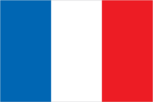
three equal vertical bands of blue (hoist side), white, and red; known as the French Tricouleur (Tricolor); the design and colors are similar to a number of other flags, including those of Belgium, Chad, Ireland, Cote d'Ivoire, and Luxembourg; the official flag for all French dependent areas
Government type
republic
Independence
486 (unified by Clovis)
International organization participation
ACCT, AfDB, AsDB, Australia Group, BDEAC, BIS, CCC, CDB (non-regional), CE, CERN, EAPC, EBRD, ECA (associate), ECE, ECLAC, EIB, EMU, ESA, ESCAP, EU, FAO, FZ, G5, G7, G-10, IADB, IAEA, IBRD, ICAO, ICC, ICFTU, ICRM, IDA, IEA, IFAD, IFC, IFRCS, IHO, ILO, IMF, IMO, Inmarsat, InOC, Intelsat, Interpol, IOC, IOM, ISO, ITU, MINURCA, MINURSO, MIPONUH, MONUA, MTCR, NATO, NEA, NSG, OAS (observer), OECD, OPCW, OSCE, PCA, SPC, UN, UN Security Council, UNCTAD, UNESCO, UNHCR, UNIDO, UNIFIL, UNIKOM, UNITAR, UNMIBH, UNOMIG, UNRWA, UNTSO, UNU, UPU, WCL, WEU, WFTU, WHO, WIPO, WMO, WToO, WTrO, ZC Diplomatic representation in the US: chief of mission: Ambassador Francois V. BUJON DE L'ESTANG chancery: 4101 Reservoir Road NW, Washington, DC 20007 consulate(s) general: Atlanta, Boston, Chicago, Houston, Los Angeles, Miami, New Orleans, New York, and San Francisco Diplomatic representation from the US: chief of mission: Ambassador Felix G. ROHATYN embassy: 2 Avenue Gabriel, 75382 Paris Cedex 08 mailing address: PSC 116, APO AE 09777 consulate(s) general: Marseille, Strasbourg
Judicial branch
Supreme Court of Appeals or Cour de Cassation, judges are appointed by the president from nominations of the High Council of the Judiciary; Constitutional Council or Conseil Constitutionnel, three members appointed by the president, three members appointed by the president of the National Assembly, and three appointed by the president of the Senate; Council of State or Conseil d'Etat Political parties and leaders: Rally for the Republic or RPR Political pressure groups and leaders: Communist-controlled labor union (Confederation Generale du Travail) or CGT, nearly 2.4 million members (claimed); Socialist-leaning labor union (Confederation Francaise Democratique du Travail) or CFDT, about 800,000 members (est.); independent labor union or Force Ouvriere, 1 million members (est.); independent white-collar union or Confederation Generale des Cadres, 340,000 members (claimed); National Council of French Employers (Conseil National du Patronat Francais) or CNPF or Patronat
Legal system
civil law system with indigenous concepts; review of administrative but not legislative acts
Legislative branch
bicameral Parliament or Parlement consists of the Senate or Senat (321 seats--296 for metropolitan France, 13 for overseas departments and territories, and 12 for French nationals abroad; members are indirectly elected by an electoral college to serve nine-year terms; elected by thirds every three years) and the National Assembly or Assemblee Nationale (577 seats; members are elected by popular vote under a single-member majoritarian system to serve five-year terms) elections: Senate--last held 27 September 1998 (next to be held September 2001); National Assembly--last held 25 May-1 June 1997 (next to be held NA May 2002) election results: Senate--percent of vote by party--NA; seats by party--RPR 99, Centrist Union 52, Republicans and independents 47, PS 78, PCF 16, other 29; National Assembly--percent of vote by party--NA; seats by party--PS 245, RPR 140, UDF 109, PCF 37, PRS 13, Ecologists 8, MDC 7, LDI-MPF 1, FN 1, various left 9, various right 7
National holiday
National Day, Taking of the Bastille, 14 July (1789)
Suffrage
18 years of age; universal
Economy
Agriculture--products
wheat, cereals, sugar beets, potatoes, wine grapes; beef, dairy products; fish
Budget
revenues: $222 billion expenditures: $265 billion, including capital expenditures of $NA (1998 est.)
Currency
1 French franc (F) = 100 centimes
Debt--external
$117.6 billion (1996 est.)
Economic aid--donor
ODA, $8.4 billion (1995)
Economy--overview
One of the four West European trillion-dollar economies, France matches a growing services sector with a diversified industrial base and substantial agricultural resources. Industry generates one-quarter of GDP and more than 80% of export earnings. The government retains considerable influence over key segments of each sector, with majority ownership of railway, electricity, aircraft, and telecommunication firms. It has been gradually relaxing its control over these sectors since the early 1990s. The government is slowly selling off its holdings in France Telecom, in Air France, and in the insurance, banking, and defense industries. Meanwhile, large tracts of fertile land, the application of modern technology, and subsidies have combined to make France the leading agricultural producer in Western Europe. A major exporter of wheat and dairy products, France is practically self-sufficient in agriculture. The economy expanded by 3% in 1998, following a 2.3% gain in 1997. Persistently high unemployment still poses a major problem for the government. France has shied away from cutting exceptionally generous social welfare benefits or the enormous state bureaucracy, preferring to pare defense spending and raise taxes to keep the deficit down. The JOSPIN administration has pledged both to lower unemployment and trim spending, pinning its hopes for new jobs on economic growth and on legislation to gradually reduce the workweek from 39 to 35 hours by 2002. France joined 10 other EU members to launch the euro on 1 January 1999.
Electricity--consumption
411.743 billion kWh (1996)
Electricity--exports
72.64 billion kWh (1996)
Electricity--imports
3.6 billion kWh (1996)
Electricity--production
480.783 billion kWh (1996)
Electricity--production by source
fossil fuel: 8.72% hydro: 12.92% nuclear: 78.25% other: 0.11% (1996)
Exchange rates
French francs (F) per US$1--5.65 (January 1999), 5.8995 (1998), 5.8367 (1997), 5.1155 (1996), 4.9915 (1995), 5.5520 (1994) note: on 1 January 1999, the European Union introduced a common currency that is now being used by financial institutions in some member countries at the rate of 0.8597 euros per US$ and a fixed rate of 6.55957 French francs per euro; the euro will replace the local currency in consenting countries for all transactions in 2002
Exports
$289 billion (f.o.b., 1998)
Exports--commodities
machinery and transportation equipment, chemicals, foodstuffs, agricultural products, iron and steel products, textiles and clothing
Exports--partners
Germany 16%, UK 10%, Italy 9%, Spain 8%, Belgium-Luxembourg 8%, US 6.5%, Netherlands 4.5%, Japan 2%, Russia 0.9% (1997)
Fiscal year
calendar year
GDP
purchasing power parity--$1.32 trillion (1998 est.)
GDP--composition by sector
agriculture: 2.4% industry: 28.4% services: 69.2% (1997)
GDP--per capita
purchasing power parity?$22,600 (1998 est.)
GDP--real growth rate
3% (1998 est.)
Household income or consumption by percentage share
lowest 10%: 2.5% highest 10%: 24.9% (1989)
Imports
$255 billion (f.o.b., 1998)
Imports--commodities
crude oil, machinery and equipment, agricultural products, chemicals, iron and steel products
Imports--partners
Germany 17%, Italy 10%, US 9%, Belgium-Luxembourg 8%, UK 8%, Spain 7%, Netherlands 5%, Japan 3%, China 2.5% (1997)
Industrial production growth rate
3.9% (1998)
Industries
steel, machinery, chemicals, automobiles, metallurgy, aircraft, electronics, mining, textiles, food processing, tourism
Inflation rate (consumer prices)
0.7% (1998)
Labor force
25.4 million
Labor force--by occupation
services 69%, industry 26%, agriculture 5% (1995)
Population below poverty line
NA%
Unemployment rate
11.5% (1998)
Communications
Radio broadcast stations
AM 41, FM 800 (mostly repeaters), shortwave 0
Radios
49 million (1993 est.)
Telephone system
highly developed domestic: extensive cable and microwave radio relay; extensive introduction of fiber-optic cable; domestic satellite system international: satellite earth stations--2 Intelsat (with total of 5 antennas--2 for Indian Ocean and 3 for Atlantic Ocean), NA Eutelsat, 1 Inmarsat (Atlantic Ocean region); HF radiotelephone communications with more than 20 countries
Telephones
35 million (1987 est.)
Television broadcast stations
310 (in addition, there are about 1,400 repeaters) (1997)
Televisions
29.3 million (1993 est.)
Transportation
Airports
474 (1998 est.) Airports--with paved runways: total: 267 over 3,047 m: 13 2,438 to 3,047 m: 31 1,524 to 2,437 m: 94 914 to 1,523 m: 73 under 914 m: 56 (1998 est.) Airports--with unpaved runways: total: 207 1,524 to 2,437 m: 3 914 to 1,523 m: 75 under 914 m: 129 (1998 est.)
Heliports
3 (1998 est.)
Highways
total: 892,900 km paved: 892,900 km (including 9,900 km of expressways) unpaved: 0 km (1997 est.)
Merchant marine
total: 64 ships (1,000 GRT or over) totaling 1,826,364 GRT/2,962,338 DWT ships by type: bulk 5, cargo 5, chemical tanker 6, combination bulk 1, container 6, liquefied gas tanker 4, multifunction large-load carrier 2, oil tanker 20, passenger 3, roll-on/roll-off cargo 5, short-sea passenger 6, specialized tanker 1 note: France also maintains a captive register for French-owned ships in Iles Kerguelen (French Southern and Antarctic Lands) (1998 est.)
Pipelines
crude oil 3,059 km; petroleum products 4,487 km; natural gas 24,746 km Ports and harbors: Bordeaux, Boulogne, Cherbourg, Dijon, Dunkerque, La Pallice, Le Havre, Lyon, Marseille, Mullhouse, Nantes, Paris, Rouen, Saint Nazaire, Saint Malo, Strasbourg
Railways
total: 32,027 km ( 31,940 km are operated by French National Railways (SNCF); 13,803 km of SNCF routes are electrified and 12,132 km are doubleor multiple-tracked) standard gauge: 31,928 km 1.435-m gauge narrow gauge: 99 km 1.000-m gauge note: does not include 33 tourist railroads, totaling 469 km, many being of very narrow gauge (1996)
Waterways
14,932 km; 6,969 km heavily traveled
Military and Security
Military branches
Army (includes Marines), Navy (includes Naval Air), Air Force (includes Air Defense, National Gendarmerie
Military expenditures--dollar figure
$39.831 billion (1997)
Military expenditures--percent of GDP
2.5% (1995)
Military manpower--availability
males age 15-49: 14,666,286 (1999 est.) Military manpower--fit for military service: males age 15-49: 12,203,675 (1999 est.)
Military manpower--military age
18 years of age
Military manpower--reaching military age annually
males: 411,911 (1999 est.)
Transnational Issues
Disputes--international
Madagascar claims Bassas da India, Europa Island, Glorioso Islands, Juan de Nova Island, and Tromelin Island; Comoros claims Mayotte; Mauritius claims Tromelin Island; territorial dispute between Suriname and French Guiana; territorial claim in Antarctica (Adelie Land); Matthew and Hunter Islands east of New Caledonia claimed by France and Vanuatu
Illicit drugs
transshipment point for and consumer of South American cocaine and Southwest Asian heroin