1981 Edition
CIA World Factbook 1981 (Internet Archive)
Geography
Area
- 2,771,300 km8; 57% agricultural (11% crops, improved pasture and fallow, 46% natural grazing land), 25% forested, 18% mountain, urban, or waste
- 7,692,300 km2; 6% arable, 58% pasture, 2% forested, 34% other
- Colony — 12,168 km2; area consists of some 200 small islands and two principal islands, East Falkland (6,680 km2) and West Falkland (5,276 km2); dependencies— South Sandwich Islands, South Georgia, and the Shag and Clerke Rocks
- 1,340 km2; less than 5% arable, of which only a fraction cultivated; archipelago consisting of 18 inhabited islands and a few uninhabited islets
Coastline
- 4,989 km
- about 25,760 km
- 1,288 km
- 764 km
Government leader
Governor and Commander in Chief J. R. W. PARKER (also High Commissioner for British Antarctic Colony)
Land boundaries
9,414 km
Limits of territorial waters (claimed)
- 200 nm (continental shelf, including sovereignty over superjacent waters)
- 3 nm (fishing 200 nm; prawn and crayfish on continental shelf)
- 3 nm
- 3 nm; fishing 200 nm
Suffrage
universal
People and Society
Ethnic divisions
- approximately 85% white, 15% mestizo, Indian, or other nonwhite groups
- 99% Caucasian, 1% Asian and aborigine
- almost totally British
- homogeneous white population
Labor force
- 10.8 million; 19% agriculture, 25% manufacturing, 20% services, 11% commerce, 6% transport and communications, 19% other; 2.2% estimated unemployment (1978 est.)
- 6.5 million; 14% agriculture, 32% industry, 37% services, 15% commerce, 2% other; 6.2% unemployment
- 1,100 (est); est. over 95% in agriculture, mostly sheepherding
- 15,000; largely engaged in fishing, manufacturing, transportation, and commerce
Language
- Spanish
- English
- English
Languages
Faroese (derived from Old Norse), Danish
Literacy
- 85% (90% in Buenos Aires)
- 98.5%
- compulsory education up to age 14
- 99%
Nationality
- noun — Argentines); adjective — Argentine
- noun — Australian(s); adjective — Australian
- noun — Falkland Islander(s); adjective — Falkland Island
- noun — Faroese (sing., pi.); adjective — Faroese
Organized labor
- 25% of labor force (est.)
- 44% of labor force
Population
- 28,593,000 (July 1982), average annual growth rate 1.6%
- 15,011,000 (July 1982), average annual growth rate 1.3%
- 2,000 (July 1982), average annual growth rate -0.7%
- 45,000 (July 1982), average annual growth rate 1.2% (current)
Religion
- 90% nominally Roman Catholic (less than 20% practicing), 2% Protestant, 2% Jewish, 6% other
- 98% Christian
- predominantly Church of England
- Evangelical Lutheran
Government
Branches
- presidency; national judiciary
- Parliament (House of Representatives and Senate); Prime Minister and Cabinet responsible to House; independent judiciary AUSTRALIA (Continued)
- Governor, Executive Council, Legislative Council 1 The possession of the Falkland Islands has been disputed by the UK and Argentina (which refers to them as the Islas Malvinas) since 1833. On 1 April 1982 Argentine military forces invaded the islands. The British responded by sending warships to the South Atlantic.
- legislative authority rests jointly with Crown, acting through appointed High Commissioner,' and 32member provincial parliament (Lagting) in matters of strictly Faroese concern; executive power vested in Crown, acting through High Commissioner, but exercised by provincial cabinet responsible to provincial parliament FIJI FAROE ISLANDS (Continued)
Capital
- Buenos Aires
- Canberra
- Stanley
- Torshavn on the island of Streymoy
Communists
- some 70,000 members in various party organizations, including a small nucleus of activists
- 5,000 members (est.)
- insignificant number
Elections
- held at three-year intervals or sooner if Parliament is dissolved by Prime Minister; last election October Political parties and leaders: government — Liberal Party (Malcolm Fraser) and National Country Party (Douglas Anthony); opposition — Labor Party (William J. Hayden) Voting strength (1980 parliamentary election): lower house — Liberal-Country coalition, 74 seats; Labor Party, 51 seats; Senate — Liberal-Country coalition, 31 seats; Labor, 27 seats; Australian Democrats, 5 seats; Independents, 1 seat
- held every four years; most recent, 8 November 1980 Political parties and leaders: Coalition, Pauli Effefsen; Peoples, Jogvan Sundstein; Republican, Erlendur Patursson; Home Rule, Tobj0rn Poulsen; Progressive and Fishermen's, Adolf Hansen; Social Democratic, Atli Dam Voting strength (1980 election): Coalition, 23.8%; Social Democratic, 21.7%; Republican, 17.0%; Peoples, 17.9%; Home Rule, 8.4%; Progressive and Fishermen's, 8.2%
Government leader
President, Lt. Gen. Leopoldo Fortunato GALTIERI, chosen in December 1981 by the military junta that took power on 24 March 1976
Government leaders
- Governor General Sir Zelman COWEN; Prime Minister J. Malcolm FRASER
- Queen MARGRETHE II; Lagmand (Chairman) Pauli ELLEFSEN; Danish Governor Leif GROTH
Government structure
the President and the junta, composed of the chiefs of the three armed services, retain supreme authority; active duty or retired officers fill three Cabinet posts and administer all provincial and many local governments; in addition, the military now oversees the nation's principal labor confederation and unions, as well as other civilian pressure groups; Congress has been disbanded and all political activity suspended; a five-man Legislative Council, composed of senior officers, advises the junta on lawmaking
Legal system
- based on Spanish and French civil codes; constitution adopted 1853 partially superseded in 1966 by the Statute of the Revolution, which takes precedence over the constitution when the two are in conflict; further changes may be made by new government; judicial review of legislative acts; legal education at University of Buenos Aires and other public and private universities; has not accepted compulsory ICJ jurisdiction
- based on English common law; constitution adopted 1900; High Court has jurisdiction over cases involving interpretation of the constitution; accepts compulsory ICJ jurisdiction, with reservations
- English common law
- based on Danish law; Home Rule Act enacted 1948
Member of
- FAO, G-77, GATT, IADB, IAEA, IBRD, IFAD, ICAC, ICAO, IDA, IDB, IFC, IHO, ILO, IMCO, IMF, IOOC, ISO, ITU, IWC— International Whaling Commission, IWC — International Wheat Council, LAFTA, NAM, OAS, SELA, UN, UNESCO, UPU, WHO, WMO, WTO, WSG
- ADB, AIOEC, ANZUS, CIPEC (associate), Colombo Plan, Commonwealth, DAC, ELDO, ESCAP, FAO, GATT, IAEA, IATP, IBA, IBRD, ICAC, ICAO, ICO, IDA, IEA, IFAD, IFC, IHO, ILO, International Lead and Zinc Study Group, IMCO, IMF, IOOC, IPU, ISO, ITC, ITU, IWC — International Whaling Commission, IWC — International Wheat Council, OECD, UN, UNESCO, UPU, WHO, WIPO, WMO, WSG
- Nordic Council
National holiday
- Independence Day, 25 May
- 26 January
Official name
- Argentine Republic
- Commonwealth of Australia
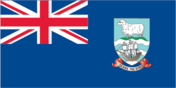
- Colony of the Falkland Islands
- Faroe Islands
Other political or pressure groups
- Peronist-dominated labor movement, General Economic Confederation (Peronistleaning association of small businessmen), Argentine Industrial Union (manufacturers' association), Argentine Rural Society (large landowners' association), business organizations, students, and the Catholic Church
- Democratic Labor Party (anti-Communist Labor Party splinter group)
Political parties
several civilian political groupings remain potentially influential, despite the suspension of all partisan activity; these include Justicialist Party (Peronist coalition that formerly governed) and the Radical Civic Union, center-left party providing the chief civilian opposition to the Peronists; the Moscow-oriented Communist Party remains legal, but extreme leftist splinter groups have been outlawed
Political subdivisions
- 22 provinces, 1 district (Federal Capital), and 1 territory
- 6 states and 2 territories — Australian Capital Territory (Canberra) and Northern Territory
- local government is confined to capital
- 7 districts, 49 communes, 1 town
Suffrage
- universal over age 18
- universal, but not compulsory, over age 21
Type
- republic; under military rule since 1976
- federal parliamentary state recognizing Elizabeth II as sovereign or head of state
- British crown colony
- self-governing province within the Kingdom of Denmark; 2 representatives in Danish parliament
Economy
Agriculture
- main products — cereals, oilseed, livestock products; Argentina is a major world exporter of temperate zone foodstuffs AUSTRALIA ARGENTINA (Continued)
- large areas devoted to livestock grazing; 60% of area used for crops is planted in wheat; major products — wool, livestock, wheat, fruits, sugarcane; self-sufficient in food; caloric intake, 3,300 calories per day per capita
- Colony — predominantly sheep farming
- sheep and cattle grazing
Aid
- economic — Australian aid abroad in Australian dollars, $662 million (FY81-82); for Papua New Guinea in US dollars, $290 million per year 1981-86
- economic — (1970-79) Western (non-US) countries, ODA and OOF, $24 million
Budget
- (1980) approximately $20 billion at exchange rate of first quarter 1980
- expenditures, A$40.86 billion; receipts A$40.72 billion (FY81-82)
- (FY78) expenditures $73.3 million, revenues $73.3 million
Crude steel
- 3.2 million metric tons produced (1979), 120 kg per capita
- 7.8 million metric tons produced (FY76), 560 kg per capita
Electric power
- 10,500,000 kW capacity (1981); 40.0 billion kWh produced (1981), 1,454 kWh per capita
- 26,358,140 kW capacity (1980); 98.843 billion kWh produced (1980), 6,728 kWh per capita
- 1,250 kW capacity (1980); 2.5 million kWh produced (1980), 1,150 kWh per capita
- 48,000 kW capacity (1980); 90 million kWh produced (1980), 2,140 kWh per capita
Exports
- $8.0 billion (f.o.b., 1980); meat, corn, wheat, wool, hides, oilseed
- $18.7 billion (f.o.b., 1979); principal products (1979) — 44% agricultural products, 14% metalliferous ores, 10% wool, 10% coal
- Colony— $5.8 million (1978); wool, hides and skins, and other; dependencies — no exports in 1968 or 1969
- $150.7 million (f.o.b., 1979); mostly fish and fish products
Fiscal year
- calendar year
- 1 July-30 June
- calendar year beginning 1 January 1979
Fishing
- catch 537,323 metric tons (1978); exports $42 million (1976 est.)
- catch 122,947 metric tons (1978); exports $94.5 million (FY75), imports $86.2 million (FY75)
- catch 261,800 metric tons (1979); exports, $131.6 million (1979 est.)
GDP
$420.8 million (1979), about $8,280 per capita
GNP
- $143 billion (1980), $5,257 per capita; 69% consumption, 26% investment, 6% net foreign demand (1979); real GDP growth rate 1980, -0.3%
- $120.4 billion (1979), $8,360 per capita; 60% private consumption, 16% government current expenditure, 24% investment (1975); 2.8% real average annual growth (1979)
Government budget
Colony — revenues, $5.1 million (FY68); expenditures, $5.3 million (1980-81)
Imports
- $9.4 billion (f.o.b., 1980); machinery, fuel and lubricating oils, iron and steel, intermediate industrial products Major trade partners (1980): exports— 9% Brazil, 9% Netherlands, 8% Italy, 9% US, 6% FRG, 5% USSR, Japan, and Spain; imports— 26% US, 10% Brazil, 11% FRG, 4% Italy, 11% Japan, 3% Chile
- $18.3 billion (c.i.f., 1979); principal products (1977) — 41% manufactured raw materials, 28% capital equipment, 25% consumer goods
- Colony — $3.4 million (1978); food, clothing, fuels, and machinery; dependencies — $8,368 (1969); mineral fuels and lubricants, food, and machinery
- $205.8 million (c.i.f., 1979); machinery and transport equipment, petroleum and petroleum products, food products
Major industries
- food processing (especially meatpacking), motor vehicles, consumer durables, textiles, chemicals, printing, and metallurgy
- mining, industrial and transportation equipment, food processing, chemicals
- Colony — wool processing
Major industry
fishing
Major trade partners
- (1979) exports — 28% Japan, 12% US, 5% New Zealand, 4% UK; imports— 23% US, 11% UK, 18% Japan
- nearly all exports to the UK, also some to the Netherlands and to Japan; imports from Curacao, Japan, and the UK
- 48.1% Denmark, 8.9% US, 8.6% Norway, 8.1% UK (1978)
Monetary conversion rate
- 1,930 pesos=US$l (midSeptember 1980)
- 1.0 Australian dollar=US$1.08 (February 1982)
- 1 Falkland Island pound = US$2.3263
- 5.261 Danish Kroner=US$l
Communications
Airfields
- 2,446 total, 2,147 usable; 108 with permanentsurface runways; 24 with runways 2,440-3,659 m, 311 with runways 1,220-2,439 m
- 1,584 total, 1,526 usable; 207 with permanentsurface runways, 2 with runways over 3,660 m; 16 with runways 2,440-3,659 m, 570 with runways 1,220-2,439 m
- 2 total, 2 usable, 1 with permanent surface runways; 1 with runways 1,200-2,439 m
- 1 with permanent-surface runways 1,220-2,439
Civil air
- 67 major transport aircraft including 2 leased in
- around 150 major transport aircraft
- no major transport aircraft
- no major transport aircraft
Highways
- 208,100 km total, of which 47,550 km paved, 39,500 km gravel, 101,000 km improved earth, 20,300 km unimproved earth
- 837,872 km total (1980); 207,650 km paved, 205,454 km gravel, crushed stone, or stabilized soil surface, 424,768 km unimproved earth
- 510 km total; 30 km paved, 80 km gravel, and 400 km unimproved earth
- 200 km
Inland waterways
- 11,000 km navigable
- 8,368 km; mainly by small, shallowdraft craft
Military budget
- proposed for fiscal year ending 31 December 1981, $3,426,600; about 16.6% of total central government budget
- for fiscal year ending 30 June 1982, $4.7 billion; about 10.1% of total central government budget
Military manpower
- males 15-49, 7,040,000; 5,715,000 fit for military service; 236,000 reach military age (20) annually
- males 15-49, 3,907,000; 3,334,000 fit for military service; 131,000 reach military age (17) annually
- males 15-49 included with Denmark nN PAPUA ^ &f GUfflEA
Pipelines
- 4,090 km crude oil; 2,200 km refined products; 8,172 km natural gas
- crude oil, 740 km; refined products, 340 km; natural gas, 6,947 km
Ports
- 7 major, 21 minor
- 12 major, numerous minor
- 1 major (Port Stanley), 4 minor
- 1 minor
Railroads
- 39,738 km total; 3,086 km standard gauge (1.435 m), 22,788 km broad gauge (1.676 m), 13,461 km meter gauge (1.000 m), 403 km 0.750-meter gauge; of total in country, 260 km are electrified
- 42,855 km total (1980); 9,689 km 1.60-meter gauge, 15,783 km standard gauge (1.435 m), 17,383 km 1.067-meter gauge; 800 km electrified (June 1962); government owned (except for few hundred kilometers of privately owned track)
- none
- none
Telecommunications
- extensive modern system; telephone network has 2.76 million sets (10.3 per 100 popl.), radio relay widely used; 1 satellite station with 2 Atlantic Ocean antennas; 160 AM, 12 FM, and 74 TV stations DEFENSE FORCES
- very good international and domestic service; 7.4 million telephones (52 per 100 popl.); 223 AM, 5 FM, and 111 TV stations; 3 earth satellite stations; submarine cables to New Zealand, New Guinea, Singapore, Malaysia, Hong Kong, and Guam DEFENSE FORCES
- government-operated radiotelephone networks providing effective service to almost all points on both islands; approximately 530 telephones (est. 29.2 per 100 popl.); 1 AM station
- good international communications; fair domestic facilities; 15,000 telephones (35 per 100 popl.); 1 AM and 3 FM stations; 3 coaxial submarine cables DEFENSE FORCES