2024 Edition
CIA World Factbook 2024 (factbook.json @ b8538d78e87c)
Introduction
Background
The area that is modern-day Ethiopia is rich in cultural and religious diversity with more than 80 ethnic groups. The oldest hominid yet found comes from Ethiopia, and Ethiopia was the second country to officially adopt Christianity in the 4th century A.D. A series of monarchies ruled the area that is now Ethiopia from 980 B.C. to 1855, when the Amhara kingdoms of northern Ethiopia united in an empire under Tewodros II. Many Ethiopians still speak reverently about the Battle of Adwa in 1896, when they defeated Italian forces and won their freedom from colonial rule. Emperor Haile SELASSIE became an internationally renowned figure in 1935, when he unsuccessfully appealed to the League of Nations to prevent Italy from occupying Ethiopia from 1936 to 1941. SELASSIE survived an attempted coup in 1960, annexed modern-day Eritrea in 1962, and played a leading role in establishing the Organization of African Unity in 1963. However, in 1974, a military junta called the Derg deposed him and established a socialist state. Torn by bloody coups, uprisings, drought, and massive displacement, the Derg regime was toppled in 1991 by a coalition of opposing forces, the Ethiopian People's Revolutionary Democratic Front (EPRDF). The EPRDF became an ethno-federalist political coalition that ruled Ethiopia from 1991 until its dissolution in 2019. Ethiopia adopted its constitution in 1994 and held its first multiparty elections in 1995. A two-and-a-half-year border war with Eritrea in the late 1990s ended with a peace treaty in 2000. Ethiopia subsequently rejected the 2007 Eritrea-Ethiopia Boundary Commission demarcation. This resulted in more than a decade of a tense “no peace, no war” stalemate between the two countries. In 2012, longtime Prime Minister MELES Zenawi died in office and was replaced by his Deputy Prime Minister HAILEMARIAM Desalegn, marking the first peaceful transition of power in decades. Following a wave of popular dissent and anti-government protest that began in 2015, HAILEMARIAM resigned in 2018, and ABIY Ahmed Ali took office the same year as Ethiopia's first ethnic Oromo prime minister. In 2018, ABIY promoted a rapprochement between Ethiopia and Eritrea that was marked with a peace agreement and a reopening of their shared border. In 2019, Ethiopia's nearly 30-year ethnic-based ruling coalition, the EPRDF, merged into a single unity party called the Prosperity Party; however, the lead coalition party, the Tigray People’s Liberation Front (TPLF), declined to join. In 2020, a military conflict erupted between forces aligned with the TPLF and the Ethiopian military. The conflict -- which was marked by atrocities committed by all parties -- ended in 2022 with a cessation of hostilities agreement between the TPLF and the Ethiopian Government. However, Ethiopia continues to experience ethnic-based violence as other groups -- including the Oromo Liberation Army (OLA) and Amhara militia Fano -- seek concessions from the Ethiopian Government.
Geography
Area
- land
- 1,096,570 sq km
- note
- note: area numbers are approximate since a large portion of the Ethiopia-Somalia border is undefined
- total
- 1,104,300 sq km
- water
- 7,730 sq km
Area - comparative
slightly less than twice the size of Texas
Climate
tropical monsoon with wide topographic-induced variation
Coastline
0 km (landlocked)
Elevation
- highest point
- Ras Dejen 4,550 m
- lowest point
- Danakil Depression -125 m
- mean elevation
- 1,330 m
Geographic coordinates
8 00 N, 38 00 E
Geography - note
note 1: landlocked -- entire coastline along the Red Sea was lost with the de jure independence of Eritrea on 24 May 1993; Ethiopia is, therefore, the most populous landlocked country in the world; the Blue Nile, the chief headstream of the Nile by water volume, rises in T'ana Hayk (Lake Tana) in northwest Ethiopianote 2: three major crops may have originated in Ethiopia: coffee (almost certainly), grain sorghum, and castor bean
Irrigated land
1,813 sq km (2020)
Land boundaries
- border countries
- Djibouti 342 km; Eritrea 1,033 km; Kenya 867 km; Somalia 1,640 km; South Sudan 1,299 km; Sudan 744 km
- total
- 5,925 km
Land use
- agricultural land
- 36.3% (2018 est.)
- agricultural land: arable land
- arable land: 15.2% (2018 est.)
- agricultural land: permanent crops
- permanent crops: 1.1% (2018 est.)
- agricultural land: permanent pasture
- permanent pasture: 20% (2018 est.)
- forest
- 12.2% (2018 est.)
- other
- 51.5% (2018 est.)
Location
Eastern Africa, west of Somalia
Major aquifers
Ogaden-Juba Basin, Sudd Basin (Umm Ruwaba Aquifer)
Major lakes (area sq km)
- fresh water lake(s)
- Lake Tana - 3,600 sq km; Abaya Hayk - 1,160 sq km; Ch'amo Hayk - 550 sq km
- salt water lake(s)
- Lake Turkana (shared with Kenya) - 6,400 sq km; Abhe Bid Hayk/Abhe Bad (shared with Djibouti) - 780 sq km;
Major rivers (by length in km)
Blue Nile river source (shared with Sudan [m]) - 1,600 kmnote – [s] after country name indicates river source; [m] after country name indicates river mouth
Major watersheds (area sq km)
Atlantic Ocean drainage: (Mediterranean Sea) Nile (3,254,853 sq km)
Map references
Africa
Maritime claims
none (landlocked)
Natural hazards
geologically active Great Rift Valley susceptible to earthquakes, volcanic eruptions; frequent droughtsvolcanism: volcanic activity in the Great Rift Valley; Erta Ale (613 m), which has caused frequent lava flows in recent years, is the country's most active volcano; Dabbahu became active in 2005, forcing evacuations; other historically active volcanoes include Alayta, Dalaffilla, Dallol, Dama Ali, Fentale, Kone, Manda Hararo, and Manda-Inakir
Natural resources
small reserves of gold, platinum, copper, potash, natural gas, hydropower
Population distribution
highest density is found in the highlands of the north and middle areas of the country, particularly around the centrally located capital city of Addis Ababa; the far east and southeast are sparsely populated as shown in this population distribution map
Terrain
high plateau with central mountain range divided by Great Rift Valley
People and Society
Age structure
- 0-14 years
- 38.7% (male 23,092,496/female 22,765,882)
- 15-64 years
- 58% (male 34,175,328/female 34,536,238)
- 65 years and over
- 3.4% (2024 est.) (male 1,794,269/female 2,186,085)
Alcohol consumption per capita
- beer
- 0.92 liters of pure alcohol (2019 est.)
- other alcohols
- 0.03 liters of pure alcohol (2019 est.)
- spirits
- 0.2 liters of pure alcohol (2019 est.)
- total
- 1.16 liters of pure alcohol (2019 est.)
- wine
- 0 liters of pure alcohol (2019 est.)
Birth rate
29.6 births/1,000 population (2024 est.)
Child marriage
- men married by age 18
- 5% (2016 est.)
- women married by age 15
- 14.1%
- women married by age 18
- 40.3%
Children under the age of 5 years underweight
21.1% (2019)
Contraceptive prevalence rate
37.7% (2020)
Current health expenditure
3.5% of GDP (2020)
Currently married women (ages 15-49)
67.5% (2023 est.)
Death rate
5.8 deaths/1,000 population (2024 est.)
Demographic profile
Ethiopia is a predominantly agricultural country – nearly 80% of the population lives in rural areas – that is in the early stages of demographic transition. Infant, child, and maternal mortality have fallen sharply over the past decade, but the total fertility rate has declined more slowly and the population continues to grow. The rising age of marriage and the increasing proportion of women remaining single have contributed to fertility reduction. While the use of modern contraceptive methods among married women has increased significantly from 6 percent in 2000 to 27 percent in 2012, the overall rate is still quite low. Ethiopia’s rapid population growth is putting increasing pressure on land resources, expanding environmental degradation, and raising vulnerability to food shortages. With about 40 percent of the population below the age of 15 and a fertility rate of 4 children per woman (and even higher in rural areas), Ethiopia will have to make further progress in meeting its family planning needs if it is to achieve the age structure necessary for reaping a demographic dividend in the coming decades. Poverty, drought, political repression, and forced government resettlement have driven Ethiopia’s internal and external migration since the 1960s. Before the 1974 revolution, only small numbers of the Ethiopian elite went abroad to study and then returned home, but under the brutal Derg regime thousands fled the country, primarily as refugees. Between 1982 and 1991 there was a new wave of migration to the West for family reunification. Since the defeat of the Derg in 1991, Ethiopians have migrated to escape violence among some of the country’s myriad ethnic groups or to pursue economic opportunities. Internal and international trafficking of women and children for domestic work and prostitution is a growing problem.
Dependency ratios
- elderly dependency ratio
- 5.5
- potential support ratio
- 18.1 (2021 est.)
- total dependency ratio
- 75.7
- youth dependency ratio
- 70.2
Drinking water source
- improved: rural
- rural: 70.2% of population
- improved: total
- total: 76.4% of population
- improved: urban
- urban: 98.5% of population
- unimproved: rural
- rural: 29.8% of population
- unimproved: total
- total: 23.6% of population (2020 est.)
- unimproved: urban
- urban: 1.5% of population
Education expenditures
4.5% of GDP (2019 est.)
Ethnic groups
Oromo 35.8%, Amhara 24.1%, Somali 7.2%, Tigray 5.7%, Sidama 4.1%, Guragie 2.6%, Welaita 2.3%, Afar 2.2%, Silte 1.3%, Kefficho 1.2%, other 13.5% (2022 est.)
Gross reproduction rate
1.89 (2024 est.)
Hospital bed density
0.3 beds/1,000 population (2016)
Infant mortality rate
- female
- 27.6 deaths/1,000 live births
- male
- 37.4 deaths/1,000 live births
- total
- 32.6 deaths/1,000 live births (2024 est.)
Languages
- Languages
- Oromo (official regional working language) 33.8%, Amharic (official national language) 29.3%, Somali (official regional working language) 6.2%, Tigrigna (Tigrinya) (official regional working language) 5.9%, Sidamo 4%, Wolaytta 2.2%, Gurage 2%, Afar (official regional working language) 1.7%, Hadiyya 1.7%, Gamo 1.5%, Gedeo 1.3%, Opuuo 1.2%, Kafa 1.1%, other 8.1%, English (2007 est.)
- major-language sample(s)
- Kitaaba Addunyaa Waan Qabataamaatiif - Kan Madda Odeeffannoo bu’uraawaatiif baay’ee barbaachisaa ta’e. (Oromo)የአለም እውነታ መጽሐፍ፣ ለመሠረታዊ መረጃ እጅግ አስፈላጊ የሆነ ምንጭ። (Amharic)The World Factbook, the indispensable source for basic information.
Life expectancy at birth
- female
- 70 years
- male
- 65.4 years
- total population
- 67.7 years (2024 est.)
Literacy
- definition
- age 15 and over can read and write
- female
- 44.4% (2017)
- male
- 57.2%
- total population
- 51.8%
Major urban areas - population
5.461 million ADDIS ABABA (capital) (2023)
Maternal mortality ratio
267 deaths/100,000 live births (2020 est.)
Median age
- female
- 20.7 years
- male
- 20.2 years
- total
- 20.4 years (2024 est.)
Mother's mean age at first birth
- 19.3 years (2019 est.)
- note
- note: data represents median age at first birth among women 20-49
Nationality
- adjective
- Ethiopian
- noun
- Ethiopian(s)
Net migration rate
-0.1 migrant(s)/1,000 population (2024 est.)
Obesity - adult prevalence rate
4.5% (2016)
Physician density
0.11 physicians/1,000 population (2020)
Population
- female
- 59,488,205 (2024 est.)
- male
- 59,062,093
- total
- 118,550,298
Population distribution
highest density is found in the highlands of the north and middle areas of the country, particularly around the centrally located capital city of Addis Ababa; the far east and southeast are sparsely populated as shown in this population distribution map
Population growth rate
2.37% (2024 est.)
Religions
Ethiopian Orthodox 43.8%, Muslim 31.3%, Protestant 22.8%, Catholic 0.7%, traditional 0.6%, other 0.8% (2016 est.)
Sanitation facility access
- improved: rural
- rural: 8.1% of population
- improved: total
- total: 17.7% of population
- improved: urban
- urban: 52.5% of population
- unimproved: rural
- rural: 91.9% of population
- unimproved: total
- total: 82.3% of population (2020 est.)
- unimproved: urban
- urban: 47.5% of population
School life expectancy (primary to tertiary education)
- female
- 8 years (2012)
- male
- 8 years
- total
- 9 years
Sex ratio
- 0-14 years
- 1.01 male(s)/female
- 15-64 years
- 0.99 male(s)/female
- 65 years and over
- 0.82 male(s)/female
- at birth
- 1.03 male(s)/female
- total population
- 0.99 male(s)/female (2024 est.)
Tobacco use
- female
- 1.3% (2020 est.)
- male
- 8.8% (2020 est.)
- total
- 5.1% (2020 est.)
Total fertility rate
3.84 children born/woman (2024 est.)
Urbanization
- rate of urbanization
- 4.4% annual rate of change (2020-25 est.)
- urban population
- 23.2% of total population (2023)
Government
Administrative divisions
12 ethnically based regional states (kililoch, singular - kilil) and 2 chartered cities* (astedader akabibiwach, singular - astedader akabibi); Adis Abeba* (Addis Ababa), Afar, Amara (Amhara), Binshangul Gumuz, Dire Dawa*, Gambela Hizboch (Gambela), Hareri Hizb (Harari), Oromia, Sidama, Sumale, Tigray, YeDebub Biheroch Bihereseboch na Hizboch (Southern Nations, Nationalities and Peoples), YeDebub M'irab Ityop'iya Hizboch (Southwest Ethiopia Peoples), Southern Ethiopia Peoples
Capital
- etymology
- the name in Amharic means "new flower" and was bestowed on the city in 1889, three years after its founding
- geographic coordinates
- 9 02 N, 38 42 E
- name
- Addis Ababa
- time difference
- UTC+3 (8 hours ahead of Washington, DC, during Standard Time)
Citizenship
- citizenship by birth
- no
- citizenship by descent only
- at least one parent must be a citizen of Ethiopia
- dual citizenship recognized
- no
- residency requirement for naturalization
- 4 years
Constitution
- amendments
- proposals submitted for discussion require two-thirds majority approval in either house of Parliament or majority approval of one-third of the State Councils; passage of amendments other than constitutional articles on fundamental rights and freedoms and the initiation and amendment of the constitution requires two-thirds majority vote in a joint session of Parliament and majority vote by two thirds of the State Councils; passage of amendments affecting rights and freedoms and amendment procedures requires two-thirds majority vote in each house of Parliament and majority vote by all the State Councils
- history
- several previous; latest drafted June 1994, adopted 8 December 1994, entered into force 21 August 1995
Country name
- abbreviation
- FDRE
- conventional long form
- Federal Democratic Republic of Ethiopia
- conventional short form
- Ethiopia
- etymology
- the country name derives from the Greek word "Aethiopia," which in classical times referred to lands south of Egypt in the Upper Nile region
- former
- Abyssinia, Italian East Africa
- local long form
- YeItyop'iya Federalawi Demokrasiyawi Ripeblik
- local short form
- Ityop'iya
Diplomatic representation from the US
- chief of mission
- Ambassador Ervin MASSINGA (since 4 October 2023)
- email address and website
- AddisACS@state.govhttps://et.usembassy.gov/
- embassy
- Entoto Street, P.O. Box 1014, Addis Ababa
- FAX
- [251] 111-24-24-01
- mailing address
- 2030 Addis Ababa Place, Washington DC 20521-2030
- telephone
- [251] 111-30-60-00
Diplomatic representation in the US
- chancery
- 3506 International Drive NW, Washington, DC 20008
- chief of mission
- Ambassador (vacant); Chargé d'Affaires Aster Mamo ANA (since 31 July 2024)
- consulate(s) general
- Los Angeles, St. Paul (MN)
- email address and website
- ethiopia@ethiopianembassy.orghttps://ethiopianembassy.org/
- FAX
- [1] (202) 587-0195
- telephone
- [1] (202) 364-1200
Executive branch
- cabinet
- Council of Ministers selected by the prime minister and approved by the House of People's Representatives
- chief of state
- President TAYE Atske Selassie (since 7 October 2024)
- election results
- 2021: SAHLE-WORK Zewde reelected president during joint session of Parliament, vote - 659 (unanimous); ABIY confirmed Prime Minister by House of Peoples' Representatives (4 October 2021)2018: SAHLE-WORK Zewde elected president during joint session of Parliament, vote - 659 (unanimous); note - snap election held on 25 October 2018 due to resignation of President MULATA Teshome
- elections/appointments
- president indirectly elected by both chambers of Parliament for a 6-year term (eligible for a second term); election held on 21 June 2021 and 30 September 2021 (the scheduled 29 August 2020 election was postponed by Prime Minister ABIY due to the COVID-19 pandemic); prime minister designated by the majority party following legislative elections
- head of government
- Prime Minister ABIY Ahmed Ali (since April 2018)
- note
- note: SAHLE-WORK Zewde is the first female elected head of state in Ethiopia
Flag description
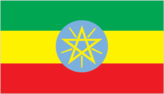
- three equal horizontal bands of green (top), yellow, and red, with a yellow pentagram and single yellow rays emanating from the angles between the points on a light blue disk centered on the three bands; green represents hope and the fertility of the land, yellow symbolizes justice and harmony, while red stands for sacrifice and heroism in the defense of the land; the blue of the disk symbolizes peace and the pentagram represents the unity and equality of the nationalities and peoples of Ethiopia
- note
- note: Ethiopia is the oldest independent country in Africa, and the three main colors of her flag (adopted ca. 1895) were so often appropriated by other African countries upon independence that they became known as the Pan-African colors; the emblem in the center of the current flag was added in 1996
Government type
federal parliamentary republic
Independence
oldest independent country in Africa and one of the oldest in the world - at least 2,000 years (may be traced to the Aksumite Kingdom, which coalesced in the first century B.C.)
International law organization participation
has not submitted an ICJ jurisdiction declaration; non-party state to the ICCt
International organization participation
ACP, AfDB, ATMIS, AU, BRICS, COMESA, EITI, FAO, G-24, G-77, IAEA, IBRD, ICAO, ICRM, IDA, IFAD, IFC, IFRCS, IGAD, ILO, IMF, IMO, Interpol, IOC, IOM, IPU, ISO, ITSO, ITU, ITUC (NGOs), MIGA, NAM, OPCW, PCA, UN, UNCTAD, UNESCO, UNHCR, UNIDO, UNMISS, UNOOSA, UNWTO, UPU, WCO, WFTU (NGOs), WHO, WIPO, WMO, WTO (accession candidate)
Judicial branch
- highest court(s)
- Federal Supreme Court (consists of 11 judges); note - the House of Federation has jurisdiction for all constitutional issues
- judge selection and term of office
- president and vice president of Federal Supreme Court recommended by the prime minister and appointed by the House of People's Representatives; other Supreme Court judges nominated by the Federal Judicial Administrative Council (a 10-member body chaired by the president of the Federal Supreme Court) and appointed by the House of People's Representatives; judges serve until retirement at age 60
- subordinate courts
- federal high courts and federal courts of first instance; state court systems (mirror structure of federal system); sharia courts and customary and traditional courts
Legal system
civil law system
Legislative branch
- description
- bicameral Parliament consists of:House of Federation or Yefedereshein Mikir Bete (153 seats maximum; 144 seats current; members indirectly elected by state assemblies to serve 5-year terms)House of People's Representatives or Yehizb Tewokayoch Mekir Bete (547 seats maximum; 470 seats current; members directly elected in single-seat constituencies by simple majority vote; 22 seats reserved for minorities; all members serve 5-year terms)
- election results
- House of Federation - percent of vote by party/coalition - NA; seats by party/coalition - NA; composition - men 102, women 43, percentage women 29.7%House of Representatives - percent of vote by party/coalition - NA; seats by party/coalition - Prosperity Party 454, NAMA 5, EZEMA 4, Gedeo People's Democratic organization 2, Kucha People Democratic Party 1, independent 4; composition - men 275, women 195, percentage women 41.3%; note - total Parliament percentage women 38.9%
- elections
- House of Federation - last held 4 October 2021 (next expected in October 2026)House of People's Representatives - last held in two parts on 21 June 2021 and 30 September 2021 (next expected in June 2026)
- note
- note: the House of Federation is responsible for interpreting the constitution and federal-regional issues, and the House of People's Representatives is responsible for passing legislation
National anthem
- lyrics/music
- DEREJE Melaku Mengesha/SOLOMON Lulu
- name
- "Whedefit Gesgeshi Woud Enat Ethiopia" (March Forward, Dear Mother Ethiopia)
- note
- note: adopted 1992
National heritage
- selected World Heritage Site locales
- Rock-Hewn Churches, Lalibela (c); Simien National Park (n); Fasil Ghebbi, Gondar Region (c); Aksum (c); Lower Valley of the Awash (c); Lower Valley of the Omo (c); Tiya (c); Harar Jugol, the Fortified Historic Town (c); Konso Cultural Landscape (c); Gedeo Cultural Landscape (c); Bale Mountains National Park (n); Melka Kunture and Balchit: Archaeological and Palaeontological Sites in the Highland Area of Ethiopia (c)
- total World Heritage Sites
- 12 (10 cultural, 2 natural)
National holiday
Derg Downfall Day (defeat of MENGISTU regime), 28 May (1991)
National symbol(s)
Abyssinian lion (traditional), yellow pentagram with five rays of light on a blue field (promoted by current government); national colors: green, yellow, red
Political parties
Ethiopian Citizens for Social Justice and Democracy or EZEMA Gedeo People's Democratic PartyIndependentKucha People Democratic Party National Movement of Amhara or NAMAProsperity Party or PP
Suffrage
18 years of age; universal
Economy
Agricultural products
- maize, wheat, cereals, sorghum, milk, barley, taro, potatoes, millet, beans (2022)
- note
- note: top ten agricultural products based on tonnage
Average household expenditures
- on alcohol and tobacco
- 3.1% of household expenditures (2022 est.)
- on food
- 39.7% of household expenditures (2022 est.)
Budget
- expenditures
- $8.83 billion (2022 est.)
- note
- note: central government revenues and expenses (excluding grants/extrabudgetary units/social security funds) converted to US dollars at average official exchange rate for year indicated
- revenues
- $7.009 billion (2022 est.)
Credit ratings
- Fitch rating
- B (2014)
- Moody's rating
- B2 (2020)
- note
- note: The year refers to the year in which the current credit rating was first obtained.
- Standard & Poors rating
- B (2014)
Current account balance
- Current account balance 2021
- -$4.507 billion (2021 est.)
- Current account balance 2022
- -$5.16 billion (2022 est.)
- Current account balance 2023
- -$4.788 billion (2023 est.)
- note
- note: balance of payments - net trade and primary/secondary income in current dollars
Debt - external
- Debt - external 2022
- $21.522 billion (2022 est.)
- note
- note: present value of external debt in current US dollars
Economic overview
growing Horn of Africa construction- and services-based economy; port access via Djibouti and Eritrea; widespread but declining poverty; COVID-19, locust invasion, and Tigray crisis disruptions; public investment increases; second largest African labor force
Exchange rates
- Currency
- birr (ETB) per US dollar -
- Exchange rates 2019
- 29.07 (2019 est.)
- Exchange rates 2020
- 34.927 (2020 est.)
- Exchange rates 2021
- 43.734 (2021 est.)
- Exchange rates 2022
- 51.756 (2022 est.)
- Exchange rates 2023
- 54.601 (2023 est.)
Exports
- Exports 2021
- $9.496 billion (2021 est.)
- Exports 2022
- $10.971 billion (2022 est.)
- Exports 2023
- $10.865 billion (2023 est.)
- note
- note: balance of payments - exports of goods and services in current dollars
Exports - commodities
- coffee, gold, garments, cut flowers, vegetables (2022)
- note
- note: top five export commodities based on value in dollars
Exports - partners
- UAE 17%, US 13%, Germany 6%, Saudi Arabia 6%, Somalia 6% (2022)
- note
- note: top five export partners based on percentage share of exports
GDP - composition, by end use
- exports of goods and services
- 6.6% (2023 est.)
- government consumption
- 6.3% (2023 est.)
- household consumption
- 78.9% (2023 est.)
- imports of goods and services
- -14% (2023 est.)
- investment in fixed capital
- 22.2% (2023 est.)
- note
- note: figures may not total 100% due to rounding or gaps in data collection
GDP - composition, by sector of origin
- agriculture
- 35.8% (2023 est.)
- industry
- 24.5% (2023 est.)
- note
- note: figures may not total 100% due to non-allocated consumption not captured in sector-reported data
- services
- 37% (2023 est.)
GDP (official exchange rate)
- $163.698 billion (2023 est.)
- note
- note: data in current dollars at official exchange rate
Gini Index coefficient - distribution of family income
- Gini Index coefficient - distribution of family income 2015
- 35 (2015 est.)
- note
- note: index (0-100) of income distribution; higher values represent greater inequality
Household income or consumption by percentage share
- highest 10%
- 28.5% (2015 est.)
- lowest 10%
- 2.9% (2015 est.)
- note
- note: % share of income accruing to lowest and highest 10% of population
Imports
- Imports 2021
- $20.859 billion (2021 est.)
- Imports 2022
- $24.187 billion (2022 est.)
- Imports 2023
- $22.951 billion (2023 est.)
- note
- note: balance of payments - imports of goods and services in current dollars
Imports - commodities
- wheat, refined petroleum, fertilizers, vaccines, palm oil (2022)
- note
- note: top five import commodities based on value in dollars
Imports - partners
- China 24%, US 9%, India 8%, UAE 6%, UK 4% (2022)
- note
- note: top five import partners based on percentage share of imports
Industrial production growth rate
- 6.93% (2023 est.)
- note
- note: annual % change in industrial value added based on constant local currency
Industries
food processing, beverages, textiles, leather, garments, chemicals, metals processing, cement
Inflation rate (consumer prices)
- Inflation rate (consumer prices) 2021
- 26.84% (2021 est.)
- Inflation rate (consumer prices) 2022
- 33.89% (2022 est.)
- Inflation rate (consumer prices) 2023
- 30.22% (2023 est.)
- note
- note: annual % change based on consumer prices
Labor force
- 61.664 million (2023 est.)
- note
- note: number of people ages 15 or older who are employed or seeking work
Population below poverty line
- 23.5% (2015 est.)
- note
- note: % of population with income below national poverty line
Public debt
- note
- note: central government debt as a % of GDP
- Public debt 2019
- 31.45% of GDP (2019 est.)
Real GDP (purchasing power parity)
- note
- note: data in 2021 dollars
- Real GDP (purchasing power parity) 2021
- $316.145 billion (2021 est.)
- Real GDP (purchasing power parity) 2022
- $332.968 billion (2022 est.)
- Real GDP (purchasing power parity) 2023
- $354.604 billion (2023 est.)
Real GDP growth rate
- note
- note: annual GDP % growth based on constant local currency
- Real GDP growth rate 2021
- 5.64% (2021 est.)
- Real GDP growth rate 2022
- 5.32% (2022 est.)
- Real GDP growth rate 2023
- 6.5% (2023 est.)
Real GDP per capita
- note
- note: data in 2021 dollars
- Real GDP per capita 2021
- $2,600 (2021 est.)
- Real GDP per capita 2022
- $2,700 (2022 est.)
- Real GDP per capita 2023
- $2,800 (2023 est.)
Remittances
- note
- note: personal transfers and compensation between resident and non-resident individuals/households/entities
- Remittances 2021
- 0.4% of GDP (2021 est.)
- Remittances 2022
- 0.4% of GDP (2022 est.)
- Remittances 2023
- 0.36% of GDP (2023 est.)
Reserves of foreign exchange and gold
- note
- note: holdings of gold (year-end prices)/foreign exchange/special drawing rights in current dollars
- Reserves of foreign exchange and gold 2018
- $3.987 billion (2018 est.)
- Reserves of foreign exchange and gold 2019
- $2.993 billion (2019 est.)
- Reserves of foreign exchange and gold 2020
- $3.046 billion (2020 est.)
Taxes and other revenues
- 4.51% (of GDP) (2022 est.)
- note
- note: central government tax revenue as a % of GDP
Unemployment rate
- note
- note: % of labor force seeking employment
- Unemployment rate 2021
- 3.94% (2021 est.)
- Unemployment rate 2022
- 3.49% (2022 est.)
- Unemployment rate 2023
- 3.5% (2023 est.)
Youth unemployment rate (ages 15-24)
- female
- 7.4% (2023 est.)
- male
- 4% (2023 est.)
- note
- note: % of labor force ages 15-24 seeking employment
- total
- 5.6% (2023 est.)
Energy
Carbon dioxide emissions
- from coal and metallurgical coke
- 1.38 million metric tonnes of CO2 (2022 est.)
- from petroleum and other liquids
- 15.852 million metric tonnes of CO2 (2022 est.)
- total emissions
- 17.232 million metric tonnes of CO2 (2022 est.)
Coal
- consumption
- 660,000 metric tons (2022 est.)
- exports
- 1,000 metric tons (2022 est.)
- imports
- 666,000 metric tons (2022 est.)
- production
- 8,000 metric tons (2022 est.)
Electricity
- consumption
- 10.596 billion kWh (2022 est.)
- exports
- 1.665 billion kWh (2022 est.)
- installed generating capacity
- 5.73 million kW (2022 est.)
- transmission/distribution losses
- 3.154 billion kWh (2022 est.)
Electricity access
- electrification - rural areas
- 43%
- electrification - total population
- 55% (2022 est.)
- electrification - urban areas
- 94%
Electricity generation sources
- biomass and waste
- 0.2% of total installed capacity (2022 est.)
- hydroelectricity
- 95.7% of total installed capacity (2022 est.)
- solar
- 0.2% of total installed capacity (2022 est.)
- wind
- 3.8% of total installed capacity (2022 est.)
Energy consumption per capita
- Total energy consumption per capita 2022
- 2.34 million Btu/person (2022 est.)
Natural gas
- proven reserves
- 24.919 billion cubic meters (2021 est.)
Petroleum
- crude oil estimated reserves
- 428,000 barrels (2021 est.)
- refined petroleum consumption
- 110,000 bbl/day (2022 est.)
Communications
Broadband - fixed subscriptions
- subscriptions per 100 inhabitants
- 0.2 (2020 est.)
- total
- 212,000 (2020 est.)
Broadcast media
10 public/state broadcasters; 9 public/state radio stations; 13 commercial FM radio stations; 18 commercial TV stations; 45 community radio stations; 5 community TV stations (2023)
Internet country code
.et
Internet users
- percent of population
- 17% (2021 est.)
- total
- 20.4 million (2021 est.)
Telecommunication systems
- domestic
- fixed-line subscriptions less than 1 per 100 while mobile-cellular stands at a little over 54 per 100 people (2021)
- general assessment
- Ethio telecom is the major provider, but no longer has a complete monopoly on all telecom services; a consortium led by Kenyan Safaricom launched service in October 2022; the World Bank in early 2021 provided a $200 million loan to help develop the country’s digital transformation, while the government has embarked on its 2020-2030 program as well as its Digital Ethiopia 2025 strategy, both aimed at making better use of digital technologies to promote socioeconomic development (2023)
- international
- country code - 251; open-wire to Sudan and Djibouti; microwave radio relay to Kenya and Djibouti; 2 domestic satellites provide the national trunk service; satellite earth stations - 3 Intelsat (1 Atlantic Ocean and 2 Pacific Ocean) (2016)
Telephones - fixed lines
- subscriptions per 100 inhabitants
- (2022 est.) less than 1
- total subscriptions
- 862,000 (2022 est.)
Telephones - mobile cellular
- subscriptions per 100 inhabitants
- 56 (2022 est.)
- total subscriptions
- 69.123 million (2022 est.)
Transportation
Airports
57 (2024)
Civil aircraft registration country code prefix
ET
Heliports
1 (2024)
Merchant marine
- by type
- general cargo 10, oil tanker 2
- total
- 12 (2023)
National air transport system
- annual freight traffic on registered air carriers
- 2,089,280,000 (2018) mt-km
- annual passenger traffic on registered air carriers
- 11,501,244 (2018)
- inventory of registered aircraft operated by air carriers
- 75
- number of registered air carriers
- 1 (2020)
Railways
- note
- note: electric railway with redundant power supplies; under joint control of Djibouti and Ethiopia and managed by a Chinese contractor
- standard gauge
- 659 km (2017) 1.435-m gauge
- total
- 659 km (2017) (Ethiopian segment of the 756 km Addis Ababa-Djibouti railroad)
Roadways
- total
- 180,000 km (2023)
Military and Security
Military - note
the ENDF has been one of sub-Saharan Africa’s largest, most experienced, and best equipped militaries, but it suffered heavy casualties and equipment losses during the 2020-2022 Tigray conflict; the ENDF is focused on both external threats emanating from its neighbors and internal threats from multiple internal armed groups; since 1998, the ENDF has engaged in several conventional and counterinsurgency operations, including border wars with Eritrea (1998-2000) and Somalia (2006-2008) and internal conflicts with the Tigray regional state (2020-2022), several insurgent groups and ethnic militias (including the ethno-nationalist Amhara Fano), and the al-Shabaab terrorist groupas of 2024, the ENDF was conducting counterinsurgency operations against anti-government militants in several states, including in Oromya (Oromia) against the Oromo Liberation Army (OLA), an insurgent group that claims to be fighting for greater autonomy for the Oromo, Ethiopia's largest ethnic group; in 2022, militants from the Somalia-based al-Shabaab terrorist group launched an incursion into Ethiopia's Somali (Sumale) regional state, attacking villages and security forces; the Ethiopian Government claimed that regional security forces killed hundreds of al-Shabaab fighters and subsequently deployed additional ENDF troops into Somalia’s Gedo region to prevent further incursions (2024)
Military and security forces
- Ethiopian National Defense Force (ENDF): Ground Forces (Army), Ethiopian Air Force (Ye Ityopya Ayer Hayl, ETAF) (2024)
- note
- note 1: national and regional police forces are responsible for law enforcement and maintenance of order, with the ENDF sometimes providing internal security support; the Ethiopian Federal Police (EFP) report to the Prime Minister’s Officenote 2: the regional governments control regional security forces, including "special" paramilitary forces, which generally operate independently from the federal government and in some cases operate as regional defense forces maintaining national borders; in April 2023, the federal government ordered the integration of these regional special forces into the EFP or ENDF; in some cases, the regional governments have maintained former members of the special forces for “crowd control/Adma Bitena” as a separate unit within their security structures; local militias also operate across the country in loose and varying coordination with regional security and police forces, the ENDF, and the EFPnote 3: in 2020 the Ethiopian Government announced it had re-established a navy, which had been disbanded in 1996; in March 2019, Ethiopia signed a defense cooperation agreement with France which stipulated that France would support the establishment of an Ethiopian navynote 4: in 2018, Ethiopia established a Republican Guard military unit as a separate command operationally under the Office of the Prime Minister and administratively accountable to the Ministry of Defense; it is responsible for protecting senior officials and government institutions and conducting some military operations
Military and security service personnel strengths
available information varies widely; estimated 150-300,000 active-duty troops (2024)
Military deployments
as many as 10,000 troops in Somalia (approximately 3,000 for ATMIS; the remainder under a bilateral agreement with the Somali Government; note - foreign troop contingents in Somalia under ATMIS are drawing down towards a final departure in December 2024); 1,500 South Sudan (UNMISS) (2024)
Military equipment inventories and acquisitions
the ENDF's major weapons and equipment inventory has traditionally been comprised of Russian, Soviet, and Eastern bloc material; it suffered considerable equipment losses during the 2020-2022 Tigray conflict; in more recent years, Ethiopia has diversified its arms sources to include weapons from China, Israel, Turkey, Ukraine, and the UAE; Ethiopia has a modest industrial defense base centered on small arms and production of armored vehicles under license (2024)
Military expenditures
- Military Expenditures 2019
- 0.6% of GDP (2019 est.)
- Military Expenditures 2020
- 0.5% of GDP (2020 est.)
- Military Expenditures 2021
- 0.5% of GDP (2021 est.)
- Military Expenditures 2022
- 1.7% of GDP (2022 est.)
- Military Expenditures 2023
- 1% of GDP (2023 est.)
Military service age and obligation
18-22 years of age for voluntary military service (although the military may, when necessary, recruit a person more than 22 years old); no compulsory military service, but the military can conduct callups when necessary and compliance is compulsory (2023)
Transnational Issues
Illicit drugs
transit hub for heroin originating in Southwest and Southeast Asia and destined for Europe, as well as cocaine destined for markets in southern Africa; cultivates qat (khat) for local use and regional export, principally to Djibouti and Somalia (legal in all three countries); the lack of a well-developed financial system limits the country's utility as a money laundering center
Refugees and internally displaced persons
- IDPs
- 4.385 million (includes conflict- and climate-induced IDPs, excluding unverified estimates from the Amhara region; border war with Eritrea from 1998-2000; ethnic clashes; and ongoing fighting between the Ethiopian military and separatist rebel groups in the Somali and Oromia regions; natural disasters; intercommunal violence; most IDPs live in Sumale state) (2023)
- refugees (country of origin)
- 167,391 (Eritrea) (2023); 420,502 (South Sudan), 314,976 (Somalia), 111,778 (Sudan) (refugees since 15 April 2023) (2024)
Space
Space agency/agencies
Ethiopian Space Science and Geospatial Institute (ESSGI; formed in 2022 from the joining of the Ethiopian Space Science and Technology Institute or ESSTI and the Ethiopian Geospatial Information Institute or EGII) (2024)
Space program overview
- has a small space program with a focus on acquiring and operating satellites, as well as research and astronomy; jointly builds satellites with foreign partners and operates and exploits remote sensing (RS) satellites; developing the ability to manufacture satellites and their associated payloads; involved in astronomy and in the construction of space observatories; cooperates on space-related issues with a variety of countries, including China, France, India, Russia, and multiple African countries, particularly Kenya, Rwanda, Sudan, Tanzania, and Uganda; shares RS data with neighboring countries (2024)
- note
- note: further details about the key activities, programs, and milestones of the country’s space program, as well as government spending estimates on the space sector, appear in the Space Programs reference guide
Terrorism
Terrorist group(s)
- al-Shabaab; Islamic Revolutionary Guard Corps (IRGC)/Qods Force
- note
- note: details about the history, aims, leadership, organization, areas of operation, tactics, targets, weapons, size, and sources of support of the group(s) appear(s) in the Terrorism reference guide
Environment
Air pollutants
- carbon dioxide emissions
- 14.87 megatons (2016 est.)
- methane emissions
- 114.21 megatons (2020 est.)
- particulate matter emissions
- 21.8 micrograms per cubic meter (2019 est.)
Climate
tropical monsoon with wide topographic-induced variation
Environment - current issues
deforestation; overgrazing; soil erosion; desertification; loss of biodiversity; water shortages in some areas from water-intensive farming and poor management; industrial pollution and pesticides contribute to air, water, and soil pollution
Environment - international agreements
- party to
- Biodiversity, Climate Change, Climate Change-Kyoto Protocol, Climate Change-Paris Agreement, Comprehensive Nuclear Test Ban, Desertification, Endangered Species, Hazardous Wastes, Ozone Layer Protection
- signed, but not ratified
- Environmental Modification, Law of the Sea, Nuclear Test Ban
Food insecurity
- widespread lack of access
- due to conflict in Tigray Region, drought conditions in southeastern areas, high food prices - according to the 2023 Humanitarian Response Plan, about 20.1 million people are estimated to be in need of emergency food assistance; the difficult food security situation is mainly the result of the lingering impact of the conflict in northern areas, episodes of intercommunal violence across the country, and the drought in southern areas that are affecting food availability and access; food insecurity is exacerbated by severe macroeconomic challenges including insufficient foreign currency reserves and the continuous depreciation of the national currency, which constrains imports of key commodities including fertilizers, as well as a very high inflation, with the year‑on‑year inflation rate estimated at 30.8 percent in May 2023 (2023)
Land use
- agricultural land
- 36.3% (2018 est.)
- agricultural land: arable land
- arable land: 15.2% (2018 est.)
- agricultural land: permanent crops
- permanent crops: 1.1% (2018 est.)
- agricultural land: permanent pasture
- permanent pasture: 20% (2018 est.)
- forest
- 12.2% (2018 est.)
- other
- 51.5% (2018 est.)
Major aquifers
Ogaden-Juba Basin, Sudd Basin (Umm Ruwaba Aquifer)
Major lakes (area sq km)
- fresh water lake(s)
- Lake Tana - 3,600 sq km; Abaya Hayk - 1,160 sq km; Ch'amo Hayk - 550 sq km
- salt water lake(s)
- Lake Turkana (shared with Kenya) - 6,400 sq km; Abhe Bid Hayk/Abhe Bad (shared with Djibouti) - 780 sq km;
Major rivers (by length in km)
Blue Nile river source (shared with Sudan [m]) - 1,600 kmnote – [s] after country name indicates river source; [m] after country name indicates river mouth
Major watersheds (area sq km)
Atlantic Ocean drainage: (Mediterranean Sea) Nile (3,254,853 sq km)
Revenue from coal
0% of GDP (2018 est.)
Revenue from forest resources
5.81% of GDP (2018 est.)
Total renewable water resources
122 billion cubic meters (2020 est.)
Total water withdrawal
- agricultural
- 9.69 billion cubic meters (2020 est.)
- industrial
- 50 million cubic meters (2020 est.)
- municipal
- 810 million cubic meters (2020 est.)
Urbanization
- rate of urbanization
- 4.4% annual rate of change (2020-25 est.)
- urban population
- 23.2% of total population (2023)
Waste and recycling
- municipal solid waste generated annually
- 6,532,787 tons (2015 est.)