2018 Edition
CIA World Factbook 2018 Archive (Wayback Machine)
Introduction
Background
Unique among African countries, the ancient Ethiopian monarchy maintained its freedom from colonial rule with the exception of a short-lived Italian occupation from 1936-41. In 1974, a military junta, the Derg, deposed Emperor Haile SELASSIE (who had ruled since 1930) and established a socialist state. Torn by bloody coups, uprisings, wide-scale drought, and massive refugee problems, the regime was finally toppled in 1991 by a coalition of rebel forces, the Ethiopian People's Revolutionary Democratic Front. A constitution was adopted in 1994, and Ethiopia's first multiparty elections were held in 1995. A border war with Eritrea in the late 1990s ended with a peace treaty in December 2000. In November 2007, the Eritrea-Ethiopia Border Commission (EEBC) issued specific coordinates as virtually demarcating the border and pronounced its work finished. Alleging that the EEBC acted beyond its mandate in issuing the coordinates, Ethiopia has not accepted them and has not withdrawn troops from previously contested areas pronounced by the EEBC as belonging to Eritrea. In August 2012, longtime leader Prime Minister MELES Zenawi died in office and was replaced by his Deputy Prime Minister HAILEMARIAM Desalegn, marking the first peaceful transition of power in decades.
Geography
Area
- land
- 1 million sq km
- total
- 1,104,300 sq km
- water
- 104,300 sq km
Area Comparative
slightly less than twice the size of Texas
Climate
tropical monsoon with wide topographic-induced variation
Coastline
0 km (landlocked)
Elevation
- elevation extremes
- -125 m lowest point: Danakil Depression
- mean elevation
- 1,330 m
- note
- 4550 highest point: Ras Dejen
Environment Current Issues
deforestation; overgrazing; soil erosion; desertification; loss of biodiversity; water shortages in some areas from water-intensive farming and poor management; industrial pollution and pesticides contribute to air, water, and soil pollution
Environment International Agreements
- party to
- Biodiversity, Climate Change, Climate Change-Kyoto Protocol, Desertification, Endangered Species, Hazardous Wastes, Ozone Layer Protection
- signed, but not ratified
- Environmental Modification, Law of the Sea
Geographic Coordinates
8 00 N, 38 00 E
Geography Note
landlocked - entire coastline along the Red Sea was lost with the de jure independence of Eritrea on 24 May 1993; Ethiopia is, therefore, the most populous landlocked country in the world; the Blue Nile, the chief headstream of the Nile by water volume, rises in T'ana Hayk (Lake Tana) in northwest Ethiopia; three major crops are believed to have originated in Ethiopia: coffee, grain sorghum, and castor bean
Irrigated Land
2,900 sq km (2012)
Land Boundaries
- border countries (6)
- Djibouti 342 km, Eritrea 1033 km, Kenya 867 km, Somalia 1640 km, South Sudan 1299 km, Sudan 744 km
- total
- 5,925 km
Land Use
- arable land: 15.2% (2011 est.) / permanent crops: 1.1% (2011 est.) / permanent pasture: 20% (2011 est.)
- agricultural land
- 36.3% (2011 est.)
- forest
- 12.2% (2011 est.)
- other
- 51.5% (2011 est.)
Location
Eastern Africa, west of Somalia
Map References
Africa
Maritime Claims
- note
- none (landlocked)
Natural Hazards
geologically active Great Rift Valley susceptible to earthquakes, volcanic eruptions; frequent droughtsvolcanism: volcanic activity in the Great Rift Valley; Erta Ale (613 m), which has caused frequent lava flows in recent years, is the country's most active volcano; Dabbahu became active in 2005, forcing evacuations; other historically active volcanoes include Alayta, Dalaffilla, Dallol, Dama Ali, Fentale, Kone, Manda Hararo, and Manda-Inakir
Natural Resources
small reserves of gold, platinum, copper, potash, natural gas, hydropower
Population Distribution
highest density is found in the highlands of the north and middle areas of the country, particularly around the centrally located capital city of Addis Ababa; the far east and southeast are sparsely populated
Terrain
high plateau with central mountain range divided by Great Rift Valley
People and Society
Age Structure
- 0-14 years
- 43.21% (male 23,494,593 /female 23,336,508)
- 15-24 years
- 20.18% (male 10,857,968 /female 11,011,100)
- 25-54 years
- 29.73% (male 15,978,384 /female 16,247,086)
- 55-64 years
- 3.92% (male 2,059,129 /female 2,185,814)
- 65 years and over
- 2.97% (male 1,445,547 /female 1,770,262) (2018 est.)
Birth Rate
36 births/1,000 population (2018 est.)
Children Under The Age Of 5 Years Underweight
23.6% (2016)
Contraceptive Prevalence Rate
36.5% (2017)
Death Rate
7.5 deaths/1,000 population (2018 est.)
Demographic Profile
Ethiopia is a predominantly agricultural country – more than 80% of the population lives in rural areas – that is in the early stages of demographic transition. Infant, child, and maternal mortality have fallen sharply over the past decade, but the total fertility rate has declined more slowly and the population continues to grow. The rising age of marriage and the increasing proportion of women remaining single have contributed to fertility reduction. While the use of modern contraceptive methods among married women has increased significantly from 6 percent in 2000 to 27 percent in 2012, the overall rate is still quite low.Ethiopia’s rapid population growth is putting increasing pressure on land resources, expanding environmental degradation, and raising vulnerability to food shortages. With more than 40 percent of the population below the age of 15 and a fertility rate of over 5 children per woman (and even higher in rural areas), Ethiopia will have to make further progress in meeting its family planning needs if it is to achieve the age structure necessary for reaping a demographic dividend in the coming decades.Poverty, drought, political repression, and forced government resettlement have driven Ethiopia’s internal and external migration since the 1960s. Before the 1974 revolution, only small numbers of the Ethiopian elite went abroad to study and then returned home, but under the brutal Derg regime thousands fled the country, primarily as refugees. Between 1982 and 1991 there was a new wave of migration to the West for family reunification. Since the defeat of the Derg in 1991, Ethiopians have migrated to escape violence among some of the country’s myriad ethnic groups or to pursue economic opportunities. Internal and international trafficking of women and children for domestic work and prostitution is a growing problem.
Dependency Ratios
- elderly dependency ratio
- 6.3 (2015 est.)
- potential support ratio
- 15.8 (2015 est.)
- total dependency ratio
- 82.1 (2015 est.)
- youth dependency ratio
- 75.8 (2015 est.)
Drinking Water Source
- improved: urban: 93.1% of population
- rural: 48.6% of population
- total: 57.3% of population
- unimproved: urban: 6.9% of population
- rural: 51.4% of population
- total: 42.7% of population (2015 est.)
Education Expenditures
4.5% of GDP (2013)
Ethnic Groups
Oromo 34.4%, Amhara (Amara) 27%, Somali (Somalie) 6.2%, Tigray (Tigrinya) 6.1%, Sidama 4%, Gurage 2.5%, Welaita 2.3%, Hadiya 1.7%, Afar (Affar) 1.7%, Gamo 1.5%, Gedeo 1.3%, Silte 1.3%, Kefficho 1.2%, other 8.8% (2007 est.)
Health Expenditures
4.9% of GDP (2014)
Hiv Aids Adult Prevalence Rate
0.9% (2017 est.)
Hiv Aids Deaths
15,000 (2017 est.)
Hiv Aids People Living With Hiv Aids
610,000 (2017 est.)
Hospital Bed Density
0.3 beds/1,000 population (2015)
Infant Mortality Rate
- female
- 41 deaths/1,000 live births (2018 est.)
- male
- 55.3 deaths/1,000 live births (2018 est.)
- total
- 48.3 deaths/1,000 live births (2018 est.)
Languages
Oromo (official working language in the State of Oromiya) 33.8%, Amharic (official national language) 29.3%, Somali (official working language of the State of Sumale) 6.2%, Tigrigna (Tigrinya) (official working language of the State of Tigray) 5.9%, Sidamo 4%, Wolaytta 2.2%, Gurage 2%, Afar (official working language of the State of Afar) 1.7%, Hadiyya 1.7%, Gamo 1.5%, Gedeo 1.3%, Opuuo 1.2%, Kafa 1.1%, other 8.1%, English (major foreign language taught in schools), Arabic (2007 est.)
Life Expectancy At Birth
- female
- 65.5 years (2018 est.)
- male
- 60.5 years
- total population
- 63 years
Literacy
- definition
- age 15 and over can read and write (2015 est.)
- female
- 41.1% (2015 est.)
- male
- 57.2% (2015 est.)
- total population
- 49.1% (2015 est.)
Major Infectious Diseases
- animal contact diseases
- rabies (2016)
- degree of risk
- very high (2016)
- food or waterborne diseases
- bacterial and protozoal diarrhea, hepatitis A, and typhoid fever (2016)
- respiratory diseases
- meningococcal meningitis (2016)
- vectorborne diseases
- malaria and dengue fever (2016)
- water contact diseases
- schistosomiasis (2016)
Major Urban Areas Population
4.4 million ADDIS ABABA (capital) (2018)
Maternal Mortality Rate
353 deaths/100,000 live births (2015 est.)
Median Age
- female
- 18.2 years (2018 est.)
- male
- 17.8 years
- total
- 18 years
Mother S Mean Age At First Birth
- 20 years (2016 est.)
- note
- median age at first birth among women 25-29
Nationality
- adjective
- Ethiopian
- noun
- Ethiopian(s)
Net Migration Rate
-0.2 migrant(s)/1,000 population (2017 est.)
Obesity Adult Prevalence Rate
4.5% (2016)
Physicians Density
0.03 physicians/1,000 population (2009)
Population
- 108,386,391 (July 2018 est.)
- note
- estimates for this country explicitly take into account the effects of excess mortality due to AIDS; this can result in lower life expectancy, higher infant mortality, higher death rates, lower population growth rates, and changes in the distribution of population by age and sex than would otherwise be expected
Population Growth Rate
2.83% (2018 est.)
Religions
Ethiopian Orthodox 43.5%, Muslim 33.9%, Protestant 18.5%, traditional 2.7%, Catholic 0.7%, other 0.6% (2007 est.)
Sanitation Facility Access
- improved: urban: 27.2% of population (2015 est.)
- rural: 28.2% of population (2015 est.)
- total: 28% of population (2015 est.)
- unimproved: urban: 72.8% of population (2015 est.)
- rural: 71.8% of population (2015 est.)
- total: 72% of population (2015 est.)
School Life Expectancy Primary To Tertiary Education
- female
- 8 years (2012)
- male
- 9 years (2012)
- total
- 8 years (2012)
Sex Ratio
- 0-14 years
- 1.01 male(s)/female (2017 est.)
- 15-24 years
- 0.99 male(s)/female (2017 est.)
- 25-54 years
- 0.99 male(s)/female (2017 est.)
- 55-64 years
- 0.95 male(s)/female (2017 est.)
- 65 years and over
- 0.82 male(s)/female (2017 est.)
- at birth
- 1.02 male(s)/female (2017 est.)
- total population
- 0.99 male(s)/female (2017 est.)
Total Fertility Rate
4.91 children born/woman (2018 est.)
Unemployment Youth Ages 15 24
- female
- 30.9% (2016 est.)
- male
- 17.1% (2016 est.)
- total
- 25.2% (2016 est.)
Urbanization
- rate of urbanization
- 4.63% annual rate of change (2015-20 est.)
- urban population
- 20.8% of total population (2018)
Government
Administrative Divisions
9 ethnically based regional states (kililoch, singular - kilil) and 2 self-governing administrations* (astedaderoch, singular - astedader); Adis Abeba* (Addis Ababa), Afar, Amara (Amhara), Binshangul Gumuz, Dire Dawa*, Gambela Hizboch (Gambela Peoples), Hareri Hizb (Harari People), Oromiya (Oromia), Sumale (Somali), Tigray, Ye Debub Biheroch Bihereseboch na Hizboch (Southern Nations, Nationalities and Peoples)
Capital
- geographic coordinates
- 9 02 N, 38 42 E
- name
- Addis Ababa
- time difference
- UTC+3 (8 hours ahead of Washington, DC, during Standard Time)
Citizenship
- citizenship by birth
- no
- citizenship by descent only
- at least one parent must be a citizen of Ethiopia
- dual citizenship recognized
- no
- residency requirement for naturalization
- 4 years
Constitution
- amendments
- proposals submitted for discussion require two-thirds majority approval in either house of Parliament or majority approval of one-third of the State Councils; passage of amendments other than constitutional articles on fundamental rights and freedoms and the initiation and amendment of the constitution requires two-thirds majority vote in a joint session of Parliament and majority vote by two-thirds of the State Councils; passage of amendments affecting rights and freedoms and amendment procedures requires two-thirds majority vote in each house of Parliament and majority vote by all the State Councils (2017)
- history
- several previous; latest drafted June 1994, adopted 8 December 1994, entered into force 21 August 1995 (2017)
Country Name
- abbreviation
- FDRE
- conventional long form
- Federal Democratic Republic of Ethiopia
- conventional short form
- Ethiopia
- etymology
- the country name derives from the Greek word "Aethiopia," which in classical times referred to lands south of Egypt in the Upper Nile region
- former
- Abyssinia, Italian East Africa
- local long form
- Ityop'iya Federalawi Demokrasiyawi Ripeblik
- local short form
- Ityop'iya
Diplomatic Representation From The Us
- chief of mission
- Ambassador Michael RAYNOR (since 3 October 2017)
- embassy
- Entoto Street, Addis Ababa
- FAX
- [251] 11 124-2401
- mailing address
- P.O. Box 1014, Addis Ababa
- telephone
- [251] 11 130-6000
Diplomatic Representation In The Us
- chancery
- 3506 International Drive NW, Washington, DC 20008
- chief of mission
- Ambassador Kassa TEKLEBERHAN Gebrehiwet (since 24 January 2018)
- consulate(s)
- Houston, New York
- consulate(s) general
- Los Angeles, Seattle
- FAX
- [1] (202) 587-0195
- telephone
- [1] (202) 364-1200
Executive Branch
- cabinet
- Council of Ministers selected by the prime minister and approved by the House of People's Representatives
- chief of state
- President SAHLE-WORK Zewde (since 25 October 2018)
- election results
- SAHLE-WORK Zewde elected president; Parliament vote - 659 (unanimous)
- elections/appointments
- president indirectly elected by both chambers of Parliament for a 6-year term (eligible for a second term); election last held on 7 October 2013 (next to be held in October 2019); prime minister designated by the majority party following legislative elections
- head of government
- Prime Minister ABIY Ahmed (since 2 April 2018); Deputy Prime Minister DEMEKE Mekonnen Hassen (since 29 November 2012); note - Prime Minister HAILEMARIAM Desalegn (since 21 September 2012) resigned on 15 February 2018
- note
- SAHLE-WORK Zewde is the first female elected head of state in Ethiopia; she is currently the only female president in Africa
Flag Description
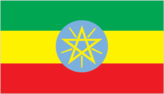
- three equal horizontal bands of green (top), yellow, and red, with a yellow pentagram and single yellow rays emanating from the angles between the points on a light blue disk centered on the three bands; green represents hope and the fertility of the land, yellow symbolizes justice and harmony, while red stands for sacrifice and heroism in the defense of the land; the blue of the disk symbolizes peace and the pentagram represents the unity and equality of the nationalities and peoples of Ethiopia
- note
- Ethiopia is the oldest independent country in Africa, and the three main colors of her flag (adopted ca. 1895) were so often appropriated by other African countries upon independence that they became known as the Pan-African colors; the emblem in the center of the current flag was added in 1996
Government Type
federal parliamentary republic
Independence
oldest independent country in Africa and one of the oldest in the world - at least 2,000 years (may be traced to the Aksumite Kingdom, which coalesced in the first century B.C.)
International Law Organization Participation
has not submitted an ICJ jurisdiction declaration; non-party state to the ICCt
International Organization Participation
ACP, AfDB, AU, COMESA, EITI (candidate country), FAO, G-24, G-77, IAEA, IBRD, ICAO, ICRM, IDA, IFAD, IFC, IFRCS, IGAD, ILO, IMF, IMO, Interpol, IOC, IOM, IPU, ISO, ITSO, ITU, ITUC (NGOs), MIGA, NAM, OPCW, PCA, UN, UNAMID, UNCTAD, UNESCO, UNHCR, UNIDO, UNISFA, UNMIL, UN Security Council (temporary), UNOCI, UNWTO, UPU, WCO, WFTU (NGOs), WHO, WIPO, WMO, WTO (observer)
Judicial Branch
- highest courts
- Federal Supreme Court (consists of 11 judges); note - the House of Federation has jurisdiction for all constitutional issues
- judge selection and term of office
- president and vice president of Federal Supreme Court recommended by the prime minister and appointed by the House of People's Representatives; other Supreme Court judges nominated by the Federal Judicial Administrative Council (a 10-member body chaired by the president of the Federal Supreme Court) and appointed by the House of People's Representatives; judges serve until retirement at age 60
- subordinate courts
- federal high courts and federal courts of first instance; state court systems (mirror structure of federal system); sharia courts and customary and traditional courts
Legal System
civil law system
Legislative Branch
- description
- bicameral Parliament consists of:House of Federation or Yefedereshein Mikir Bete (153 seats; members indirectly elected by state assemblies to serve 5-year terms) House of People's Representatives or Yehizb Tewokayoch Mekir Bete (547 seats; members directly elected in single-seat constituencies by simple majority vote; 22 seats reserved for minorities; all members serve 5-year terms)
- election results
- House of Representatives - percent of vote by party/coalition - NA; seats by party/coalition - EPRDF 501, SPDP 24, BGPDUP 9, ANDP 8, GPUDM 3, APDO 1, HNL 1
- elections
- House of People's Representatives - last held on 24 May 2015 (next to be held in 2020)
- note
- House of Federation is responsible for interpreting the constitution and federal-regional issues and the House of People's Representatives is responsible for passing legislation
National Anthem
- lyrics/music
- DEREJE Melaku Mengesha/SOLOMON Lulu
- name
- "Whedefit Gesgeshi Woud Enat Ethiopia" (March Forward, Dear Mother Ethiopia)
- note
- adopted 1992
National Holiday
Derg Downfall Day (defeat of MENGISTU regime), 28 May (1991)
National Symbol S
Abyssinian lion (traditional), yellow pentagram with five rays of light on a blue field (promoted by current government); national colors: green, yellow, red
Political Parties And Leaders
Afar National Democratic Party or ANDP [Taha AHMED]Argoba People Democratic Organization or APDOAmhara National Democratic Movement or ANDM [Demeke MEKONNEN]Benishangul Gumuz People's Democratic Unity Party or BGPDUPBlue Party (Semayawi Party) [Solomon TESSEMA, spokesman]Ethiopian Federal Democratic Unity Forum or MEDREK or FORUM [Beyene PETROS] (includes ESD-SCUP, OFC, SLM, UTDS)Ethiopian People's Revolutionary Democratic Front or EPRDF [ABIY Ahmed] (includes ANDM, OPDO, SEPDM, TPLF)Ethiopian Social Democracy-Sothern Coalition Unity Party or ESD-SCUPGambella Peoples Unity Democratic Movement or GPUDMHarari National League or HNL [Murad ABDULHADI]Oromo Fderalist Congress or OFCOromo People's Democratic Organization or OPDO [ABIY Ahmed]Sidama Liberaton Movement or SLMSomali People's Democratic Party or SPDPSouthern Ethiopian People's Democratic Movement or SEPDM [Muferiat KAMIL]Tigray People's Liberation Front or TPLF [Meles ZENAWI]Union of Tigraians for Democracy & Sovergnty or UTDS
Suffrage
18 years of age; universal
Economy
Agriculture Products
cereals, coffee, oilseed, cotton, sugarcane, vegetables, khat, cut flowers; hides, cattle, sheep, goats; fish
Budget
- expenditures
- 13.79 billion (2017 est.)
- revenues
- 11.24 billion (2017 est.)
Budget Surplus Or Deficit
-3.2% (of GDP) (2017 est.)
Central Bank Discount Rate
- note
- NA
Commercial Bank Prime Lending Rate
- 13.5% (31 December 2017 est.)
- 12.2% (31 December 2016 est.)
Current Account Balance
- -$6.551 billion (2017 est.)
- -$6.574 billion (2016 est.)
Debt External
- $26.05 billion (31 December 2017 est.)
- $24.82 billion (31 December 2016 est.)
Distribution Of Family Income Gini Index
- 33 (2011)
- 30 (2000)
Economy Overview
Ethiopia - the second most populous country in Africa - is a one-party state with a planned economy. For more than a decade before 2016, GDP grew at a rate between 8% and 11% annually – one of the fastest growing states among the 188 IMF member countries. This growth was driven by government investment in infrastructure, as well as sustained progress in the agricultural and service sectors. More than 70% of Ethiopia’s population is still employed in the agricultural sector, but services have surpassed agriculture as the principal source of GDP.Ethiopia has the lowest level of income-inequality in Africa and one of the lowest in the world, with a Gini coefficient comparable to that of the Scandinavian countries. Yet despite progress toward eliminating extreme poverty, Ethiopia remains one of the poorest countries in the world, due both to rapid population growth and a low starting base. Changes in rainfall associated with world-wide weather patterns resulted in the worst drought in 30 years in 2015-16, creating food insecurity for millions of Ethiopians.The state is heavily engaged in the economy. Ongoing infrastructure projects include power production and distribution, roads, rails, airports and industrial parks. Key sectors are state-owned, including telecommunications, banking and insurance, and power distribution. Under Ethiopia's constitution, the state owns all land and provides long-term leases to tenants. Title rights in urban areas, particularly Addis Ababa, are poorly regulated, and subject to corruption.Ethiopia’s foreign exchange earnings are led by the services sector - primarily the state-run Ethiopian Airlines - followed by exports of several commodities. While coffee remains the largest foreign exchange earner, Ethiopia is diversifying exports, and commodities such as gold, sesame, khat, livestock and horticulture products are becoming increasingly important. Manufacturing represented less than 8% of total exports in 2016, but manufacturing exports should increase in future years due to a growing international presence.The banking, insurance, telecommunications, and micro-credit industries are restricted to domestic investors, but Ethiopia has attracted roughly $8.5 billion in foreign direct investment (FDI), mostly from China, Turkey, India and the EU; US FDI is $567 million. Investment has been primarily in infrastructure, construction, agriculture/horticulture, agricultural processing, textiles, leather and leather products.To support industrialization in sectors where Ethiopia has a comparative advantage, such as textiles and garments, leather goods, and processed agricultural products, Ethiopia plans to increase installed power generation capacity by 8,320 MW, up from a capacity of 2,000 MW, by building three more major dams and expanding to other sources of renewable energy. In 2017, the government devalued the birr by 15% to increase exports and alleviate a chronic foreign currency shortage in the country.
Exchange Rates
- birr (ETB) per US dollar -
- 25 (2017 est.)
- 21.732 (2016 est.)
- 21.732 (2015 est.)
- 21.55 (2014 est.)
- 19.8 (2013 est.)
Exports
- $3.23 billion (2017 est.)
- $2.814 billion (2016 est.)
Exports Commodities
coffee (27%, by value), oilseeds (17%), edible vegetables including khat (17%), gold (13%), flowers (7%), live animals (7%), raw leather products (3%), meat products (3%)
Exports Partners
Sudan 23.3%, Switzerland 10.2%, China 8.1%, Somalia 6.6%, Netherlands 6.2%, US 4.7%, Germany 4.7%, Saudi Arabia 4.6%, UK 4.6% (2017)
Fiscal Year
8 July - 7 July
Gdp Composition By End Use
- exports of goods and services
- 8.1% (2017 est.)
- government consumption
- 10% (2017 est.)
- household consumption
- 69.6% (2017 est.)
- imports of goods and services
- -31.2% (2017 est.)
- investment in fixed capital
- 43.5% (2017 est.)
- investment in inventories
- -0.1% (2017 est.)
Gdp Composition By Sector Of Origin
- agriculture
- 34.8% (2017 est.)
- industry
- 21.6% (2017 est.)
- services
- 43.6% (2017 est.)
Gdp Official Exchange Rate
$80.87 billion (2017 est.) (2017 est.)
Gdp Per Capita Ppp
- $2,200 (2017 est.)
- $2,000 (2016 est.)
- $1,900 (2015 est.)
- note
- data are in 2017 dollars
Gdp Purchasing Power Parity
- $200.6 billion (2017 est.)
- $181 billion (2016 est.)
- $167.6 billion (2015 est.)
- note
- data are in 2017 dollars
Gdp Real Growth Rate
- 10.9% (2017 est.)
- 8% (2016 est.)
- 10.4% (2015 est.)
Gross National Saving
- 32.1% of GDP (2017 est.)
- 32.7% of GDP (2016 est.)
- 32.4% of GDP (2015 est.)
Household Income Or Consumption By Percentage Share
- highest 10%
- 25.6% (2005)
- lowest 10%
- 25.6% (2005)
Imports
- $15.59 billion (2017 est.)
- $14.69 billion (2016 est.)
Imports Commodities
machinery and aircraft (14%, by value), metal and metal products, (14%), electrical materials, (13%), petroleum products (12%), motor vehicles, (10%), chemicals and fertilizers (4%)
Imports Partners
China 24.1%, Saudi Arabia 10.1%, India 6.4%, Kuwait 5.3%, France 5.2% (2017)
Industrial Production Growth Rate
10.5% (2017 est.)
Industries
food processing, beverages, textiles, leather, garments, chemicals, metals processing, cement
Inflation Rate Consumer Prices
- 9.9% (2017 est.)
- 7.3% (2016 est.)
Labor Force
52.82 million (2017 est.)
Labor Force By Occupation
- agriculture
- 72.7%
- industry
- 7.4%
- services
- 19.9% (2013 est.)
Market Value Of Publicly Traded Shares
- note
- NA
Population Below Poverty Line
29.6% (2014 est.)
Public Debt
- 54.2% of GDP (2017 est.)
- 53.2% of GDP (2016 est.)
Reserves Of Foreign Exchange And Gold
- $3.013 billion (31 December 2017 est.)
- $3.022 billion (31 December 2016 est.)
Stock Of Broad Money
- $9.042 billion (31 December 2017 est.)
- $8.757 billion (31 December 2016 est.)
Stock Of Direct Foreign Investment At Home
(31 December 2009 est.)
Stock Of Domestic Credit
- $27.66 billion (31 December 2017 est.)
- $25.78 billion (31 December 2016 est.)
Stock Of Narrow Money
- $9.042 billion (31 December 2017 est.)
- $8.757 billion (31 December 2016 est.)
Taxes And Other Revenues
13.9% (of GDP) (2017 est.)
Unemployment Rate
- 17.5% (2012 est.)
- 18% (2011 est.)
Energy
Carbon Dioxide Emissions From Consumption Of Energy
12.18 million Mt (2017 est.)
Crude Oil Exports
0 bbl/day (2015 est.)
Crude Oil Imports
0 bbl/day (2015 est.)
Crude Oil Production
0 bbl/day (2017 est.)
Crude Oil Proved Reserves
428,000 bbl (1 January 2018 est.)
Electricity Access
- electrification - rural areas
- 10% (2013)
- electrification - total population
- 24% (2013)
- electrification - urban areas
- 85% (2013)
- population without electricity
- 71.2 million (2013)
Electricity Consumption
9.062 billion kWh (2016 est.)
Electricity Exports
166 million kWh (2015 est.)
Electricity From Fossil Fuels
3% of total installed capacity (2016 est.)
Electricity From Hydroelectric Plants
86% of total installed capacity (2017 est.)
Electricity From Nuclear Fuels
0% of total installed capacity (2017 est.)
Electricity From Other Renewable Sources
11% of total installed capacity (2017 est.)
Electricity Imports
0 kWh (2016 est.)
Electricity Installed Generating Capacity
2.784 million kW (2016 est.)
Electricity Production
11.15 billion kWh (2016 est.)
Natural Gas Consumption
0 cu m (2017 est.)
Natural Gas Exports
0 cu m (2017 est.)
Natural Gas Imports
0 cu m (2017 est.)
Natural Gas Production
0 cu m (2017 est.)
Natural Gas Proved Reserves
24.92 billion cu m (1 January 2018 est.)
Refined Petroleum Products Consumption
74,000 bbl/day (2016 est.)
Refined Petroleum Products Exports
0 bbl/day (2015 est.)
Refined Petroleum Products Imports
69,970 bbl/day (2015 est.)
Refined Petroleum Products Production
0 bbl/day (2017 est.)
Communications
Broadband Fixed Subscriptions
- subscriptions per 100 inhabitants
- 1 (2017 est.)
- total
- 580,120 (2017 est.)
Broadcast Media
6 public TV stations broadcasting nationally and 10 public radio broadcasters; 7 private radio stations and 19 community radio stations (2017)
Internet Country Code
.et
Internet Users
- percent of population
- 15.4% (July 2016 est.)
- total
- 15,731,741 (July 2016 est.)
Telephone System
- domestic
- fixed-line subscriptions at 1 per 100 while mobile-cellular stands at 59 per 100; the number of mobile telephones is increasing steadily (2017)
- general assessment
- Ethio Telecom maintains a monopoly over telecommunication services; open-wire, microwave radio relay; radio communication in the HF, VHF, and UHF frequencies; mobile broadband services via 3G and LTE networks; 2 domestic satellites provide the national trunk service; international Internet bandwidth increased 56% in 2016 to reach 35 Gb/s (2017)
- international
- country code - 251; open-wire to Sudan and Djibouti; microwave radio relay to Kenya and Djibouti; satellite earth stations - 3 Intelsat (1 Atlantic Ocean and 2 Pacific Ocean) (2016)
Telephones Fixed Lines
- subscriptions per 100 inhabitants
- 1 (2017 est.)
- total subscriptions
- 1.181 million (2017 est.)
Telephones Mobile Cellular
- subscriptions per 100 inhabitants
- 59 (2017 est.)
- total subscriptions
- 62.617 million
Transportation
Airports
57 (2013)
Airports With Paved Runways
- 1,524 to 2,437 m
- 4 (2017)
- 2,438 to 3,047 m
- 8 (2017)
- over 3,047 m
- 3 (2017)
- total
- 17 (2017)
- under 914 m
- 2 (2017)
Airports With Unpaved Runways
- 1,524 to 2,437 m
- 9 (2013)
- 2,438 to 3,047 m
- 3 (2013)
- 914 to 1,523 m
- 20 (2013)
- total
- 40 (2013)
- under 914 m
- 8 (2013)
Civil Aircraft Registration Country Code Prefix
ET (2016)
Merchant Marine
- by type
- general cargo 9, oil tanker 2 (2017)
- total
- 11 (2017)
National Air Transport System
- annual freight traffic on registered air carriers
- 1,228,738,320 mt-km (2015)
- annual passenger traffic on registered air carriers
- 7,074,779 (2015)
- inventory of registered aircraft operated by air carriers
- 75 (2015)
- number of registered air carriers
- 1 (2015)
Ports And Terminals
- note
- Ethiopia is landlocked and uses the ports of Djibouti in Djibouti and Berbera in Somalia
Railways
- note
- electric railway with redundant power supplies; under joint control of Djibouti and Ethiopia and managed by a Chinese contractor
- standard gauge
- 659 km 1.435-m gauge (2017)
- total
- 659 km (Ethiopian segment of the 756 km Addis Ababa-Djibouti railroad) (2017)
Roadways
- paved
- 14,354 km (2015)
- total
- 110,414 km (2015)
- unpaved
- 96,060 km (2015)
Military and Security
Military Branches
Ethiopian National Defense Force (ENDF): Ground Forces, Ethiopian Air Force (Ye Ityopya Ayer Hayl, ETAF) (2013)
Military Expenditures
- 0.67% of GDP (2016)
- 0.71% of GDP (2015)
- 0.77% of GDP (2014)
- 0.81% of GDP (2013)
- 0.87% of GDP (2012)
Military Service Age And Obligation
18 years of age for voluntary military service; no compulsory military service, but the military can conduct callups when necessary and compliance is compulsory (2012)
Transnational Issues
Disputes International
Eritrea and Ethiopia agreed to abide by the 2002 Eritrea-Ethiopia Boundary Commission's (EEBC) delimitation decision, but neither party responded to the revised line detailed in the November 2006 EEBC Demarcation Statementthe undemarcated former British administrative line has little meaning as a political separation to rival clans within Ethiopia's Ogaden and southern Somalia's Oromo regionEthiopian forces invaded southern Somalia and routed Islamist courts from Mogadishu in January 2007"Somaliland" secessionists provide port facilities in Berbera and trade ties to landlocked Ethiopiacivil unrest in eastern Sudan has hampered efforts to demarcate the porous boundary with Ethiopia
Illicit Drugs
transit hub for heroin originating in Southwest and Southeast Asia and destined for Europe, as well as cocaine destined for markets in southern Africa; cultivates qat (khat) for local use and regional export, principally to Djibouti and Somalia (legal in all three countries); the lack of a well-developed financial system limits the country's utility as a money laundering center
Refugees And Internally Displaced Persons
- IDPs
- 2,075,278 (includes conflict- and climate-induced IDPs; border war with Eritrea from 1998-2000; ethnic clashes; and ongoing fighting between the Ethiopian military and separatist rebel groups in the Somali and Oromia regions; natural disasters; intercommunal violence; most IDPs live in Sumale state) (2018)
- refugees (country of origin)
- 422,240 (South Sudan) (refugees and asylum seekers), 257,283 (Somalia) (refugees and asylum seekers), 173,879 (Eritrea) (refugees and asylum seekers), 44,620 (Sudan) (refugees and asylum seekers) (2018)
Terrorism
Terrorist Groups Foreign Based
- al-Shabaab
- aim(s): punish Ethiopia for participating in the African Union Mission in Somalia; compel Ethiopia to withdraw troops from Somaliaarea(s) of operation: aspires to conduct attacks in Addis Ababa; no permanent presence (April 2018)
Terrorist Groups Home Based
- al-Shabaab
- aim(s): punish Ethiopia for participating in the African Union Mission in Somalia; compel Ethiopia to withdraw troops from Somaliaarea(s) of operation: aspires to conduct attacks in Addis Ababa; no permanent presence (April 2018)