1989 Edition
CIA World Factbook 1989 (Internet Archive)
Countries
182
Data Records
15,825
Categories
5
Source
CIA World Factbook 1989 (Internet Archive)
Geography
Climate
- varies from temperate in south to subarctic and arctic in north
- tropical monsoon with wide topographic-induced variation; prone to extended droughts
- harsh, dry desert with great extremes of temperature
Coastline
- 243,791 km
- 1,094km
- 2,510 km
Comparative area
- slightly larger than US
- slightly less than twice the size of Texas
- slightly less than onefourth the size of US
Contiguous zone
1 8 nm
Continental shelf
- 200 meters or to depth of exploitation
- not specific
Disputes
- maritime boundary disputes with France (St. Pierre and Miquelon) and US
- southern half of the boundary with Somalia is a Provisional Administrative Line; possible claim by Somalia based on unification of ethnic Somalis; territorial dispute with Somalia over the Ogaden; separatist movement in Eritrea; antigovernment insurgencies in Tigray and other areas
- no defined boundaries with PDRY, UAE, and YAR; shares Neutral Zone with Iraq — in July 1975, Iraq and Saudi Arabia signed an agreement to divide the zone between them, but the agreement must be ratified, however, before it becomes effective; Kuwaiti ownership of Qaruh and Umm al Maradim Islands is disputed by Saudi Arabia
Environment
- 80% of population concentrated within 160 km of US border; continuous permafrost in north a serious obstacle to development
- geologically active Great Rift Valley susceptible to earthquakes, volcanic eruptions; deforestation; overgrazing; soil erosion; desertification; frequent droughts; famine
- no perennial rivers or permanent water bodies; developing extensive coastal seawater desalination facilities; desertification
Exclusive fishing zone
- 200 nm
- not specific
Land boundaries
- 8,893 km with US (includes 2,477 km with Alaska)
- 5,141 km total; Djibouti 459 km, Kenya 861 km, Somalia 1,600 km, Sudan 2,221 km
- 4,410 km total; Iraq 488 km, Iraq-Saudi Arabia Neutral Zone 198 km, Jordan 742 km, Kuwait 222 km, Oman 676 km, Qatar 40 km, UAE 586 km, PDRY 830 km, YAR 628 km
Land use
- 5% arable land; NEGL% permanent crops; 3% meadows and pastures; 35% forest and woodland; 57% other; includes NEGL% irrigated
- 12% arable land; 1% permanent crops; 41% meadows and pastures; 24% forest and woodland; 22% other; includes NEGL% irrigated
- 1% arable land; NEGL% permanent crops; 39% meadows and pastures; 1% forest and woodland; 59% other; includes NEGL% irrigated
Natural resources
- nickel, zinc, copper, gold, lead, molybdenum, potash, silver, fish, timber, wildlife, coal, crude oil, natural gas
- small reserves of gold, platinum, copper, potash
- crude oil, natural gas, iron ore, gold, copper
Note
- second-largest country in world (after USSR); strategic location between USSR and US via north polar route
- strategic geopolitical position along world's busiest shipping lanes and close to Arabian oilfields; major resettlement project ongoing in rural areas will significantly alter population distribution and settlement patterns over the next several decades
- extensive coastlines on Persian Gulf and Red Sea provide great leverage on shipping (especially crude oil) through Persian Gulf and Suez Canal
Terrain
- mostly plains with mountains in west and lowlands in southeast
- high plateau with central mountain range divided by Great Rift Valley
- mostly uninhabited, sandy desert
Territorial sea
- \ 2 nm
- 1 2 nm
- 1 2 nm
Total area
- 9,976,140 km2; land area: 9,220,970 km2
- 1,221,900 km2; land area: 1,101,000km2
- 2,149,690 km2; land area: 2,149,690km2
People and Society
Birth rate
- 14 births/ 1,000 population (1990)
- 45 births/ 1,000 population (1990)
Death rate
- 7 deaths/ 1,000 population (1990)
- 15 deaths/ 1,000 population (1990)
Ethnic divisions
- 40% British Isles origin, 27% French origin, 20% other European, 1.5% indigenous Indian and Eskimo
- 40% Oromo, 32% Amhara and Tigrean, 9% Sidamo, 6% Shankella, 6% Somali, 4% Afar, 2% Gurage, 1% other
Infant mortality rate
- 7 deaths/ 1,000 live births (1990)
- 116 deaths/ 1,000 live births (1990)
Labor force
- 13,380,000; services 75%, manufacturing 14%, agriculture 4%, construction 3%, other 4% (1988)
- 18,000,000; 80% agriculture and animal husbandry, 1 2% government and services, 8% industry and construction (1985) Organized labor All Ethiopian Trade Union formed by the government in January 1977 to represent 273,000 registered trade union members
Language
- English and French (both official)
- Amharic (official), Tigrinya, Orominga, Arabic, English (major foreign language taught in schools)
Life expectancy at birth
- 74 years male, 81 years female (1990)
- 49 years male, 52 years female (1990)
Literacy
- 99%
- 55.2%
Nationality
- noun — Canadian(s); adjective— Canadian
- noun— Ethiopians); adjective— Ethiopian
Net migration rate
- 5 migrants/ 1 ,000 population (1990)
- 5 migrants/ 1 ,000 population (1990)
Organized labor
30.6% of labor force; 39.6% of nonagricultural paid workers
Population
- 26,538,229 (July 1990), growth rate 1.1% (1990)
- 51,666,622 (July 1990), growth rate 3.5% (1990)
Religion
- 46% Roman Catholic, 16% United Church, 10% Anglican
- 40-45% Muslim, 35-40% Ethiopian Orthodox, 15-20% animist, 5% other
Total fertility rate
- 1 .7 children born/ woman (1990)
- 7.0 children born/ woman (1990)
Government
Administrative divisions
- 10 provinces and 2 territories*; Alberta, British Columbia, Manitoba, New Brunswick, Newfoundland, Northwest Territories*, Nova Scotia, Ontario, Prince Edward Island, Quebec, Saskatchewan, Yukon Territory*
- 14 administrative regions (plural — NA, singular — kifle hager); ArsI, Bale, Eritrea, Gamo Gofa, Gojam, Gonder, Harerge, Ilubabor, Kefa, Shewa, STdamo, Tigray, Welega, Welo; note — the administrative structure may be changing to 25 administrative regions (astedader akababiwach, singular — astedader akababee) and 5 autonomous regions* (rasgez akababiwach, singular — rasgez akababee); Addis Ababa, ArsT, Aseb*, Asosa, Bale, Borena, Dire Dawa*, East Gojam, East Harerge, Eritrea*, Gambela, Gamo Gofa, Ilubabor, Kefa, Metekel, Nazaret, North Gonder, North Shewa, North Welo, Ogaden*, Omo, STdamo, South Gonder, South Shewa, South Welo, Tigray*, Welega, West Gojam, West Harerge, West Shewa
Capital
- Ottawa
- Addis Ababa
Communists
3,000
Constitution
- amended British North America Act 1 867 patriated to Canada 1 7 April 1982; charter of rights and unwritten customs
- 12 September 1987
Diplomatic representation
- Ambassador Derek BURNEY; Chancery at 1746 Massachusetts Avenue NW, Washington DC 20036; telephone (202) 785-1400; there are Canadian Consulates General in Atlanta, Boston, Buffalo, Chicago, Cleveland, Dallas, Detroit, Los Angeles, Minneapolis, New York, Philadelphia, San Francisco, and Seattle; US — Ambassador Edward N. NEY; Embassy at 100 Wellington Street, KIP 5T1, Ottawa (mailing address is P. O. Box 5000, Ogdensburg, NY 13669); telephone (613) 238-5335; there are US Consulates General in Calgary, Halifax, Montreal, Quebec, Toronto, and Vancouver
- Counselor, Charge d' Affaires ad interim GIRMA Amare; Chancery at 2134 Kalorama Road NW, Washington DC 20008; telephone (202) 234-2281 or 2282; US— Charge d' Affaires Robert G. HOUDEK; Embassy at Entoto Street, Addis Ababa (mailing address is P.O. Box 1014, Addis Ababa); telephone 254-233-4141 Europa Island (French possession)
Elections
- House of Commons — last held 21 November 1988 (next to be held by November 1993); results — Progressive Conservative 43.0%, Liberal 32%, New Democratic Party 20%, other 5%; seats — (295 total) Progressive Conservative 170, Liberal 82, New Democratic Party 43
- President — last held 10 September 1987 (next to be held September 1992); results — National Assembly elected President Mengistu Haile-Mariam; National Assembly — last held 14 June 1987 (next to be held June 1992); results— WPE is the only party; seats— (835 total) WPE 835
Executive branch
- British monarch, governor general, prime minister, deputy prime minister. Cabinet
- president, vice president, Council of State prime minister, five deputy prime ministers, Council of Ministers
Flag
- three vertical bands of red (hoist side), white (double width, square), and red with a red maple leaf centered in the white band
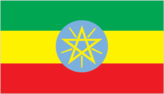
- three equal horizontal bands of green (top), yellow, and red; Ethiopia is the oldest independent country in Africa and the colors of her flag were so often adopted by other African countries upon independence that they became known as the pan-African colors
Independence
- 1 July 1867 (from UK)
- oldest independent country in Africa and one of the oldest in the world— at least 2,000 years
Judicial branch
- Supreme Court
- Supreme Court
Leaders
- Chief of State— Queen ELIZABETH II (since 6 February 1952), represented by Governor General Raymond John HNATSHYN (since 29 January 1990); Head of Government — Prime Minister (Martin) Brian MULRONEY (since 4 September 1984); Deputy Prime Minister Donald Frank MAZANKOWSKI (since NA June 1986) Canada (continued) Political parties and leaders: Progressive Conservative, Brian Mulroney; Liberal, John Turner; New Democratic, Audrey McLaughlin
- Chief of State— President MENGISTU Haile-Mariam (Chairman from 11 September 1977 until becoming President on 10 September 1987); Vice President FISSEHA Desta (since 10 September 1987); Head of Government — Prime Minister (Acting) and Deputy Prime Minister HAILU Yimenu (since 7 November 1989; Deputy Prime Minister WOLLE Chekol (since 21 November 1989); Deputy Prime Minister ALEMU Abebe (since 10 September 1987); Deputy Prime Minister TESFAYE Dinka (since 10 September 1987); Deputy Prime Minister ASHAGRE Yigletu (since 21 November 1989) Political parties and leaders: only partyWorkers' Party of Ethiopia (WPE), Mengistu Haile-Mariam, secretary general
Legal system
- based on English common law, except in Quebec, where civil law system based on French law prevails; accepts compulsory ICJ jurisdiction, with reservations
- complex structure with civil, Islamic, common, and customary law influences; has not accepted compulsory ICJ jurisdiction
Legislative branch
- bicameral Parliament consists of an upper house or Senate and a lower house or House of Commons
- unicameral National Assembly (Shengo)
Long-form name
- none
- People's Democratic Republic of Ethiopia
Member of
- ADB, CCC, Colombo Plan, Commonwealth, DAC, FAO, GATT, IAEA, IBRD, ICAO, ICES, ICO, IDA, IDB — Inter-American Development Bank, IEA, IFAD, IFC, IHO, ILO, ILZSG, IMF, IMO, INTELSAT, INTERPOL, IPU, ISO, ITC, ITU, IWC— International Whaling Commission, IWC— International Wheat Council, NATO, OAS, OECD, PAHO, UN, UNCTAD, UNESCO, UPU, WHO, WIPO, WMO, WSG
- ACP, AfDB, CCC, ECA, FAO, G-77, IAEA, IBRD, ICO, ICAO, IDA, IFAD, IFC, ILO, IMF, IMO, INTELSAT, INTERPOL, IPU, ITU, NAM, OAU, UN, UNESCO, UPU, WFTU, WHO, WMO, WTO
National holiday
- Canada Day, 1 July (1867)
- National Revolution Day, 12 September (1974)
Other political or pressure groups
important dissident groups include Eritrean People's Liberation Front (EPLF) in Eritrea; Tigrean People's Liberation Front (TPLF) and Ethiopian Peoples Democratic Movement in Tigray, Welo, and border regions; Oromo Liberation Front in Welega and Harerge regions
Suffrage
- universal at age 18
- universal at age 1 8
Type
- confederation with parliamentary democracy
- Communist state
Economy
Agriculture
- the agriculture and forestry sectors provide employment for the majority of the population, contributing nearly 25% to GDP and providing a high degree of self-sufficiency in staple foods; commercial and food crops include coffee, cocoa, timber, cotton, rubber, bananas, oilseed, grains, livestock, root starches
- accounts for 3% of GDP; one of the world's major producers and exporters of grain (wheat and barley); key source of US agricultural imports; large forest resources cover 35% of total land area; commercial fisheries provide annual catch of 1 .5 million metric tons, of which 75% is exported
- accounts for 45% of GDP and is the most important sector of the economy even though frequent droughts, poor cultivation practices, and state economic policies keep farm output low; famines not uncommon; export crops of coffee and oilseeds grown partly on state farms; estimated 50% of agricultural production at subsistence level; principal crops and livestock— cereals, pulses, coffee, oilseeds, potatoes, sugarcane, vegetables, hides and skins, cattle, sheep, goats
- dominant sector of economy, primary source of exports; cash crops — cocoa (90%), coconuts, palm kernels, coffee; food products — bananas, papaya, beans, poultry, fish; not self-sufficient in food grain and meat
Aid
- US commitments, including Ex-Im (FY70-88), $400 million; Western (nonUS) countries, ODA and OOF bilateral commitments (1970-87), $3.9 billion; OPEC bilateral aid (1979-89), $29 million; Communist countries (1970-88), $120 million
- donor — ODA and OOF commitments (1970-87), $2.2 billion
- US commitments, including Ex-Im (FY70-88), $471 million; Western (nonUS) countries, ODA and OOF bilateral commitments (1970-87), $2.6 billion; OPEC bilateral aid (1979-89), $8 million; Communist countries (1970-88), $2.0 billion
- US commitments, including Ex-Im (FY70-87), $7 million; Western (non-US) countries, ODA and OOF bilateral commitments (1970-87), 41.9 million
Budget
- revenues $2.17 billion; expenditures $2.17 billion, including capital expenditures of $833 million (FY88)
- revenues $79.2 billion; expenditures $102.0 billion, including capital expenditures of $1.8 billion (FY88 est.)
- revenues $ 1 .4 billion; expenditures $1.9 billion, including capital expenditures of $0.7 billion (FY87)
- revenues $19.2 million; expenditures $25.1 million, including capital expenditures of $19.9 million (1987)
Currency
- Communaute Financiere Africaine franc (plural — francs); I CFA franc (CFAF) = 100 centimes
- Canadian dollar (plural — dollars); 1 Canadian dollar (Can$) = 100 cents
- birr (plural — birr); 1 birr (Br) = 100 cents
- dobra (plural — dobras); 1 dobra (Db) = 100 centimes
Electricity
- 752,000 kW capacity; 2,940 million kWh produced, 270 kWh per capita (1989)
- 103,746,000 kW capacity; 472,580 million kWh produced, 17,960 kWh per capita (1989)
- 330,000 kW capacity; 700 million kWh produced, 14 kWh per capita (1989)
- 6,000 kW capacity; 12 million kWh produced, 100 kWh per capita (1989)
Exchange rates
- Communaute Financiere Africaine francs (CFAF) per US$1— 287.99 (January 1990), 319.01 (1989), 297.85 (1988), 300.54 (1987), 346.30 (1986), 449.26 (1985)
- Canadian dollars (Can$) per US$1— 1.1 7 14 (January 1990), 1.1840 (1989), 1.2307(1988), 1.3260(1987), 1.3895(1986), 1.3655(1985) Fiscal year 1 April-3 1 March
- birr (Br) per US$1— 2.0700 (fixed rate)
- dobras (Db) per US$1 — 122.48 (December 1988), 72.827 (1987), 36.993(1986), 41.195(1985)
Exports
- $2.0 billion (f.o.b., 1988); commodities— petroleum products 56%, coffee, cocoa, timber, manufactures; partners— EC (particularly the Netherlands) about 50%, US 3%
- $127.2 billion (f.o.b., 1989); commodities— newsprint, wood pulp, timber, grain, crude petroleum, natural gas, ferrous and nonferrous ores, motor vehicles; partners— US, Japan, UK, FRG, other EC, USSR
- $418 million (f.o.b., FY88); commodities— coffee 60%, hides; partners — US, FRG, Djibouti, Japan, PDRY, France, Italy
- $9.1 million (f.o.b., 1988 est.); commodities — cocoa 90%, copra, coffee, palm oil; partners— FRG, GDR, Netherlands, China
External debt
- $4.9 billion (December 1989 est.)
- $247 billion (1987)
- $2.6 billion (1988)
- $95 million (1988)
Fiscal year
- 1 July-30 June
- 8 July-7 July
- calendar year
GDP
- $12.9 billion, per capita $955; real growth rate -8.6% (1988)
- $513.6 billion, per capita $19,600; real growth rate 2.9% (1989 est.)
- $6.6 billion, per capita $130, real growth rate 4.5% (FY89 est.)
- $37.9 million, per capita $340; real growth rate 1.8% (1986)
Illicit drugs
illicit producer of cannabis for the domestic drug market
Imports
- $2.3 billion (c.i.f., 1988); commodities— machines and electrical equipment, transport equipment, chemical products, consumer goods; partners — France 42%, Japan 7%, US 4%
- $116.5 billion (c.i.f., 1989); commodities— processed foods, beverages, crude petroleum, chemicals, industrial machinery, motor vehicles, durable consumer goods, electronic computers; partners — US, Japan, UK, FRG, other EC, Taiwan, South Korea, Mexico
- $1.1 billion (c.i.f., FY88), commodities— food, fuels, capital goods; partners—USSR, Italy, FRG, Japan, UK, US, France
- $17.3 million (c.i.f., 1988 est.); commodities — machinery and electrical equipment 59%, food products 32%, fuels 9%; partners — Portugal, GDR, Angola, China
Industrial production
- growth rate —6.4% (FY87)
- growth rate 2.3% (1989)
- growth rate —0.2% (FY88 est.)
- growth rate 7.1% (1986)
Industries
- crude oil products, small aluminum plant, food processing, light consumer goods industries, sawmills
- processed and unprocessed minerals, food products, wood and paper products, transportation equipment, chemicals, fish products, petroleum and natural gas
- cement, textiles, food processing, oil refinery
- light construction, shirts, soap, beer, fisheries, shrimp processing
Inflation rate (consumer prices)
- 8.6% (FY88)
- 5.0% (1989)
- 9.6% (FY89)
- 4.2% (1986)
Overview
- Over the past decade the economy has registered a remarkable performance because of the development of an offshore oil industry. Real GDP growth annually averaged 10% from 1978 to 1985. In 1986 Cameroon had one of the highest levels of income per capita in tropical Africa, with oil revenues picking up the slack as growth in other sectors softened. Because of the sharp drop in oil prices, however, the economy is now experiencing serious budgetary difficulties and balance-of-payments disequalibrium. Oil reserves currently being exploited will be depleted in the early 1990s, so ways must be found to boost agricultural and industrial exports in the medium term. The Sixth Cameroon Development Plan (198691) stresses balanced development and designates agriculture as the basis of the country's economic future.
- As an affluent, high-tech industrial society, Canada today closely resembles the US in per capita output, marketoriented economic system, and pattern of production. Since World War II the impressive growth of the manufacturing, mining, and service sectors has transformed the nation from a largely rural economy into one primarily industrial and urban. In the 1980s Canada registered one of the highest rates of growth among the OECD nations, averaging about 4%. With its great natural resources, skilled labor force, and modern capital plant, Canada has excellent economic prospects.
- Ethiopia is one of the poorest and least developed countries in Africa. Its economy is based on subsistence agriculture, which accounts for about 45% of GDP, 90% of exports, and 80% of total employment; coffee generates over 60% of export earnings. The manufacturing sector is heavily dependent on inputs from the agricultural sector. The economy is centrally planned, and over 90% of large-scale industry is state run. Favorable agricultural weather largely explains the 4.5% growth in output in FY89.
- The economy has remained dependent on cocoa since the gained independence nearly 15 years ago. Since then, however, cocoa production has gradually deteriorated because of drought and mismanagement, so that by 1987 output had fallen to less than 50% of its former levels. As a result, a shortage of cocoa for export has created a serious balance-ofpayments problem. Production of less important crops, such as coffee, copra, and palm kernels, has also declined. The value of imports generally exceeds that of exports by a ratio of 4 to 1 . The emphasis on cocoa production at the expense of other food crops has meant that Sao Tome has to import 90% of food needs. It also has to import all fuels and most manufactured goods. Over the years, Sao Tome has been unable to service its external debt, which amounts to roughly 80% of export earnings. Considerable potential exists for development of a tourist industry, and the government has taken steps to expand facilities in recent years. The government also implemented a FiveYear Plan covering 1 986-90 to restructure the economy and reschedule external debt service payments in cooperation with the International Development Association and Western lenders.
Unemployment rate
- 7% (1985)
- 7.5% (1989)
- NA; shortage of skilled manpower
- NA%
Communications
Airports
- 61 total, 54 usable; 10 with permanent-surface runways; none with runways over 3,659 m; 5 with runways 2,440-3,659 m; 22 with runways 1,2202,439 m
- 1,359 total, 1,117 usable; 442 with permanent-surface runways; 4 with runways over 3,659 m; 30 with runways 2,440-3,659 m; 322 with runways 1,2202,439 m
- 152 total, 1 1 1 usable; 9 with permanent-surface runways; 2 with runways over 3,659 m; 10 with runways 2,440-3,659 m; 51 with runways 1,2202,439 m
- 2 total, 2 usable; 2 with permanent-surface runways 1,220-2,439 m
Branches
- Army, Navy, Air Force; paramilitary Gendarmerie
- Mobile Command, Maritime Command, Air Command, Communications Command, Canadian Forces Europe, Training Commands
- Army, Navy, Air Force, Air Defense
- Army, Navy
Civil air
- 5 major transport aircraft
- 21 major transport aircraft
- 8 major transport aircraft
Defense expenditures
- 1.7% of GDP, or $219 million (1990 est.) 1 20O km Vancouver Calgary Halifax 'TTAWA oronto
- 2.0% of GDP, or $10 billion (1989 est.)
- 8.5% of GDP (1988)
- 1.6% of GDP (1980) 500 kn
Highways
- about 65,000 km total; includes 2,682 km bituminous, 30,000 km unimproved earth, 32,318 km gravel, earth, and improved earth
- 884,272 km total; 712,936 km surfaced (250,023 km paved), 171,336 km earth
- 44,300 km total; 3,650 km bituminous, 9,650 km gravel, 3,000 km improved earth, 28,000 km unimproved earth
- 300 km (two-thirds are paved); roads on Principe are mostly unpaved and in need of repair
Inland waterways
- 2,090 km; of decreasing importance
- 3,000 km, including St. Lawrence Seaway
Merchant marine
- 2 cargo ships ( 1 ,000 CRT or over) totaling 24,122 GRT/ 33,509 DWT
- 78 ships (1,000 CRT or over) totaling 555,749 GRT/774,914 DWT; includes 1 passenger, 5 short-sea passenger, 2 passenger-cargo, 1 2 cargo, 2 railcar carrier, 1 refrigerated cargo, 8 rollon/roll-off, 1 container, 29 petroleum, oils, and lubricants (POL) tanker, 6 chemical tanker, 1 specialized tanker, 10 bulk; note — does not include ships used exclusively in the Great Lakes ships Civil air 636 major transport aircraft; Air Canada is the major carrier
- 14 ships (1,000 GRT or over) totaling 71,837 GRT/92,067 DWT; includes 10 cargo, 1 roll-on/roll off cargo, 1 livestock carrier, 2 petroleum, oils, and lubricants (POL) tanker
Military manpower
- males 1 5-49, 2,553,867; 1,286,831 fit for military service; 121,773 reach military age (18) annually
- males 1 5-49, 7,174,1 19; 6,251,492 fit for military service; 187,894 reach military age (17) annually
- males 15-49, 11,438,616; 5,922,555 fit for military service; 589,231 reach military age (18) annually
- males 15-49, 27,805; 14,662 fit for military service
Pipelines
oil, 23,564 km total crude and refined; natural gas, 74,980 km
Ports
- Douala
- Halifax, Montreal, Quebec, Saint John (New Brunswick), St. John's (Newfoundland), Toronto, Vancouver
- Aseb, Mitsiwa
- Sao Tome, Santo Antonio
Railroads
- 1,003 km total; 858 km 1.000meter gauge, 145 km 0.600-meter gauge
- 80,095 km total; 79,917 km 1.435-meter standard gauge (includes 129 km electrified); 178 km 0.915-meter narrow gauge (mostly unused); two major transcontinental freight railway systemsCanadian National (government owned) and Canadian Pacific Railway; passenger service — VIA (government operated)
- 988 km total; 681 km 1.000meter gauge; 307 km 0.950-meter gauge (nonoperational)
Telecommunications
- good system of open wire, cable, troposcatter, and radio relay; Canada 26,000 telephones; stations— 10 AM, 1 FM, 1 TV; 2 Atlantic Ocean INTELSAT earth stations Defense Forces
- excellent service provided by modern media; 18.0 million telephones; stations— 900 AM, 29 FM, 53 (1,400 repeaters) TV; 5 coaxial submarine cables; over 300 satellite earth stations operating in INTELSAT (including 4 Atlantic Ocean and 1 Pacific Ocean) and domestic systems Defense Forces
- open-wire and radio relay system adequate for government use; open-wire to Sudan and Djibouti; radio relay to Kenya and Djibouti; stations — 4 AM, no FM, 1 TV; 45,000 TV sets; 3,300,000 radios; 1 Atlantic Ocean INTELSAT earth station Defense Forces
- minimal system; 2,200 telephones; stations — 1 AM, 2 FM, no TV; 1 Atlantic Ocean INTELSAT earth station Defense Forces