1986 Edition
CIA World Factbook 1986 (Internet Archive)
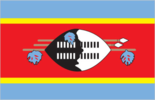
Geography
Airfields
42 total, 40 usable; 4 with permanent-surface runways; 1 with runways 2,440-3,659 m, 1 with runways 1, 220-2,439 m
Branches
- National Army (including Infantry Battalion, Military Police Brigade, Navy [company-size], Air Force)
- constitution was repealed and Parliament dissolved by King Sobhuza II (deceased August 1982) in April 1973; new bicameral Parliament (Senate, House of Assembly) formally opened in January 1979; 80-member electoral college chose 40 members of lower house and 10 members of upper house; additional 10 members for each house chosen by King; executive authority vested in the King or Queen (with the advice of the Supreme Council of State), whose assent is required before parliamentary acts become law; King's authority exercised through Prime Minister and Cabinet who must be members of Parliament; judiciary is part of Ministry of Justice but otherwise independent of executive and legislative branches; cases from subordinate courts can be appealed to the High Court and the Court of Appeal
Capital
Mbabane (administrative); Lobamba (legislative capital)
Civil air
2 major transport aircraft
Communists
no Communist party
Ethnic divisions
96% African, 3% European, 1% mulatto
Fiscal year
calendar year Communications
Government leaders
Head of State, Ntombi THWALA, Queen Regent (since September 1983); Prince Bhekimpi DLAMINI, Prime Minister (since March 1983)
Highways
8,300 km total; 500 km paved; 5,400 km bauxite gravel, crushed stone, or improved earth; 2,400 km sand or clay
Infant mortality rate
156/1,000(1982)
Inland waterways
1,200 km; most important means of transport; oceangoing vessels with drafts ranging from 4.2 m to 7 m can navigate many of the principal waterways while native canoes navigate upper reaches
Labor force
195,000; over 60,000 engaged in subsistence agriculture; 55,000-60,000 wage earners, many only intermittently, with 36% agriculture and forestry, 20% community and social services, 14% manufacturing, 9% construction, 21 % other; 12,000 employed in South Africa (1982)
Land boundaries
435 km People
Language
English and siSwati (official); government business conducted in English
Legal system
based on South African Roman-Dutch law in statutory courts, Swazi traditional law and custom in traditional courts; legal education at University of Botswana and Swaziland; has not accepted compulsory ICJ jurisdiction
Life expectancy
men 46.8, women 50.0
Literacy
65%
Military budget
1983, $41.8 million; 8.2% of central government budget Sec regional map VII Land 17,363 km2; slightly smaller than New Jersey; mostly crop or pasture
Military manpower
males 15-49, 72,000; 43,000 fit for military service
Monetary conversion rate
1.79 Suriname guilders=US$l (September 1985)
National holiday
Somhlolo (Independence) Day, 6 September
Nationality
noun — Swazi(s); adjective — Swazi
Official name
Kingdom of Swaziland
Organized labor
about 15% of wage earners are unionized Government
Political subdivisions
4 administrative districts
Population
692,000 (July 1986), average annual growth rate 3.0%
Ports
1 major (Paramaribo), 6 minor
Railroads
166 km total; 86 km 1.000-meter gauge, government owned, and 80 km 1.435-meter standard gauge; all single track
Religion
57% Christian, 43% indigenous beliefs
Suffrage
universal for adults
Telecommunications
international facilities good; domestic radio-relay system; 27,500 telephones (6.3 per 100 popl.); 4 AM, 4 FM stations; 1 TV station; 2 Atlantic satellite stations Defense Forces
Type
monarchy; independent member of Commonwealth since September 1968