2017 Edition
CIA World Factbook 2017 Archive (HTML)
Introduction
Background
El Salvador achieved independence from Spain in 1821 and from the Central American Federation in 1839. A 12-year civil war, which cost about 75,000 lives, was brought to a close in 1992 when the government and leftist rebels signed a treaty that provided for military and political reforms. El Salvador is beset by one of the world’s highest homicide rates and pervasive criminal gangs.
Geography
Area
- 21,041 sq km 20,721 sq km 320 sq km
- land
- 20,721 sq km
- total
- 21,041 sq km
- water
- 320 sq km
Area - comparative
about the same size as New Jersey
Climate
tropical; rainy season (May to October); dry season (November to April); tropical on coast; temperate in uplands
Coastline
307 km
Elevation
- 442 m lowest point: Pacific Ocean 0 m highest point: Cerro El Pital 2,730 m
- elevation extremes
- lowest point: Pacific Ocean 0 m
- highest point
- Cerro El Pital 2,730 m
- mean elevation
- 442 m
Environment - current issues
deforestation; soil erosion; water pollution; contamination of soils from disposal of toxic wastes
Environment - international agreements
- Biodiversity, Climate Change, Climate Change-Kyoto Protocol, Desertification, Endangered Species, Hazardous Wastes, Ozone Layer Protection, Wetlands Law of the Sea
- party to
- Biodiversity, Climate Change, Climate Change-Kyoto Protocol, Desertification, Endangered Species, Hazardous Wastes, Ozone Layer Protection, Wetlands
- signed, but not ratified
- Law of the Sea
Geographic coordinates
13 50 N, 88 55 W
Geography - note
smallest Central American country and only one without a coastline on the Caribbean Sea
Irrigated land
452 sq km (2012)
Land boundaries
- 590 km Guatemala 199 km, Honduras 391 km
- border countries (2)
- Guatemala 199 km, Honduras 391 km
- total
- 590 km
Land use
- 74.7% arable land 33.1%; permanent crops 10.9%; permanent pasture 30.7% 13.6% 11.7% (2011 est.)
- agricultural land
- 74.7%
- forest
- 13.6%
- other
- 11.7% (2011 est.)
Location
Central America, bordering the North Pacific Ocean, between Guatemala and Honduras
Map references
Central America and the Caribbean
Maritime claims
- 12 nm 24 nm 200 nm
- contiguous zone
- 24 nm
- exclusive economic zone
- 200 nm
- territorial sea
- 12 nm
Natural hazards
- known as the Land of Volcanoes; frequent and sometimes destructive earthquakes and volcanic activity; extremely susceptible to hurricanes significant volcanic activity; San Salvador (1,893 m), which last erupted in 1917, has the potential to cause major harm to the country's capital, which lies just below the volcano's slopes; San Miguel (2,130 m), which last erupted in 2002, is one of the most active volcanoes in the country; other historically active volcanoes include Conchaguita, Ilopango, Izalco, and Santa Ana
- volcanism
- significant volcanic activity; San Salvador (1,893 m), which last erupted in 1917, has the potential to cause major harm to the country's capital, which lies just below the volcano's slopes; San Miguel (2,130 m), which last erupted in 2002, is one of the most active volcanoes in the country; other historically active volcanoes include Conchaguita, Ilopango, Izalco, and Santa Ana
Natural resources
hydropower, geothermal power, petroleum, arable land
Terrain
mostly mountains with narrow coastal belt and central plateau
People and Society
Age structure
- 25.92% (male 820,255/female 779,306) 20.23% (male 628,535/female 620,230) 39.23% (male 1,120,705/female 1,300,771) 7.14% (male 194,360/female 246,164) 7.48% (male 203,320/female 258,365) (2017 est.)
- 0-14 years
- 25.92% (male 820,255/female 779,306)
- 15-24 years
- 20.23% (male 628,535/female 620,230)
- 25-54 years
- 39.23% (male 1,120,705/female 1,300,771)
- 55-64 years
- 7.14% (male 194,360/female 246,164)
- 65 years and over
- 7.48% (male 203,320/female 258,365) (2017 est.)
Birth rate
16.2 births/1,000 population (2017 est.)
Children under the age of 5 years underweight
5% (2014)
Contraceptive prevalence rate
72% (2014)
Death rate
5.8 deaths/1,000 population (2017 est.)
Demographic profile
El Salvador is the smallest and most densely populated country in Central America. It is well into its demographic transition, experiencing slower population growth, a decline in its number of youths, and the gradual aging of its population. The increased use of family planning has substantially lowered El Salvador's fertility rate, from approximately 6 children per woman in the 1970s to replacement level today. A 2008 national family planning survey showed that female sterilization remained the most common contraception method in El Salvador - its sterilization rate is among the highest in Latin America and the Caribbean - but that the use of injectable contraceptives is growing. Fertility differences between rich and poor and urban and rural women are narrowing. Salvadorans fled during the 1979 to 1992 civil war mainly to the United States but also to Canada and to neighboring Mexico, Guatemala, Honduras, Nicaragua, and Costa Rica. Emigration to the United States increased again in the 1990s and 2000s as a result of deteriorating economic conditions, natural disasters (Hurricane Mitch in 1998 and earthquakes in 2001), and family reunification. At least 20% of El Salvador's population lives abroad. The remittances they send home account for close to 20% of GDP, are the second largest source of external income after exports, and have helped reduce poverty.
Dependency ratios
- 56.8 44.4 12.4 8 (2015 est.)
- elderly dependency ratio
- 12.4
- potential support ratio
- 8 (2015 est.)
- total dependency ratio
- 56.8
- youth dependency ratio
- 44.4
Drinking water source
- urban: 97.5% of population rural: 86.5% of population total: 93.8% of population urban: 2.5% of population rural: 13.5% of population total: 6.2% of population (2015 est.)
- rural
- 13.5% of population
- total
- 6.2% of population (2015 est.)
- urban
- 2.5% of population
Education expenditures
3.4% of GDP (2014)
Ethnic groups
mestizo 86.3%, white 12.7%, Amerindian 0.2% (includes Lenca, Kakawira, Nahua-Pipil), black 0.1%, other 0.6% (2007 est.)
Health expenditures
6.8% of GDP (2014)
HIV/AIDS - adult prevalence rate
0.6% (2016 est.)
HIV/AIDS - people living with HIV/AIDS
24,000 (2016 est.)
Hospital bed density
1.1 beds/1,000 population (2012)
Infant mortality rate
- 16.8 deaths/1,000 live births 18.8 deaths/1,000 live births 14.6 deaths/1,000 live births (2017 est.)
- female
- 14.6 deaths/1,000 live births (2017 est.)
- male
- 18.8 deaths/1,000 live births
- total
- 16.8 deaths/1,000 live births
Languages
Spanish (official), Nawat (among some Amerindians)
Life expectancy at birth
- 74.9 years 71.6 years 78.3 years (2017 est.)
- female
- 78.3 years (2017 est.)
- male
- 71.6 years
- total population
- 74.9 years
Literacy
- age 15 and over can read and write 88% 90% 86.2% (2015 est.)
- definition
- age 15 and over can read and write
- female
- 86.2% (2015 est.)
- male
- 90%
- total population
- 88%
Major infectious diseases
- high bacterial and protozoal diarrhea dengue fever active local transmission of Zika virus by Aedes species mosquitoes has been identified in this country (as of August 2016); it poses an important risk (a large number of cases possible) among US citizens if bitten by an infective mosquito; other less common ways to get Zika are through sex, via blood transfusion, or during pregnancy, in which the pregnant woman passes Zika virus to her fetus (2016)
- degree of risk
- high
- food or waterborne diseases
- bacterial and protozoal diarrhea
- note
- active local transmission of Zika virus by Aedes species mosquitoes has been identified in this country (as of August 2016); it poses an important risk (a large number of cases possible) among US citizens if bitten by an infective mosquito; other less common ways to get Zika are through sex, via blood transfusion, or during pregnancy, in which the pregnant woman passes Zika virus to her fetus (2016)
- vectorborne diseases
- dengue fever
Major urban areas - population
SAN SALVADOR (capital) 1.098 million (2015)
Maternal mortality rate
54 deaths/100,000 live births (2015 est.)
Median age
- 27.1 years 25.6 years 28.6 years (2017 est.)
- female
- 28.6 years (2017 est.)
- male
- 25.6 years
- total
- 27.1 years
Mother's mean age at first birth
- 20.8 years median age at first birth among women 25-29 (2008 est.)
- note
- median age at first birth among women 25-29 (2008 est.)
Nationality
- Salvadoran(s) Salvadoran
- adjective
- Salvadoran
- noun
- Salvadoran(s)
Net migration rate
-8 migrant(s)/1,000 population (2017 est.)
Obesity - adult prevalence rate
24.6% (2016)
Physicians density
1.92 physicians/1,000 population (2008)
Population
6,172,011 (July 2017 est.)
Population distribution
athough it is the smallest country in land area in Central America, El Salvador has a population that is 18 times larger than Belize; at least 20% of the population lives abroad; high population density country-wide, with particular concentration around the capital of San Salvador
Population growth rate
0.25% (2017 est.)
Religions
Roman Catholic 50%, Protestant 36%, other 2%, none 12% (2014 est.)
Sanitation facility access
- urban: 82.4% of population rural: 60% of population total: 75% of population urban: 17.6% of population rural: 40% of population total: 25% of population (2015 est.)
- rural
- 40% of population
- total
- 25% of population (2015 est.)
- urban
- 17.6% of population
School life expectancy (primary to tertiary education)
- 13 years 13 years 13 years (2014)
- female
- 13 years (2014)
- male
- 13 years
- total
- 13 years
Sex ratio
- 1.05 male(s)/female 1.05 male(s)/female 1.01 male(s)/female 0.86 male(s)/female 0.8 male(s)/female 0.8 male(s)/female 0.93 male(s)/female (2016 est.)
- 0-14 years
- 1.05 male(s)/female
- 15-24 years
- 1.01 male(s)/female
- 25-54 years
- 0.86 male(s)/female
- 55-64 years
- 0.8 male(s)/female
- 65 years and over
- 0.8 male(s)/female
- at birth
- 1.05 male(s)/female
- total population
- 0.93 male(s)/female (2016 est.)
Total fertility rate
1.87 children born/woman (2017 est.)
Unemployment, youth ages 15-24
- 12.4% 11.8% 13.6% (2013 est.)
- female
- 13.6% (2013 est.)
- male
- 11.8%
- total
- 12.4%
Urbanization
- 67.6% of total population (2017) 1.23% annual rate of change (2015-20 est.)
- rate of urbanization
- 1.23% annual rate of change (2015-20 est.)
- urban population
- 67.6% of total population (2017)
Government
Administrative divisions
14 departments (departamentos, singular - departamento); Ahuachapan, Cabanas, Chalatenango, Cuscatlan, La Libertad, La Paz, La Union, Morazan, San Miguel, San Salvador, San Vicente, Santa Ana, Sonsonate, Usulutan
Capital
- San Salvador 13 42 N, 89 12 W UTC-6 (1 hour behind Washington, DC, during Standard Time)
- geographic coordinates
- 13 42 N, 89 12 W
- name
- San Salvador
- time difference
- UTC-6 (1 hour behind Washington, DC, during Standard Time)
Citizenship
- yes yes yes 5 years
- citizenship by birth
- yes
- citizenship by descent
- yes
- dual citizenship recognized
- yes
- residency requirement for naturalization
- 5 years
Constitution
many previous; latest drafted 16 December 1983, enacted 23 December 1983; amended many times, last in 2014 (2016)
Country name
- Republic of El Salvador El Salvador Republica de El Salvador El Salvador name is an abbreviation of the original Spanish conquistador designation for the area "Provincia de Nuestro Senor Jesus Cristo, el Salvador del Mundo" (Province of Our Lord Jesus Christ, the Saviour of the World), which became simply "El Salvador" (The Savior)
- conventional long form
- Republic of El Salvador
- conventional short form
- El Salvador
- etymology
- name is an abbreviation of the original Spanish conquistador designation for the area "Provincia de Nuestro Senor Jesus Cristo, el Salvador del Mundo" (Province of Our Lord Jesus Christ, the Saviour of the World), which became simply "El Salvador" (The Savior)
- local long form
- Republica de El Salvador
- local short form
- El Salvador
Diplomatic representation from the US
- Ambassador Jean Elizabeth MANES (since 29 March 2016) Final Boulevard Santa Elena Sur, Antiguo Cuscatlan, La Libertad, San Salvador Unit 3450, APO AA 34023; 3450 San Salvador Place, Washington, DC 20521-3450 [503] 2501-2999 [503] 2501-2150
- chief of mission
- Ambassador Jean Elizabeth MANES (since 29 March 2016)
- embassy
- Final Boulevard Santa Elena Sur, Antiguo Cuscatlan, La Libertad, San Salvador
- FAX
- [503] 2501-2150
- mailing address
- Unit 3450, APO AA 34023; 3450 San Salvador Place, Washington, DC 20521-3450
- telephone
- [503] 2501-2999
Diplomatic representation in the US
- Ambassador Claudia Ivette CANJURA de Centeno (since 17 June 2016) 1400 16th Street NW, Suite 100, Washington, DC 20036 [1] (202) 595-7517 [1] (202) 232-1928 Atlanta, Boston, Brentwood (NY), Chicago, Coral Gables (FL), Dallas, Houston, Las Vegas (NV), Los Angeles, McAllen (TX), New York, Nogales (AZ), San Francisco, Seattle, Tucson (AZ), Washington, DC, Woodbridge (VA), Woodstock (GA) Elizabeth (NJ), Newark (NJ)
- chancery
- 1400 16th Street NW, Suite 100, Washington, DC 20036
- chief of mission
- Ambassador Claudia Ivette CANJURA de Centeno (since 17 June 2016)
- consulate(s)
- Elizabeth (NJ), Newark (NJ)
- consulate(s) general
- Atlanta, Boston, Brentwood (NY), Chicago, Coral Gables (FL), Dallas, Houston, Las Vegas (NV), Los Angeles, McAllen (TX), New York, Nogales (AZ), San Francisco, Seattle, Tucson (AZ), Washington, DC, Woodbridge (VA), Woodstock (GA)
- FAX
- [1] (202) 232-1928
- telephone
- [1] (202) 595-7517
Executive branch
- President Salvador SANCHEZ CEREN (since 1 June 2014); Vice President Salvador Oscar ORTIZ (since 1 June 2014); note - the president is both chief of state and head of government President Salvador SANCHEZ CEREN (since 1 June 2014); Vice President Salvador Oscar ORTIZ (since 1 June 2014) Council of Ministers selected by the president president and vice president directly elected on the same ballot by absolute majority popular vote in 2 rounds if needed for a single 5-year term; election last held on 2 February 2014 with a runoff on 9 March 2014 (next to be held in early 2019) percent of vote in first round - Salvador SANCHEZ CEREN (FMLN) 48.9%, Norman QUIJANO (ARENA) 39%, Antonio SACA (CN) 11.4%, other 0.7%; Salvador SANCHEZ CEREN elected president in second round - Salvador SANCHEZ CEREN 50.1%, Norman QUIJANO 49.9%
- cabinet
- Council of Ministers selected by the president
- chief of state
- President Salvador SANCHEZ CEREN (since 1 June 2014); Vice President Salvador Oscar ORTIZ (since 1 June 2014); note - the president is both chief of state and head of government
- election results
- percent of vote in first round - Salvador SANCHEZ CEREN (FMLN) 48.9%, Norman QUIJANO (ARENA) 39%, Antonio SACA (CN) 11.4%, other 0.7%; Salvador SANCHEZ CEREN elected president in second round - Salvador SANCHEZ CEREN 50.1%, Norman QUIJANO 49.9%
- elections/appointments
- president and vice president directly elected on the same ballot by absolute majority popular vote in 2 rounds if needed for a single 5-year term; election last held on 2 February 2014 with a runoff on 9 March 2014 (next to be held in early 2019)
- head of government
- President Salvador SANCHEZ CEREN (since 1 June 2014); Vice President Salvador Oscar ORTIZ (since 1 June 2014)
Flag description
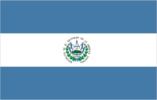
- three equal horizontal bands of cobalt blue (top), white, and cobalt blue with the national coat of arms centered in the white band; the coat of arms features a round emblem encircled by the words REPUBLICA DE EL SALVADOR EN LA AMERICA CENTRAL; the banner is based on the former blue-white-blue flag of the Federal Republic of Central America; the blue bands symbolize the Pacific Ocean and the Caribbean Sea, while the white band represents the land between the two bodies of water, as well as peace and prosperity similar to the flag of Nicaragua, which has a different coat of arms centered in the white band; also similar to the flag of Honduras, which has five blue stars arranged in an X pattern centered in the white band
- note
- similar to the flag of Nicaragua, which has a different coat of arms centered in the white band; also similar to the flag of Honduras, which has five blue stars arranged in an X pattern centered in the white band
Government type
presidential republic
Independence
15 September 1821 (from Spain)
International law organization participation
has not submitted an ICJ jurisdiction declaration; non-party state to the ICCt
International organization participation
BCIE, CACM, CD, CELAC, FAO, G-11, G-77, IADB, IAEA, IBRD, ICAO, ICC (national committees), ICRM, IDA, IFAD, IFC, IFRCS, ILO, IMF, IMO, Interpol, IOC, IOM, IPU, ISO (correspondent), ITSO, ITU, ITUC (NGOs), LAES, LAIA (observer), MIGA, MINURSO, MINUSTAH, NAM (observer), OAS, OPANAL, OPCW, Pacific Alliance (observer), PCA, Petrocaribe, SICA, UN, UNCTAD, UNESCO, UNIDO, UNIFIL, Union Latina, UNISFA, UNMISS, UNOCI, UNWTO, UPU, WCO, WFTU (NGOs), WHO, WIPO, WMO, WTO
Judicial branch
- Supreme Court or Corte Suprema de Justicia (consists of 15 judges assigned to constitutional, civil, penal, and administrative conflict divisions) judges elected by the Legislative Assembly on the recommendation of both the National Council of the Judicature, an independent body elected by the Legislative Assembly and the Bar Association; judges elected for 9-year terms, with renewal of one-third of membership every 3 years; consecutive reelection is allowed Appellate Courts; Courts of First Instance; Courts of Peace
- highest court(s)
- Supreme Court or Corte Suprema de Justicia (consists of 15 judges assigned to constitutional, civil, penal, and administrative conflict divisions)
- judge selection and term of office
- judges elected by the Legislative Assembly on the recommendation of both the National Council of the Judicature, an independent body elected by the Legislative Assembly and the Bar Association; judges elected for 9-year terms, with renewal of one-third of membership every 3 years; consecutive reelection is allowed
- subordinate courts
- Appellate Courts; Courts of First Instance; Courts of Peace
Legal system
civil law system with minor common law influence; judicial review of legislative acts in the Supreme Court
Legislative branch
- unicameral Legislative Assembly or Asamblea Legislativa (84 seats; members directly elected in multi-seat constituencies and a single nationwide constituency by proportional representation vote to serve 3-year terms) last held on 1 March 2015 (next to be held in March 2018) percent of vote by party - ARENA 38.8%, FMLN 37.3%, GANA 9.3%, PCN 6.8%, PDC 2.5%, other 5.2%; seats by party - ARENA 32, FMLN 31, GANA 11, PCN 4, ARENA-PCN 3, PCN-DS 1, PCN-PDC 1, PDC 1
- description
- unicameral Legislative Assembly or Asamblea Legislativa (84 seats; members directly elected in multi-seat constituencies and a single nationwide constituency by proportional representation vote to serve 3-year terms)
- election results
- percent of vote by party - ARENA 38.8%, FMLN 37.3%, GANA 9.3%, PCN 6.8%, PDC 2.5%, other 5.2%; seats by party - ARENA 32, FMLN 31, GANA 11, PCN 4, ARENA-PCN 3, PCN-DS 1, PCN-PDC 1, PDC 1
- elections
- last held on 1 March 2015 (next to be held in March 2018)
National anthem
- "Himno Nacional de El Salvador" (National Anthem of El Salvador) Juan Jose CANAS/Juan ABERLE officially adopted 1953, in use since 1879; at 4:20 minutes the anthem of El Salvador is one of the world's longest
- lyrics/music
- Juan Jose CANAS/Juan ABERLE
- name
- "Himno Nacional de El Salvador" (National Anthem of El Salvador)
- note
- officially adopted 1953, in use since 1879; at 4:20 minutes the anthem of El Salvador is one of the world's longest
National holiday
Independence Day, 15 September (1821)
National symbol(s)
- turquoise-browed motmot (bird); national colors: blue, white
- turquoise-browed motmot (bird); national colors
- blue, white
Political parties and leaders
Christian Democratic Party or PDC [Rodolfo Antonio PARKER Soto] Democratic Change (Cambio Democratico) or CD [Douglas AVILES] (formerly United Democratic Center or CDU) Farabundo Marti National Liberation Front or FMLN [Medardo GONZALEZ] Great Alliance for National Unity or GANA [Jose Andres ROVIRA Caneles] National Coalition Party or PCN [Manuel RODRIGUEZ] Nationalist Republican Alliance or ARENA [Mauricio INTERIANO]
Political pressure groups and leaders
Electrical Industry Union of El Salvador or SIES Federation of the Construction Industry, Similar Transport, and other activities or FESINCONTRANS National Confederation of Salvadoran Workers or CNTS National Trade Union Federation of Salvadoran Workers or FENASTRAS National Union of Salvadoran Workers or UNTS Port Industry Union of El Salvador or SIPES Salvadoran Workers Central or CTS Union of Judiciary Workers or SITTOJ Union of Workers of the Ministry of the Treasury or SITRAMI Workers Union of Electrical Corporation or STCEL American Chamber of Commerce in El Salvador National Association of Private Enterprise or ANEP Salvadoran Chamber of Commerce or SACOC Salvadoran Chamber of the Construction Industry or CASALCO Salvadoran Industrial Association or ASI
Suffrage
18 years of age; universal
Economy
Agriculture - products
coffee, sugar, corn, rice, beans, oilseed, cotton, sorghum; beef, dairy products
Budget
- $5.525 billion $6.276 billion (2016 est.)
- expenditures
- $6.276 billion (2016 est.)
- revenues
- $5.525 billion
Budget surplus (+) or deficit (-)
-2.8% of GDP (2016 est.)
Commercial bank prime lending rate
6.37% (31 December 2016 est.) 6.17% (31 December 2015 est.)
Current account balance
$-531 million (2016 est.) $-926.1 million (2015 est.)
Debt - external
$15.2 billion (31 December 2016 est.) $15.03 billion (31 December 2015 est.)
Distribution of family income - Gini index
37 (2015 est.) 38 (2014)
Economy - overview
The smallest country in Central America geographically, El Salvador has the fourth largest economy in the region. With the global recession, real GDP contracted in 2009 and economic growth has since remained low, averaging less than 2% from 2010 to 2014, but recovered somewhat in 2015-16 with an average annual growth rate of 2.4%. Remittances accounted for approximately 17.1% of GDP in 2016 and were received by about a third of all households. In 2006, El Salvador was the first country to ratify the Dominican Republic-Central American Free Trade Agreement, which has bolstered the export of processed foods, sugar, and ethanol, and supported investment in the apparel sector amid increased Asian competition. In September 2015, El Salvador kicked off a five-year $277 million second compact with the Millennium Challenge Corporation - a US Government agency aimed at stimulating economic growth and reducing poverty - to improve El Salvador's competitiveness and productivity in international markets. The Salvadoran Government maintained fiscal discipline during post-war reconstruction and rebuilding following earthquakes in 2001 and hurricanes in 1998 and 2005, but El Salvador's public debt, estimated at 61.1% of GDP in 2016, has been growing over the last several years. Total external debt was nearly 60% of GDP in 2016.
Exchange rates
- the US dollar is used as a medium of exchange and circulates freely in the economy
- note
- the US dollar is used as a medium of exchange and circulates freely in the economy
Exports
$4.186 billion (2016 est.) $4.381 billion (2015 est.)
Exports - commodities
offshore assembly exports, coffee, sugar, textiles and apparel, ethanol, chemicals, electricity, iron and steel manufactures
Exports - partners
US 48.3%, Honduras 14.2%, Guatemala 13.5%, Nicaragua 6.5%, Costa Rica 4.7% (2016)
Fiscal year
calendar year
GDP - composition, by end use
- 88.8% 12.1% 13.6% 0% 24.9% -39.3% (2016 est.)
- exports of goods and services
- 24.9%
- government consumption
- 12.1%
- household consumption
- 88.8%
- imports of goods and services
- -39.3% (2016 est.)
- investment in fixed capital
- 13.6%
- investment in inventories
- 0%
GDP - composition, by sector of origin
- 10.6% 24.6% 64.8% (2016 est.)
- agriculture
- 10.6%
- industry
- 24.6%
- services
- 64.8% (2016 est.)
GDP - per capita (PPP)
- $8,600 (2016 est.) $8,500 (2015 est.) $8,300 (2014 est.) data are in 2016 dollars
- note
- data are in 2016 dollars
GDP - real growth rate
2.4% (2016 est.) 2.3% (2015 est.) 1.4% (2014 est.)
GDP (official exchange rate)
$26.8 billion (2016 est.)
GDP (purchasing power parity)
- $54.67 billion (2016 est.) $52.73 billion (2015 est.) $51 billion (2014 est.) data are in 2016 dollars
- note
- data are in 2016 dollars
Gross national saving
11.7% of GDP (2016 est.) 10.3% of GDP (2015 est.) 8.8% of GDP (2014 est.)
Household income or consumption by percentage share
- 2.2% 32.3% (2014 est.)
- highest 10%
- 32.3% (2014 est.)
- lowest 10%
- 2.2%
Imports
$8.823 billion (2016 est.) $9.384 billion (2015 est.)
Imports - commodities
raw materials, consumer goods, capital goods, fuels, foodstuffs, petroleum, electricity
Imports - partners
US 37.9%, Guatemala 10.2%, China 8.8%, Mexico 7.6%, Honduras 6.3% (2016)
Industrial production growth rate
2.2% (2016 est.)
Industries
food processing, beverages, petroleum, chemicals, fertilizer, textiles, furniture, light metals
Inflation rate (consumer prices)
0.6% (2016 est.) -0.9% (2015 est.)
Labor force
2.76 million (2016 est.)
Labor force - by occupation
- 21% 20% 58% (2011 est.)
- agriculture
- 21%
- industry
- 20%
- services
- 58% (2011 est.)
Market value of publicly traded shares
$4.4 billion (December 2016 est.) $3.816 billion (December 2015 est.) $3.535 billion (December 2014 est.)
Population below poverty line
34.9% (2015 est.)
Public debt
- 65.5% of GDP (2016 est.) 63.7% of GDP (2015 est.) El Salvador's total public debt includes non-financial public sector debt, financial public sector debt, and central bank debt
- note
- El Salvador's total public debt includes non-financial public sector debt, financial public sector debt, and central bank debt
Reserves of foreign exchange and gold
$3.238 billion (31 December 2016 est.) $2.787 billion (31 December 2015 est.)
Stock of broad money
$11.97 billion (31 December 2016 est.) $11.61 billion (31 December 2015 est.)
Stock of direct foreign investment - abroad
$1.111 billion (31 December 2016 est.) $1.026 billion (31 December 2015 est.)
Stock of direct foreign investment - at home
$10.31 billion (31 December 2016 est.) $10.03 billion (31 December 2015 est.)
Stock of domestic credit
$13.71 billion (31 December 2016 est.) $13.28 billion (31 December 2015 est.)
Stock of narrow money
$3.129 billion (31 December 2016 est.) $3.253 billion (31 December 2015 est.)
Taxes and other revenues
20.7% of GDP (2016 est.)
Unemployment rate
- 7% (2016 est.) 5.6% (2015 est.) data are official rates; but underemployment is high
- note
- data are official rates; but underemployment is high
Energy
Carbon dioxide emissions from consumption of energy
4.318 million Mt (2015 est.)
Crude oil - exports
220 bbl/day (2014 est.)
Crude oil - imports
0 bbl/day (2014 est.)
Crude oil - production
0 bbl/day (2016 est.)
Crude oil - proved reserves
0 bbl (1 January 2017 es)
Electricity - consumption
6.351 billion kWh (2016)
Electricity - exports
74.3 million kWh (2016 est.)
Electricity - from fossil fuels
51.6% of total installed capacity (2015 est.)
Electricity - from hydroelectric plants
25.6% of total installed capacity (2015 est.)
Electricity - from nuclear fuels
0% of total installed capacity (2015 est.)
Electricity - from other renewable sources
25.7% of total installed capacity (2015 est.)
Electricity - imports
1.066 billion kWh (2016 est.)
Electricity - installed generating capacity
1.792 million kW (2016 est.)
Electricity - production
5.482 billion kWh (2016 est.)
Electricity access
- 400,000 94% 98% 86% (2013)
- electrification - rural areas
- 86% (2013)
- electrification - total population
- 94%
- electrification - urban areas
- 98%
- population without electricity
- 400,000
Natural gas - consumption
0 cu m (2016 est.)
Natural gas - exports
0 cu m (2016 est.)
Natural gas - imports
0 cu m (2016 est.)
Natural gas - production
0 cu m (2016 est.)
Natural gas - proved reserves
0 cu m (1 January 2016 es)
Refined petroleum products - consumption
46,000 bbl/day (2015 est.)
Refined petroleum products - exports
224.8 bbl/day (2014 est.)
Refined petroleum products - imports
45,540 bbl/day (2014 est.)
Refined petroleum products - production
0 bbl/day (2014 est.)
Communications
Broadcast media
multiple privately owned national terrestrial TV networks, supplemented by cable TV networks that carry international channels; hundreds of commercial radio broadcast stations and 1 government-owned radio broadcast station; transition to digital transmission to begin in 2018 along with adaptation of the Japanese-Brazilian Digital Standard (ISDB-T) (2017)
Internet country code
.sv
Internet users
- 1,785,254 29.0% (July 2016 est.)
- percent of population
- 29.0% (July 2016 est.)
- total
- 1,785,254
Telephone system
- multiple mobile-cellular began rolling out Long Term Evolution (LTE) data services in late-2016; growth in fixed-line services has slowed in the face of mobile-cellular competition; Internet usage grew almost 400% between 2007 and 2015 nationwide microwave radio relay system country code - 503; satellite earth station - 1 Intelsat (Atlantic Ocean); connected to Central American Microwave System (2017)
- domestic
- nationwide microwave radio relay system
- general assessment
- multiple mobile-cellular began rolling out Long Term Evolution (LTE) data services in late-2016; growth in fixed-line services has slowed in the face of mobile-cellular competition; Internet usage grew almost 400% between 2007 and 2015
- international
- country code - 503; satellite earth station - 1 Intelsat (Atlantic Ocean); connected to Central American Microwave System (2017)
Telephones - fixed lines
- 933,377 15 (July 2016 est.)
- subscriptions per 100 inhabitants
- 15 (July 2016 est.)
- total subscriptions
- 933,377
Telephones - mobile cellular
- 9,101,868 148 (July 2016 est.)
- subscriptions per 100 inhabitants
- 148 (July 2016 est.)
- total
- 9,101,868
Transportation
Airports
68 (2013)
Airports - with paved runways
- 1 (2017)
- 1,524 to 2,437 m
- 1
- 914 to 1,523 m
- 2
- over 3,047 m
- 1
- total
- 5
- under 914 m
- 1 (2017)
Airports - with unpaved runways
- 51 (2013)
- 1,524 to 2,437 m
- 1
- 914 to 1,523 m
- 11
- total
- 63
- under 914 m
- 51 (2013)
Civil aircraft registration country code prefix
YS (2016)
Heliports
2 (2013)
National air transport system
- 2,597,649 13,873,884 mt-km (2015)
- annual freight traffic on registered air carriers
- 13,873,884 mt-km (2015)
- annual passenger traffic on registered air carriers
- 2,597,649
- inventory of registered aircraft operated by air carriers
- 36
- number of registered air carriers
- 2
Ports and terminals
- Puerto Cutuco Acajutla offshore terminal
- major seaport(s)
- Puerto Cutuco
- oil terminal(s)
- Acajutla offshore terminal
Railways
- 12.5 km 12.5 km 0.914-m gauge (2014)
- narrow gauge
- 12.5 km 0.914-m gauge (2014)
- total
- 12.5 km
Roadways
- 6,979 km 4,414 km (includes 341 km of expressways) 2,565 km (2016)
- paved
- 4,414 km (includes 341 km of expressways)
- total
- 6,979 km
- unpaved
- 2,565 km (2016)
Waterways
(Rio Lempa River is partially navigable by small craft) (2011)
Military and Security
Military branches
- Salvadoran Armed Forces (Fuerza Armada de El Salvador, FAES): Salvadoran Army (Ejercito de El Salvador, ES), Salvadoran Navy (Fuerza Naval de El Salvador, FNES), Salvadoran Air Force (Fuerza Aerea Salvadorena, FAS) (2017)
- Salvadoran Armed Forces (Fuerza Armada de El Salvador, FAES)
- Salvadoran Army (Ejercito de El Salvador, ES), Salvadoran Navy (Fuerza Naval de El Salvador, FNES), Salvadoran Air Force (Fuerza Aerea Salvadorena, FAS) (2017)
Military expenditures
0.87% of GDP (2016) 0.95% of GDP (2015) 0.93% of GDP (2014) 0.98% of GDP (2013) 0.94% of GDP (2012)
Military service age and obligation
18 years of age for selective compulsory military service; 16-22 years of age for voluntary male or female service; service obligation is 12 months, with 11 months for officers and NCOs (2012)
Transnational Issues
Disputes - international
International Court of Justice (ICJ) ruled on the delimitation of "bolsones" (disputed areas) along the El Salvador-Honduras boundary, in 1992, with final agreement by the parties in 2006 after an Organization of American States survey and a further ICJ ruling in 2003; the 1992 ICJ ruling advised a tripartite resolution to a maritime boundary in the Gulf of Fonseca advocating Honduran access to the Pacific; El Salvador continues to claim tiny Conejo Island, not identified in the ICJ decision, off Honduras in the Gulf of Fonseca
Illicit drugs
transshipment point for cocaine; small amounts of marijuana produced for local consumption; significant use of cocaine
Refugees and internally displaced persons
- 220,000 (2016)
- IDPs
- 220,000 (2016)