1985 Edition
CIA World Factbook 1985 (Internet Archive)
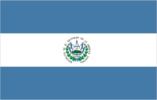
Geography
Agriculture
main crops — coffee, cotton, corn, sugar, beans, rice
Aid
economic — authorized from US, including Ex-Im (FY70-83), $690 million; ODA and OOF committed by other Western countries (1970-82), $95 million; military— from US (FY70-83), $215 million
Airfields
95 total, 77 usable; 63 with permanent-surface runways; 2 with runways over 3,659 m, 44 with runways 2,440-3,659 m, 21 with runways 1,220-2,439 m
Area
services, 6% transportation, 15% other (1984 est); shortage of skilled labor and large pool of unskilled labor, but manpower training programs improving situation; significant unemployment
Branches
Legislative Assembly (60 seats), Executive, Supreme Court
Budget
(1983) government revenues, $502 million; expenditures, $582 million
Business organizations
National Association of Private Enterprise (ANEP), conservative; Productive Alliance (AP), conservative; National Federation of Salvadoran Small Businessmen (FENAPES), conservative
Capital
San Salvador
Civil air
46 major transport aircraft
Elections
Legislative Assembly (formerly Constituent Assembly), 28 March 1982; presidential election, 25 March 1984; presidential runoff election, 6 May 1984 (next scheduled for 1989); Legislative Assembly election scheduled for 31 March 1985 Political parties and leaders: Christian Democratic Party (PDC), Jose Napoleon Duarte; National Conciliation Party (PCN), Raul Molina; Democratic Action (AD), Rene Fortin Magana; Salvadoran Popular Party (PPS), Francisco Quinonez; National Republican Alliance (ARENA), Maj. (Ret.) Roberto D'Aubuisson; Salvadoran Authentic Institutional Party (PAISA), Roberto Escobar Garcia
Electric power
700,000 kW capacity (1984); 1.7 billion kWh produced (1984), 340 kWh per capita
Exports
$737 million (f.o.b., 1983); coffee, cotton, sugar
Fiscal year
July through June Communications
Fishing
catch 12,897 metric tons (1982)
Freight carried
Suez Canal (1983) 257 million metric tons, of which 98 million metric tons were petroleums, oils, and lubricants
GDP
$4.3 billion (1984 est.), $872 per capita
Government leaders
Jose Napoleon DUARTE, President (since June 1984); Rodolfo CASTILLO Claramount Vice President (since June 1984); Abraham RODRIGUEZ, First Presidential Designate (since September 1984); Rene FORTIN, Magana, Second Presidential Designate (since September 1984)
Highways
47,025 km total; 12,300 km paved, 2,500 km gravel and crushed stone, 14,200 km improved earth, 18,025 km unimproved earth
Imports
$892 million (c.i.f., 1983); machinery, intermediate goods, petroleum, construction materials, fertilizers, foodstuffs
Inland waterways
3,360 km; Suez Canal, 195 km long, used by oceangoing vessels drawing up to 16.1 meters of water; Alexandria-Cairo waterway navigable by barges of 550-metric ton capacity; Nile and large canals by barges of 420-metric-ton capacity; Ismailia Canal by barges of 200to 300metric-ton capacity; secondary canals by sailing craft of 10to 70-metric-ton capacity
Labor organizations
Federation of Construction and Transport Workers Unions (FESINCONSTRANS), independent; Salvadoran Communal Union (UCS), peasant association; General Confederation of Trade Unions (CGS); United Confederation of Workers (CUT), leftist; Popular Democratic Unity (UPD), moderate labor coalition which includes FESINCONSTRANS, UCS, and other democratic labor organizations
Legal system
based on Spanish law, with traces of common law; new constitution enacted in December 1983; judicial review of legislative acts in the Supreme Court; legal education at University of El Salvador; accepts compulsory ICJ jurisdiction, with reservations
Major industries
food processing, textiles, clothing, petroleum products
Major trade partners
exports — 33% US, 15% FRG, 12% Guatemala; imports— 39% US, 18% Guatemala, 9% Mexico
Member of
FAO, G-77, IADB, IAEA, IBRD, ICAC, ICAO, ICO, IDA, IDB— Inter-American Development Bank, IFAD, IFC, ILO, IMF, IMO, INTELSAT, INTERPOL, ITU, IWC — International Wheat Council, OAS, ODECA, PAHO, SELA, UN, UNESCO, UPU, WFTU, WHO, WIPO, WMO, WTO Economy
Monetary conversion rate
official rate 0.70 Egyptian pound=US$l; official "incentive" rate 0.84 Egyptian pound=US$l; parallel or "own" exchange market rate 1.23 Egyptian pounds=US$l (October 1983)
National holiday
Independence Day, 15 September
Official name
Republic of El Salvador
Organized labor
8% total labor force; 10% agricultural labor force; 7% urban labor force (1982) Government
Other political or pressure groups
leftist revolutionary movement — Unified Revolutionary Directorate (DRU) and Farabundo Marti National Liberation Front (FMLN), leadership bodies of the insurgency; Popular Liberation Forces (FPL), Armed Forces of the National Resistance (FARN), People's Revolutionary Army (ERP), Salvadoran Communist Party/Armed Forces of Liberation (PCS/FAL), and Central American Workers' Revolutionary Party (PRTC)/ Popular Liberation Revolutionary Armed Forces (FARLP); militant front organizations — Revolutionary Coordinator of Masses (CRM; alliance of front groups), Popular Revolutionary Bloc (BPR), Unified Popular Action Front (FAPU), Popular Leagues of 28 February (LP-28), National Democratic Union (UDN), and Popular Liberation Movement (MLP); Revolutionary Democratic Front (FDR), coalition of CRM and Democratic Front (FD), controlled by DRU; FD consists of moderate leftist groups — Independent Movement of Professionals and Technicians of El Salvador (MIPTES), National Revolutionary Move ment (MNR), and Popular Social Christian Movement (MPSC); extreme rightist vigilante organizations or death squads — Secret Anti-Communist Army (ESA); Maximiliano Hernandez Brigade; Organization for Liberation From Communism (OLC)
Pipelines
crude oil, 930 km; refined products, 596 km; natural gas, 460 km
Political subdivisions
14 departments
Ports
4 major (Alexandria, Port Said, Suez, Safaja); 15 minor; 8 petroleum, oil, and lubricant terminals
Railroads
4,857 km total; 951 km double track; 25 km electrified; 4,510 km 1,435meter standard gauge, 347 km 0.750-meter gauge
Suffrage
universal over age 18
Telecommunications
system is large but still inadequate for needs; principal centers are Alexandria, Cairo, Al Mansurah, Ismailia, and Tanta; intercity connections by coaxial cable and microwave; extensive upgrading in progress; est. 600,000 telephones (1.3 per 100 popl.); 25 AM, 5 FM, 47 TV stations; 1 Atlantic Ocean satellite station; 1 Indian Ocean satellite station; 3 submarine coaxial cables; troposheric scatter to Sudan; radio-relay to
Type
republic
Voting strength
Legislative Assembly — PDC, 24 seats; ARENA, 19 seats; PAISA, 9 seats; PCN, 5 seats; AD, 2 seats; PPJ>, 1 seat