1985 Edition
CIA World Factbook 1985 (Internet Archive)
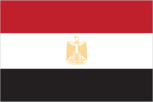
Geography
Agriculture
main cash crop — cotton; other crops — rice, onions, beans, citrus fruit, wheat, corn, barley; not self-sufficient in food
Area
1,001,449 km2; the size of Texas and Oregon combined; 96.5% desert, waste, or urban; 2.8% cultivated (of which about 70% is multiple crop); 0.7% inland water
Branches
executive power vested in President, who appoints Cabinet; People's Assembly is principal legislative body, with Shura Council having consultative role; independent judiciary administered by Minister of Justice
Capital
Cairo •
Coastline
2,450 km (1967) People
Communists
approximately 500 party members
Elections
regular elections to People's Assembly every five years (most recent May 1984); two-thirds of Shura Council is elected for six-year term (first elections were in September 1980) with remaining members appointed by President; presidential election every six years; last held October 1981 Political parties and leaders: formation of political parties must be approved by government; National Democratic Party, led by Mubarak, is the dominant party; legal opposition parties are Socialist Liberal Party, Kamal Murad; Socialist Labor Party, Ibrahim Shukri; National Progressive Unionist Grouping, Khalid Muhyi-al-Din; Umma Party, Ahmad al-Sabahi; and New Wafd Party, Fu'ad Siraj al-Din
Electric power
6,836,000 kW capacity (1984); 35.931 billion kWh produced (1984), 763 kWh per capita
Exports
$3.6 billion (f.o.b., 1984 est.J; crude petroleum, raw cotton, cotton yarn and fabric
GNP
$20.0 billion (1983; based on market exchange rate of 1.23 Egyptian pounds= US$1), $437 per capita; real growth of 6% in
Government leaders
Mohammed Hosni MUBARAK, President (since 1981); Kamal Hasan 'A LI, Prime Minister (since 1984)
Imports
$9.4 billion (c.i.f., 1984 est); foodstuffs, machinery and equipment, fertilizers, woods
Labor force
13.4 million; 45-50% agriculture, 13% industry, 11% trade and finance, 26% services and other; shortage of skilled labor; unemployment about 7%
Land boundaries
approximately 2,580 km Water
Language
Arabic (official); English and French widely understood by educated classes
Legal system
based on English common law, Islamic law, and Napoleonic codes; permanent constitution written in 1971; judicial review of limited nature in Supreme Court, also in Council of State, which oversees validity of administrative decisions; legal education at Cairo University; accepts compulsory ICJ jurisdiction, with reservations
Limits of territorial waters (claimed)
12 nm (economic, including fishing, 200 nm)
Literacy
40%
Major industries
textiles, food processing, chemicals, petroleum, construction, cement
Major trade partners
US, EC countries
Member of
AAPSO, Af DB, FAO, G-77, GATT, IAEA, IBRD, ICAC, ICAO, IDA, IDE— Islamic Development Bank, IFAD, IFC, IHO, ILO, IMF, IMO, INTELSAT, INTERPOL, IOOC, IPU, IRC, ITU, IWC— International Wheat Council, NAM, OAU, QIC, UN, UNESCO, UPU, WHO, WIPO, WMO, WPC, WSG, WTO; Egypt suspended from Arab League and OAPEC in April 1979 Economy
National holiday
National Day, 23 July
Nationality
noun — Egyptian(s); adjective — Egyptian or Arab Republic of Egypt Ethnic divisions :90% Eastern Hamitic stock; 10% Greek, Italian, SyroLebanese
Official name
Arab Republic of Egypt
Organized labor
1 to 3 million Government
Other political or pressure groups
Islamic groups are illegal, but the largest one, the Muslim Brotherhood, is tolerated by the government; trade unions and professional associations are officially sanctioned
Political subdivisions
26 governorates
Population
48,305,000 (July 1985), average annual growth rate 2.6%
Religion
(official estimate) 94% Muslim (mostly Sunni), 6% Coptic Christian and other
Suffrage
universal over age 18
Type
republic