1988 Edition
CIA World Factbook 1988 (Internet Archive)
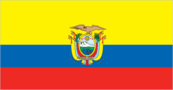
Geography
Boundary disputes
- Peru (two areas)
- none; disputes with Israel over Taba area and precise location of some individual boundary markers; Administrative Boundary and international boundary with Sudan; West Bank and Gaza Strip are Israeli occupied with status to be determined
- Honduras
- none; maritime dispute with Gabon
Climate
- tropical along coast becoming cooler inland
- desert; hot, dry summers with moderate winters
- tropical; rainy season (May to October); dry season (November to April)
- tropical; always hot, humid
Coastline
- 2,237 km
- 2,450 km
- 307 km
- 296 km
Comparative area
- about the size of Colorado
- about the size of Oregon and Texas combined
- about the size of Massachusetts
- about the size of Maryland
Contiguous zone
18 nm
Continental shelf
- 200 m
- 200 meters or to depth of exploitation
Environment
- subject to frequent earthquakes, landslides, volcanic activity, tsunamis; deforestation; desertification; soil erosion
- Nile is only perennial water source; increasing soil salinization below Aswan High Dam; hot, driving windstorm called khamsins occurs in spring; water pollution; desertification
- The Land of Volcanoes; subject to frequent and sometimes very destructive earthquakes; deforestation; soil erosion; water pollution
- subject to violent windstorms
Ethnic divisions
- 55% mestizo (mixed Indian and Spanish), 25% Indian, 10% Spanish, 10% black
- 90% Eastern Hamitic stock; 10% Greek, Italian, Syro-Lebanese
- 89% mestizo, 10% Indian, 1% white
- indigenous population of Bioko, primarily Bubi, some Fernandinos; Rio Muni, primarily Fang; less than 1,000 Europeans, mostly Spanish
Extended economic zone
200 nm
Infant mortality rate
- 68.4/1,000 (1984)
- 94/1,000 (1984)
- 41/1,000 (1984)
- 142.9/1,000(1984)
Labor force
- (1983) 2.8 million; 52% agriculture, 13% manufacturing, 7% commerce, 4% construction, 4% public administration, 16% other services and activities
- about 13.0 million (1985); 40-45% agriculture, 36% government (local and national), public sector enterprises, and armed forces; 20% privately owned service and manufacturing enterprises (1984); shortage of skilled labor; unemployment about 7% (official estimate); estimated 2.0 million Egyptians work abroad, mostly in Iraq and the Gulf Arab states (1986)
- 1.7 million (est. 1982); 40% agriculture, 16% manufacturing, 16% commerce, 13% government, 9% financial services, 6% transportation (1984 est.); shortage of skilled labor and large pool of unskilled labor, but manpower training programs improving situation; significant unemployment and underemployment
- most involved in subsistence agriculture; labor shortages on plantations
Land boundaries
- 1,931 km total
- 2,580 km total
- 515 km total
- 539 km total
Land use
- 6% arable land; 3% permanent crops; 17% meadows and pastures; 51% forest and woodland; 23% other; includes 2% irrigated
- 2% arable land; NEGL% permanent crops; 0% meadows and pastures; NEGL% forest and woodland; 98% other; includes 2% irrigated
- 27% arable land; 8% permanent crops; 29% meadows and pastures; 6% forest and woodland; 30% other; includes 5% irrigated
- 5% arable land; 4% permanent crops; 4% meadows and pastures; 61% forest and woodland; 26% other
Language
- Spanish (official); Indian languages, especially Quechua
- Arabic (official); English and French widely understood by educated classes
- Spanish, Nahua (among some Indians)
- Spanish (official), pidgin English, Fang
Life expectancy
- 64 (1984)
- 60
- men 62.6, women 66.3
- men 44, women 48
Literacy
- 85% (1981)
- 40%
- 65%
- 55%
Nationality
- noun — Ecuadorean(s); adjective— Ecuadorean
- noun — Egyptian(s); adjective— Egyptian
- noun — Salvadoran(s); adjective— Salvadoran
- noun — Equatorial Guinean(s); adjective — Equatorial Guinean
Organized labor
- less than 15% of labor force
- about 2.5 million
- 8% total labor force; 10% agricultural labor force; 7% urban labor force (1982)
Population
- 9,954,609 (July 1987), average annual growth rate 2.80%
- 51,929,962 (July 1987), average annual growth rate 2.74%
- 5,260,478 (July 1987), average annual growth rate 2.37%
- 340,434 (July 1987), average annual growth rate 1.83%; includes Rio Muni 265,281, average annual growth rate 1.83%, and Bioko 75,153, average annual growth rate 1.83%
Religion
- 95% Roman Catholic (majority nonpracticing)
- (official estimate) 94% Muslim (mostly Sunni), 6% Coptic Christian and other
- about 97% Roman Catholic, with activity by Protestant groups throughout the country
- natives all nominally Christian and predominantly Roman Catholic; some pagan practices retained
Special notes
- Cotopaxi in Andes is highest active volcano in world
- controls Sinai Peninsula, only land bridge between Africa and remainder of Eastern Hemisphere; controls Suez Canal, shortest sea link between Indian Ocean and Mediterranean; size and juxtaposition to Israel establishes its major role in Middle East geopolitics
- smallest Central American country and only one without a coastline on Caribbean Sea
- none
Terrain
- coastal plain (Costa), Andes Mountains and central highlands (Sierra), flat to rolling eastern jungle (Oriente)
- vast desert plateau interrupted by Nile valley and delta
- mostly mountains with narrow coastal belt and central plateau
- coastal plains rise to interior hills
Territorial sea
- 200 nm
- 12 nm
- 200 nm (overflight and navigation permitted beyond 12 nm)
- 12 nm
Total area
- 283,560 km2; land area: 276,840 km2
- 1,001,450 km2; land area: 995,450 km2
- 21,040 km2; land area: 20,720 km2
- 28,050 km2; land area: 28,050 km2
Government
Administrative divisions
- 20 provinces including Galapagos Islands
- 26 governorates
- 14 departments
Branches
- executive; unicameral legislature (Chamber of Representatives); independent judiciary
- executive power vested in President, who appoints Cabinet; People's Assembly is principal legislative body, with Slmra Council having consultative role; independent judiciary administered by Minister of Justice
- Legislative Assembly (60 seats), Executive, Supreme Court
Business organizations
National Association of Private Enterprise (ANEP), conservative; Productive Alliance (AP), conservative; National Federation of Salvadoran Small Businessmen (FENAPES), conservative
Capital
- Quito
- Cairo
- San Salvador
Communists
- Communist Party of Ecuador (PCE, pro-Moscow, Rene Mauge — secretary general), 6,000 members; Communist Party of Ecuador/ Marxist Leninist (PCMLE, Maoist), 6,000 members; Revolutionary Socialist Party of Ecuador (PSRE, pro-Cuba), 100 members plus an estimated 5,000 sympathizers
- about 500 party members
Elections
- parliamentary and presidential elections held January 1984; second-stage presidential election held May 1984; government and legislature took office in August 1984; an amendment to the constitution in August 1983 changed the term of office for the President from five to four years; the 59 deputies elected by the provinces serve for two years; the 12 at-large deputies serve for four years; next presidential election scheduled for 1988 Political parties and leaders: Social Christian Party (PSC, the party of President Leon Febres-Cordero), center-right; Popular Democracy (DP), Osvaldo Hurtado; Christian Democratic, Julio Cesar Trujillo; Democratic Left (ID), Xavier Ledesma; Social Democratic, Rodrigo Borja; Radical Alfarist Front (FRA), Cecilia Calderon de Castro, populist; Democratic Party (PD), Francisco Huerta, center-left; Radical Liberal Party, Eudoro Loor Rivadeneira, center-right; Conservative Party, Jose Teran, center-right; Concentration of Popular Forces (CFP), Averroes Bucaram, populist; People, Change, and Democracy (PCD), Aquiles Rigail Santistevan, centerleft; Democratic Popular Movement (MPD), Jaime Hurtado, Communist; Revolutionary Nationalist Party (PNR), Carlos Julio Arosemena, center-right; Broad Leftist Front (FADI), Rene Mauge, proMoscow Communist
- regular elections to People's Assembly every five years (next slated for April 1987); two-thirds of Shura Council is elected for six-year term (first elections were in September 1980) with remaining members appointed by President; presidential election every six years; last held October 1981 Political parties and leaders: formation of political parties must be approved by government; National Democratic Party, led by Mubarak, is the dominant party; legal opposition parties are Socialist Liberal Party, Kamal Murad; Socialist Labor Party, Ibrahim Shukri; National Progressive Unionist Grouping, Khalid Muhyi-alDin; Umma Party, Ahmad al-Sabahi; and New Wafd Party, Fu'ad Siraj al-Din
- Legislative Assembly (formerly Constituent Assembly), 28 March 1982; presidential election, 25 March 1984; presidential runoff election, 6 May 1984 (next scheduled for 1989); Legislative Assembly election, 31 March 1985 Political parties and leaders: Christian Democratic Party (PDC), Jose Antonio Morales Erlich; National Conciliation Party (PCN), Hugo Carrillo; Democratic Action (AD), Ricardo Gonzalez Camacho; Salvadoran Popular Party (PPS), Francisco Quifionez; National Republican Alliance (ARENA), Alfredo Cristiani; Salvadoran Authentic Institutional Party (PAISA), Roberto Escobar Garcia; Social Democratic Party (PSD), Mario Rene Roldan; Patria Libre, Hugo Barrera
Government leader
Leon FEBRESCORDERO Ribadeneyra, President (since August 1984)
Government leaders
- Mohammed Hosni MUBARAK, President (since 1981); 'Atif SIDQI (since November 1986)
- Jose Napoleon DUARTE, President (since June 1984); Rodolfo CASTILLO Claramount, Vice President (since June 1984); Abraham RODRIGUEZ, First Presidential Designate (since September 1984); Rene FORTIN, Magafla, Second Presidential Designate (since September 1984)
Labor organizations
Federation of Construction and Transport Workers Unions (FESINCONSTRANS), independent; Salvadoran Communal Union (UCS), peasant association; Unitary Federation of Salvadoran Unions (FUSS), leftist; National Federation of Salvadoran Workers (FENASTRAS), leftist; Democratic Workers Central (CTD), moderate; General Confederation of Workers (CGT), moderate; Popular Democratic Unity (UPD), moderate labor coalition which includes FESINCONSTRANS, and other democratic labor organizations
Legal system
- based on civil law system; progressive new constitution passed in January 1978 referendum; came into effect following the installation of a new civilian government in August 1979; has not accepted compulsory ICJ jurisdiction
- based on English common law, Islamic law, and Napoleonic codes; permanent constitution written in 1971; judicial review of limited nature in Supreme Court, also in Council of State, which oversees validity of administrative decisions; accepts compulsory ICJ jurisdiction, with reservations
- based on Spanish law, with traces of common law; new constitution enacted in December 1983; judicial review of legislative acts in the Supreme Court; accepts compulsory ICJ jurisdiction, with reservations
Member of
- Andean Pact, ECOSOC, FAO, G-77, IADB, IAEA, IBRD, ICAO, ICO, IDA, IDE— Inter-American Development Bank, IFAD, IFC, IHO, ILO, IMF, IMO, INTELSAT, INTERPOL, IRC, ITU, LAIA, NAM, OAS, OPEC, PAHO, SELA, UN, UNESCO, UPEB, UPU, WFTU, WHO, WMO, WTO
- AAPSO, AfDB, FAO, G-77, GATT, IAEA, IBRD, ICAC, ICAO, IDA, IDE — Islamic Development Bank, IFAD, IFC, IHO, ILO, IMF, IMO, INTELSAT, INTERPOL, IOOC, IPU, IRC, ITU, IWC — International Wheat Council, NAM, OAU, QIC, UN, UNESCO, UPU, WHO, WIPO, WMO, WPC, WSG, WTO; Egypt suspended from Arab League and OAPEC in April 1979
- CACM, FAO, G-77, IADB, IAEA, IBRD, ICAC, ICAO, ICO, IDA, IDE — Inter-American Development Bank, IFAD, IFC, ILO, IMF, IMO, INTELSAT, INTERPOL, ITU, IWC— International Wheat Council, OAS, ODECA, PAHO, SELA, UN, UNESCO, UPU, WFTU, WHO, WIPO, WMO, WTO
National holiday
- Independence Day, 10 August
- National Day, 23 July
- Independence Day, 15 September
Official name
- Republic of Ecuador
- Arab Republic of Egypt
- Republic of El Salvador
- Republic of Equatorial
Other political or pressure groups
- Islamic groups are illegal, but the largest one, the Muslim Brotherhood, is tolerated by the government; trade unions and professional associations are officially sanctioned
- leftist revolutionary movement — Unified Revolutionary Directorate (DRU) and Farabundo Marti National Liberation Front (FMLN), leadership bodies of the insurgency; Popular Liberation Forces (FPL), Armed Forces of National Resistance (FARN), People's Revolutionary Army (ERP), Salvadoran Communist Party/ Armed Forces of Liberation (PCES/FAL), and Central American Workers' Revolutionary Party (PRTC)/ Popular Liberation Revolutionary Armed Forces (FARLP); militant front organizations— Revolutionary Coordinator of Masses (CRM; alliance of front groups), Popular Revolutionary Bloc (BPR), Unified Popular Action Front (FAPU), Popular Leagues of 28 February (LP-28), National Democratic Union (UDN), and Popular Liberation Movement (MLP); Revolutionary Democratic Front (FDR), coalition of CRM and Democratic Front (FD), controlled by DRU; FD consists of moderate leftist groups — Independent Movement of Professionals and Technicians of El Salvador (MIPTES), National Revolutionary Movement (MNR), and Popular Social Christian Movement (MPSC); extreme rightist vigilante organizations or death squads — Secret Anti-Communist Army (ESA); Maximiliano Hernandez Brigade; Organization for Liberation From Communism (OLC)
Suffrage
- universal over age 18; compulsory for literate
- universal over age 18
- universal over age 18
Type
- republic
- republic
- republic
Voting strength
- results of May 1984 presidential runoff election — Leon FebresCordero of the Social Christian Party, who headed the coalition National Reconstruction Front, 52.2%; Rodrigo Borja of the Democratic Left, 47.8%
- Legislative Assembly — PDC, 33 seats; ARENA, 13 seats; PAISA, 1 seat; PCN, 12 seats; independent, 1 seat
Economy
Agriculture
- main crops — bananas, coffee, cocoa, sugarcane, corn, potatoes, rice; an illegal producer of coca for the international drug trade
- main cash crop — cotton; other crops — rice, onions, beans, citrus fruit, wheat, corn, barley; not self-sufficient in food
- coffee, cotton, corn, sugar, beans, rice, sorghum, wheat
Aid
- Western (non-US) ODA and OOF commitments (1970-84), $721 million; US economic (FY70-85), $330 million; Communist countries (1970-85), $64 million
- authorized from US, including Ex-Im (FY70-85), $1.3 billion; ODA and OOF commitments by other Western countries (1970-84), $170 million
Budget
- revenues, $1,718 million; expenditures, $1,876 million (1987)
- government revenues, $502 million; expenditures, $582 million (1983)
Electric power
- 1,791,000 kW capacity; 4,540 million kWh produced, 470 kWh per capita (1986)
- 8,427,000 kW capacity; 40,600 million kWh produced, 800 kWh per capita (1986)
- 705,000 kW capacity; 1,710 billion kWh produced, 340 kWh per capita (1986)
Exports
- $2.1 billion (f.o.b., 1986); petroleum, shrimp, fish products, coffee, bananas, cocoa
- $3.2 billion (f.o.b., 1985/86 est); crude petroleum, raw cotton, cotton yarn, fabric
- $772 million (f.o.b., 1985); coffee, cotton, sugar, shrimp
Fiscal year
- calendar year
- 1 July-30 June
- calendar year
Fishing
- catch 307,300 metric tons (1983); shrimp production 36,230 metric tons (1985); exports $260 million (1985), imports negligible
- catch 10,500 metric tons (1984 est.)
GDP
- $21.2 billion, $430 per capita; 3.5% real growth (1985)
- $4.36 billion, $870 per capita (1985 est.)
GNP
$10.7 billion (1985), $1,140 per capita; 66% private consumption, 21% gross investment, 12% public consumption, 27% foreign (1984); real growth rate 3.2% (1985); inflation rate 24.5% (1986)
Imports
- $1.7 billion (f.o.b., 1986); agricultural and industrial machinery, industrial raw materials, building supplies, chemical products, transportation and communication equipment
- $9.0 billion (c.i.f., 1985/86 est.); foodstuffs, machinery and equipment, fertilizers, woods
- $1,052 million (c.i.f., 1985); machinery, intermediate goods, petroleum, construction materials, fertilizers, foodstuffs
Major industries
- food processing, textiles, chemicals, fishing, petroleum
- textiles, food processing, chemicals, petroleum, construction, cement
- food processing, textiles, clothing, petroleum products
Major trade partners
- exports — 54% US, 10% Latin America and Caribbean, 4% EC, 2% Japan; imports — 33% US, 16% Latin America and Caribbean, 23% EC, 12% Japan (1985)
- US, EC countries
- exports — 33% US, 15% FRG, 12% Guatemala; imports— 39% US, 18% Guatemala, 9% Mexico
Military transfers
- US (FY70-85) $71 million
- US (FY70-85), $548 million
Monetary conversion rate
- 146 sucres=US$l (1 January 1987)
- official rate 0.70 Egyptian pound=US$l; commercial bank rate 1.35 Egyptian pounds=US$l; free market rate 1.95 Egyptian pounds=US$l (December 1986)
- 5.0 colones=US$l (November 1986)
Natural resources
- petroleum, fish, timber Ecuador (continued) Egypt
- petroleum, natural gas, iron ore, phosphates, manganese, limestone, gypsum, talc, asbestos, lead, zinc
- hydroelectric and geothermal power
Communications
Airfields
- 176 total, 174 usable; 32 with permanent-surface runways; 1 with runways over 3,659 m, 6 with runways 2,440-3,659 m, 21 with runways 1,220-2,439 m
- 102 total, 86 usable; 64 with permanent-surface runways; 2 with runways over 3,659 m, 45 with runways 2,440-3,659 m, 22 with runways 1,220-2,439 m Egypt (continued) El Salvador
- 161 total, 135 usable; 6 with permanent-surface runways; 1 with runways 2,440-3,659 m; 6 with runways 1,220-2,439 m
Branches
- Ecuadorean Army (Ejercito Ecuatoriano), Ecuadorean Air Force (Fuerza Aerea Ecuatoriana), Ecuadorean Navy (Armada Ecuatoriana)
- Army, Navy, Air Force, Air Defense Command
- Army, Navy, Air Force, National Guard, National Police, Treasury Police
Civil air
- 44 major transport aircraft
- 42 major transport aircraft
- 7 major transport aircraft
Freight carried
Suez Canal — 257.6 million metric tons, of which 94 million metric tons were petroleums, oils, and lubricants (1985)
Highways
- 28,000 km total; 3,600 km paved, 17,400 km gravel and improved earth, 7,000 km unimproved earth
- 28,500 km total; 15,000 km surfaced, 13,500 km unsurfaced
- 10,000 km total; 1,500 km paved, 4,100 km gravel, 4,400 km improved and unimproved earth
Inland waterways
- 1,500 km
- 3,360 km (including the Nile River, Lake Nasser, AlexandriaCairo Waterway, the Ismailia Canal, and numerous smaller canals in the Delta); Suez Canal, 162 km long, used by oceangoing vessels drawing up to 16.1 meters of water
- Rio Lempa partially navigable
Military budget
- estimated for fiscal year ending 31 December 1986, $242 million; about 10.9% of the central government budget Mediterranean Sea port Bur Saf ajah Al Kh.rijah^ .Luxot Atwsn See rtfionil nup VI »nd VII Boundary representation is not necessarily authoritative
- operating expenditures for fiscal year ending 30 June 1985, $3.7 billion; 13% of central government budget Boundary repres not necessarily a North Pacific Ocean Stt regional map 111
- estimated for fiscal year ending 31 December 1986, $166.8 million; about 24.6% of the central government budget Equatorial Guinea -MALABO ^•^/ Bioko Gulf of Guinea Island not shown in true geographical position. H, Annobon 1««* XJMM ^-VS»__ RIO MUNI Acalayong S« refloiul m.p VII
Military manpower
- males 15-49, 2,399,000; 1,628,000 fit for military service; 108,000 reach military age (20) annually
- males 15-49, 12,203,000; 7,949,000 fit for military service; 513,000 reach military age (20) annually
- males 15-49, 1,223,000; 780,000 fit for military service; 63,000 reach military age (18) annually
Pipelines
- crude oil, 800 km; refined products, 1,358 km
- crude oil, 1,107 km; refined products, 596 km; natural gas, 460 km
Ports
- 4 major (Guayaquil, Manta, Puerto Bolivar, Esmeraldas), 6 minor
- 4 major (Alexandria, Port Said, Suez, Bur Safajah); 15 minor; 9 petroleum, oil, and lubricant terminals
- 2 major (Acajutla, La Union), 1 minor
Railroads
- 965 km total; all 1.067-meter gauge single track
- 4,857 km total; 951 km double track; 25 km electrified; 4,510 km 1,435meter standard gauge, 347 km 0.750-meter gauge
- 602 km 0.914-meter gauge, single track
Telecommunications
- domestic facilities generally adequate; 1 Atlantic Ocean satellite station; 318,000 telephones (3.9 per 100 popl.); 285 AM, 24 TV stations Defense Forces
- system is large but still inadequate for needs; principal centers are Alexandria, Cairo, Al Man;urah, Ismailia, and Tan(a; intercity connections by coaxial cable and microwave; extensive upgrading in progress; est. 600,000 telephones (1.2 per 100 popl.); 25 AM, 5 FM, 47 TV stations; 1 Atlantic Ocean and 1 Indian Ocean INTELSAT station; 3 submarine coaxial cables; tropospheric scatter to Sudan; radio-relay to Libya Defense Forces
- nationwide trunk radio-relay system; connection into Central American microwave net; 116,000 telephones (2.3 per 100 popl.); 77 AM, 2 shortwave, 5 TV stations; 1 Atlantic Ocean satellite station Defense Forces