1985 Edition
CIA World Factbook 1985 (Internet Archive)
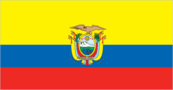
Geography
Agriculture
main crops — bananas, coffee, cocoa, sugarcane, corn, potatoes, rice
Aid
- economic — bilateral commitments, including Ex-Im (FY70-83), from US, $599 million; ODA and OOF from other Western countries (1970-82), $210 million; military authorized from US (1970-83), $33 million
- economic — other Western countries (1970-82), $498 million; US (FY70-83), $250; Communist countries (1970-83), $46 million; military— US (FY70-83) $57 million
Airfields
- 47 total, 34 usable; 14 with permanent-surface runways; 2 with runways 2,4403,659 m, 9 with runways 1,220-2,439 m
- 167 total, 166 usable; 23 with permanent-surface runways; 1 with runways over 3,659 m, 6 with runways 2,440-3,659 m, 22 with runways 1,220-2,439 m
Branches
- Army, Navy, Air Force
- executive; unicameral legislature (Chamber of Representatives); independent judiciary
- Ecuadorean Army, Ecuadorean Air Force, Ecuadorean Navy
Budget
- revenues, $1.1 billion; expenditures, $1.0 million (1983)
- (1982) revenues, $1,424 million; expenditures, $2,155 million
Capital
Quito
Civil air
- 14 major transport aircraft
- 44 major transport aircraft
Coastline
2,237 km (includes Galapagos Islands) People
Communists
Communist Party of Ecuador (PCE, pro-Moscow, Rene Mauge — secretary general), 6,000 members; Communist Party of Ecuador/Marxist Leninist (PCMLE, independent), 6,000 members; Revolutionary Socialist Party of Ecuador (PSRE, pro-Cuba), 100 members plus an estimated 5,000 sympathizers
Elections
parliamentary and presidential elections held January 1984; second-stage presidential election held May 1984; government and legislature took office in August 1984; an amendment to the constitution in August 1983 changed the term of office for the president from 5 to 4 years; the 59 deputies elected by the provinces serve for 2 years; the 12 at-large deputies serve for 4 years Political parties and leaders: Social Christian Party (PSC, the party of President Leon Febres-Cordero), center-right; Popular Democracy (DP), Osvaldo Hurtado; Christian Democratic, Julio Cesar Trujillo; Democratic Left (ID); Social Democratic, Rodrigo Borja; Radical Alfarist Front (FRA), Cecilia Calderon de Castro, populist; Democratic Party (PD), Francisco Huerta, center-left; Radical Liberal Party, Blasco Penaherrera, centerright; Conservative Party, Jose Teran, centerright; Concentration of Popular Forces (CFP), Averroes Bucaram, populist; People, Change, and Democracy (PCD), Aquiles Rigail, center-left; Ecuadorean Roldocist Party (PRE), Abdala Bucaram, populist; Democratic Popular Movement (MPD), Jaime Hurtado, Communist; Revolutionary Nationalist Party (PNR), Carlos Julio Arosemena, center-right; Democratic Institutionalist Coalition, Otto Arosemena, center-right; Broad Leftist Front (FADI), Rene Mauge, pro-Moscow Communist
Electric power
1,716,000 kW capacity (1984); 3.4 billion kWh produced (1984), 390 kWh per capita
Ethnic divisions
55% mestizo (mixed Indian and Spanish), 25% Indian, 10% Spanish, 10% black
Exports
$2,365 million (f.o.b., 1983); petroleum exports $1 ,750 million; bananas, coffee, cocoa, fish products
Fiscal year
- calendar year Communications
- calendar year Communications
Fishing
catch 636,532 metric tons (1982); exports $210 million (1982), imports negligible
GNP
$1 1.3 billion (1983), $1,343 per capita; 61% private consumption, 15% public consumption, 26% gross investment, 2% foreign (1982); growth rate -3.3% (1983)
Government leader
Leon FEBRESCORDERO Ribadeneyra, President (since August 1984)
Highways
- 12,000 km total; 5,800 km paved, 5,600 km gravel and improved earth, 600 km unimproved
- 69,280 km total; 11,925 km paved, 24,400 km gravel, 32,955 km earth roads and tracks
Imports
$1,408 million (c.i.f., 1983); agricultural and industrial machinery, industrial raw materials, building supplies, chemical products, transportation and communication equipment
Inland waterways
1,500 km
Labor force
(1983) 2.8 million; 52% agriculture, 13% manufacturing, 7% commerce, 4% construction, 4% public administration, 16% other services and activities
Land boundaries
1,931 km Water
Language
Spanish (official); Indian dialects, especially Quechua
Legal system
based on civil law system; progressive new constitution passed in January 1978 referendum; came into effect following the installation of a new civilian government in August 1979; legal education at four state and two private universities; has not accepted compulsory ICJ jurisdiction
Limits of territorial waters (claimed)
200 nm
Literacy
84%
Major industries
food processing, textiles, chemicals, fishing, petroleum
Major trade partners
exports (1982) — 52% US, 25% Latin America and Caribbean, 1% Japan, 1% Italy, 1% FRG; imports (1982) 45% US, 15% Latin America and Caribbean, 12% Japan (1982)
Member of
Andean Pact, ECOSOC, FAO, G-77, IADB, IAEA, IBRD, ICAO, ICO, IDA, IDE — Inter-American Development Bank, IFAD, IFC, IHO, ILO, IMF, IMO, INTELSAT, INTERPOL, IRC, ITU, LAIA, NAM, OAS, OPEC, PAHO, SELA, UN, UNESCO, UPEB, UPU, WFTU, WHO, WMO, WTO Economy
Military budget
estimated for the fiscal year ending 31 December 1985, $136.2 million; about 7.3% of the central government budget
Military manpower
- males 15-49, 1,637,000; 1,080,000 fit for military service; 82,000 reach military age (18) annually 175 km Boundary representation is nol necessarily authoritative Galapagos Islands Land 283,561 km2 (including Galapagos Islands); the size of Colorado; 55% forest; 11% cultivated, 8% meadow and pasture; 26% waste, urban, or other (excludes the Oriente and the Galapagos Islands, for which information is not available)
- males 15-49, 2,029,000; 1,379,000 fit for military service; 93,000 reach military age (20) annually
Monetary conversion rate
- 1 peso=US$l (December 1984)
- official, 67.18 sucres=US$l; floating, 1 19.50 sucres=US$l (January 1984)
National holiday
Independence Day, 10 August
Nationality
noun — Ecuadorean(s); adjective— Ecuadorean
Official name
Republic of Ecuador
Organized labor
less than 15% of labor force Government
Pipelines
- refined products, 69 km
- crude oil, 800 km; refined products, 1,358 km
Political subdivisions
20 provinces including Galapagos Islands
Population
8,884,000 (July 1985), average annual growth rate 2.7%
Ports
- 4 major (Santo Domingo, Haina, San Pedro de Macoris, Puerto Plata), 17 minor
- 3 major (Guayaquil, Manta, Puerto Bolivar, Esmeraldas), 6 minor
Railroads
- 375 km total of 1.435-meter gauge, privately owned
- 1,930 km total; all 1.067meter gauge single track
Religion
95% Roman Catholic (majority nonpracticing)
Suffrage
universal over age 18; compulsory for literates
Telecommunications
- relatively efficient domestic system based on islandwide radiorelay network; 175,100 telephones (3 per 100 popl.); 122 AM, 62 FM, 37 TV stations; 1 coaxial submarine cable; 1 Atlantic Ocean satellite station Defense Forces
- domestic facilities generally adequate; 1 Atlantic Ocean satellite station; 290,200 telephones (3.3 per 100 pop!.); 260 AM, 38 FM, 23 TV stations Defense Forces
Type
republic
Voting strength
results of May 1984 presidential runoff election — Leon FebresCordero of the Social Christian Party, who headed the coalition National Reconstruction Front, 52%; Rodrigo Borja of the Democratic Left, 48%