1986 Edition
CIA World Factbook 1986 (Internet Archive)
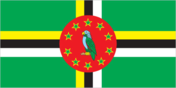
Geography
Agriculture
- bananas, citrus, coconuts, cocoa, essential oils
- main crops — sugarcane, coffee, cocoa, tobacco, rice, corn
Aid
- economic — bilateral ODA and OOF (1970-80), from Western (non-US) countries, $22.6 million; no military aid
- economic — US economic commitments, including Ex-Im (FY70-84), from US, $598 million; ODA and OOF from other Western countries (1970-83), $289 million; military authorized from US (1970-84), $40 million
Airfields
- 2 total, 2 usable; 2 with permanent-surface runways; 1 with runways 1,220-2,439 m
- 47 total, 34 usable; 14 with permanent-surface runways; 2 with runways 2,440-3,659 m, 9 with runways 1, 220-2,439 m
Area
752.7 km2; about one-fourth the size of Rhode Island; 67% forest; 24% arable; 2% pasture; 7% other Water
Branches
- legislative, 51-member bicameral House of Assembly (1 ex-officio member, 9 appointed members, and 21 members popularly elected members; executive, Cabinet headed by Prime Minister; judicial, magistrate's courts and regional court of appeals
- Commonwealth of Dominica Police Force
- President popularly elected for a four-year term; bicameral legislature (National Congress — 27-seat Senate and 120seat Chamber of Deputies elected for fouryear terms); Supreme Court
- Army, Navy, Air Force
Budget
- revenues, $33.4 million; expenditures, $38.5 million (FY84)
- revenues, $1.2 billion; expenditures, $1.3 million (1984)
Capital
- Roseau
- Santo Domingo
Civil air
- unknown number of major transport aircraft Dominica (continued) Dominican Republic
- 14 major transport aircraft
CNP
$85.4 million (prelim.), $1,034 per capita; 1984 real growth rate 4.3% (1984)
Coastline
- 148 km People
- 1,288 km People
- 2,237 km (includes Galapagos Islands) People
Communists
- negligible
- an estimated 8,000 to 10,000 members in several legal and illegal factions; effectiveness limited by ideological differences and organizational inadequacies
Elections
- every five years; last held 2 July Political parties and leaders: Labor Party of Dominica (LPD, a leftist front group), Michael Douglas; Dominica Freedom Party (DFP), (Mary) Eugenia Charles
- last national election May 1982; next election May 1986 Political parties and leaders: Dominican Revolutionary Party (PRD), Jacobo Majluta and Jose Francisco Pena Gomez; Reformist Social Christian Party (PRSC), Joaquin Balaguer (formed in 1984 by merger of Reformist Party and Revolutionary Social Christian Party); Dominican Liberation Party (PLD), Juan Bosch; Democratic Quisqueyan Party (POD), Elias Wessin y Wessin; Antireelection Movement of Democratic Integration (MIDA), Francisco Augusto Lora; National Civic Union (UCN), Guillermo Delmonte Urraca; Dominican Communist Party (PCD), Narciso Isa Conde, Anti-Imperialist Patriotic Union (UFA), Ivan Rodriguez; in 1983 several leftist parties, including the Communists, joined to form the Dominican Leftist Front (FID); however, they still retain individual party structures . 68 Ecuador
Electric power
- 7,000 kW capacity (1985); 16 million kWh produced (1985), 216 kWh per capita
- 1,439,000 kW capacity (1985); 3.286 billion kWh produced (1985), 497 kWh per capita
Ethnic divisions
- mostly black; some CaribIndians
- 73% mixed, 16% white, 11% black
- 55% mestizo (mixed Indian and Spanish), 25% Indian, 10% Spanish, 10% black
Exports
- $25.6 million (f.o.b., 1984 prelim.); bananas, coconuts, lime juice and oil, cocoa, reexports
- $866 million (f.o.b., 1984); sugar, nickel, coffee, tobacco, cocoa, gold, silver
Fiscal year
- 1 July-30 June Communications
- calendar year Communications
GNP
$11.0 billion (1984 prelim.), $1,090 per capita; real GDP growth 1.0% (1984)
Government leader
- (Mary) Eugenia CHARLES, Prime Minister (since July 1980); Sir Clarence SEIGNORET, President (since December 1983)
- Salvador JORGE Blanco, President (since May 1982)
Highways
- 750 km total; 370 km paved, 380 km gravel and earth
- 12,000 km total; 5,800 km paved, 5,600 km gravel and improved earth, 600 km unimproved
Imports
- $55.8 million (c.i.f., 1984 prelim.); machinery and equipment, foodstuffs, manufactured articles, cement
- $1.4 billion (f.o.b., 1984); foodstuffs, petroleum, industrial raw materials, capital equipment
Infant mortality rate
- 24. 1/1,000 (1981)
- 63/ 1 ,000 (1983)
- 76.3/1,000(1978)
Labor force
- 25,000; 40% agriculture, 32% industry and commerce, 28% services; 1520% unemployment (1984)
- 1.7 million (1984); 45% agriculture, 34% industry, 16% services, 3% other
Land boundaries
- 361 km Water
- 1,931 km Water
Language
- English (official); French patois widely spoken
- Spanish
- Spanish (official); Indian languages, especially Quechua
Legal system
- based on English common law; three local magistrate courts and the British Caribbean Court of Appeals
- based on French civil codes; 1966 constitution
Life expectancy
- men 56.97, women 59. 18
- 60
- 62
Limits of territorial waters (claimed)
- 12 nm (200 nm exclusive economic zone)
- 6 nm (200 nm exclusive economic zone)
- 200 nm
Literacy
- about 80%
- 68%
Major industries
- agricultural processing, tourism, soap and other coconut-based products, cigars
- tourism, sugar processing, nickel mining, gold mining, textiles, cement
Major trade partners
- (1984) exports — 46% UK, 16% Jamaica, 15% Trinidad and Tobago, 2% US, 0.3% other EC; imports— 27% US, 13% UK, 8% Trinidad and Tobago, 6% other EC
- exports — 77% US, including Puerto Rico (1984 prelim.); imports— 45% US, including Puerto Rico (1980)
Member of
- CARICOM, Commonwealth, FAO, GATT (de facto), G-77, IBRD, IDA, IFAD, IFC, ILO, IMF, IMO, INTERPOL, OAS, UN, UNESCO, UPU, WHO, WMO Economy
- FAO, G-77, GATT, IADB, IAEA, IBA, IBRD, ICAO, ICO, IDA, IDB— Inter-American Development Bank, IFAD, IFC, IHO, ILO, IMF, IMO, INTELSAT, INTERPOL, IOOC, IRC, ISO, ITU, OAS, PAHO, SELA, UN, UNESCO, UPU, WFTU, WHO, WMO, WTO Economy
Military budget
proposed for fiscal year 1986, $2.9 million; 4.6% of the central government budget 100km North Atlantic Ocean Bahta de Samana Caribbean Sea Land 48,734 km2; the size of New Hampshire and Vermont combined; 45% forest, 20% built on or waste, 17% meadow and pasture, 14% cultivated, 4% fallow
Military manpower
males 15-49, 1,686,000; 1,112,000 fit for military service; 84,000 reach military age (18) annually Setrtfionil mipIV Galapagos Islands Land 283,561 km2 (including Galapagos Islands); the size of Colorado; 55% forest; 11% cultivated; 8% meadow and pasture; 26% waste, urban, or other (excludes the Oriente and the Galapagos Islands, for which information is not available)
Monetary conversion rate
- 2.70 East Caribbean dollars= US$1 (February 1984)
- 3 pesos=US$l (September 1985)
National holiday
Independence Day, 27 February
Nationality
- noun — Dominican(s); adjective— Dominican
- noun — Dominican(s); adjective— Dominican
- noun — Ecuadorean(s); adjective— Ecuadorean
Natural resources
- timber
- nickel, bauxite, gold, silver
Official name
- Commonwealth of Dominica
- Dominican Republic
Organized labor
- 25% of the labor force Government
- 150,000(1984); 12% of labor force Government
Other political or pressure groups
Dominica Liberation Movement (DLM), a small leftist group
Pipelines
crude oil, 96 km; refined products, 8 km
Political subdivisions
- 21 districts
- 26 provinces and the National District
Population
- 74,000 (July 1986), average annual growth rate 0.4%
- 6,785,000 (July 1986), average annual growth rate 2.5%
- 9,647,000 (July 1986), average annual growth rate 2.8%
Ports
- 1 major (Roseau), 1 minor (Portsmouth)
- 4 major (Santo Domingo, Haina, San Pedro de Macoris, Puerto Plata), 17 minor
Railroads
- none
- 375 km total of 1.435-meter gauge, privately owned
Religion
- 80% Roman Catholic; Anglican, Methodist
- 95% Roman Catholic
- 95% Roman Catholic (majority nonpracticing)
Suffrage
- universal adult suffrage at age 18
- universal and compulsory, over age 18 or married, except members of the armed forces and police, who cannot vote
Telecommunications
- 4,600 telephones in fully automatic network (5.6 per 100 popl.); VHF and UHF link to St. Lucia; new SHF links to Martinique and Guadeloupe; 3 AM stations, 1 FM station, 1 cable TV station Defense Forces
- relatively efficient domestic system based on islandwide radiorelay network; 190,000 telephones (3 per 100 popl.); 126 AM, 18 TV stations; 1 coaxial submarine cable; 1 Atlantic Ocean satellite station Defense Forces
Type
- independent state within Commonwealth
- republic
Voting strength
- (1985 election) House of Assembly seats— DFP 15, LPD 5, independent 1
- (1982 election) 74% voter turnout; 46.76% PRO, 39.14% PR, 9.69% PLD; 4.41% minor parties