1981 Edition
CIA World Factbook 1981 (Internet Archive)
Countries
133
Data Records
7,952
Categories
6
Source
CIA World Factbook 1981 (Internet Archive)
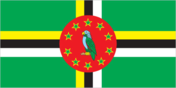
Geography
Area
- 790 km2; 24% arable, 2% pasture, 67% forests, 7% other
- Voting strength (1980 election): House of Assembly seats — DFP 17 seats, DLP 2 seats, independent 2 seats
- 48,692 km2; 14% cultivated, 4% fallow, 17% meadows and pastures, 45% forested, 20% built on or waste
Coastline
- 148 km
- 1,288 km
Communists
negligible
Land boundaries
361 km
Limits of territorial waters (claimed)
- 3 nm (fishing 12 nm)
- 6 nm (fishing 200 nm; 200 nm exclusive economic zone)
Member of
CARICOM, FAO, GATT (de facto), IDA, IFAD, IFC, IMCO, IMF, OAS, UN, UNESCO, UPU, WMO
People and Society
Ethnic divisions
- mostly of African Negro descent
- 73% mulatto, 16% white, 11% Negro
Labor force
- 23,000; about 50% in agriculture; 24% unemployment
- 1.3 million; 73% agriculture, 8% industry, 19% services, and other
Language
- English; French patois
- Spanish
Literacy
- about 80%
- 68%
Nationality
- noun — Dominican(s); adjective — Dominican
- noun — Dominican(s); adjective— Dominican
Organized labor
- 25% of the labor force
- 12% of labor force
Population
- 80,000 (July 1982), average annual growth rate 0.6%
- 6,013,000 (July 1982), average annual growth rate 2.7%
Religion
- Roman Catholic, Church of England, Methodist
- 95% Roman Catholic
Government
Branches
- legislature, 11 -member popularly elected House of Assembly; executive, Cabinet headed by Premier
- President popularly elected for a four-year term; bicameral legislature consisting of Senate (27 seats) and Chamber of Deputies (91 seats) elected for four-year terms; Supreme Court
Capital
- Roseau
- Santo Domingo
Communists
an estimated 7,000 to 9,000 members in severallegal and illegal factions; effectiveness limited by ideological differences and organizational inadequacies
Elections
- every five years; most recent 21 July 1980 Political parties and leaders: Dominica Labor Party (DLP), Michael Douglas; Dominica Freedom Party (DFP),
- last national election May 1978; next election May 1982 Political parties and leaders: Dominican Revolutionary Party (PRD), Ivelisse Prats de Perez Reformist Party (PR), Joaquin Balaguer; Dominican Liberation Party (PLD), Juan Bosch; Democratic Quisqueyan Party (PQD), Elias Wessin y Wessin; Social Christian Revolutionary Party (PRSC), Rogelio Delgado Bogaert; Movement for National Conciliation (MNC), Jaime Manuel Fernandez Gonzalez; Antireelection Movement of Democratic Integration (MIDA), Francisco Augusto Lora; National Civic Union (UCN), Guillermo Delmonte Urraca; National Salvation Movement (MSN), Luis Julian Perez; Popular Democratic Party (PDF), Homero Lajara Burgos; Fourteenth of June Revolutionary Movement (MR-1J4), Hector Aristy Pereyra; Dominican Communist Party (PCD), Narciso Isa Conde, central committee, legalized in 1978; Dominican Popular Movement (MPD), illegal; 12th of January National Liberation Movement (ML-12E), Plinio Matos Moquete, illegal; Communist Party of the Dominican Republic (PACOREDO), Luis Montas Gonzalez, illegal; Popular Socialist Party (PSP), illegal; Anti-Imperialist Patriotic Union (UPA), Franklin Franco Pichardo; Democratic Union (UD), Ramon Antonio Flores; Revolutionary League of Workers (LRT), Claudio Tavarez; several additional small leftist parties Voting strength (1978 election): 51.7% PRD, 40.9% PR, 7.4% thirteen minor parties
Government leader
- Prime Minister (Mary) Eugenia CHARLES
- President Antonio (Silvestre) GUZMAN Fernandez DOMINICAN REPUBLIC (Continued)
Legal system
- based on English common law; three local magistrate courts and the British Caribbean Court of Appeals
- based on French civil codes; 1966 constitution
Member of
FAO, G-77, GATT, IADB, IAEA, IBA, IBRD, ICAO, ICO, IDA, IDE, IFAD, IFC, IHO, ILO, IMCO, IMF, IOOC, ISO, ITU, OAS, SELA, UN, UNESCO, UPU, WHO, WMO, WTO
National holiday
Independence Day, 27 February
Official name
- Commonwealth of Dominica
- Dominican Republic
Political subdivisions
- 10 parishes
- 26 provinces and the National District
Suffrage
- universal adult suffrage over age 18
- universal and compulsory, over age 18 or married, except members of the armed forces and police, who cannot vote
Type
- independent state within Commonwealth as of 3 November 1978, recognizes Elizabeth II as Chief of State
- republic
Economy
Agricultural products
bananas, citrus, coconuts, cocoa, dasheen
Agriculture
main crops — sugarcane, coffee, cocoa, tobacco, rice, corn
Aid
- economic— bilateral ODA and OOF (1970-79), from Western (non-US) countries, $22.6 million; no military aid
- economic — bilateral commitments, including Ex-Im (FY70-80), from US, $414 million; (1970-79) ODA and OOF from other Western countries, $103 million; militaryauthorized from US (1970-80), $18 million
Budget
- revenues, $28 million (including grants); expenditures, $30 million (excluding grants) (1980/81)
- revenues, $891 million; expenditures, $1,094.1 million (1980 est.)
Electric power
- 7,000 kW capacity (1981); 15 million kWh produced (1981), 189 kWh per capita
- 890,000 kW capacity (1981); 3.0 billion kWh produced (1981), 519 kWh per capita
Exports
- $8.9 million (f.o.b., 1980 proj.); bananas, lime juice and oil, cocoa, reexports
- $962 million (f.o.b., 1980); sugar, nickel, coffee, tobacco, cocoa, bauxite
Fiscal year
- 1 July-30 June
- calendar year
GNP
- $35 million (1980 est. in 1977 prices), $430 per capita; 1980 real growth rate, -1.4% (est.)
- $6.8 billion (1980 prelim.), $1,256 per capita; real growth rate 1980, 5.4%
Imports
- $49 million (c.i.f., 1980 proj.); machinery and equipment, foodstuffs, manufactured articles, cement
- $1,515 million (f.o.b., 1980); foodstuffs, petroleum, industrial raw materials, capital equipment
Major industries
- agricultural processing, tourism
- tourism, sugar processing, nickel mining, bauxite mining, gold mining, textiles, cement
Major trade partners
- exports— 56% UK, 14% East Common Market, 17% rest of CARICOM, 6% other Caribbean, 4% US (1979); imports— 25% UK, 12% ECC, 16% rest of Caribbean, 14% US
- exports — 46% US including Puerto Rico (1980); imports— 45% US including Puerto Rico (1980)
Monetary conversion rate
- 2.70 East Caribbean dollars=US$l
- 1 peso=US$l
Communications
Airfields
- 1 with permanent-surface runways 1,220-2,439
- 47 total, 37 usable; 13 with permanent-surface runways; 2 with runways 2,440-3,659 m, 9 with runways 1,220-2,439 m
Civil air
- no major transport aircraft
- 16 major transport aircraft, including 1 leased in
Highways
- 630 km total; 360 km paved, 270 km gravel and earth
- 11,400 km total; 5,800 km paved, 5,600 km gravel and improved earth
Military manpower
males 15-49, 1,423,000; 939,000 fit for military service; 75,000 reach military age (18) annually
Pipelines
refined products, 69 km
Ports
- 2 minor (Roseau, Portsmouth)
- 4 major (Santo Domingo, Barahona, Haina, San Pedro de Macoris), 17 minor
Railroads
- none
- 1,600 km total; 104 km government owned common-carrier 1.065-meter gauge; 1,496 km privately owned plantation lines of four different gauges ranging from 0.60 m to 1.43 m, 0.760-meter gauge predominating
Telecommunications
- 4,000 telephones in fully automatic network (5.1 per 100 popl.); VHF and UHF link to St. Lucia; 2 AM stations and 1 TV station Atlantic Ocean CUB*; -^ & ;•;•;'.. i^.&> HAIT DOMINICAN REPUBLIC Saoto Domingo Cari6bean Sea KNEZUOA
- relatively efficient domestic system based on islandwide radio-relay network; 139,000 telephones (2.5 per 100 popl.); 135 AM, 31 FM, and 22 TV stations; 1 coaxial submarine cable; 1 Atlantic Ocean satellite station DEFENSE FORCES