2022 Edition
CIA World Factbook 2022 (factbook.json @ 61dadec0c9c9)
Introduction
Background
At the close of World War I, the Czechs and Slovaks of the former Austro-Hungarian Empire merged to form Czechoslovakia, a parliamentarian democracy. During the interwar years, having rejected a federal system, the new country's predominantly Czech leaders were frequently preoccupied with meeting the increasingly strident demands of other ethnic minorities within the republic, most notably the Slovaks, the Sudeten Germans, and the Ruthenians (Ukrainians). On the eve of World War II, Nazi Germany occupied the territory that today comprises Czechia, and Slovakia became an independent state allied with Germany. After the war, a reunited but truncated Czechoslovakia (less Ruthenia) fell within the Soviet sphere of influence when the pro-Soviet Communist party staged a coup in February 1948. In 1968, an invasion by fellow Warsaw Pact troops ended the efforts of the country's leaders to liberalize communist rule and create "socialism with a human face," ushering in a period of repression known as "normalization." The peaceful "Velvet Revolution" swept the Communist Party from power at the end of 1989 and inaugurated a return to democratic rule and a market economy. On 1 January 1993, the country underwent a nonviolent "velvet divorce" into its two national components, the Czech Republic and Slovakia. The Czech Republic joined NATO in 1999 and the European Union in 2004. The country formally added the short-form name Czechia in 2016, while also continuing to use the full form name, the Czech Republic.
Geography
Area
- land
- 77,247 sq km
- total
- 78,867 sq km
- water
- 1,620 sq km
Area - comparative
about two-thirds the size of Pennsylvania; slightly smaller than South Carolina
Climate
temperate; cool summers; cold, cloudy, humid winters
Coastline
0 km (landlocked)
Elevation
- highest point
- Snezka 1,602 m
- lowest point
- Labe (Elbe) River 115 m
- mean elevation
- 433 m
Geographic coordinates
49 45 N, 15 30 E
Geography - note
note 1: landlocked; strategically located astride some of oldest and most significant land routes in Europe; Moravian Gate is a traditional military corridor between the North European Plain and the Danube in central Europenote 2: the Hranice Abyss in Czechia is the world's deepest surveyed underwater cave at 404 m (1,325 ft); its survey is not complete and it could end up being some 800-1,200 m deep
Irrigated land
220 sq km (2020)
Land boundaries
- border countries
- Austria 402 km; Germany 704 km; Poland 699 km; Slovakia 241 km
- total
- 2,046 km
Land use
- agricultural land
- 54.8% (2018 est.)
- agricultural land: arable land
- arable land: 41% (2018 est.)
- agricultural land: permanent crops
- permanent crops: 1% (2018 est.)
- agricultural land: permanent pasture
- permanent pasture: 12.8% (2018 est.)
- forest
- 34.4% (2018 est.)
- other
- 10.8% (2018 est.)
Location
Central Europe, between Germany, Poland, Slovakia, and Austria
Major rivers (by length in km)
Danube (shared with Germany [s], Austria, Slovakia, Hungary, Croatia, Serbia, Bulgaria, Ukraine, Moldova, and Romania [m]) - 2,888 km; Elbe river source (shared with Germany [m]) - 1,252 kmnote – [s] after country name indicates river source; [m] after country name indicates river mouth
Major watersheds (area sq km)
Atlantic Ocean drainage: (Black Sea) Danube (795,656 sq km)
Map references
Europe
Maritime claims
none (landlocked)
Natural hazards
flooding
Natural resources
hard coal, soft coal, kaolin, clay, graphite, timber, arable land
Population distribution
a fairly even distribution throughout most of the country, but the northern and eastern regions tend to have larger urban concentrations
Terrain
Bohemia in the west consists of rolling plains, hills, and plateaus surrounded by low mountains; Moravia in the east consists of very hilly country
People and Society
Age structure
- 0-14 years
- 15.17% (male 834,447/female 789,328)
- 15-24 years
- 9.2% (male 508,329/female 475,846)
- 25-54 years
- 43.29% (male 2,382,899/female 2,249,774)
- 55-64 years
- 12.12% (male 636,357/female 660,748)
- 65 years and over
- 20.23% (male 907,255/female 1,257,515) (2020 est.)
Alcohol consumption per capita
- beer
- 6.77 liters of pure alcohol (2019 est.)
- other alcohols
- 0 liters of pure alcohol (2019 est.)
- spirits
- 3.24 liters of pure alcohol (2019 est.)
- total
- 12.73 liters of pure alcohol (2019 est.)
- wine
- 2.73 liters of pure alcohol (2019 est.)
Birth rate
8.59 births/1,000 population (2022 est.)
Children under the age of 5 years underweight
NA
Contraceptive prevalence rate
NA
Current health expenditure
7.8% of GDP (2019)
Death rate
10.74 deaths/1,000 population (2022 est.)
Dependency ratios
- elderly dependency ratio
- 32.2
- potential support ratio
- 3.1 (2021 est.)
- total dependency ratio
- 57.4
- youth dependency ratio
- 25.2
Drinking water source
- improved: rural
- rural: 99.8% of population
- improved: total
- total: 99.9% of population
- improved: urban
- urban: 99.9% of population
- unimproved: rural
- rural: 0.2% of population
- unimproved: total
- total: 0.1% of population (2020 est.)
- unimproved: urban
- urban: 0.1% of population
Education expenditures
5.1% of GDP (2020 est.)
Ethnic groups
- Czech 57.3%, Moravian 3.4%, other 7.7%, unspecified 31.6% (2021 est.)
- note
- note: includes only persons with one ethnicity
HIV/AIDS - adult prevalence rate
(2018 est.)
Hospital bed density
6.6 beds/1,000 population (2018)
Infant mortality rate
- female
- 2.19 deaths/1,000 live births (2022 est.)
- male
- 2.59 deaths/1,000 live births
- total
- 2.4 deaths/1,000 live births
Languages
- Languages
- Czech (official) 88.4%, Slovak 1.5%, other 2.6%, unspecified 7.2%note: includes only persons with one mother tongue (2021 est.)
- major-language sample(s)
- World Fackbook, nepostradatelný zdroj základních informací. (Czech)The World Factbook, the indispensable source for basic information.
Life expectancy at birth
- female
- 82.82 years (2022 est.)
- male
- 76.8 years
- total population
- 79.73 years
Literacy
- definition
- NA
- female
- 99% (2011)
- male
- 99%
- total population
- 99%
Major urban areas - population
1.323 million PRAGUE (capital) (2023)
Maternal mortality ratio
3 deaths/100,000 live births (2017 est.)
Median age
- female
- 44.7 years (2020 est.)
- male
- 42 years
- total
- 43.3 years
Mother's mean age at first birth
28.5 years (2020 est.)
Nationality
- adjective
- Czech
- noun
- Czech(s)
Net migration rate
2.32 migrant(s)/1,000 population (2022 est.)
Obesity - adult prevalence rate
26% (2016)
Physicians density
4.15 physicians/1,000 population (2020)
Population
10,705,384 (2022 est.)
Population distribution
a fairly even distribution throughout most of the country, but the northern and eastern regions tend to have larger urban concentrations
Population growth rate
0.02% (2022 est.)
Religions
Roman Catholic 7%, other believers belonging to a church or religious society 6% (includes Evangelical United Brethren Church and Czechoslovak Hussite Church), believers unaffiliated with a religious society 9.1%, none 47.8%, unspecified 30.1% (2021 est.)
Sanitation facility access
- improved: rural
- rural: 100% of population
- improved: total
- total: 100% of population
- improved: urban
- urban: 100% of population
- unimproved: rural
- rural: 0% of population
- unimproved: total
- total: 0% of population (2020 est.)
- unimproved: urban
- urban: 0% of population
School life expectancy (primary to tertiary education)
- female
- 17 years (2020)
- male
- 16 years
- total
- 16 years
Sex ratio
- 0-14 years
- 1.06 male(s)/female
- 15-24 years
- 1.19 male(s)/female
- 25-54 years
- 1.14 male(s)/female
- 55-64 years
- 0.93 male(s)/female
- 65 years and over
- 0.61 male(s)/female
- at birth
- 1.05 male(s)/female
- total population
- 1.05 male(s)/female (2022 est.)
Tobacco use
- female
- 26.4% (2020 est.)
- male
- 35% (2020 est.)
- total
- 30.7% (2020 est.)
Total fertility rate
1.49 children born/woman (2022 est.)
Urbanization
- rate of urbanization
- 0.2% annual rate of change (2020-25 est.)
- urban population
- 74.6% of total population (2023)
Youth unemployment rate (ages 15-24)
- female
- 9.1% (2021 est.)
- male
- 7.6%
- total
- 8.2%
Government
Administrative divisions
13 regions (kraje, singular - kraj) and 1 capital city* (hlavni mesto); Jihocesky (South Bohemia), Jihomoravsky (South Moravia), Karlovarsky (Karlovy Vary), Kralovehradecky (Hradec Kralove), Liberecky (Liberec), Moravskoslezsky (Moravia-Silesia), Olomoucky (Olomouc), Pardubicky (Pardubice), Plzensky (Pilsen), Praha (Prague)*, Stredocesky (Central Bohemia), Ustecky (Usti), Vysocina (Highlands), Zlinsky (Zlin)
Capital
- daylight saving time
- +1hr, begins last Sunday in March; ends last Sunday in October
- etymology
- the name may derive from an old Slavic root "praga" or "prah", meaning "ford", and refer to the city's origin at a crossing point of the Vltava (Moldau) River
- geographic coordinates
- 50 05 N, 14 28 E
- name
- Prague
- time difference
- UTC+1 (6 hours ahead of Washington, DC, during Standard Time)
Citizenship
- citizenship by birth
- no
- citizenship by descent only
- at least one parent must be a citizen of Czechia
- dual citizenship recognized
- no
- residency requirement for naturalization
- 5 years
Constitution
- amendments
- passage requires at least three-fifths concurrence of members present in both houses of Parliament; amended several times, last in 2021
- history
- previous 1960; latest ratified 16 December 1992, effective 1 January 1993
Country name
- conventional long form
- Czech Republic
- conventional short form
- Czechia
- etymology
- name derives from the Czechs, a West Slavic tribe who rose to prominence in the late 9th century A.D.; the country officially adopted the English short-form name of Czechia on 1 July 2016
- local long form
- Ceska republika
- local short form
- Cesko
Diplomatic representation from the US
- chief of mission
- Ambassador (vacant); Charge d'Affaires Christy AGOR (since 18 August 2022)
- email address and website
- ACSPrg@state.govhttps://cz.usembassy.gov/
- embassy
- Trziste 15, 118 01 Praha 1 - Mala Strana
- FAX
- [420] 257-022-809
- mailing address
- 5630 Prague Place, Washington DC 20521-5630
- telephone
- [420] 257-022-000
Diplomatic representation in the US
- chancery
- 3900 Spring of Freedom Lane NW, Washington, DC 20008-3803
- chief of mission
- Ambassador Miloslav STASEK (since 16 September 2022)
- consulate(s) general
- Chicago, Los Angeles, New York
- email address and website
- washington@embassy.mzv.czhttps://www.mzv.cz/washington/
- FAX
- [1] (202) 966-8540
- telephone
- [1] (202) 274-9100
Executive branch
- cabinet
- Cabinet appointed by the president on the recommendation of the prime minister
- chief of state
- President Milos ZEMAN (since 8 March 2013)
- election results
- 2018: Milos ZEMAN reelected president in the second round; percent of vote - Milos ZEMAN (SPO) 51.4%, Jiri DRAHOS (independent) 48.6%2013: Milos ZEMAN elected president; percent of vote - Milos ZEMAN (SPO) 54.8%, Karel SCHWARZENBERG (TOP 09) 45.2%
- elections/appointments
- president directly elected by absolute majority popular vote in 2 rounds if needed for a 5-year term (limited to 2 consecutive terms); elections last held on 12-13 January 2018 with a runoff on 26-27 January 2018 (next to be held in January 2023); prime minister appointed by the president for a 4-year term
- head of government
- Prime Minister Petr FIALA (since 17 December 2021); First Deputy Prime Minister Vit RAKUSAN (since 17 December 2021), Deputy Prime Ministers Marian JURECKA, Ivan BARTOS, Vlastimil VALEK (all since 17 December 2021)
Flag description
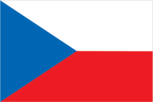
- two equal horizontal bands of white (top) and red with a blue isosceles triangle based on the hoist side
- note
- note: combines the white and red colors of Bohemia with blue from the arms of Moravia; is identical to the flag of the former Czechoslovakia
Government type
parliamentary republic
Independence
1 January 1993 (Czechoslovakia split into the Czech Republic and Slovakia); note - although 1 January is the day the Czech Republic came into being, the Czechs commemorate 28 October 1918, the day the former Czechoslovakia declared its independence from the Austro-Hungarian Empire, as their independence day
International law organization participation
has not submitted an ICJ jurisdiction declaration; accepts ICCt jurisdiction
International organization participation
Australia Group, BIS, BSEC (observer), CD, CE, CEI, CERN, EAPC, EBRD, ECB, EIB, ESA, EU, FAO, IAEA, IBRD, ICAO, ICC (national committees), ICCt, ICRM, IDA, IEA, IFC, IFRCS, ILO, IMF, IMO, IMSO, Interpol, IOC, IOM, IPU, ISO, ITSO, ITU, ITUC (NGOs), MIGA, MONUSCO, NATO, NEA, NSG, OAS (observer), OECD, OIF (observer), OPCW, OSCE, PCA, Schengen Convention, SELEC, UN, UNCTAD, UNESCO, UNHCR, UNHRC, UNIDO, UNWTO, UPU, Wassenaar Arrangement, WCO, WFTU (NGOs), WHO, WIPO, WMO, WTO, ZC
Judicial branch
- highest court(s)
- Supreme Court (organized into Civil Law and Commercial Division, and Criminal Division each with a court chief justice, vice justice, and several judges); Constitutional Court (consists of 15 justices); Supreme Administrative Court (consists of 36 judges, including the court president and vice president, and organized into 6-, 7-, and 9-member chambers)
- judge selection and term of office
- Supreme Court judges proposed by the Chamber of Deputies and appointed by the president; judges appointed for life; Constitutional Court judges appointed by the president and confirmed by the Senate; judges appointed for 10-year, renewable terms; Supreme Administrative Court judges selected by the president of the Court; unlimited terms
- subordinate courts
- High Court; regional and district courts
Legal system
new civil code enacted in 2014, replacing civil code of 1964 - based on former Austro-Hungarian civil codes and socialist theory - and reintroducing former Czech legal terminology
Legislative branch
- description
- bicameral Parliament or Parlament consists of:Senate or Senat (81 seats; members directly elected in single-seat constituencies by absolute majority vote in 2 rounds if needed; members serve 6-year terms with one-third of the membership renewed every 2 years)Chamber of Deputies or Poslanecka Snemovna (200 seats; members directly elected in 14 multi-seat constituencies by proportional representation vote with a 5% threshold required to fill a seat; members serve 4-year terms)
- election results
- Senate - percent of vote by party - seats by party - ODS 23, STAN 15, KDU-CSL 12, ANO 5, TOP 09 6, CSSD 1, SEN 21 4, Pirates 2, minor parties with one seat each 9, independents 1 Chamber of Deputies - percent of vote by party – SPOLU 27.8%, Action of Dissatisfied Persons (ANO)27.1%, Pirates and Mayors of Independents (STAN) 15.6%, Freedom and Direct Democracy 9.6%, other 19.9%; seats by party - Action of Dissatisfied Persons 72, SPOLU 71, Pirates and Mayors 37, Freedom and Direct Democracy 20
- elections
- Senate - last held in 2 rounds on 23-24 September and 30 September and 1 October 2022 (next to be held in October 2024)Chamber of Deputies - last held on 8-9 October 2021 (next to be held by October 2025)
National anthem
- lyrics/music
- Josef Kajetan TYL/Frantisek Jan SKROUP
- name
- "Kde domov muj?" (Where is My Home?)
- note
- note: adopted 1993; the anthem was originally written as incidental music to the play "Fidlovacka" (1834), it soon became very popular as an unofficial anthem of the Czech nation; its first verse served as the official Czechoslovak anthem beginning in 1918, while the second verse (Slovak) was dropped after the split of Czechoslovakia in 1993
National heritage
- selected World Heritage Site locales
- Historic Prague; Historic Telč; Historic Český Krumlov; Lednice-Valtice Cultural Landscape; Historic Kutná Hora; Holy Trinity Column, Olomouc; Karlovy Vary Spa
- total World Heritage Sites
- 16 (all cultural)
National holiday
Czechoslovak Founding Day, 28 October (1918)
National symbol(s)
silver (or white), double-tailed, rampant lion; national colors: white, red, blue
Political parties and leaders
Christian Democratic Union-Czechoslovak People's Party or KDU-CSL [Marian JURECKA]Civic Democratic Party or ODS [Petr FIALA]Communist Party of Bohemia and Moravia or KSCM [Katerina KONECNA]Czech Social Democratic Party or CSSD [Michal SMARDA]Freedom and Direct Democracy or SPD [Tomio OKAMURA]Mayors and Independents or STAN [Vit RAKUSAN]Mayors for the Liberec Region [Martin PUTA]Movement of Dissatisfied Citizens or ANO [Andrej BABIS]Party of Free Citizens Svobodni [Libor VONDRACEK]Pirate Party or Pirates [Ivan BARTOS]Senator 21 [Vaclav LASKA]Tradition Responsibility Prosperity 09 or TOP 09 [Marketa PEKAROVA ADAMOVA]
Suffrage
18 years of age; universal
Economy
Agricultural products
wheat, sugar beet, milk, barley, rapeseed, potatoes, maize, pork, triticale, poultry
Budget
- expenditures
- 83.92 billion (2017 est.)
- revenues
- 87.37 billion (2017 est.)
Budget surplus (+) or deficit (-)
1.6% (of GDP) (2017 est.)
Credit ratings
- Fitch rating
- AA- (2018)
- Moody's rating
- Aa3 (2019)
- note
- note: The year refers to the year in which the current credit rating was first obtained.
- Standard & Poors rating
- AA- (2011)
Current account balance
- Current account balance 2018
- $1.259 billion (2018 est.)
- Current account balance 2019
- -$678 million (2019 est.)
Debt - external
- Debt - external 2018
- $200.197 billion (2018 est.)
- Debt - external 2019
- $191.871 billion (2019 est.)
Economic overview
Czechia is a prosperous market economy that boasts one of the highest GDP growth rates and lowest unemployment levels in the EU, but its dependence on exports makes economic growth vulnerable to contractions in external demand. Czechia’s exports comprise some 80% of GDP and largely consist of automobiles, the country’s single largest industry. Czechia acceded to the EU in 2004 but has yet to join the euro-zone. While the flexible koruna helps Czechia weather external shocks, it was one of the world’s strongest performing currencies in 2017, appreciating approximately 16% relative to the US dollar after the central bank (Czech National Bank - CNB) ended its cap on the currency’s value in early April 2017, which it had maintained since November 2013. The CNB hiked rates in August and November 2017 - the first rate changes in nine years - to address rising inflationary pressures brought by strong economic growth and a tight labor market. Since coming to power in 2014, the new government has undertaken some reforms to try to reduce corruption, attract investment, and improve social welfare programs, which could help increase the government’s revenues and improve living conditions for Czechs. The government introduced in December 2016 an online tax reporting system intended to reduce tax evasion and increase revenues. The government also plans to remove labor market rigidities to improve the business climate, bring procurement procedures in line with EU best practices, and boost wages. The country's low unemployment rate has led to steady increases in salaries, and the government is facing pressure from businesses to allow greater migration of qualified workers, at least from Ukraine and neighboring Central European countries. Long-term challenges include dealing with a rapidly aging population, a shortage of skilled workers, a lagging education system, funding an unsustainable pension and health care system, and diversifying away from manufacturing and toward a more high-tech, services-based, knowledge economy.
Exchange rates
- Currency
- koruny (CZK) per US dollar -
- Exchange rates 2013
- 20.758 (2013 est.)
- Exchange rates 2014
- 24.599 (2014 est.)
- Exchange rates 2018
- 22.71439 (2018 est.)
- Exchange rates 2019
- 23.0629 (2019 est.)
- Exchange rates 2020
- 21.76636 (2020 est.)
Exports
- Exports 2018
- $191.69 billion (2018 est.)
- Exports 2019
- $186.54 billion (2019 est.)
- Exports 2020
- $174.92 billion (2020 est.)
- note
- note: Data are in current year dollars and do not include illicit exports or re-exports.
Exports - commodities
cars and vehicle parts, computers, broadcasting equipment, office machinery/parts, seating (2019)
Exports - partners
Germany 31%, Slovakia 7%, Poland 6%, France 5% (2019)
Fiscal year
calendar year
GDP - composition, by end use
- exports of goods and services
- 79.9% (2017 est.)
- government consumption
- 19.2% (2017 est.)
- household consumption
- 47.4% (2017 est.)
- imports of goods and services
- -72.3% (2017 est.)
- investment in fixed capital
- 24.7% (2017 est.)
- investment in inventories
- 1.1% (2017 est.)
GDP - composition, by sector of origin
- agriculture
- 2.3% (2017 est.)
- industry
- 36.9% (2017 est.)
- services
- 60.8% (2017 est.)
GDP (official exchange rate)
$250.631 billion (2019 est.)
Gini Index coefficient - distribution of family income
- Gini Index coefficient - distribution of family income 2014
- 25.1 (2014)
- Gini Index coefficient - distribution of family income 2017
- 24.9 (2017 est.)
Household income or consumption by percentage share
- highest 10%
- 21.7% (2015 est.)
- lowest 10%
- 4.1%
Imports
- Imports 2018
- $176.78 billion (2018 est.) note: data are in current year dollars
- Imports 2019
- $171.43 billion (2019 est.) note: data are in current year dollars
- Imports 2020
- $157.95 billion (2020 est.) note: data are in current year dollars
Imports - commodities
broadcasting equipment, cars and vehicle parts, office machinery/parts, computers, packaged medicines (2019)
Imports - partners
Germany 27%, China 12%, Poland 9%, Slovakia 5% (2019)
Industrial production growth rate
7.5% (2017 est.)
Industries
motor vehicles, metallurgy, machinery and equipment, glass, armaments
Inflation rate (consumer prices)
- Inflation rate (consumer prices) 2017
- 2.4% (2017 est.)
- Inflation rate (consumer prices) 2018
- 2.1% (2018 est.)
- Inflation rate (consumer prices) 2019
- 2.8% (2019 est.)
Labor force
5.222 million (2020 est.)
Labor force - by occupation
- agriculture
- 2.8%
- industry
- 38%
- services
- 59.2% (2015)
Population below poverty line
10.1% (2018 est.)
Public debt
- Public debt 2016
- 36.8% of GDP (2016 est.)
- Public debt 2017
- 34.7% of GDP (2017 est.)
Real GDP (purchasing power parity)
- note
- note: data are in 2017 dollars
- Real GDP (purchasing power parity) 2018
- $424.48 billion (2018 est.)
- Real GDP (purchasing power parity) 2019
- $434.31 billion (2019 est.)
- Real GDP (purchasing power parity) 2020
- $409.97 billion (2020 est.)
Real GDP growth rate
- Real GDP growth rate 2017
- 5.35% (2017 est.)
- Real GDP growth rate 2018
- 3.18% (2018 est.)
- Real GDP growth rate 2019
- 2.27% (2019 est.)
Real GDP per capita
- note
- note: data are in 2017 dollars
- Real GDP per capita 2018
- $39,900 (2018 est.)
- Real GDP per capita 2019
- $40,700 (2019 est.)
- Real GDP per capita 2020
- $38,300 (2020 est.)
Reserves of foreign exchange and gold
- Reserves of foreign exchange and gold 31 December 2016
- $85.73 billion (31 December 2016 est.)
- Reserves of foreign exchange and gold 31 December 2017
- $148 billion (31 December 2017 est.)
Taxes and other revenues
40.5% (of GDP) (2017 est.)
Unemployment rate
- Unemployment rate 2018
- 3.18% (2018 est.)
- Unemployment rate 2019
- 2.8% (2019 est.)
Youth unemployment rate (ages 15-24)
- female
- 9.1% (2021 est.)
- male
- 7.6%
- total
- 8.2%
Energy
Carbon dioxide emissions
- from coal and metallurgical coke
- 57.268 million metric tonnes of CO2 (2019 est.)
- from consumed natural gas
- 16.739 million metric tonnes of CO2 (2019 est.)
- from petroleum and other liquids
- 25.526 million metric tonnes of CO2 (2019 est.)
- total emissions
- 99.533 million metric tonnes of CO2 (2019 est.)
Coal
- consumption
- 37.212 million metric tons (2020 est.)
- exports
- 1.885 million metric tons (2020 est.)
- imports
- 3.795 million metric tons (2020 est.)
- production
- 33.806 million metric tons (2020 est.)
- proven reserves
- 2.927 billion metric tons (2019 est.)
Electricity
- consumption
- 60.814 billion kWh (2020 est.)
- exports
- 23.521 billion kWh (2020 est.)
- imports
- 13.368 billion kWh (2020 est.)
- installed generating capacity
- 22.485 million kW (2020 est.)
- transmission/distribution losses
- 4.117 billion kWh (2020 est.)
Electricity access
- electrification - total population
- 100% (2020)
Electricity generation sources
- biomass and waste
- 7% of total installed capacity (2020 est.)
- fossil fuels
- 47% of total installed capacity (2020 est.)
- geothermal
- 0% of total installed capacity (2020 est.)
- hydroelectricity
- 4.5% of total installed capacity (2020 est.)
- nuclear
- 37.6% of total installed capacity (2020 est.)
- solar
- 3% of total installed capacity (2020 est.)
- tide and wave
- 0% of total installed capacity (2020 est.)
- wind
- 0.9% of total installed capacity (2020 est.)
Energy consumption per capita
- Total energy consumption per capita 2019
- 161.972 million Btu/person (2019 est.)
Natural gas
- consumption
- 8,815,133,000 cubic meters (2020 est.)
- exports
- 0 cubic meters (2020 est.)
- imports
- 7,590,318,000 cubic meters (2020 est.)
- production
- 189.185 million cubic meters (2020 est.)
- proven reserves
- 3.964 billion cubic meters (2021 est.)
Petroleum
- crude oil and lease condensate exports
- 400 bbl/day (2018 est.)
- crude oil and lease condensate imports
- 150,200 bbl/day (2018 est.)
- crude oil estimated reserves
- 15 million barrels (2021 est.)
- refined petroleum consumption
- 219,500 bbl/day (2019 est.)
- total petroleum production
- 6,300 bbl/day (2021 est.)
Refined petroleum products - exports
52,200 bbl/day (2017 est.)
Refined petroleum products - imports
83,860 bbl/day (2017 est.)
Refined petroleum products - production
177,500 bbl/day (2017 est.)
Communications
Broadband - fixed subscriptions
- subscriptions per 100 inhabitants
- 36 (2020 est.)
- total
- 3,845,426 (2020 est.)
Broadcast media
22 TV stations operate nationally, with 17 of them in private hands; publicly operated Czech Television has 5 national channels; throughout the country, there are some 350 TV channels in operation, many through cable, satellite, and IPTV subscription services; 63 radio broadcasters are registered, operating over 80 radio stations, including 7 multiregional radio stations or networks; publicly operated broadcaster Czech Radio operates 4 national, 14 regional, and 4 Internet stations; both Czech Radio and Czech Television are partially financed through a license fee (2019)
Internet country code
.cz
Internet users
- percent of population
- 86.8% (July 2022 est.)
- total
- 9,323,428 (July 2022 est.)
Telecommunication systems
- domestic
- roughly 12 fixed-telephone subscriptions per 100 inhabitants and mobile telephone usage of about 121 per 100 inhabitants (2020)
- general assessment
- the telecom market has attracted investment from among the key regional telcos; telcos in the Czech Republic have become multi-service providers, offering a full range of fixed and mobile services; the auction has enabled the licensees to expand the reach of their 5G networks; this process has also been assisted by them closing down 3G networks and reforming spectrum for 5G and LTE use (2021)
- international
- country code - 420; satellite earth stations - 6 (2 Intersputnik - Atlantic and Indian Ocean regions, 1 Intelsat, 1 Eutelsat, 1 Inmarsat, 1 Globalstar) (2019)
- note
- note: the COVID-19 pandemic continues to have a significant impact on production and supply chains globally; since 2020, some aspects of the telecom sector have experienced a downturn, particularly in mobile device production; progress toward 5G implementation has resumed, as well as upgrades to infrastructure; consumer spending on telecom services has increased due to the surge in demand for capacity and bandwidth; the crucial nature of telecom services as a tool for work and school from home is still evident, and the spike in this area has seen growth opportunities for development of new tools and increased services
Telephones - fixed lines
- subscriptions per 100 inhabitants
- 12 (2020 est.)
- total subscriptions
- 1,335,224 (2020 est.)
Telephones - mobile cellular
- subscriptions per 100 inhabitants
- 121 (2020 est.)
- total subscriptions
- 12,999,812 (2020 est.)
Transportation
Airports
- total
- 128 (2021)
Airports - with paved runways
- 1,524 to 2,437 m
- 12
- 2,438 to 3,047 m
- 9
- 914 to 1,523 m
- 2
- over 3,047 m
- 2
- total
- 41
- under 914 m
- 16 (2021)
Airports - with unpaved runways
- 1,524 to 2,437 m
- 1
- 914 to 1,523 m
- 25
- total
- 87
- under 914 m
- 61 (2021)
Civil aircraft registration country code prefix
OK
Heliports
1 (2021)
National air transport system
- annual freight traffic on registered air carriers
- 25.23 million (2018) mt-km
- annual passenger traffic on registered air carriers
- 5,727,200 (2018)
- inventory of registered aircraft operated by air carriers
- 48
- number of registered air carriers
- 4 (2020)
Pipelines
7,160 km gas, 675 km oil, 94 km refined products (2016)
Ports and terminals
- note
- Decin, Usti nad Labem (Elbe)
- river port(s)
- Prague (Vltava)
Railways
- narrow gauge
- 23 km (2017) 0.760-m gauge
- standard gauge
- 9,385 km (2017) 1.435-m gauge (3,218 km electrified)
- total
- 9,408 km (2017)
Roadways
- paved
- 55,744 km (2019) (includes 1,252 km of expressways)
- total
- 55,744 km (2019) (includes urban and category I, II, III roads)
Waterways
664 km (2010) (principally on Elbe, Vltava, Oder, and other navigable rivers, lakes, and canals)
Military and Security
Military - note
Czechia joined NATO in 1999; Czechia, Hungary, and Poland were invited to begin accession talks at NATO's Madrid Summit in 1997, and in March 1999 they became the first former members of the Warsaw Pact to join the Alliance
Military and security forces
Czech Armed Forces: Land Forces; Air Forces; Cyber Forces; Special Forces (2022)
Military and security service personnel strengths
approximately 26,000 active personnel (20,000 Army; 6,000 Air Force) (2022)
Military deployments
- up to 130 Lithuania (NATO); 130 Slovakia (NATO) (2022)
- note
- note: in response to Russia’s invasion of Ukraine, some NATO countries have sent additional troops and equipment to the battlegroups deployed in NATO territory in eastern Europe
Military equipment inventories and acquisitions
- the Czech military has a mix of Soviet-era and more modern equipment, mostly of Western European origin; since 2010, the leading suppliers of military equipment to Czechia have been Austria and Spain; Czechia has a considerable domestic defense industry; during the Cold War, Czechoslovakia was a major supplier of tanks, armored personnel carriers, military trucks, and trainer aircraft (2021)
- note
- note: in 2019, Czechia announced a modernization plan to acquire more equipment that was compliant with NATO standards, including aircraft from the US and armored vehicles from Germany and Sweden, as well as domestically-produced arms
Military expenditures
- Military Expenditures 2018
- 1.1% of GDP (2018) (approximately $3.8 billion)
- Military Expenditures 2019
- 1.2% of GDP (2019) (approximately $4.05 billion)
- Military Expenditures 2020
- 1.3% of GDP (2020)
- Military Expenditures 2021
- 1.4% of GDP (2021)
- Military Expenditures 2022
- 1.3% of GDP (2022 est.)
Military service age and obligation
- 18-28 years of age for voluntary military service for men and women; conscription abolished 2004 (2022)
- note
- note: as of 2019, women comprised about 13% of the military's full-time personnel
Transnational Issues
Disputes - international
none
Illicit drugs
manufacture of methamphetamine continues to be mostly based on pseudoephedrine from Poland or Turkey.
Refugees and internally displaced persons
- refugees (country of origin)
- 472,473 (Ukraine) (as of 20 December 2022)
- stateless persons
- 1,498 (mid-year 2021)
Environment
Air pollutants
- carbon dioxide emissions
- 102.22 megatons (2016 est.)
- methane emissions
- 13.11 megatons (2020 est.)
- particulate matter emissions
- 15.15 micrograms per cubic meter (2016 est.)
Climate
temperate; cool summers; cold, cloudy, humid winters
Environment - current issues
air and water pollution in areas of northwest Bohemia and in northern Moravia around Ostrava present health risks; acid rain damaging forests; land pollution caused by industry, mining, and agriculture
Environment - international agreements
- party to
- Air Pollution, Air Pollution-Heavy Metals, Air Pollution-Multi-effect Protocol, Air Pollution-Nitrogen Oxides, Air Pollution-Persistent Organic Pollutants, Air Pollution-Sulphur 85, Air Pollution-Sulphur 94, Air Pollution-Volatile Organic Compounds, Antarctic-Environmental Protection, Antarctic Treaty, Biodiversity, Climate Change, Climate Change-Kyoto Protocol, Climate Change-Paris Agreement, Comprehensive Nuclear Test Ban, Desertification, Endangered Species, Environmental Modification, Hazardous Wastes, Law of the Sea, Nuclear Test Ban, Ozone Layer Protection, Ship Pollution, Tropical Timber 2006, Wetlands, Whaling
- signed, but not ratified
- none of the selected agreements
Land use
- agricultural land
- 54.8% (2018 est.)
- agricultural land: arable land
- arable land: 41% (2018 est.)
- agricultural land: permanent crops
- permanent crops: 1% (2018 est.)
- agricultural land: permanent pasture
- permanent pasture: 12.8% (2018 est.)
- forest
- 34.4% (2018 est.)
- other
- 10.8% (2018 est.)
Major rivers (by length in km)
Danube (shared with Germany [s], Austria, Slovakia, Hungary, Croatia, Serbia, Bulgaria, Ukraine, Moldova, and Romania [m]) - 2,888 km; Elbe river source (shared with Germany [m]) - 1,252 kmnote – [s] after country name indicates river source; [m] after country name indicates river mouth
Major watersheds (area sq km)
Atlantic Ocean drainage: (Black Sea) Danube (795,656 sq km)
Revenue from coal
- coal revenues
- 0.14% of GDP (2018 est.)
Revenue from forest resources
- forest revenues
- 0.17% of GDP (2017 est.)
Total renewable water resources
13.15 billion cubic meters (2017 est.)
Total water withdrawal
- agricultural
- 46.6 million cubic meters (2017 est.)
- industrial
- 967.2 million cubic meters (2017 est.)
- municipal
- 616.6 million cubic meters (2017 est.)
Urbanization
- rate of urbanization
- 0.2% annual rate of change (2020-25 est.)
- urban population
- 74.6% of total population (2023)
Waste and recycling
- municipal solid waste generated annually
- 3.337 million tons (2015 est.)
- municipal solid waste recycled annually
- 850,935 tons (2015 est.)
- percent of municipal solid waste recycled
- 25.5% (2015 est.)