2012 Edition
CIA World Factbook 2012 Archive (HTML)
Introduction
Background
At the close of World War I, the Czechs and Slovaks of the former Austro-Hungarian Empire merged to form Czechoslovakia. During the interwar years, having rejected a federal system, the new country's predominantly Czech leaders were frequently preoccupied with meeting the increasingly strident demands of other ethnic minorities within the republic, most notably the Slovaks, the Sudeten Germans, and the Ruthenians (Ukrainians). On the eve of World War II, Nazi Germany occupied the Czech part of the country and Slovakia became an independent state allied with Germany. After the war, a reunited but truncated Czechoslovakia (less Ruthenia) fell within the Soviet sphere of influence. In 1968, an invasion by Warsaw Pact troops ended the efforts of the country's leaders to liberalize Communist rule and create "socialism with a human face," ushering in a period of repression known as "normalization." The peaceful "Velvet Revolution" swept the Communist Party from power at the end of 1989 and inaugurated a return to democratic rule and a market economy. On 1 January 1993, the country underwent a nonviolent "velvet divorce" into its two national components, the Czech Republic and Slovakia. The Czech Republic joined NATO in 1999 and the European Union in 2004.
Geography
Area
- 78,867 sq km 77,247 sq km 1,620 sq km
- total
- 78,867 sq km
- water
- 1,620 sq km
Area - comparative
slightly smaller than South Carolina
Climate
temperate; cool summers; cold, cloudy, humid winters
Coastline
0 km (landlocked)
Elevation extremes
- Elbe River 115 m Snezka 1,602 m
- highest point
- Snezka 1,602 m
- lowest point
- Elbe River 115 m
Environment - current issues
air and water pollution in areas of northwest Bohemia and in northern Moravia around Ostrava present health risks; acid rain damaging forests; efforts to bring industry up to EU code should improve domestic pollution
Environment - international agreements
- Air Pollution, Air Pollution-Nitrogen Oxides, Air Pollution-Persistent Organic Pollutants, Air Pollution-Sulfur 85, Air Pollution-Sulfur 94, Air Pollution-Volatile Organic Compounds, Antarctic-Environmental Protocol, Antarctic Treaty, Biodiversity, Climate Change, Climate Change-Kyoto Protocol, Desertification, Endangered Species, Environmental Modification, Hazardous Wastes, Law of the Sea, Ozone Layer Protection, Ship Pollution, Wetlands, Whaling none of the selected agreements
- party to
- Air Pollution, Air Pollution-Nitrogen Oxides, Air Pollution-Persistent Organic Pollutants, Air Pollution-Sulfur 85, Air Pollution-Sulfur 94, Air Pollution-Volatile Organic Compounds, Antarctic-Environmental Protocol, Antarctic Treaty, Biodiversity, Climate Change, Climate Change-Kyoto Protocol, Desertification, Endangered Species, Environmental Modification, Hazardous Wastes, Law of the Sea, Ozone Layer Protection, Ship Pollution, Wetlands, Whaling
- signed, but not ratified
- none of the selected agreements
Freshwater withdrawal (domestic/industrial/agricultural)
- 1.91 cu km/yr (41%/57%/2%) 187 cu m/yr (2002)
- per capita
- 187 cu m/yr (2002)
- total
- 1.91 cu km/yr (41%/57%/2%)
Geographic coordinates
49 45 N, 15 30 E
Geography - note
landlocked; strategically located astride some of oldest and most significant land routes in Europe; Moravian Gate is a traditional military corridor between the North European Plain and the Danube in central Europe
Irrigated land
390 sq km (2003)
Land boundaries
- 1,989 km Austria 362 km, Germany 815 km, Poland 615 km, Slovakia 197 km
- border countries
- Austria 362 km, Germany 815 km, Poland 615 km, Slovakia 197 km
- total
- 1,989 km
Land use
- 38.82% 3% 58.18% (2005)
- arable land
- 38.82%
- other
- 58.18% (2005)
- permanent crops
- 3%
Location
Central Europe, between Germany, Poland, Slovakia, and Austria
Map references
Europe
Maritime claims
none (landlocked)
Natural hazards
flooding
Natural resources
hard coal, soft coal, kaolin, clay, graphite, timber
Terrain
Bohemia in the west consists of rolling plains, hills, and plateaus surrounded by low mountains; Moravia in the east consists of very hilly country
Total renewable water resources
16 cu km (2005)
People and Society
Age structure
- 13.4% (male 703,476/ female 665,087) 69.6% (male 3,564,702/ female 3,514,501) 17% (male 694,215/ female 1,035,319) (2012 est.)
- 0-14 years
- 13.4% (male 703,476/ female 665,087)
- 15-64 years
- 69.6% (male 3,564,702/ female 3,514,501)
- 65 years and over
- 17% (male 694,215/ female 1,035,319) (2012 est.)
Birth rate
8.62 births/1,000 population (2012 est.)
Children under the age of 5 years underweight
2.1% (2002)
Death rate
10.94 deaths/1,000 population (July 2012 est.)
Education expenditures
4.2% of GDP (2007)
Ethnic groups
Czech 90.4%, Moravian 3.7%, Slovak 1.9%, other 4% (2001 census)
Health expenditures
7.6% of GDP (2009)
HIV/AIDS - adult prevalence rate
less than 0.1% (2009 est.)
HIV/AIDS - deaths
fewer than 100 (2009 est.)
HIV/AIDS - people living with HIV/AIDS
2,000 (2009 est.)
Hospital bed density
7.18 beds/1,000 population (2008)
Infant mortality rate
- 3.7 deaths/1,000 live births 4.03 deaths/1,000 live births 3.35 deaths/1,000 live births (2012 est.)
- female
- 3.35 deaths/1,000 live births (2012 est.)
- total
- 3.7 deaths/1,000 live births
Languages
Czech 94.9%, Slovak 2%, other 2.3%, unidentified 0.8% (2001 census)
Life expectancy at birth
- 77.38 years 74.11 years 80.83 years (2012 est.)
- female
- 80.83 years (2012 est.)
- total population
- 77.38 years
Literacy
- NA 99% 99% 99% (2003 est.)
- definition
- NA
- female
- 99% (2003 est.)
- male
- 99%
- total population
- 99%
Major cities - population
PRAGUE (capital) 1.162 million (2009)
Maternal mortality rate
5 deaths/100,000 live births (2010)
Median age
- 41.1 years 39.6 years 42.9 years (2012 est.)
- female
- 42.9 years (2012 est.)
- male
- 39.6 years
- total
- 41.1 years
Nationality
- Czech(s) Czech
- adjective
- Czech
- noun
- Czech(s)
Net migration rate
0.97 migrant(s)/1,000 population (2012 est.)
Obesity - adult prevalence rate
15.1% (2002)
Physicians density
3.625 physicians/1,000 population (2008)
Population
10,177,300 (July 2012 est.)
Population growth rate
-0.134% (2012 est.)
Religions
Roman Catholic 26.8%, Protestant 2.1%, other 3.3%, unspecified 8.8%, unaffiliated 59% (2001 census)
Sanitation facility access
- urban: 99% of population rural: 97% of population total: 98% of population urban: 1% of population rural: 3% of population total: 2% of population
- rural
- 3% of population
- total
- 2% of population
- urban
- 1% of population
School life expectancy (primary to tertiary education)
- 15 years 15 years 16 years (2008)
- female
- 16 years (2008)
- male
- 15 years
- total
- 15 years
Sex ratio
- 1.06 male(s)/female 1.06 male(s)/female 1.01 male(s)/female 0.67 male(s)/female 0.95 male(s)/female (2011 est.)
- 15-64 years
- 1.01 male(s)/female
- 65 years and over
- 0.67 male(s)/female
- at birth
- 1.06 male(s)/female
- total population
- 0.95 male(s)/female (2011 est.)
- under 15 years
- 1.06 male(s)/female
Total fertility rate
1.27 children born/woman (2012 est.)
Unemployment, youth ages 15-24
- 16.6% 16.6% 16.7% (2009)
- female
- 16.7% (2009)
- total
- 16.6%
Urbanization
- 74% of total population (2010) 0.3% annual rate of change (2010-15 est.)
- rate of urbanization
- 0.3% annual rate of change (2010-15 est.)
- urban population
- 74% of total population (2010)
Government
Administrative divisions
13 regions (kraje, singular - kraj) and 1 capital city* (hlavni mesto); Jihocesky (South Bohemia), Jihomoravsky (South Moravia), Karlovarsky, Kralovehradecky, Liberecky (Liberec), Moravskoslezsky (Moravia-Silesia), Olomoucky (Olomouc), Pardubicky (Pardubice), Plzensky (Pilsen), Praha (Prague)*, Stredocesky (Central Bohemia), Ustecky, Vysocina, Zlinsky (Zlin)
Capital
- Prague 50 05 N, 14 28 E UTC+1 (6 hours ahead of Washington, DC during Standard Time) +1hr, begins last Sunday in March; ends last Sunday in October
- daylight saving time
- +1hr, begins last Sunday in March; ends last Sunday in October
- geographic coordinates
- 50 05 N, 14 28 E
- name
- Prague
- time difference
- UTC+1 (6 hours ahead of Washington, DC during Standard Time)
Constitution
ratified 16 December 1992, effective 1 January 1993; amended several times
Country name
- Czech Republic Czech Republic Ceska republika Cesko
- conventional long form
- Czech Republic
- conventional short form
- Czech Republic
- local long form
- Ceska republika
- local short form
- Cesko
Diplomatic representation from the US
- Ambassador Norman EISEN Trziste 15, 118 01 Prague 1 use embassy street address [420] 257 022 000 [420] 257 022 809
- chief of mission
- Ambassador Norman EISEN
- embassy
- Trziste 15, 118 01 Prague 1
- FAX
- [420] 257 022 809
- mailing address
- use embassy street address
- telephone
- [420] 257 022 000
Diplomatic representation in the US
- Ambassador Petr GANDALOVIC 3900 Spring of Freedom Street NW, Washington, DC 20008 [1] (202) 274-9100 [1] (202) 966-8540 Chicago, Los Angeles, New York
- chancery
- 3900 Spring of Freedom Street NW, Washington, DC 20008
- chief of mission
- Ambassador Petr GANDALOVIC
- consulate(s) general
- Chicago, Los Angeles, New York
- FAX
- [1] (202) 966-8540
- telephone
- [1] (202) 274-9100
Executive branch
- President Vaclav KLAUS (since 7 March 2003); note - President-elect Milos ZEMAN is to be sworn in 8 March 2013 Prime Minister Petr NECAS (since 28 June 2010); First Deputy Prime Minister Karel SCHWARZENBERG (since 13 July 2010), Deputy Prime Minister Karolina PEAKE (since 1 July 2011) Cabinet appointed by the president on the recommendation of the prime minister constitutional amendment passed in 2012 introduced presidential election by popular vote instead of by Parliament; president elected for a five-year term (may not serve more than two consecutive terms); elections last held on 11-12 January 2013 with a runoff on 25-26 January 2013 (next to be held in January 2018); prime minister appointed by the president Milos ZEMAN elected president; percent of popular vote - Milos ZEMAN 54.8%, Karel SCHWARZENBERG 45.2%
- cabinet
- Cabinet appointed by the president on the recommendation of the prime minister
- chief of state
- President Vaclav KLAUS (since 7 March 2003); note - President-elect Milos ZEMAN is to be sworn in 8 March 2013
- election results
- Milos ZEMAN elected president; percent of popular vote - Milos ZEMAN 54.8%, Karel SCHWARZENBERG 45.2%
- elections
- constitutional amendment passed in 2012 introduced presidential election by popular vote instead of by Parliament; president elected for a five-year term (may not serve more than two consecutive terms); elections last held on 11-12 January 2013 with a runoff on 25-26 January 2013 (next to be held in January 2018); prime minister appointed by the president
- head of government
- Prime Minister Petr NECAS (since 28 June 2010); First Deputy Prime Minister Karel SCHWARZENBERG (since 13 July 2010), Deputy Prime Minister Karolina PEAKE (since 1 July 2011)
Flag description
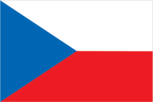
two equal horizontal bands of white (top) and red with a blue isosceles triangle based on the hoist side is identical to the flag of the former Czechoslovakia
Government type
parliamentary democracy
Independence
1 January 1993 (Czechoslovakia split into the Czech Republic and Slovakia); note - although 1 January is the day the Czech Republic came into being, the Czechs commemorate 28 October 1918, the day the former Czechoslovakia declared its independence from the Austro-Hungarian Empire, as their independence day
International law organization participation
has not submitted an ICJ jurisdiction declaration; accepts ICCt jurisdiction
International organization participation
Australia Group, BIS, BSEC (observer), CD, CE, CEI, CERN, EAPC, EBRD, EIB, ESA, EU, FAO, IAEA, IBRD, ICAO, ICC (national committees), ICRM, IDA, IEA, IFC, IFRCS, ILO, IMF, IMO, IMSO, Interpol, IOC, IOM, IPU, ISO, ITSO, ITU, ITUC (NGOs), MIGA, MONUSCO, NATO, NEA, NSG, OAS (observer), OECD, OIF (observer), OPCW, OSCE, PCA, Schengen Convention, SELEC (observer), UN, UNCTAD, UNESCO, UNIDO, UNWTO, UPU, WCO, WFTU (NGOs), WHO, WIPO, WMO, WTO, ZC
Judicial branch
Supreme Court; judges are appointed by the president for an unlimited term; Constitutional Court; 15 judges are appointed by the president and confirmed by the Senate for a 10-year term; Supreme Administrative Court; chairman and deputy chairmen are appointed by the president for a 10-year term; judges are appointed by the president for an unlimited term
Legal system
in 2014, a new civil code will replace the existing civil law system, which is based on former Austro-Hungarian civil codes and socialist theory and has been amended 40 times since the Communist regime fell in 1989
Legislative branch
- bicameral Parliament or Parlament consists of the Senate or Senat (81 seats; members elected by popular vote to serve six-year terms; one-third elected every two years) and the Chamber of Deputies or Poslanecka Snemovna (200 seats; members elected by popular vote to serve four-year terms) Senate - last held in two rounds on 12-13 and 19-20 October 2012 (next to be held in October 2014); Chamber of Deputies - last held on 28-29 May 2010 (next to be held in 2014) Senate - percent of vote by party - NA; seats by party - CSSD 48, ODS 15, KDU-CSL 4, TOP 09 4, North Bohemians 2, KSCM 2, Green 1, Ostravak 1, Pirate 1, independent 3; Chamber of Deputies - percent of vote by party - CSSD 22.1%, ODS 20.2%, TOP 09 16.7%, KSCM 11.3%, VV 10.9%, other 18.8%; seats by party - CSSD 54, ODS 49, TOP 09 41, KSCM 26, VV 11, unaffiliated 19
- election results
- Senate - percent of vote by party - NA; seats by party - CSSD 48, ODS 15, KDU-CSL 4, TOP 09 4, North Bohemians 2, KSCM 2, Green 1, Ostravak 1, Pirate 1, independent 3; Chamber of Deputies - percent of vote by party - CSSD 22.1%, ODS 20.2%, TOP 09 16.7%, KSCM 11.3%, VV 10.9%, other 18.8%; seats by party - CSSD 54, ODS 49, TOP 09 41, KSCM 26, VV 11, unaffiliated 19
- elections
- Senate - last held in two rounds on 12-13 and 19-20 October 2012 (next to be held in October 2014); Chamber of Deputies - last held on 28-29 May 2010 (next to be held in 2014)
National anthem
- "Kde domov muj?" (Where is My Home?) Josef Kajetan TYL/Frantisek Jan SKROUP adopted 1993; the anthem is a verse from the former Czechoslovak anthem originally written as part of the opera "Fidlovacka"
- lyrics/music
- Josef Kajetan TYL/Frantisek Jan SKROUP
- name
- "Kde domov muj?" (Where is My Home?)
National holiday
Czechoslovak Founding Day, 28 October (1918)
National symbol(s)
double-tailed lion
Political parties and leaders
Association of Independent Candidates-European Democrats or SNK-ED [Zdenka MARKOVA]; Christian Democratic Union-Czechoslovak People's Party or KDU-CSL [Pavel BELOBRADEK]; Civic Democratic Party or ODS [Petr NECAS]; Communist Party of Bohemia and Moravia or KSCM [Vojtech FILIP]; Czech Pirate Party [Ivan BARTOS]; Czech Social Democratic Party or CSSD [Bohuslav SOBOTKA]; Green Party [Ondrej LISKA]; Liberal Democrats or LIDEM [Karolina PEAKE]; North Bohemians; Ostravak Movement; Public Affairs or VV [Radek JOHN]; Tradice Odpovednost Prosperita 09 or TOP 09 [Karel SCHWARZENBERG]
Political pressure groups and leaders
Czech-Moravian Confederation of Trade Unions or CMKOS [Jaroslav ZAVADIL]
Suffrage
18 years of age; universal
Economy
Agriculture - products
wheat, potatoes, sugar beets, hops, fruit; pigs, poultry
Budget
- $81.08 billion $87.25 billion (2012 est.)
- expenditures
- $87.25 billion (2012 est.)
- revenues
- $81.08 billion
Budget surplus (+) or deficit (-)
-3.2% of GDP (2012 est.)
Central bank discount rate
0.75% (31 December 2011 est.) 0.75% (31 December 2010) this is the two-week repo, the main rate CNB uses
Commercial bank prime lending rate
5.9% (31 December 2012 est.) 5.72% (31 December 2011 est.)
Current account balance
-$3.596 billion (2012 est.) -$6.348 billion (2011 est.)
Debt - external
$90.18 billion (2012 est.) $93.91 billion (31 December 2011 est.)
Distribution of family income - Gini index
31 (2009) 25.4 (1996)
Economy - overview
The Czech Republic is a stable and prosperous market economy closely integrated with the EU, especially since the country's EU accession in 2004. While the conservative, inward-looking Czech financial system has remained relatively healthy, the small, open, export-driven Czech economy remains sensitive to changes in the economic performance of its main export markets, especially Germany. When Western Europe and Germany fell into recession in late 2008, demand for Czech goods plunged, leading to double digit drops in industrial production and exports. As a result, real GDP fell 4.7% in 2009, with most of the decline occurring during the first quarter. Real GDP, however, slowly recovered with positive quarter-on-quarter growth starting in the second half of 2009 and continuing throughout 2011. In 2012, however, the economy fell into a recession due to a slump in external demand. The auto industry remains the largest single industry, and, together with its upstream suppliers, accounts for nearly 24% of Czech manufacturing. The Czech Republic produced more than a million cars for the first time in 2010, over 80% of which were exported. Foreign and domestic businesses alike voice concerns about corruption especially in public procurement. Other long term challenges include dealing with a rapidly aging population, funding an unsustainable pension and health care system, and diversifying away from manufacturing and toward a more high-tech, services-based, knowledge economy.
Exchange rates
koruny (CZK) per US dollar - 19.59 (2012 est.) 17.696 (2011 est.) 19.098 (2010 est.) 19.063 (2009) 17.064 (2008)
Exports
$134.1 billion (2012 est.) $138.5 billion (2011 est.)
Exports - commodities
machinery and transport equipment, raw materials and fuel, chemicals
Exports - partners
Germany 32.4%, Slovakia 9%, Poland 6.3%, France 5.5%, Austria 4.6%, UK 4.6%, Italy 4.2% (2011)
Fiscal year
calendar year
GDP - composition by sector
- 1.8% 39.6% 58.6% (2012 est.)
- agriculture
- 1.8%
- industry
- 39.6%
- services
- 58.6% (2012 est.)
GDP - per capita (PPP)
$27,200 (2012 est.) $27,500 (2011 est.) $27,100 (2010 est.) data are in 2012 US dollars
GDP - real growth rate
-1% (2012 est.) 1.7% (2011 est.) 2.7% (2010 est.)
GDP (official exchange rate)
$193.5 billion (2012 est.)
GDP (purchasing power parity)
$286.7 billion (2012 est.) $289.6 billion (2011 est.) $284.9 billion (2010 est.) data are in 2012 US dollars
Household income or consumption by percentage share
- 1.5% NA% (2009)
- highest 10%
- NA% (2009)
- lowest 10%
- 1.5%
Imports
$129 billion (2012 est.) $133.2 billion (2011 est.)
Imports - commodities
machinery and transport equipment, raw materials and fuels, chemicals
Imports - partners
Germany 29.6%, China 7.6%, Poland 7.1%, Slovakia 7%, Netherlands 5.7%, Russia 4.8%, Austria 4.4% (2011)
Industrial production growth rate
6.9% (2011 est.)
Inflation rate (consumer prices)
3.3% (2012 est.) 1.9% (2011 est.)
Investment (gross fixed)
24.4% of GDP (2012 est.)
Labor force
5.545 million (2012 est.)
Labor force - by occupation
- 3.1% 38.6% 58.3% (2009)
- agriculture
- 3.1%
- industry
- 38.6%
- services
- 58.3% (2009)
Market value of publicly traded shares
$53.2 billion (31 December 2011) $73.1 billion (31 December 2010) $70.26 billion (31 December 2009)
Population below poverty line
9% (2010 est.)
Public debt
43.9% of GDP (2012 est.) 41.2% of GDP (2011 est.)
Reserves of foreign exchange and gold
$35.26 billion (31 December 2012 est.) $40.29 billion (31 December 2011 est.)
Stock of broad money
$151.7 billion (31 December 2012 est.) $141.4 billion (31 December 2011 est.)
Stock of direct foreign investment - abroad
$16.47 billion (31 December 2012 est.) $15.47 billion (31 December 2011 est.)
Stock of direct foreign investment - at home
$129.2 billion (31 December 2012 est.) $125.2 billion (31 December 2011 est.)
Stock of domestic credit
$139.9 billion (31 December 2012 est.) $129.9 billion (31 December 2011 est.)
Stock of narrow money
$114 billion (31 December 2012 est.) $107.8 billion (31 December 2011 est.)
Taxes and other revenues
41.9% of GDP (2012 est.)
Unemployment rate
8.6% (2012 est.) 8.5% (2011 est.)
Energy
Carbon dioxide emissions from consumption of energy
90.83 million Mt (2010 est.)
Crude oil - exports
420 bbl/day (2009 est.)
Crude oil - imports
143,700 bbl/day (2009 est.)
Crude oil - production
9,162 bbl/day (2011 est.)
Crude oil - proved reserves
15 million bbl (1 January 2012 est.)
Electricity - consumption
58.88 billion kWh (2009 est.)
Electricity - exports
21.59 billion kWh (2010 est.)
Electricity - from fossil fuels
60% of total installed capacity (2009 est.)
Electricity - from hydroelectric plants
5.7% of total installed capacity (2009 est.)
Electricity - from nuclear fuels
20.9% of total installed capacity (2009 est.)
Electricity - from other renewable sources
7.1% of total installed capacity (2009 est.)
Electricity - imports
6.642 billion kWh (2010 est.)
Electricity - installed generating capacity
18.32 million kW (2009 est.)
Electricity - production
80.44 billion kWh (2010 est.)
Natural gas - consumption
8.944 billion cu m (2011 est.)
Natural gas - exports
167 million cu m (2011 est.)
Natural gas - imports
9.319 billion cu m (2011 est.)
Natural gas - production
185 million cu m (2011 est.)
Natural gas - proved reserves
3.964 billion cu m (1 January 2011 est.)
Refined petroleum products - consumption
199,000 bbl/day (2011 est.)
Refined petroleum products - exports
25,060 bbl/day (2009 est.)
Refined petroleum products - imports
65,560 bbl/day (2009 est.)
Refined petroleum products - production
167,000 bbl/day (2009 est.)
Communications
Broadcast media
roughly 130 TV broadcasters operating some 350 channels with 4 publicly operated and the remainder in private hands; 16 TV stations have national coverage with 4 being publicly operated; cable and satellite TV subscription services are available; 63 radio broadcasters are registered operating roughly 80 radio stations with 15 stations publicly operated; 10 radio stations provide national coverage with the remainder local or regional (2008)
Internet country code
.cz
Internet hosts
4.148 million (2012)
Internet users
6.681 million (2009)
Telephone system
- privatization and modernization of the Czech telecommunication system got a late start but is advancing steadily; virtually all exchanges now digital; existing copper subscriber systems enhanced with Asymmetric Digital Subscriber Line (ADSL) equipment to accommodate Internet and other digital signals; trunk systems include fiber-optic cable and microwave radio relay access to the fixed-line telephone network expanded throughout the 1990s but the number of fixed line connections has been dropping since then; mobile telephone usage increased sharply beginning in the mid-1990s and the number of cellular telephone subscriptions now greatly exceeds the population country code - 420; satellite earth stations - 6 (2 Intersputnik - Atlantic and Indian Ocean regions, 1 Intelsat, 1 Eutelsat, 1 Inmarsat, 1 Globalstar)
- domestic
- access to the fixed-line telephone network expanded throughout the 1990s but the number of fixed line connections has been dropping since then; mobile telephone usage increased sharply beginning in the mid-1990s and the number of cellular telephone subscriptions now greatly exceeds the population
- general assessment
- privatization and modernization of the Czech telecommunication system got a late start but is advancing steadily; virtually all exchanges now digital; existing copper subscriber systems enhanced with Asymmetric Digital Subscriber Line (ADSL) equipment to accommodate Internet and other digital signals; trunk systems include fiber-optic cable and microwave radio relay
- international
- country code - 420; satellite earth stations - 6 (2 Intersputnik - Atlantic and Indian Ocean regions, 1 Intelsat, 1 Eutelsat, 1 Inmarsat, 1 Globalstar)
Telephones - main lines in use
2.289 million (2011)
Telephones - mobile cellular
13 million (2011)
Transportation
Airports
128 (2012)
Airports - with paved runways
- 16 (2012)
- 1,524 to 2,437 m
- 12
- 2,438 to 3,047 m
- 9
- 914 to 1,523 m
- 2
- over 3,047 m
- 2
- total
- 41
- under 914 m
- 16 (2012)
Airports - with unpaved runways
- 60 (2012)
- 1,524 to 2,437 m
- 1
- 914 to 1,523 m
- 26
- total
- 87
- under 914 m
- 60 (2012)
Heliports
1 (2012)
Merchant marine
- 1 (Saint Vincent and the Grenadines 1) (2010)
- registered in other countries
- 1 (Saint Vincent and the Grenadines 1) (2010)
Pipelines
gas 7,010 km; oil 547 km; refined products 94 km (2010)
Ports and terminals
Decin, Prague, Usti nad Labem
Railways
- 9,469 km 9,449 km 1.435-m gauge (3,165 km electrified) 20 km 0.750-m gauge (2008)
- narrow gauge
- 20 km 0.750-m gauge (2008)
- total
- 9,469 km
Roadways
- 127,797 km (includes urban roads) 127,797 km (includes 730 km of expressways) (2008)
- total
- 127,797 km (includes urban roads)
Waterways
664 km (principally on Elbe, Vltava, Oder, and other navigable rivers, lakes, and canals) (2010)
Military and Security
Manpower available for military service
- 2,506,826 2,407,634 (2010 est.)
- females age 16-49
- 2,407,634 (2010 est.)
- males age 16-49
- 2,506,826
Manpower fit for military service
- 2,072,267 1,988,839 (2010 est.)
- females age 16-49
- 1,988,839 (2010 est.)
- males age 16-49
- 2,072,267
Manpower reaching militarily significant age annually
- 49,999 47,501 (2010 est.)
- female
- 47,501 (2010 est.)
- male
- 49,999
Military branches
- Army of the Czech Republic (Armada Ceske Republiky): Joint Forces Command (Spolocene Sily; includes Land Forces (Pozemni Sily) and Air Forces (Vzdusne Sily)) the Ministry of Defense plans to abolish the Joint Forces Command in 2012 and reestablish separate Land and Air Forces Commands (2011)
- Army of the Czech Republic (Armada Ceske Republiky)
- Joint Forces Command (Spolocene Sily; includes Land Forces (Pozemni Sily) and Air Forces (Vzdusne Sily))
Military expenditures
1.15% of GDP (2007 est.)
Military service age and obligation
18-28 years of age for male and female voluntary military service; no conscription (2010)
Transnational Issues
Disputes - international
while threats of international legal action never materialized in 2007, 915,220 Austrians, with the support of the popular Freedom Party, signed a petition in January 2008, demanding that Austria block the Czech Republic's accession to the EU unless Prague closes its controversial Soviet-style nuclear plant in Temelin, bordering Austria
Illicit drugs
transshipment point for Southwest Asian heroin and minor transit point for Latin American cocaine to Western Europe; producer of synthetic drugs for local and regional markets; susceptible to money laundering related to drug trafficking, organized crime; significant consumer of ecstasy (2008)