1996 Edition
CIA World Factbook 1996 (Project Gutenberg)
Introduction
Description
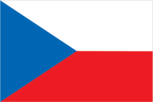
two equal horizontal bands of white (top) and red with a blue isosceles triangle based on the hoist side (almost identical to the flag of the former Czechoslovakia)
Location
49 45 N, 15 30 E -- Central Europe, southeast of Germany Flag ----
Geography
Area
- comparative area
- slightly smaller than South Carolina
- land area
- 78,645 sq km
- total area
- 78,703 sq km
Climate
temperate; cool summers; cold, cloudy, humid winters
Coastline
0 km (landlocked)
Environment
- current issues
- air and water pollution in areas of northwest Bohemia and in northern Moravia around Ostrava present health risks; acid rain damaging forests
- international agreements
- party to - Air Pollution, Air Pollution-Nitrogen Oxides, Air Pollution-Sulphur 85, Antarctic Treaty, Biodiversity, Climate Change, Endangered Species, Environmental Modification, Hazardous Wastes, Nuclear Test Ban, Ozone Layer Protection, Ship Pollution, Wetlands; signed, but not ratified - Air Pollution-Sulphur 94, Antarctic-Environmental Protocol, Law of the Sea
- natural hazards
- NA
Geographic coordinates
49 45 N, 15 30 E
Geographic note
landlocked; strategically located astride some of oldest and most significant land routes in Europe; Moravian Gate is a traditional military corridor between the North European Plain and the Danube in central Europe
International disputes
Liechtenstein claims restitution for 1,600 sq km of Czech territory confiscated from its royal family in 1918; Sudeten German claims for restitution of property confiscated in connection with their expulsion after World War II versus the Czech Republic claims that restitution does not precede February 1948 when the Communists seized power; unresolved property issues with Slovakia over redistribution of property of the former Czechoslovak federal government
Irrigated land
NA sq km
Land boundaries
- border countries
- Austria 362 km, Germany 646 km, Poland 658 km, Slovakia 214 km
- total
- 1,880 km
Land use
- arable land
- NA%
- forest and woodland
- NA%
- meadows and pastures
- NA%
- other
- NA%
- permanent crops
- NA%
Location
Central Europe, southeast of Germany
Map references
Europe
Maritime claims
none (landlocked)
Natural resources
hard coal, soft coal, kaolin, clay, graphite
Terrain
- Bohemia in the west consists of rolling plains, hills, and plateaus surrounded by low mountains; Moravia in the east consists of very hilly country
- highest point
- Snezka 1,602 m
- lowest point
- Elbe River 115 m
People and Society
Age structure
0-14 years: 18% (male 965,861; female 918,745) 15-64 years: 68% (male 3,519,753; female 3,524,913) 65 years and over: 14% (male 526,841; female 865,007) (July 1996 est.)
Birth rate
10.39 births/1,000 population (1996 est.)
Death rate
10.89 deaths/1,000 population (1996 est.)
Ethnic divisions
Czech 94.4%, Slovak 3%, Polish 0.6%, German 0.5%, Gypsy 0.3%, Hungarian 0.2%, other 1%
Infant mortality rate
8.4 deaths/1,000 live births (1996 est.)
Languages
Czech, Slovak
Life expectancy at birth
- female
- 77.65 years (1996 est.)
- male
- 70.08 years
- total population
- 73.76 years
Literacy
- age NA and over can read and write (est.)
- female
- NA%
- male
- NA%
- total population
- 99%
Nationality
- adjective
- Czech
- note
- 300,000 Slovaks declared themselves Czech citizens in 1994
- noun
- Czech(s)
Net migration rate
0.24 migrant(s)/1,000 population (1996 est.)
Population
10,321,120 (July 1996 est.)
Population growth rate
-0.03% (1996 est.)
Religions
atheist 39.8%, Roman Catholic 39.2%, Protestant 4.6%, Orthodox 3%, other 13.4%
Sex ratio
- all ages
- 0.94 male(s)/female (1996 est.)
- at birth
- 1.06 male(s)/female
- under 15 years
- 1.05 male(s)/female 15-64 years: 1 male(s)/female 65 years and over: 0.61 male(s)/female
Total fertility rate
1.38 children born/woman (1996 est.)
Government
Administrative divisions
8 regions (kraje, kraj - singular); Jihocesky, Jihomoravsky, Praha, Severocesky, Severomoravsky, Stredocesky, Vychodocesky, Zapadocesky
Capital
Prague
Chamber of Deputies (Snemovna Poslancu)
elections last held 5-6 June 1992 (next to be held 31 May-1 June 1996); results - percent of vote by party NA given breakup and realignment of all parliamentary opposition parties since 1992; seats - (200 total) governing coalition (ODS 65, KDS 10, ODA 16, KDU-CSL 15), opposition (CSSD 18, LB 25, KSCM 10, LSU 9, LSNS 5, CMUS 9, SPR-RSC 6, independents 12)
Constitution
ratified 16 December 1992; effective 1 January 1993
Data code
EZ
Diplomatic representation in US
- chancery
- 3900 Spring of Freedom Street NW, Washington, DC 20008
- chief of mission
- Ambassador Michael ZANTOVSKY
- telephone
- [1] (202) 363-6315, 6316
Executive branch
- cabinet
- Cabinet was appointed by the president on recommendation of the prime minister
- chief of state
- President Vaclav HAVEL (since 26 January 1993) was elected for a five-year term by the Parliament; election last held 26 January 1993 (next to be held NA January 1998); results - Vaclav HAVEL was elected
- head of government
- Prime Minister Vaclav KLAUS (since NA June 1992) was appointed by the president; Deputy Prime Ministers Ivan KOCARNIK (since NA June 1992), Josef LUX (since NA June 1992), Jan KALVODA (since NA June 1992)
FAX
- [1] (202) 966-8540
- [42] (2) 2451-1001
Flag
two equal horizontal bands of white (top) and red with a blue isosceles triangle based on the hoist side (almost identical to the flag of the former Czechoslovakia)
Independence
1 January 1993 (from Czechoslovakia)
International organization participation
Australia Group, BIS, CCC, CE (guest), CEI, CERN, EBRD, ECE, EU (applicant), FAO, IAEA, IBRD, ICAO, ICFTU, ICRM, IDA, IFC, IFRCS, ILO, IMF, IMO, Interpol, IOC, IOM (observer), ISO, ITU, NACC, NSG, OECD, OSCE, PCA, PFP, UN, UN Security Council (temporary), UNCRO, UNCTAD, UNESCO, UNIDO, UNOMIG, UNOMIL, UNPROFOR, UPU, WEU (associate partner), WFTU, WHO, WIPO, WMO, WToO, WTrO, ZC
Judicial branch
Supreme Court, chairman and deputy chairmen are appointed by the president; Constitutional Court, chairman and deputy chairmen are appointed by the president
Legal system
civil law system based on Austro-Hungarian codes; has not accepted compulsory ICJ jurisdiction; legal code modified to bring it in line with Organization on Security and Cooperation in Europe (OSCE) obligations and to expunge Marxist-Leninist legal theory
Legislative branch
bicameral Parliament (Parlament)
Name of country
- conventional long form
- Czech Republic
- conventional short form
- Czech Republic
- local long form
- Ceska Republika
- local short form
- Cechy
National holiday
National Liberation Day, 8 May; Founding of the Republic, 28 October
Other political or pressure groups
Czech-Moravian Chamber of Trade Unions; Civic Movement
Political parties and leaders
- governing coalition
- Civic Democratic Party (ODS), Vaclav KLAUS, chairman; Christian Democratic Party (KDS), Ivan PILIP, chairman; Civic Democratic Alliance (ODA), Jan KALVODA, chairman; Christian Democratic Union/Czech People's Party (KDU-CSL), Josef LUX, chairman; note - KDS was to merge with ODS in March 1996
- opposition
- Czech Social Democrats (CSSD - left opposition), Milos ZEMAN, chairman; Left Bloc (LB - left opposition), Jaroslav ORTMAN, chairman; Communist Party (KSCM - left opposition), Miroslav GREBENICEK, chairman; Liberal Social Union (LSU - left opposition), Frantisek TRNKA, chairman, note - may not still be in existence; Liberal National Social Party (LSNS - center party), Vavrinec BODENLOS, chairman; Bohemian-Moravian Center Union (CMUS - center party), Jan JEGLA, chairman; Assembly for the Republic (SPR-RSC - right radical), Miroslav SLADEK, chairman
Senate (Senate)
elections to be held 15-16 November 1996 (next to be held NA); seats (81 total)
Suffrage
18 years of age; universal
Type of government
parliamentary democracy
US diplomatic representation
- chief of mission
- Ambassador Jenonne R. WALKER
- embassy
- Trziste 15, 11801 Prague 1
- mailing address
- Unit 1330, APO AE 09213-1330
- telephone
- [42] (2) 2451-0847
Economy
Agriculture
grains, potatoes, sugar beets, hops, fruit; pigs, cattle, poultry; forest products
Budget
- expenditures
- $16.2 billion, including capital expenditures of $NA (1995 est.)
- revenues
- $16.5 billion
Currency
1 koruna (Kc) = 100 haleru
Economic aid
- recipient
- ODA, $27 million (1993)
Economic overview
The Czech Republic, which separated from Slovakia on 1 January 1993, emerged from recession with 2.6% growth in 1994 and 5% growth in 1995. Inflation in 1994-95 was cut in half; unemployment was kept at about 3%; the budget was balanced; and exports were reoriented to the EU. Prague's mass privatization program, including its innovative distribution of ownership shares to Czech citizens via "coupon vouchers," has made the most rapid progress in Eastern Europe. About 80% of the economy is wholly or partially in private hands. Because of its progress on reform, the Czech Republic in 1995 became the first post-Communist member of the OECD. Its solid economic performance also led Standard and Poor's to upgrade the country's sovereign credit rating to "A" and attracted nearly $5.3 billion in direct foreign investment to Czech industry between 1990 and September 1995. The Czech crown became convertible for current account transactions in October 1995. Czech companies increasingly are using the international capital market to fund capital investment, and foreign currency reserves totaled $13.9 billion at the end of 1995. Prague's biggest macroeconomic concern now is limiting the inflationary effect of these large capital inflows. The Czech economy also still faces microeconomic problems. Prague has promised to strengthen its bankruptcy law and improve the transparency of stock market operations in 1996, but some changes probably will not take effect until some time after the parliamentary elections of mid-1996 and will depend largely on voluntary compliance. Prague forecasts a balanced budget, 5.5% GDP growth, 2.8% unemployment, and 8.1% inflation for 1996.
Electricity
- capacity
- 14.470,000 kW
- consumption per capita
- 4,842 kWh (1993)
- production
- 56.3 billion kWh
Exchange rates
- koruny (Kcs) per US$1 - 26.967 (January 1996), 26.541 (1995), 28.785 (1994), 29.153 (1993), 28.26 (1992), 29.53 (1991), 17.95 (1990)
- note
- values before 1993 reflect Czechoslovak exchange rates
Exports
- $17.4 billion (f.o.b., 1995 est.)
- commodities
- manufactured goods, machinery and transport equipment, chemicals, fuels, minerals, metals, agricultural products
- partners
- Germany 32.4%, Slovakia 16.1%, Austria 6.7%, Poland 5.3%, Italy 4%, Russia 3.3%, Netherlands 2.8%, France 2.6%, UK 2.2%, Hungary 2.1%, US 1.8%, Belgium 1.5% (January-September 1995)
External debt
$14.9 billion (June 1995)
Fiscal year
calendar year
GDP
purchasing power parity - $106.2 billion (1995 est.)
GDP composition by sector
- agriculture
- 5.8%
- industry
- 40.7%
- services
- 53.5%
GDP per capita
$10,200 (1995 est.)
GDP real growth rate
5% (1995 est.)
Illicit drugs
transshipment point for Southwest Asian heroin and Latin American cocaine to Western Europe
Imports
- $21.3 billion (f.o.b., 1995 est.)
- commodities
- machinery and transport equipment, manufactured goods, chemicals, fuels and lubricants, raw materials, agricultural products
- partners
- Germany 26%, Slovakia 13.2%, Russia 9.2%, Austria 7%, Italy 5.6%, France 4.1%, US 3.8%, Poland 3.1%, Netherlands 2.9%, UK 2.9%, Switzerland 2.1%, Belgium 2.0% (January-September 1995)
Industrial production growth rate
12.9% (January-November 1995)
Industries
fuels, ferrous metallurgy, machinery and equipment, coal, motor vehicles, glass, armaments
Inflation rate (consumer prices)
9.1% (1995 est.)
Labor force
- 5.389 million
- by occupation
- industry 37.9%, agriculture 8.1%, construction 8.8%, communications and other 45.2% (1990)
Unemployment rate
2.9% (1995 est.)
Communications
Branches
Army, Air and Air Defense Forces, Civil Defense, Railroad Units
Defense expenditures
exchange rate conversion - $931 million, 2.5% of GDP (1995)
Manpower availability
- males age 15-49
- 2,724,607
- males fit for military service
- 2,074,331
- males reach military age (18) annually
- 88,418 (1996 est.)
Radio broadcast stations
AM NA, FM NA, shortwave NA
Radios
NA
Telephone system
- domestic
- NA
- international
- satellite earth stations - 2 Intersputnik (Atlantic and Indian Ocean Regions)
Telephones
3,349,539 (1993 est.)
Television broadcast stations
NA
Televisions
NA Defense
Transportation
Airports
- total
- 116
- with paved runways 1 524 to 2 437 m
- 13
- with paved runways 2 438 to 3 047 m
- 9
- with paved runways over 3 047 m
- 2
- with paved runways under 914 m
- 5
- with unpaved runways 1 524 to 2 437 m
- 10
- with unpaved runways 2 438 to 3 047 m
- 3
- with unpaved runways 914 to 1 523 m
- 32
- with unpaved runways over 3 047 m
- 1
- with unpaved runways under 914 m
- 41 (1994 est.)
Highways
- paved
- NA km
- total
- 55,557 km (1994 est.)
- unpaved
- NA km
Merchant marine
- ships by type
- bulk 5, cargo 5 (1995 est.)
- total
- 10 ships (1,000 GRT or over) totaling 155,946 GRT/251,624 DWT
Pipelines
natural gas 5,400 km
Ports
Decin, Prague, Usti nad Labem
Railways
- narrow gauge
- 97 km several narrow gauges (1995)
- standard gauge
- 9,316 km 1.435-m standard gauge (2640 km electrified)
- total
- 9,413 km
Waterways
NA km; the Elbe (Labe) is the principal river