1990 Edition
CIA World Factbook 1990 (Project Gutenberg)
Geography
Climate
temperate; cool summers; cold, cloudy, humid winters
Coastline
none--landlocked
Comparative area
slightly larger than New York State
Disputes
Nagymaros Dam dispute with Hungary
Environment
infrequent earthquakes; acid rain; water pollution; air pollution
Land boundaries
3,446 km total; Austria 548 km, GDR 459 km, Hungary 676 km, Poland 1,309 km, USSR 98 km, FRG 356 km
Land use
40% arable land; 1% permanent crops; 13% meadows and pastures; 37% forest and woodland; 9% other; includes 1% irrigated
Maritime claims
none--landlocked
Natural resources
coal, timber, lignite, uranium, magnesite, iron ore, copper, zinc
Note
landlocked; strategically located astride some of oldest and most significant land routes in Europe; Moravian Gate is a traditional military corridor between the North European Plain and the Danube in central Europe
Terrain
mixture of hills and mountains separated by plains and basins
Total area
127,870 km2; land area: 125,460 km2
People and Society
Birth rate
14 births/1,000 population (1990)
Death rate
11 deaths/1,000 population (1990)
Ethnic divisions
64.3% Czech, 30.5% Slovak, 3.8% Hungarian, 0.4% German, 0.4% Polish, 0.3% Ukrainian, 0.1% Russian, 0.2% other (Jewish, Gypsy)
Infant mortality rate
11 deaths/1,000 live births (1990)
Labor force
8,200,000 (1987); 36.9% industry, 12.3% agriculture, 50.8% construction, communications, and other (1982)
Language
Czech and Slovak (official), Hungarian
Life expectancy at birth
69 years male, 76 years female (1990)
Literacy
99%
Nationality
noun--Czechoslovak(s); adjective--Czechoslovak
Net migration rate
NEGL migrants/1,000 population (1990)
Organized labor
Revolutionary Trade Union Movement (ROH), formerly regime-controlled; other industry-specific strike committees; new independent trade unions forming
Population
15,683,234 (July 1990), growth rate 0.3% (1990)
Religion
50% Roman Catholic, 20% Protestant, 2% Orthodox, 28% other
Total fertility rate
2.0 children born/woman (1990)
Government
Administrative divisions
2 socialist republics (socialisticke republiky, singular--socialisticka republika); Ceska Socialisticka Republika, Slovenska Socialisticka Republika
Capital
Prague
Communists
1.71 million party members (April 1988) and falling
Constitution
11 July 1960; amended in 1968 and 1970; new constitution under review (1 January 1990)
Diplomatic representation
Ambassador Rita KLIMOVA; Chancery at 3900 Linnean Avenue NW, Washington DC 20008; telephone (202) 363-6315 or 6316; US--Ambassador Shirley Temple BLACK; Embassy at Trziste 15-12548, Prague (mailing address is APO New York 09213); telephone [42] (2) 53 6641 through 6649
Elections
President--last held 22 May 1985 (next to be held 8 June 1990; will be a free election); results--Gustav Husak was reelected without opposition; Federal Assembly--last held 23 and 24 May 1986 (next to be held 8 June 1990; will be a free election); results--KSC was the only party; seats--(350 total) KSC 350
Executive branch
president, prime minister, Cabinet
Flag
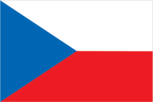
two equal horizontal bands of white (top) and red with a blue isosceles triangle based on the hoist side
Independence
18 October 1918 (from Austro-Hungarian Empire)
Judicial branch
Supreme Court
Leaders
Chief of State--President Vaclav HAVEL (since 28 December 1989); Head of Government--Premier Marian CALFA (since 10 December 1989); First Deputy Premier Valtr KOMAREK (since 7 December 1989); Jan CARNOGURSKY (since 7 December 1989)
Legal system
civil law system based on Austro-Hungarian codes, modified by Communist legal theory; no judicial review of legislative acts; has not accepted compulsory ICJ jurisdiction
Legislative branch
bicameral Federal Assembly (Federalni Shromazdeni) consists of an upper house or House of Nations (Snemovna Narodu) and a lower house or House of the People
Long-form name
Czechoslovak Socialist Republic; abbreviated CSSR; note--on 23 March 1990 the name was changed to Czechoslovak Federative Republic; because of Slovak concerns about their status in the Federation, the Federal Assembly approved the name Czech and Slovak Federative Republic on 20 April 1990
Member of
CCC, CEMA, FAO, GATT, IAEA, IBEC, ICAO, ICO, ILO, ILZSG, IMO, IPU, ISO, ITC, ITU, UN, UNESCO, UPU, Warsaw Pact, WFTU, WHO, WIPO, WMO, WSG, WTO
National holiday
National Holiday of the Republic (Anniversary of the Liberation), 9 May (1945)
Other political groups
Czechoslovak Socialist Party, Czechoslovak People's Party, Slovak Freedom Party, Slovak Revival Party, Christian Democratic Party; more than 40 political groups are expected to field candidates for the 8 June 1990 election
Political parties and leaders
Civic Forum, since December 1989 leading political force, loose coalition of former oppositionists headed by President Vaclav Havel; Communist Party of Czechoslovakia (KSC), Ladislav Adamec, chairman (since 20 December 1989); KSC toppled from power in November 1989 by massive antiregime demonstrations, minority role in coalition government since 10 December 1989
Suffrage
universal at age 18
Type
in transition from Communist state to republic
Economy
Agriculture
accounts for 15% of GNP (includes forestry); largely self-sufficient in food production; diversified crop and livestock production, including grains, potatoes, sugar beets, hops, fruit, hogs, cattle, and poultry; exporter of forest products
Aid
donor--$4.2 billion in bilateral aid to non-Communist less developed countries (1954-88)
Budget
revenues $22.4 billion; expenditures $21.9 billion, including capital expenditures of $3.7 billion (1986 state budget)
Currency
koruna (plural--koruny); 1 koruna (Kc) = 100 haleru
Electricity
22,955,000 kW capacity; 85,000 million kWh produced, 5,410 kWh per capita (1989)
Exchange rates
koruny (Kcs) per US$1--17.00 (March 1990), 10.00 (1989), 5.63 (1988), 5.43 (1987), 5.95 (1986), 6.79 (1985), 6.65 (1984)
Exports
$24.5 billion (f.o.b., 1988); commodities--machinery and equipment 58.5%; industrial consumer goods 15.2%; fuels, minerals, and metals 10.6%; agricultural and forestry products 6.1%, other products 15.2%; partners--USSR, GDR, Poland, Hungary, FRG, Yugoslavia, Austria, Bulgaria, Romania, US
External debt
$7.4 billion, hard currency indebtedness (1989)
Fiscal year
calendar year
GNP
$123.2 billion, per capita $7,878; real growth rate 1.0%
Imports
$23.5 billion (f.o.b., 1988); commodities--machinery and equipment 41.6%; fuels, minerals, and metals 32.2%; agricultural and forestry products 11.5%; industrial consumer goods 6.7%; other products 8.0%; partners--USSR, GDR, Poland, Hungary, FRG, Yugoslavia, Austria, Bulgaria, Romania, US
Industrial production
growth rate 2.1% (1988)
Industries
iron and steel, machinery and equipment, cement, sheet glass, motor vehicles, armaments, chemicals, ceramics, wood, paper products, footwear
Inflation rate (consumer prices)
1.5% (1989)
Overview
Czechoslovakia is highly industrialized and has a well-educated and skilled labor force. Its industry, transport, energy sources, banking, and most other means of production are state owned. The country is deficient, however, in energy and many raw materials. Moreover, its aging capital plant lags well behind West European standards. Industry contributes over 50% to GNP and construction 10%. About 95% of agricultural land is in collectives or state farms. The centrally planned economy has been tightly linked in trade (80%) to the USSR and Eastern Europe. Growth has been sluggish, averaging less than 2% in the period 1982-89. GNP per capita ranks next to the GDR as the highest in the Communist countries. As in the rest of Eastern Europe, the sweeping political changes of 1989 have been disrupting normal channels of supply and compounding the government's economic problems. Czechoslovakia is beginning the difficult transition from a command to a market economy.
Unemployment rate
0.9% (1987)
Communications
Airports
158 total, 158 usable; 40 with permanent-surface runways; 19 with runways 2,440-3,659 m; 37 with runways 1,220-2,439 m
Civil air
40 major transport aircraft
Highways
73,805 km total; including 489 km superhighway (1986)
Inland waterways
475 km (1986); the Elbe (Labe) is the principal river
Merchant marine
21 ships (1,000 GRT or over) totaling 208,471 GRT/ 308,072 DWT; includes 15 cargo, 6 bulk
Pipelines
crude oil, 1,448 km; refined products, 1,500 km; natural gas, 8,000 km
Ports
maritime outlets are in Poland (Gdynia, Gdansk, Szczecin), Yugoslavia (Rijeka, Koper), FRG (Hamburg), GDR (Rostock); principal river ports are Prague on the Vltava, Decin on the Elbe (Labe), Komarno on the Danube, Bratislava on the Danube
Railroads
13,116 km total; 12,868 km 1.435-meter standard gauge, 102 km 1.524-meter broad gauge, 146 km 0.750- and 0.760-meter narrow gauge; 2,854 km double track; 3,530 km electrified; government owned (1986)
Telecommunications
stations--58 AM, 16 FM, 45 TV; 14 Soviet TV relays; 4,360,000 TV sets; 4,208,538 radio receivers; at least 1 satellite earth station
Military and Security
Branches
Czechoslovak People's Army, Frontier Guard, Air and Air Defense Forces
Defense expenditures
28.4 billion koruny, 7% of total budget (1989); note--conversion of the military budget into US dollars using the official administratively set exchange rate would produce misleading results
Military manpower
males 15-49, 4,019,311; 3,076,735 fit for military service; 137,733 reach military age (18) annually