1985 Edition
CIA World Factbook 1985 (Internet Archive)
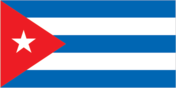
Geography
Agriculture
main crops — sugar, tobacco, rice, potatoes, tul>er.s, citrus fruits, coffee
Aid
from US (FY46-61 ), $4 1 .5 million (loans $37. 5 million, grants $4.0 million); economic aid (1960-78) from USSR, $5.7 billion in economic credit and $1 1.0 billion in subsidies; military assistance from the USSR (1959-78), $1.6 billion
Area
1 14,471 km2; nearly as large as Pennsylvania; 35% cultivated; 30% meadow and pasture; 20% waste, urban, or other; 15% forest Water
Branches
executive; legislature (National Assembly of the People's Power); controlled judiciary
Budget
$11.9 billion (1983)
Capital
Havana
Coastline
3,735 km People
Communists
approx. 400,000 party members
Crude steel
363,700 metric tons produced (1983); 37 kg per capita
Elections
National People's Assembly (indirect election) every five years; election held November 1981 Political parties and leaders: Cuban Communist Party (PCC), First Secretary Fidel Castro Ruz, Second Secretary Raul Castro Ruz
Electric power
3,360,000 kW capacity (1984); 10.42 billion kWh produced (1984), 1, 043 kWh per capita
Ethnic divisions
51% mulatto, 37% white, 11% black, 1% Chinese
Exports
$6.4 billion (f.o.b., 1983); sugar, nickel, shellfish, tobacco, coffee
Fishing
catch 195,000 metric tons (1982); exports $122 million (1983 est.)
GNP
$14.9 billion in 1974 dollars (1982 est); $1,534 per capita in 1974 dollars (1982 est.); real growth rate 1.4% (1982 est.)
Government leader
Fidel CASTRO Ruz, President (since January 1959)
Imports
$7.2 billion (c.i.f., 1983); capital goods, industrial raw materials, food, petroleum
Labor force
3.0 million in 1982; 28% services, 21% industry, 20% agriculture, 11% commerce, 9% construction, 7% transportation and communication, 4% other Government
Language
Spanish
Legal system
based on Spanish and American law, with large elements of Communist legal theory; Fundamental Law of 1959 replaced constitution of 1940; a new constitution was approved at the Cuban Communist Party's First Party Congress in December 1975 and by a popular referendum, which took place on 15 February 1976; portions of the new constitution were put into effect on 24 February 1976, by means of a Constitutional Transition Law, and the entire constitution became effective on 2 December 1976; legal education at Universities of Havana, Oriente, and Las Villas; does not accept compulsory 1CJ jurisdiction
Limits of territorial waters (claimed)
12 nm (economic, including fishing, 200 nm)
Literacy
96%
Major industries
sugar milling, i>etroleum refining, food and tobacco processing, textiles, chemicals, paper and wood products, metals, cement
Major trade partners
exports — 70% USSR, 16% other Communist countries; imports 68% USSR, 19% other Communist countries (1983)
Member of
CEMA, ECLA, FAO, G-77, CATT, lADB(nonparticipant), IAFA, ICAO, IFAD, ICO, IHO, ILO, IMO, IRC, ISO, ITU, I WC — International Wheat Council, NAM, NAMUCAR (Caribbean Multinational Shipping Line — Naviera Multinacional del Caribe), OAS (nonparticipant), PAHO, Permanent Court of Arbitration, Postal Union of the Americas and Spain, SELA, UN, UNESCO, UNIDO, UPU, WFTU, WHO, WIPO, WMO, WSG, WTO Economy
Monetary conversion rate
0.8772 peso=US$l (30 June 1984)
National holiday
Anniversary of the Revolution, 1 January
Official name
Republic of Cuba
Political subdivisions
14 provinces and 169 municipalities
Population
10,105,000 (July 1985), average annual growth rate 1.1% Nationality, noun — Cuban(s); adjective — Cuban
Religion
at least 85% nominally Roman Catholic before Castro assumed power
Shortages
spare parts for transportation and industrial machinery, consumer goods
Suffrage
universal, but not compulsory, over age 16
Type
Communist state