1981 Edition
CIA World Factbook 1981 (Internet Archive)
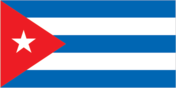
Geography
Area
- 114,478 km2; 35% cultivated, 30% meadow and pasture, 20% waste, urban, or other, 15% forested
- 9,251 km2; 47% arable and land under permanent crops, 18% forested, 10% meadows and pasture, 25% waste, urban areas, and other
Budget
$13.4 billion (1980)
Coastline
- 3,735 km
- approximately 648 km
Fiscal year
calendar year
Limits of territorial waters (claimed)
- 12 nm (fishing 200 nm; 200 nm exclusive economic zone)
- 12 nm
Monetary conversion rate
1 peso=US$1.41 (nominal; 1980)
People and Society
Ethnic divisions
- 51% mulatto, 37% white, 11% Negro, 1% Chinese
- 78% Greek; 18% Turkish; 4% British, Armenian, and other
Greek Sector labor force
180,700 (1980), 42% services; 33% industry; 25% agriculture; 2.1% unemployed
Labor force
2.9 million in 1978; 33% agriculture, 17% industry, 9% construction, 7% transportation, 32% services, 2% unemployed
Language
- Spanish
- Greek, Turkish, English
Literacy
- about 96%
- about 89% of population 15 years or older, 99% of population aged 15-39
Nationality
- noun — Cuban(s); adjective — Cuban
- noun — Cypriot(s); adjective — Cypriot
Population
- 9,771,000 (July 1982), average annual growth rate 0.8%
- 642,000 (July 1982), average annual growth rate 1.0%
Religion
- at least 85% nominally Roman Catholic before Castro assumed power
- 78% Greek Orthodox, 18% Muslim, 4% Maronite, Armenian, Apostolic, and other
Government
Branches
- executive; legislature (National People's Assembly); controlled judiciary
- currently the Government of Cyprus has effective authority over only the Greek Cypriot community, consisting of Greek Cypriot parts of bodies provided for by constitution; headed by President of the Republic and comprised of Council of Ministers, House of Representatives, and Supreme Court; Turkish Cypriots have their own "constitution" and governing bodies within the "Turkish Federated State of Cyprus"
Capital
- Havana
- Nicosia CYPRUS (Continued)
Communists
- approx. 400,000 party members
- 12,000; sympathizers estimated to number 60,000
Elections
- National People's Assembly (indirect election) every five years; election held November 1981 Political parties and leaders: Cuban Communist Party (PCC), First Secretary Fidel Castro Ruz, Second Secretary Raul Castro Ruz
- officially every five years (next presidential elections to be held in 1983); parliamentary elections held in May 1981; Turkish Cypriot "presidential" and "parliamentary" elections held in June 1981 Political parties and leaders: Greek Sector: Progressive Party of the Working People (AKEL; Communist Party), Ezekias Papaioannou; Democratic Rally (DS), Glafkos Clerides; Democratic Party (DK), Spyros Kyprianou; United Democratic Union of the Center (EDEK), Vassos Lyssarides; New Democratic Movement (NDP), Alecos Michaelides; New Union of the Center, Tassos Papadopoulos; Pancyprian Renewal Party (FAME), Khrysostomos Sofianos; Turkish
Government leader
President Fidel CASTRO Ruz
Government leaders
President Spyros KYPRIANOU; elected Interim President in September 1977 to serve out the remainder of the term of Archbishop Makarios, who died on 3 August 1977, and elected President in his own right by acclamation in February 1978; Turkish Sector: "President" Rauf DENKTASH; "Prime Minister" Mustafa CAGATAY
Legal system
- based on Spanish and American law, with large elements of Communist legal theory; Fundamental Law of 1959 replaced constitution of 1940; a new constitution was approved at the Cuban Communist Party's First Party Congress in December 1975 and by a popular referendum which took place on 15 February 1976; portions of the new constitution were put into effect on 24 February 1976, by means of a Constitutional Transition Law, and the entire constitution became effective on 2 December 1976; legal education at Universities of Havana, Oriente, and Las Villas; does not accept compulsory ICJ jurisdiction
- based on common law, with civil law modifications; negotiations to create the basis for a new or revised constitution to govern the island and relations between Greek and Turkish Cypriots have been held intermittently
Member of
- CEMA, ECLA, FAO, G-77, GATT, IADB (nonparticipant), IAEA, ICAO, IFAD, IHO, ILO, IMCO, International Rice Commission, ISO, ITU, IWC — International Wheat Council, NAM, NAMUCAR (Caribbean Multinational Shipping Line — Naviera Multinacional del Caribe), OAS (nonparticipant), PAHO, Permanent Court of Arbitration, Postal Union of the Americas and Spain, SELA, UN, UNESCO, UNIDO, UPU, WHO, WIPO, WMO, WSG, WTO
- Commonwealth, Council of Europe, FAO, G-77, GATT, IAEA, IBRD, ICAO, ICO, IDA, IFAD, IFC, ILO, IMCO, IMF, ISCON, ITU, NAM, UN, UNESCO, UPU, WHO, WMO, WTO
National holiday
- Anniversary of the Revolution, 1 January
- Independence Day, 1 October
Official name
- Republic of Cuba
- Republic of Cyprus
Other political or pressure groups
United Democratic Youth Organization (EDON; Communist controlled); Union of Cyprus Farmers (EKA; Communist controlled); Cyprus Farmers Union (PEK; proWest); Pan Cyprian Labor Federation (PEO; Communist controlled); Confederation of Cypriot Workers (SEK; proWest); Federation of Turkish Cypriot Labor Unions (Turk-Sen); Confederation of Revolutionary Labor Unions (Dev-Is)
Political subdivisions
- 14 provinces and 169 municipalities
- 6 administrative districts
Sector
National Unity Party (UBP), Mustafa Cagatay; Communal Liberation Party (TKP), Alpay Durduran; Republican Turkish Party (CTP), Ozker Ozgur; Democratic People's Party (DHP), Nejat Konuk; Turkish Unity Party (TBP), Ismail Tezer Voting strength (1981 elections): in the parliamentary elections pro-Western Democratic Rally and Communist AKEL each received 12 of the 35 seats; Kyprianou 's centerright Democratic Party received eight seats; and socialist EDEK won three seats; in "presidential" and "parliamentary" elections in the Turkish Cypriot sector, Rauf Denktash won with 52 percent of the vote; his party (UBP) received 18 of 40 seats in the "Assembly" while the center-left TKP won 13 seats; the remainder were divided among the other parties
Suffrage
- universal, but not compulsory, over age 16
- universal age 21 and over
Type
- Communist state
- republic since August 1960; a disaggregation of the two ethnic communities inhabiting the island began after the outbreak of communal strife in 1963; this separation was further solidified following the Turkish invasion of the island in July 1974, which gave the Turkish Cypriots de facto control over the northern 37 percent of the republic; in 1975 the Turkish Cypriots declared a separate Turkish Federated State of Cyprus, although Greek Cypriots control the only internationally recognized government; negotiations, which aim at finding a mutually agreeable solution to intercommunal differences, have focused on the creation of a federal system of government
Economy
Agriculture
- main crops — sugar, tobacco, rice, potatoes, tubers, citrus fruits, coffee
- main crops — potatoes, grapes, citrus fruit, grains
Aid
from US (FY46-61), $41.5 million (loans $37.5 million, grants $4.0 million); economic aid (1960-78) from USSR, $5.7 billion in economic credit and $11.0 billion in subsidies; military assistance from the USSR (1959-78), $1.6 billion
Budget
(1980 est.) revenues $489.7 million, expenditures $582.7 million, deficit $93.0 million
Crude steel
313,500 metric tons produced (1979); 30 kg per capita
Electric power
- 2,870,000 kW capacity (1981); 10.1 billion kWh produced (1981), 1,029 kWh per capita
- 500,000 kW capacity (1981); 1,042 billion kWh produced (1981), 1,654 kWh per capita
Exports
- $5.6 billion (f.o.b., 1980); sugar, nickel, shellfish, tobacco
- $532.8 million (f.o.b., 1980); principal items — food and beverages including citrus, raisins, potatoes and wine, also cement and clothing
Fiscal year
calendar year
Fishing
catch 186,000 metric tons (1980); exports $127million (1980)
GDP
$13.3 billion (1978 est, in 1978 prices), $1,360 per capita; real growth rate 1978, 4.0%
GNP
$2,165 million (1980, est), $4,223 per capita; 1980 est. real growth rate 4.2%
Imports
- $6.4 billion (c.i.f., 1980); capital goods, industrial raw materials, food, petroleum
- $1,214 million (c.i.f., 1980); principal items — manufactured goods, machinery and transport equipment, fuels, food
Major industries
- sugar milling, petroleum refining, food and tobacco processing, textiles, chemicals, paper and wood products, metals
- mining (iron pyrites, gypsum, asbestos), manufactures principally for local consumption — beverages, footwear, clothing, cement
Major trade partners
- exports — 57% USSR, 13% other Communist countries; imports — 62% USSR, 16% other Communist countries (1980 prelim.)
- imports (1980)— 15.4% UK, 0.8% Italy, 10.1% Iraq, 7.6% West Germany, 7.0% Greece; exports (1980)— 20.7% UK, 7.7% Saudi Arabia, 6.8% Syria, 9.9% Lebanon, 8.2% Libya
Monetary conversion rate
1 Cyprus pound=US$2.834 (1980 average)
Shortages
spare parts for transportation and industrial machinery, consumer goods
Turkish Sector budget
(1980 prelim.) revenues $33.1 million, expenditures $62.0 million, deficit $28.9 million
Turkish Sector exports
$40.2 million (f.o.b., 1979); principal items — citrus fruits, potatoes, metal pipes and pyrites
Turkish Sector GNP
$200.7 million (1978), $1,580 per capita
Turkish Sector imports
$107.5 million (c.i.f., 1979); principal items are foodstuffs, raw materials, fuels, machinery
Turkish Sector major trade partners
imports (1979) — 43% Turkey, 21.2% UK, 7% Italy, 6.6% West Germany, 2.7% France; exports (1979)— 66.4% UK, 21% Turkey, 3.7% West Germany
Turkish Sector monetary conversion rate
76.04 Turkish lira=US$l (1980 average)
Communications
Airfields
202 total, 195 usable; 58 with permanentsurface runways; 2 with runways over 3,659 m, 8 with runways 2,440-3,659 m, 23 with runways 1,220-2,439 m DEFENSE FORCES
Civil air
48 major transport aircraft, including 2 leased in
Highways
21,000 km total; 9,000 km paved, 12,000 km gravel and earth surfaced
Inland waterways
240 km
Military budget
for fiscal year ending 31 December 1981, $1.112 billion; about 7.5% of total budget
Military manpower
eligible 15-49, 5,079,000; of the 2,575,000 males 15-49, 1,621,000 are fit for military service; 120,000 males and 114,000 females reach military age (17) annually
Pipelines
natural gas, 80 km
Ports
8 major (including US Naval Base at Guantanamo), 44 minor
Railroads
14,725 km total, government owned; 5,070 km common-carrier lines of which 4,990 km standard gauge (1.435 m), 80 km 0.914-meter gauge; about 9,655 km plantation/industrial lines, 6,455 km standard gauge (1.435 m), 3,200 km narrow gauge