1987 Edition
CIA World Factbook 1987 (Internet Archive)
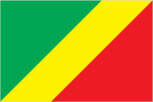
Geography
Administrative divisions
nine regions, divided into districts, and capital district
Boundary disputes
section with Zaire is indefinite
Branches
presidential executive, Council of State; judiciary; all policy made by Congolese Labor Party Central Committee and Politburo
Capital
Brazzaville
Climate
- tropical; rainy season (March to June); dry season (June to October); constantly high temperatures and humidity; particularly enervating climate astride the Equator
- tropical; moderated by trade winds
Coastline
- 169 km
- 120 km
Communists
unknown number of Communists and sympathizers
Comparative area
- slightly smaller than Montana
- slightly larger than Washington, D. C.
Continental shelf
200 meters or edge of continental margin
Elections
elections for local and regional organs and the National Assembly were held in July 1979—the first elections since June 1973 Political parties and leaders: Congolese Labor Party (PCT) is the only legal party; Party Congress held in July 1984—Sassou unanimously elected to another five-year term as President and party chairman
Environment
- deforestation
- subject to typhoons from November to March
Extended economic zone
200 nm
Government leaders
Col. Denis SASSOUNGUESSO, President and party chairman (since 1979); Ange Edouard POUNGUI, Prime Minister (since July 1984)
Gulf of
Guinea PointeBoundary representaton is Noirs not necessarily authoritative
Land boundaries
4,514 km total
Land use
- 2% arable land; NEGL% permanent crops; 29% meadows and pastures; 62% forest and woodland; 7% other
- 4% arable land; 22% permanent crops; 0% meadows and pastures; 0% forest and woodland; 74% other
Legal system
based on French civil law system and customary law; constitution adopted 8 July 1979
Member of
Af{DB, Conference of East and Central African States, EAMA, ECA, EIB (associate), FAO, G-77, GATT, IBRD, ICAO, ICO, IDA, IFAD, IFC, ILO, IMF, IMO, INTELSAT, INTERPOL, ITU, NAM, OAU, UDEAC, UEAC, UN, UNESCO, UPU, WFTU, WHO, WIPO, WMO
National holiday
National Day, 15 August
Other political or pressure groups
Union of Congolese Socialist Youth (UJSC), Congolese Trade Union Congress (CSC), Revolutionary Union of Congolese Women (URFC), General Union of Congolese Pupils and Students (UGEEC)
Special notes
- none
- none
Suffrage
universal over age 18
Terrain
- coastal plain, southern basin, central plateau, northern basin
- low coral atolls in north; volcanic, hilly islands in south
Territorial sea
- 200 nm
- 12 nm
Total area
- 200 km Loubomo BRAZZAVILLE
- 342,000 km?; land area: 341,500 km?
- 230 km?; land area: 230 km?
Type
people's republic
People and Society
Ethnic divisions
- about 15 ethnic groups divided into some 75 tribes, almost all Bantu; most important ethnic groups are Kongo (48%) in the south, Sangha (20%) Congo (continued) and M’Bochi (12%) in the north, Teke (17%) in the center; about 8,500 Europeans, mostly French
- 81.3% Polynesian (full blood), 7.7% Polynesian and European, 7.7% Polynesian and other, 2.4% European, 0.9% other
Infant mortality rate
200/1,000 (1985)
Labor force
about 40% of population economically active (1985); 75% agriculture, 25% commerce, industry, government; 79,100 wage earners; 40,000-60,000 unemployed
Language
- French (official); many African languages with Lingala and Kikongo most widely used
- English
Life expectancy
46.5
Literacy
over 80%
Nationality
- noun—Congolese (sing., pl.); adjective—Congolese or Congo
- noun—Cook Islander(s); adjective—Cook Islander
Organized labor
20% of total labor force (1979 est.)
Population
- 2,082,154 (July 1987), average annual growth rate 3.38%
- 17,898 (July 1987), average annual growth rate 0.55%
Religion
- 42% animist, 50% Christian, 2% Muslim
- Christian, majority of populace members of Cook Islands Christian Church
Government
Branches
New Zealand Governor General appoints Representative to Cook Islands, who represents the Queen and the New Zealand Government; Representative appoints the Prime Minister; popularly elected 24-member Parliament; 15-member House of Arikis (chiefs), appointed by Representative, is an advisory body only
Capital
Avarua
Elections
every five years, latest in November 1983 Political parties and leaders: Democratic Party, Sir Thomas Davis; Cook Islands Party, Geoffrey Henry
Government leader
Sir Thomas DAVIS, Prime Minister (since July 1978)
Member of
ADB, IDA, IFC, IMF, SPF, SPEC, ESCAP (associate member)
Official name
- People’s Republic of the
- Cook Islands
Suffrage
universal adult
Type
self-governing in free association with New Zealand; Cook Islands Government fully responsible for internal affairs and has the right at any time to move to full independence by unilateral action; New Zealand retains responsibility for external affairs, in consultation with the Cook Islands Government
Voting strength
(1983) Parliament— Democratic Party, 18 seats; Cook Islands Party, 11 seats
Economy
Agriculture
- cash crops—sugarcane, wood, coffee, cocoa beans, palm kernels, bananas, peanuts, tobacco; food crops—root crops, rice, corn, bananas, manioc, fish, goats, chickens
- export crops include copra, citrus fruits, pineapples, tomatoes, and bananas, with subsistence crops of yams and taro
Aid
$9.34 million (1983) New Zealand, Australia, and Western sources
Budget
- revenues, $721 million; current expenditures, $508 million; development expenditures, $241 million (1984)
- $121 million (1977)
Electric power
- 120,000 kW capacity; 262 million kWh produced, 140 kWh per capita (1986)
- 4,750 kW capacity; 15 million kWh produced, 880 kWh per capita (1986)
Exports
- $1.3 billion (f.0.b., 1984); oil (90%), lumber, tobacco, veneer, plywood, coffee, cocoa, sugar
- $4.20 million (1983); copra, fresh and canned fruit
Fiscal year
calendar year
Fishing
catch 31,000 metric tons (1983)
GDP
- about $1.8 billion, $1,140 per capita; real growth rate 2.5% per year (1984); 80% of economy is private sector, predominantly French owned and operated
- $21.0 million, $1,170 per capita (1983)
Imports
- $618 million (f.0.b., 1984); machinery, transport equipment, manufactured consumer goods, iron and steel, foodstuffs, chemical products,
- $24.36 million (1983); foodstuffs, textiles, fuels
Major industries
crude oil, cement, sawmills, brewery, sugar mill, palm oil, soap, cigarettes
Major industry
fruit processing, tourism
Major trade partners
- France, Italy, FRG, US
- (1970) exports— 98% New Zealand; imports—76% New Zealand, 7% Japan
Monetary conversion rate
- 331.24 Communauté Financiére Africaine (CFA) francs=US$1 (November 1986)
- $1.94 New Zealand=US$1 (November 1986)
Natural resources
petroleum, wood, potash, lead, zinc, uranium, phosphates, natural gas
Communications
Airfields
- 55 total, 51 usable; 5 with permanent-surface runways; 1 with runways 2,440-3,659 m, 21 with runways 1,220-2,439 m
- 7 total, 5 usable; 1 with permanent-surface runways; 2 with runways 1,220-2,439 m
Civil air
- 5 major transport aircraft
- no major transport aircraft
Highways
- 11,970 km total; 555 km bituminous surface treated; 848 km gravel, laterite, 5,347 km improved earth, and 5,220 km unimproved roads
- 187 km total (1980); 35 km paved, 35 km gravel, 84 km improved earth, 33 km unimproved earth
Inland waterways
- the Congo and Ubangi Rivers provide 1,120 km of commercially navigable water transport; the remainder of the inland waterways are used for loca! traffic only
- none
Pipelines
crude oil 25 km
Ports
- 1 major (Pointe-Noire)
- 2 minor
Railroads
- 727 km, 1.067-meter gauge, single track
- none
Telecommunications
- services adequate for government use; primary network is composed of radio-relay routes and coaxial cables; key centers are Brazzaville, PointeNoire, and Loubomo; 18,100 telephones (1.1 per 100 popl.); 3 AM, 1 FM, 4 TV stations; 1 Atlantic Ocean satellite station
- 2 AM, no FM, no TV stations; 10,000 radio receivers; 2,052 telephones; 1 satellite station
Military and Security
Branches
Army, Navy, Air Force, paramilitary National People’s Militia
Military manpower
males 15-49, 426,000; 215,000 fit for military service; about 20,000 reach military age (20) annually Cook Islands Rakshenge, Panrhyn Lee, “Menihiki “Nassau Island . Suwerraw South Pacific Ocean Palmerston, Aitutaki Mantes . -Mitiara “‘Meuks +-xAVARUA Tekutae 400 km . Rerotonga