1985 Edition
CIA World Factbook 1985 (Internet Archive)
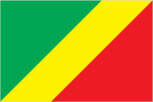
Geography
Agriculture
cash crops — sugarcane, wood, coffee, cocoa, palm kernels, peanuts, tobacco; food crops — root crops, rice, corn, bananas, manioc, fish
Area
225km See rfgional map VI] Land 342,000 km2; slightly smaller than Montana; 63% dense forest or wood, 31% meadow, 4% urban or waste, 2% cultivated (est.)
Branches
presidential executive, Council of State; judiciary; all policy made by Congolese Workers Party Central Committee and Politburo
Budget
(1983) revenues, $717 million; current expenditures, $477 million; development expenditures, $420 million
Capital
Brazzaville
Coastline
169 km People
Communists
unknown number of Communists and sympathizers
Elections
elections for local and regional organs and the National Assembly were held in July 1979— the first elections since June 1973 Political parties and leaders: Congolese Workers Party (PCT) is only legal party
Electric power
175,000 kW capacity (1984); 268 million kWh produced (1984), 153 kWh per capita
Ethnic divisions
about 15 ethnic groups divided into some 75 tribes, almost all Bantu; most important ethnic groups are Kongo (48%) in south, Sangha (20%) and M'Bochi (12%) in north, Teke (17%) in center; about 8,500 Europeans, mostly French
Exports
$997.4 billion (f .o.b., 1983); oil, lumber, tobacco, veneer, plywood, coffee, cocoa
Fiscal year
calendar year
Fishing
catch 18,934 metric tons (1982)
GDP
about $1.8 billion (1984 est.), $1,332 per capita; real growth rate 3.1% per year (1984)
Government leaders
Col. Denis SASSOUNGUESSO, President (since 1979); Ange Edouard POUNGU1, Prime Minister (since July 1984)
Imports
$607.6 million (f.o.b., 1983); machinery, transport equipment, manufactured consumer goods, iron and steel, foodstuffs, chemical products, sugar
Labor force
about 40% of population economically active (1983); 75% agriculture, 25% commerce, industry, government; 79,100 wage earners; 40,000-60,000 unemployed
Land boundaries
4,514 km Water
Language
French (official); many African languages with Lingala and Kikongo most widely used
Legal system
based on French civil law system and customary law; constitution adopted
Limits of territorial waters (claimed)
200
Literacy
over 50%
Major industries
crude oil, cement, sawmills, brewery, cigarettes, sugar mill, soap
Major trade partners
France, other EC countries, US
Member of
Af DB, Conference of East and Central African States, EAMA, EGA, EIB (associate), FAO, G-77, GATT, IBRD, ICAO, ICO, IDA, IFAD, IFC, ILO, IMF, IMO, INTELSAT, INTERPOL, ITU, NAM, OAU, UDEAC, UEAC, UN, UNESCO, UPU, WFTU, WHO, WIPO, WMO Economy
Monetary conversion rate
443.15 Communaute Financiere Africaine (CFA) francs=US$l (August 1984)
National holiday
National Day, 15 August
Nationality
noun — Congolese (sing., pi.); adjective — Congolese or Congo
Official name
People's Republic of the
Organized labor
20% of total labor force (1979 est.) Government
Other political or pressure groups
Union of Congolese Socialist Youth (UJSC), Congolese Trade Union Congress (CSC), Revolutionary Union of Congolese Women (URFC), General Union of Congolese Pupils and Students (UGEEC)
Political subdivisions
nine regions divided into districts
Population
1,798,000 (July 1985), average annual growth rate 3.0%
Religion
48% animist, 47% Christian, 2% Muslim
Suffrage
universal over age 18
Type
republic; military regime established September 1968