1983 Edition
CIA World Factbook 1983 (Internet Archive)
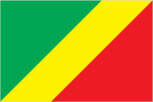
Geography
Agriculture
cash crops — sugarcane, wood, coffee, cocoa, palm kernels, peanuts, tobacco; food crops — root crops, rice, corn, bananas, manioc, fish
Airfields
60 total, 44 usable; 3 with permanent-surface runways; 1 with runways 2,440-3,659 m, 17 with runways 1,220-2,439
Branches
- presidential executive, Council of State; judiciary; all policy made by Congolese Workers Party Central Committee and Politburo
- Army, Navy, Air Force
Budget
(1982 est.) revenues $933 million, current expenditures $545 million, development expenditures $388 million
Capital
Brazzaville
Civil air
1 major transport aircraft
Communists
unknown number of Communists and sympathizers
Elections
elections for local and regional organs and the National Assembly were held in July 1979— the first elections since June 1973 Political parties and leaders: Congolese Workers Party (PCX) is only legal party
Electric power
222,000 kW capacity (1983); 160 million kWh produced (1983), 95 kWh per capita £xpor«s:$1.108billion(f.o.b., 1982); oil, lumber, tobacco, veneer, plywood, coffee, and cocoa
Fiscal year
calendar year Communications
Fishing
catch 20,600 metric tons (1979)
GDP
about $1.8 billion (1982 est.), $1,140 per capita; real growth rate 8.1% per year (1982)
Government leaders
Col. Denis SASSOUNGUESSO, President; Col. Louis-Sylvain GOMA, Prime Minister
Highways
8,246 km total; 555 km bituminous surface treated; 848 km gravel, laterite, 1,623 km improved earth, and 5,220 km unimproved roads
Imports
$663.7 million (f.o.b., 1982); machinery, transport equipment, manufactured consumer goods, iron and steel, foodstuffs, chemical products, sugar
Inland waterways
6,485 km navigable
Legal system
based on French civil law system and customary law; constitution adopted
Major industries
crude oil, sawmills, brewery, cigarettes, sugar mill, soap
Major trade partners
France, other EC countries, and US
Member of
Af DB, Conference of East and Central African States, EAMA, EGA, EIB (associate), FAO, G-77, GATT, IBRD, ICAO, ICO, IDA, IFAD, IFC, ILO, IMF, IMO, INTELSAT, INTERPOL, ITU, NAM, OAU, UDEAC, UEAC, UN, UNESCO, UPU, WFTU, WHO, WIPO, WMO Economy
Military budget
for fiscal year ending 31 December 1983, $68.9 million; about 7% of central government budget
Military manpower
males 15-49, 386,000; 194,000 fit for military service; about 17,000 reach military age (20) annually
Monetary conversion rate
422.25 Communaute Financiere Africaine (CFA) francs=US$l (February 1984)
National holiday
National Day, 15 August
Other political or pressure groups
Union of Congolese Socialist Youth (UJSC), Congolese Trade Union Congress (CSC), Revolutionary Union of Congolese Women (URFC), General Union of Congolese Pupils and Students (UGEEC)
Pipelines
crude oil 25 km
Political subdivisions
nine regions divided into districts
Ports
1 major (Pointe-Noire)
Railroads
800 km, 1.067-meter gauge, single track
Suffrage
universal over age 18
Telecommunications
services adequate for government use; primary network is composed of radio-relay routes and coaxial cables; key centers are Brazzaville, PointeNoire, and Loubomo; 13,900 telephones (1.1 per 100 popl.); 3 AM stations, 1 FM station, and 4 TV stations; 1 Atlantic Ocean satellite station Defense Forces
Type
republic; military regime established September 1968