1982 Edition
CIA World Factbook 1982 (Wikisource)
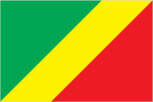
Geography
Area
349,650 km2; 63% dense forest or woodland, 33% cultivable or grazing (2% cultivated est.), 4% urban or waste
Coastline
169 km
Land boundaries
4,514 km WATER
Limits of territorial waters (claimed)
200 nm
People and Society
Ethnic divisions
about 15 ethnic groups divided into some 75 tribes, almost all Bantu; most important ethnic groups are Kongo (48%) in south, Teke (17%) in center, Sangha (20%) and M'Bochi (12%) in north; about 8,500 Europeans, mostly French
Labor force
about 40% of population economically active, most engaged in subsistence agriculture; 79,100 wage earners; 40,000-60,000 unemployed
Language
French official, many African languages with Lingala and Kikongo most widely used
Literacy
about 20%
Nationality
noun—Congolese (sing., pl.); adjective—Congolese or Congo
Organized labor
16% of total labor force (1965 est.)
Population
1,641,000 (July 1982), average annual growth rate 2.8%
Religion
about half animist, half nominally Christian, less than 1% Muslim
Government
Branches
President, Military Committee, Council of State; judiciary; all policy made by Congolese Labor Party Central Committee and Politburo
Capital
Brazzaville
Communists
unknown number of Communists and sympathizers
Elections
elections for local and regional organs and the National Assembly were held in July 1979—the first elections since June 1973 Political parties and leaders: Congolese Workers Party (PCT) is only legal party
Government leaders
President Col. Denis SASSOU-NGUESSO replaced Joachim Yhombi-Opango as President in March 1979, following an intraparty squabble; Prime Minister Col. Louis-Sylvain GOMA is Head of Government
Legal system
based on French civil law system and customary law; constitution adopted 1973
Member of
AFDB, Conference of East and Central African States, EAMA, ECA, EIB (associate), FAO, G-77, GATT, IBRD, ICAO, ICO, IDA, IFAD, IFC, ILO, IMCO, IMF, ITU, NAM, OAU, UDEAC, UEAC, UN, UNESCO, UPU, WHO, WIPO, WMO
National holiday
National Day, 15 August
Official name
People's Republic of the Congo
Other political or pressure groups
Union of Congolese Socialist Youth (UJSC), Congolese Trade Union Congress (CSC), Revolutionary Union of Congolese Union (URFC), General Union of Congolese Pupils and Students (UGEEC)
Political subdivisions
nine regions divided into districts
Suffrage
universal over age 18
Type
republic; military regime established September 1968
Economy
Agriculture
cash crops—sugarcane, wood, coffee, cocoa, palm kernels, peanuts, tobacco; food crops—root crops, rice, corn, bananas, manioc, fish
Budget
(1980) revenues $345.6 million, current expenditures $345.6 million, development expenditures $81.2 million
Electric power
116,000 kW capacity (1980); 130 million kWh produced (1980), 83 kWh per capita
Exports
$910.6 million (f.o.b., 1980); oil, lumber, tobacco, veneer, and plywood
Fiscal year
calendar year
Fishing
catch 19,447 metric tons (1978 est.)
GDP
about $1.0 billion (1980 est.), $667 per capita; real growth rate 3.5% per year (1971-81)
Imports
$545 million (f.o.b., 1980); machinery, transport equipment, manufactured consumer goods, iron and steel, foodstuffs, petroleum products, sugar
Major industries
crude oil, sawmills, brewery, cigarettes, sugar mill, soap
Major trade partners
France and other EC countries
Monetary conversion rate
202 Communaute Financiere Africaine (CFA) francs=US$1 (1980)
Communications
Airfields
63 total, 47 usable; 3 with permanent-surface runways; 1 with runways 2,440-3,659 m, 19 with runways 1,220-2,439 m
Civil air
4 major transport aircraft
Inland waterways
6,485 km navigable
Pipelines
crude oil 25 km
Ports
1 major (Pointe-Noire)
Railroads
800 km, 1.067-meter gauge, single track Highways: 8,246 km total; 555 km bituminous surface treated; 848 km gravel, laterite, 1,623 km improved earth, and 5,220 km unimproved roads
Telecommunications
services adequate for government use; primary network is comprised of radio-relay routes and coaxial cables; key centers are Brazzaville, Pointe-Noire, and Loubomo; 13,900 telephones (1.1 per 100 popl.); 3 AM stations, 1 FM station, and 4 TV stations; 1 Atlantic Ocean satellite station
Military and Security
Military budget
for fiscal year ending 31 December 1981, $59.8 million; about 10.8% of central government budget
Military manpower
males 15-49, 360,000; 180,000 fit for military service; about 16,000 reach military age (20) annually