2020 Edition
factbook.json (GitHub)
Introduction
Background
British sea captain William KEELING discovered the Cocos (Keeling) Islands in 1609, and they were named for their coconut trees in 1622. Some maps began referring to them as the Keeling Islands in 1703. In 1825, Scottish trader John CLUNIES-ROSS was trying to get to Christmas Island but was blown off course and landed on Cocos (Keeling) Islands. The next year, a British trader hired CLUNIES-ROSS's brother to bring slaves and a harem of Malay women to create the first permanent settlement on the island. By the 1830s, the Clunies-Ross family had firmly established themselves as the leaders of the islands, and they ruled Cocos (Keeling) Islands in a feudal style until 1978. The UK annexed the islands in 1857 and administered them from Ceylon after 1878 and from Singapore after 1886. The Cocos (Keeling) Islands hosted a cable relaying station and was attacked by the Germans in World War I. The Japanese similarly attacked the islands in World War II. The UK transferred the islands to Australia in 1955, when they were officially named the Cocos (Keeling) Islands, and in 1978, Australia bought all the land held by the Clunies-Ross family, ending their control of the islands. In a referendum in 1984, most islanders voted to integrate with Australia, and Western Australian laws have applied on the islands since 1992.
Geography
Area
- land
- 14 sq km
- total
- 14 sq km
- water
- 0 sq km
Area - comparative
about 24 times the size of the National Mall in Washington, D.C.
Climate
tropical with high humidity, moderated by the southeast trade winds for about nine months of the year
Coastline
26 km
Elevation
- highest point
- South Point on South Island 9 m
- lowest point
- Indian Ocean 0 m
Geographic coordinates
12 30 S, 96 50 E
Geography - note
there are 27 coral islands in the group; apart from North Keeling Island, which lies 30 km north of the main group, the islands form a horseshoe-shaped atoll around a lagoon
Irrigated land
NA
Land boundaries
- total
- 0 km
Land use
- agricultural land
- 0% (2018 est.)
- forest
- 0% (2018 est.)
- other
- 100% (2018 est.)
Location
Southeastern Asia, group of islands in the Indian Ocean, southwest of Indonesia, about halfway between Australia and Sri Lanka
Map references
Southeast Asia
Maritime claims
- exclusive fishing zone
- 200 nm
- territorial sea
- 12 nm
Natural hazards
cyclone season is October to April
Natural resources
fish
Population distribution
only Home Island and West Island are populated
Terrain
flat, low-lying coral atolls
People and Society
Age structure
- 0-14 years
- 21.2%
- 15-64 years
- 61.5%
- 65 years and over
- 17.3% (2021)
Death rate
8.89 deaths/1,000 population (2021 est.)
Ethnic groups
Europeans, Cocos Malays
Languages
- Languages
- Malay (Cocos dialect) 68.8%, English 22.3%, unspecified 8.9%; note - data represent language spoken at home (2016 est.)
- major-language sample(s)
- Buku Fakta Dunia, sumber yang diperlukan untuk maklumat asas. (Malay) The World Factbook, the indispensable source for basic information.
Median age
- total
- 40 years (2021 est.)
Nationality
- adjective
- Cocos Islander
- noun
- Cocos Islander(s)
Population
- female
- 292
- male
- 301
- total
- 593 (2021 est.)
Religions
Muslim (predominantly Sunni) 75%, Anglican 3.5%, Roman Catholic 2.2%, none 12.9%, unspecified 6.3% (2016 est.)
Government
Capital
- geographic coordinates
- 12 10 S, 96 50 E
- name
- West Island
- time difference
- UTC+6.5 (11.5 hours ahead of Washington, DC, during Standard Time)
Citizenship
see Australia
Constitution
- history
- 23 November 1955 (Cocos (Keeling) Islands Act 1955)
Country name
- conventional long form
- Territory of Cocos (Keeling) Islands
- conventional short form
- Cocos (Keeling) Islands
- etymology
- the name refers to the abundant coconut trees on the islands and to English Captain William KEELING, the first European to sight the islands in 1609
Dependency status
non-self-governing territory of Australia; administered from Canberra by the Department of Infrastructure, Transport, Cities & Regional Development
Diplomatic representation from the US
- embassy
- none (territory of Australia)
Diplomatic representation in the US
none (territory of Australia)
Executive branch
- cabinet
- NA
- chief of state
- King CHARLES III (since 8 September 2022); represented by Governor-General of the Commonwealth of Australia General Sam MOSTYN (since 1 July 2024)
- election/appointment process
- the monarchy is hereditary; governor general appointed by the monarch on the recommendation of the Australian prime minister; administrator appointed by the governor-general for a 2-year term and represents the monarch and Australia
- head of government
- Administrator Farzian ZAINAL (since 11 May 2023)
Flag
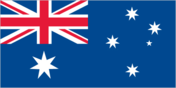
the flag of Australia is used
Government type
non-self-governing overseas territory of Australia
Independence
none (territory of Australia)
International organization participation
none
Judicial branch
- highest court(s)
- under the terms of the Territorial Law Reform Act 1992, Western Australia provides court services as needed for the island including the Supreme Court and subordinate courts (District Court, Magistrate Court, Family Court, Children's Court, and Coroners' Court)
Legal system
common law based on the Australian model
Legislative branch
- electoral system
- plurality/majority
- expected date of next election
- October 2025
- legislative structure
- unicameral
- legislature name
- Cocos (Keeling) Islands Shire Council
- most recent election date
- 10/21/2023
- number of seats
- 7 (directly elected)
- percentage of women in chamber
- 16.7%
- scope of elections
- partial renewal
- term in office
- 4 years
National anthem(s)
- history
- royal anthem, as an Australian territory
- lyrics/music
- unknown
- title
- "God Save the King"
National holiday
Australia Day (commemorates the arrival of the First Fleet of Australian settlers), 26 January (1788)
Political parties
none
Suffrage
18 years of age
Economy
Agricultural products
vegetables, bananas, pawpaws, coconuts
Exchange rates
- Currency
- Australian dollars (AUD) per US dollar -
- Exchange rates 2020
- 1.453 (2020 est.)
- Exchange rates 2021
- 1.331 (2021 est.)
- Exchange rates 2022
- 1.442 (2022 est.)
- Exchange rates 2023
- 1.505 (2023 est.)
- Exchange rates 2024
- 1.515 (2024 est.)
Exports - commodities
ships (2023)
Exports - partners
USA 31%, Singapore 29%, UK 12%, Australia 3%, Brazil 3% (2023)
Imports - commodities
iron structures, special purpose motor vehicles, cars, ships, aluminum structures (2023)
Imports - partners
Australia 87%, USA 3%, Philippines 2%, Sweden 2%, Brazil 1% (2023)
Industries
copra products, tourism
Communications
Broadcast media
1 local radio station staffed by community volunteers; satellite broadcasts of several Australian radio and TV stations available (2017)
Internet country code
.cc
Internet users
- percent of population
- 13.4% (2021 est.)
Transportation
Airports
1 (2025)
Military and Security
Military - note
defense is the responsibility of Australia
Environment
Environmental issues
limited freshwater resources; illegal fishing