1981 Edition
CIA World Factbook 1981 (Internet Archive)
Countries
133
Data Records
7,952
Categories
6
Source
CIA World Factbook 1981 (Internet Archive)
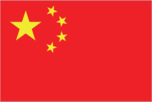
Geography
Area
- 9.6 million km2; 11% cultivated, sown area extended by multicropping, 78% desert, waste, or urban (32% of this area consists largely of denuded wasteland, plains, rolling hills, and basins from which about 3% could be reclaimed), 8% forested; 2%-3% inland water
- 1,139,600 km*; settled area 28% consisting of cropland and fallow 5%, pastures 14%, woodland, swamps, and water 6%, urban and other 3%; unsettled area 72% — mostly forest and savannah
- 236,804 km2; 8% agricultural, 60% forests, 32% urban, waste, and other; except in very limited areas, soil is very poor; most of forested area is not exploitable
- 15.5 km2; 10% agricultural, 90% urban
- 32,260 km2 (Taiwan and Pescadores); 24% cultivated, 6% pasture, 55% forested, 15% other (urban, industrial, denuded, water area)
Coastline
- 14,500 km
- 2,414 km
- 40 km
- 990 km Taiwan, 459 km offshore islands
Land boundaries
- 24,000 km
- 6,035 km
- 5,053 km
- 201 m
Limits of territorial waters (claimed)
- 12 nm
- 12 nm (economic including fishing 200 nm)
- 6 nm; fishing, 12 nm
- 3 nm (fishing 12 nm)
People and Society
Ethnic divisions
- 94% Han Chinese; 6% Chuang, Uighur, Hui, Yi, Tibetan, Miao, Manchu, Mongol, Pu-I, Korean, and numerous lesser nationalities
- 58% mestizo, 20% Caucasian, 14% mulatto, 4% Negro, 3% mixed NegroIndian, 1% Indian
- 48% Lao; 25% Phoutheung (Kha); 14% Tribal Tai; 13% Meo, Yao, and other
- 84% Taiwanese, 14% mainland Chinese, 2% aborigines
Labor force
- est. 400 million (mid1979); 75% agriculture, 25% other; shortage of skilled labor (managerial, technical, mechanics, etc.); surplus of unskilled labor
- 5.9 million (1973); 30% agriculture, 15% industry, 19% services, 13% commerce/hotels, 18% other (1973); 18.5% unemployment (1979)
- about 1-1.5 million; 80%-90% agriculture
- 6.51 million (1979); 21.5% primary industry (agriculture), 41.8% secondary industry (including manufacturing, mining, construction), 36.7% tertiary industry (including commerce and services), 1979; 1.3% unemployment (1979)
Language
- Chinese (Mandarin mainly; also Cantonese, Wu, Fukienese, Amoy, Hsiang, Kan, Hakka dialects), and minority languages (see ethnic divisions above)
- Spanish
- Lao official, French predominant foreign language
- Chinese Mandarin (official language); Taiwanese and Hakka dialect also used
Literacy
- at least 25%
- 72-75% of population over 15 years old
- about 15%
- about 90%
Nationality
- noun — Chinese (sing., pi.); adjective — Chinese
- noun — Colombian(s); adjective — Colombian
- noun — Lao or Laotian (sing.); Laotians (pi.); adjective — Lao or Laotian
- noun — Macanese (sing, and pi.); adjective —
- noun — Chinese (sing., pi.); adjective — Chinese
Organized labor
- 13% of labor force (1968)
- only labor organization is subordinate to the Communist Party
- about 15% of 1978 labor force (government controlled)
Population
- 1,055,304,000 (July 1982), average annual growth rate 1.3%
- 26,631,000 (July 1982), average annual growth rate 1.6%
- 3,577,000 (July 1982), average annual growth rate 1.7%
- 289,000 (July 1982), average annual growth rate 1.7%
- 18,456,000, excluding the population of Quemoy and Matsu Islands and foreigners (July 1982), average annual growth rate 1.8%
Religion
- most people, even before 1949, have been pragmatic and eclectic, not seriously religious; most important elements of religion are Confucianism, Taoism, Buddhism, ancestor worship; about 2%-3% Muslim, 1% Christian
- 95% Roman Catholic
- 50% Buddhist, 50% animist and other
- 93% mixture of Buddhist, Confucian, and Taoist; 4.5% Christian; 2.5% other
Government
Branches
- before 1966 control was exercised by Chinese Communist Party, through State Council, which supervised more than 60 ministries, commissions, bureaus, etc., all technically under the Standing Committee of the National People's Congress; this system broke down under Cultural Revolution pressures but has been largely restored
- President, bicameral legislature, judiciary
- President; 40-member Supreme People's Council; Cabinet; Cabinet is totally Communist but Council contains a few nominal neutralists and non-Communists; National Congress of People's Representatives established the current government structure in December 1975
- five independent branches (executive, legislative, judicial, plus traditional Chinese functions of examination and control), dominated by executive branch; President and Vice President elected by National Assembly
Capital
- Beijing (Peking)
- Bogota
- Vientiane
- Taipei
Communists
- about 39 million party members in 1981
- 10,000-12,000 members est.
Elections
- elections held for People's Congress representatives at county level Political parties and leaders: Chinese Communist Party (CCP), headed by Hu Yaobang; Hu is Chairman of Central Committee and was elected at the party's 6th plenum in June 1981; Central Committee was formed at the llth Party Congress, held in August 1977
- every fourth year; next presidential election scheduled for May 1982; last congressional election March 1982; municipal and departmental elections every two years, last held February 1980 Political parties and leaders: Liberal Party, President Julio Cesar Turbay and former President Alfonso Lopez Michelsen; Conservative Party, Alvaro Gomez Hurtado, Misael Pastrana Borrero, and Belisario Betancur head two principal factions
- elections for National Assembly, originally scheduled for 1 April 1976, have not yet been held Political parties and leaders: Lao People's Revolutionary Party (Communist), party chairman Kayson Phomvihan, includes Lao Patriotic Front and Alliance Committee of Patriotic Neutralist Forces; third congress of Lao People's Revolutionary Party scheduled for first half of 1982; other parties are moribund
- national level — legislative yuan every three years but no general election held since 1948 election on mainland (partial elections for Taiwan province representatives in December 1969, 1972, 1975, and 1980); local levelprovincial assembly, county and municipal executives every four years; county and municipal assemblies every four years Political parties and leaders: Kuomintang, or National Party, led by Chairman Chiang Ching-kuo, had no real opposition; lately a loosely organized anti-Kuomintang opposition has emerged; two insignificant parties are Democratic Socialist Party and Young China Party Voting strength (1981 provincial assembly elections): 59 seats Kuomintang, 18 seats independents; 1981 local elections, with 72% turnout of eligible voters Kuomintang received 59% of the popular vote, non-Kuomintang 41%
Government leader
- Premier of State Council ZHAO Ziyang; head of state, Chairman of NPC Standing Committee, YE Jianying; government subordinate to Central Committee of CCP
- President Julio Cesar TURBAY Ayala
Government leaders
- President SOUPHANOUVONG; Prime Minister KAYSON PHOMVIHAN; Deputy Prime LAOS (Continued) Ministers NOUHAK PHOUMSAVAN, PHOUMI VONGVICHIT, PHOUN SIPASEUT, KHAMTAI SIPHANDON, and SALI VONGKHAMSAO
- President CHIANG Ching-kuo; Premier SUN Yiin-hsiian
Legal system
- before 1966, a complex amalgam of custom and statute, largely criminal; little ostensible development of uniform code of administrative and civil law; highest judicial organ is Supreme People's Court, which reviews lower court decisions; laws and legal procedure subordinate to priorities of party policy; whole system largely suspended during Cultural Revolution but has been revived as part of the current regime's efforts to rationalize the state and to reintroduce socialist legality; regime has attempted to write civil and Communist codes; new legal codes in effect 1 January 1980
- based on Spanish law; religious courts regulate marriage and divorce; constitution decreed in 1886, amendments codified in 1946 and 1968; judicial review of legislative acts in the Supreme Court; accepts compulsory ICJ jurisdiction, with reservations COLOMBIA (Continued)
- based on civil law system; has not accepted compulsory ICJ jurisdiction
- based on civil law system; constitution adopted 1947, amended 1960 to permit Chiang Kai-shek to be reelected, and amended 1972 to permit President to restructure certain government organs; accepts compulsory ICJ jurisdiction, with reservations
Member of
- FAO, IAEA, IBRD, ICAO, IDA, IFAD, IFC, IHO, ILO, IMCO, IMF, ITU, Red Cross, UN, UNESCO, UPU, WHO, WIPO, WMO, other international bodies
- FAO, G-77, GATT, IADB, IAEA, IBRD, ICAC, ICAO, ICO, IDA, IDE, IFAD, IFC, IHO, ILO, IMCO, IMF, ISO, ITU, LAFTA and Andean Sub-Regional Group (created in May 1969 within LAFTA), OAS, SELA, UN, UNESCO, UPEB, UPU, WHO, WIPO, WMO, WSG, WTO
- ADB, Colombo Plan, ESCAP, FAO, G-77, IBRD, ICAO, IDA, IFAD, ILO, IMF, IPU, ITU, Mekong Committee, NAM, SEAMES, UN, UNCTAD, UNESCO, UPU, WHO, WMO, WTO
- expelled from UN General Assembly and Security Council on 25 October 1971 and withdrew on same date from other charter-designated subsidiary organs; expelled from IMF/World Bank group April/May 1980; member of ADB and seeking to join GATT and/or MFA; attempting to retain membership in ICAC, ISO, INTELSAT, IWC-International Wheat Council, PCA; suspended from IAEA in 1972 but still allows IAEA controls over extensive atomic development
National holiday
- National Day, 1 October
- Independence Day, 30 July
- 2 December
- 10 October
Official name
- People's Republic of China
- Republic of Colombia
- Lao People's Democratic Republic
- Taiwan
Other political or pressure groups
- the People's Liberation Army (PLA) remains a major force, although many military officers who acquired a wide range of civil politicaladministrative duties during the Cultural Revolution have been either returned to primarily military positions or removed; many veteran civilian officials, in eclipse since the Cultural Revolution, have been reinstated; mass organizations, such as the trade unions and the youth league, have been rebuilt
- Communist Party (PCC), Gilberto Vieira White; PCC/ML, Chinese Line Communist Party
- non-Communist political groups are moribund; most leaders have fled the country
- none
Political subdivisions
- 21 provinces, 3 centrally governed municipalities, and 5 autonomous regions
- 22 departments, 3 Intendants, 5 Commissariats, Bogota Special District
- 13 provinces subdivided into districts, cantons, and villages
- 16 counties, 3 cities, 2 special municipalities (Taipei and Kaosiung)
Suffrage
- universal over age 18
- age 18 and over
- universal over age 18
- universal over age 20
Type
- Communist state; real authority lies with Communist Party's Political Bureau; the National People's Congress, in theory the highest organ of government, usually ratifies the party's programs; the State Council actually directs the government
- republic; executive branch dominates government structure
- Communist state
- one-party presidential regime
Voting strength
1978 presidential election — Julio Cesar Turbay 49%, Belisario Betancur 46%, Gen. Alvaro Valencia 1.3%; 1978 municipal election, 55% Liberal Party, 36% Conservative Party, 9% combined far left parties; 70% abstention of eligible voters
Economy
Agriculture
- main crops — rice, corn, wheat, miscellaneous grains, oilseed, cotton; agriculture mainly subsistence; grain imports 13.7 million metric tons in 1980 COLOMBIA CHINA (Continued)
- main crops — coffee, rice, corn, sugarcane, plantains, bananas, cotton, tobacco; caloric intake, 2,140 calories per day per capita (1970)
- main crops — rice (overwhelmingly dominant), corn, vegetables, tobacco, coffee, cotton; formerly self-sufficient; food shortages (due in part to distribution deficiencies), including rice
- most arable land intensely farmed — 60% cultivated land under irrigation; main crops — rice, sweet potatoes, sugarcane, bananas, pineapples, citrus fruits; food shortages — wheat, corn, soybeans
Aid
- economic commitments — Western (non-US) countries ODA and OOF (1970-79), $235 million; US (FY70-80), $276 million; military— US assistance $1,119.5 million (197075)
- economic commitments— US (FY46-80), $2.2 billion, including Ex-Im; other Western (non-US) countries, ODA and OOF (1970-79), $265 million; military— US (FY46-79), $4.4 billion committed
Budget
- (1980) revenues $2.9 billion; expenditures $2.8 billion
- (1979 est.) receipts, $54.7 million; expenditures, $174.2 million; deficit $119.5 million
Central government budget
$6.7 billion (FY79)
Crude steel
- 34.48 million metric tons produced, 30 kg per capita (1979)
- 356,000 metric tons produced (1976), 14 kg per capita
Electric power
- 66,000,000 kW capacity (1980); 301.0 billion kWh produced (1980), 290 kWh per capita
- 5,000,000 kW capacity (1981); 22.0 billion kWh produced (1981), 808 kWh per capita
- 141,000 kW capacity (1980); 887 million kWh produced (1980), 253 kWh per capita
- 9,147,000 kW capacity (1980); 41.0 billion kWh produced (1980), 2,280 kWh per capita TAIWAN (Continued)
Exports
- $13.8 billion (f.o.b., 1979); agricultural products, oil, minerals and metals, manufactured goods
- $4,113 million (f.o.b., 1980); coffee, fuel oil, cotton, tobacco, sugar, textiles, cattle and hides, bananas
- $15 million (f.o.b., 1979 est.); electric power, forest products, tin concentrates; coffee, undeclared exports of opium and tobacco
- $16.1 billion (f.o.b., 1979); 28.0% textiles, 17.0% electrical machinery, 6.3% plywood and wood products, 8.0% basic metals and metal products, 28% machinery, manufactures, and transportation
Fiscal year
- calendar year
- calendar year
- 1 July-30 June
- 1 July-30 June
Fishing
- catch 63,965 metric tons 1977; exports $10.6 million (1973), imports $10.3 million (1973)
- catch 854,784 metric tons (1977)
GNP
- $552 billion (1980), $538 per capita
- $30.58 million (1980 est.; in current dollars), $1,112 per capita (1980; in current dollars); 73% private consumption, 8% public consumption, 20% gross investment
- $290 million, $90 per capita (1977 est.)
- $32.2 billion (1979, in 1979 prices), $1,830 per capita; real growth, 8% (1979)
Imports
- $14.5 billion (c.i.f., 1979); grain, chemical fertilizer, steel, industrial raw materials, machinery and equipment
- $3,851 million (f.o.b., 1980); transportation equipment, machinery, industrial metals and raw materials, chemicals and Pharmaceuticals, fuels, fertilizers, paper and paper products, foodstuffs and beverages
- $80 million (c.i.f., 1979 est.); rice and other foodstuffs, petroleum products, machinery, transportation equipment
- $14.8 billion (c.i.f., 1979); 23.0% machinery and transportation equipment, 11.0% electrical machinery, 11.0% basic metals, 15.0% crude oil, 12.3% chemical products
Major industries
- iron and steel, coal, machine building, armaments, textiles, petroleum
- textiles, food processing, clothing and footwear, beverages, chemicals, and metal products
- tin mining, timber, tobacco, textiles, electric power
- textiles, clothing, chemicals, plywood, electronics, sugar milling, food processing, cement, shipbuilding
Major trade partners
- Japan, Hong Kong, US, West Germany, Romania, Australia, Canada, UK, France, USSR (1979)
- exports — 4% Japan, 29% US, 20% Germany, 9% Venezuela, 5% Netherlands; imports — 35% US, 8% Germany, 10% Japan, 3% Ecuador, 4% UK, 5% Venezuela, 4% France (1977)
- imports from Thailand, USSR, Japan, France, China, Vietnam; exports to Thailand and Malaysia; trade with Communist countries insignificant; Laos was once a major transit point in world gold trade, value of 1973 gold reexports $55 million
- exports — 35% US, 14% Japan; imports— 31% Japan, 23% US (1979)
Monetary conversion rate
- as of 9 September 1980, about 1.46 yuan=US$l (arbitrarily established)
- 56.39 pesos=US$l (September 1981, changes frequently)
- US$1 =400 kip (since June 1978)
- NT (New Taiwan) $36=US$1
Shortages
- complex machinery and equipment, highly skilled scientists and technicians, electricity
- capital equipment, petroleum, transportation system, trained personnel
Communications
Airfields
- 372 total; 270 with permanent-surface runways; 10 with runways 3,500 m and over; 66 with runways 2,500 to 3,499 m; 230 with runways 1,200 to 2,499 m; 62 with runways less than 1,200 m; 2 seaplane stations; 4 airfields under construction DEFENSE FORCES
- 634 total, 633 usable; 50 with permanentsurface runways; 1 with runways over 3,660 m; 6 with runways 2,440-3,659 m, 89 with runways 1,220-2,439 m
- 88 total, 76 usable; 12 with permanent-surface runways; 2 with runways 2,440-3,659 m, 13 with runways 1,220-2,439 m
- 43 total, 41 usable; 31 with permanent-surface runways; 3 with runways over 3,659 m, 16 with runways 2,440-3,659 m, 10 with runways 1,220-2,439 m
Civil air
118 major transport aircraft, including 6 leased in
Highways
- about 890,000 km all types roads; almost half (about 350,000 km) unimproved natural earth roads and tracks; about 280,000 km improved earth roads about 2to 5-meters wide and in poor to fair condition; remainder (about 260,000 km) includes majority of principal roads
- 65,125 km total; 8,655 km paved, 48,510 km gravel, 7,960 earth
- about 21,300 km total; 1,300 km bituminous or bituminous treated; 5,900 km gravel, crushed stone, or improved earth; 14,100 km unimproved earth and often impassable during rainy season mid-May to mid-September
- network totals 17,224 km (construction of North-South Freeway approximately 98% complete), plus 483 km on Penghu and offshore islands; 11,455 km paved, 4,424 km gravel and crushed stone, 1,345 km earth
Inland waterways
- 169,000 km; 40,200 km navigable by modern motorized craft
- 14,300 km, navigable by river boats
- about 4,587 km, primarily Mekong and tributaries; 2,897 additional kilometers are sectionally navigable by craft drawing less than 0.5 m
Lao People's Liberation Army (LPLA)
the LPLA consists of an army with naval, aviation, and militia elements
Military budget
proposed for fiscal year ending 31 December 1981, $312.7 million; about 7.6% of central government budget
Military manpower
- males 15-49, 274,548,000; 153,482,000 fit for military service; 11,372,000 reach military age (18) annually
- males 15-49, 6,442,000; 4,570,000 fit for military service; about 326,000 reach military age (18) annually
- males 15-49, 845,000; 453,000 fit for military service; 40,000 reach military age (18) annually; no conscription age specified
- males 15-49, 4,875,000; 3,835,000 fit for military service; about 205,000 currently reach military age (19) annually
Pipelines
- crude oil, 3,585 km; refined products, 1,350 km; natural gas, 830 km; natural gas liquids, 125 km
- 615 km refined products, 97 km natural gas
Ports
- 21 major, approximately 180 minor
- 5 major, 5 minor
- 5 major, 5 minor
Ports (river)
5 major, 4 minor
Railroads
- networks total about 52,500 route km common-carrier lines; about 600 km meter gauge (1.00 m); rest standard gauge (1.435 m); all single track except 9,345 km double track on standard gauge lines; approximately 1,520 km electrified; about 10,000 km industrial lines (gauges range from 0.762 to 1.435 m)
- 3,436 km, all 0.914-meter gauge, single track
- about 1,050 km common-carrier and 3,500 km industrial lines, all on Taiwan; common-carrier lines consist of West System— 825 km meter gauge (1.067 m) with 325 km double track (complete line under construction for electrification) — and East Line — 225 km meter gauge (1.067 m); common-carrier lines owned by government and operated by Railway Administration (TRA) under Ministry of Communications; industrial lines owned and operated by government enterprises
Telecommunications
- nationwide radio-relay system; 1 Atlantic Ocean satellite station and 3 domestic satellite stations; 1.52 million telephones (5.3 per 100 popl.); 325 AM, 130 FM, and 86 TV stations DEFENSE FORCES
- service to general public considered poor; radio network provides generally erratic service to government users; approx. 10 AM stations; over 2,000 est. telephones; 1 ground satellite station DEFENSE FORCES
- very good international and domestic service; 2.6 million telephones; about 100 radio broadcast stations with 240 AM and 6 FM transmitters; 12 TV stations and 3 repeaters; 8 million radio receivers and 3.6 million TV receivers; 2 INTELSAT ground stations; tropospheric scatter links to Hong Kong and the Philippines available but inactive; submarine cables to Okinawa (Japan), the Philippines, and Guam DEFENSE FORCES