2020 Edition
factbook.json (GitHub)
Introduction
Background
Indigenous groups inhabited central and southern Chile for several thousand years, living in mixed pastoralist and settled communities. The Inca then ruled the north of the country for nearly a century prior to the arrival of the Spanish in the 16th century. In 1541, the Spanish established the Captaincy General of Chile, which lasted until Chile declared its independence in 1810. The subsequent struggle with the Spanish became tied to other South American independence conflicts, with a decisive victory not being achieved until 1818. In the War of the Pacific (1879-83), Chile defeated Peru and Bolivia to win its current northernmost regions. By the 1880s, the Chilean central government cemented its control over the central and southern regions inhabited by Mapuche Indigenous peoples. Between 1891 and 1973, a series of elected governments succeeded each other until the Marxist government of Salvador ALLENDE was overthrown in 1973 in a military coup led by General Augusto PINOCHET, who ruled until a democratically elected president was inaugurated in 1990. Economic reforms that were maintained consistently since the 1980s contributed to steady growth, reduced poverty rates by over half, and helped secure the country's commitment to democratic and representative government. Chile has increasingly assumed regional and international leadership roles befitting its status as a stable, democratic nation.
Geography
Area
- land
- 743,812 sq km
- total
- 756,102 sq km
- water
- 12,290 sq km
Area - comparative
slightly smaller than twice the size of Montana
Climate
temperate; desert in north; Mediterranean in central region; cool and damp in south
Coastline
6,435 km
Elevation
- highest point
- Nevado Ojos del Salado 6,893 m (highest volcano in the world)
- lowest point
- Pacific Ocean 0 m
- mean elevation
- 1,871 m
Geographic coordinates
30 00 S, 71 00 W
Geography - note
note 1: Chile is the longest country north-to-south in the world, extending across 39 degrees of latitude note 2: Chile is one of the countries along the Ring of Fire, which is a belt bordering the Pacific Ocean that contains about 75% of the world's volcanoes and up to 90% of the world's earthquakes note 3: the Atacama Desert in the north of Chile is the driest desert in the world; Ojos del Salado (6,893 m) in the Atacama Desert is the highest active volcano in the world, Chile's tallest mountain, and the second-highest in the Western Hemisphere and the Southern Hemisphere; the volcano's small crater lake is the world's highest lake at 6,390 m
Irrigated land
9,094 sq km (2022)
Land boundaries
- border countries
- Argentina 6,691 km; Bolivia 942 km; Peru 168 km
- total
- 7,801 km
Land use
- agricultural land
- 14.4% (2023 est.)
- agricultural land: arable land
- arable land: 1.9% (2023 est.)
- agricultural land: permanent crops
- permanent crops: 0.7% (2023 est.)
- agricultural land: permanent pasture
- permanent pasture: 11.8% (2023 est.)
- forest
- 24.5% (2023 est.)
- other
- 61.1% (2023 est.)
Location
Southern South America, bordering the South Pacific Ocean, between Argentina and Peru
Major lakes (area sq km)
- fresh water lake(s)
- Lago General Carrera (shared with Argentina) - 2,240 sq km; Lago O'Higgins (shared with Argentina) - 1,010 sq km; Lago Llanquihue - 800 sq km; Lago Fagnano (shared with Argentina) - 590 sq km
Map references
South America
Maritime claims
- contiguous zone
- 24 nm
- continental shelf
- 200/350 nm
- exclusive economic zone
- 200 nm
- territorial sea
- 12 nm
Natural hazards
severe earthquakes; active volcanism; tsunamis volcanism: significant volcanic activity due to more than three-dozen active volcanoes along the Andes Mountains; Lascar (5,592 m), which last erupted in 2007, is the most active volcano in the northern Chilean Andes; Llaima (3,125 m) in central Chile, which last erupted in 2009, is another of the country's most active; Chaiten's 2008 eruption forced major evacuations; other notable historically active volcanoes include Cerro Hudson, Calbuco, Copahue, Guallatiri, Llullaillaco, Nevados de Chillan, Puyehue, San Pedro, and Villarrica; see note 2 under "Geography - note"
Natural resources
copper, timber, iron ore, nitrates, precious metals, molybdenum, hydropower
Population distribution
90% of the population is located in the middle third of the country around the capital of Santiago; the far north, including the Atacama Desert, and the extreme south are relatively underpopulated
Terrain
low coastal mountains, fertile central valley, rugged Andes in east
People and Society
Age structure
- 0-14 years
- 19.2% (male 1,822,908/female 1,751,528)
- 15-64 years
- 67.3% (male 6,274,620/female 6,278,467)
- 65 years and over
- 13.6% (2024 est.) (male 1,072,208/female 1,464,921)
Alcohol consumption per capita
- beer
- 2.76 liters of pure alcohol (2019 est.)
- other alcohols
- 0 liters of pure alcohol (2019 est.)
- spirits
- 2.43 liters of pure alcohol (2019 est.)
- total
- 7.8 liters of pure alcohol (2019 est.)
- wine
- 2.61 liters of pure alcohol (2019 est.)
Birth rate
8.81 births/1,000 population (2025 est.)
Currently married women (ages 15-49)
48.5% (2022 est.)
Death rate
6.79 deaths/1,000 population (2025 est.)
Dependency ratios
- elderly dependency ratio
- 20.9 (2025 est.)
- potential support ratio
- 4.8 (2025 est.)
- total dependency ratio
- 45 (2025 est.)
- youth dependency ratio
- 24.1 (2025 est.)
Drinking water source
- improved: rural
- rural: 100% of population (2022 est.)
- improved: total
- total: 100% of population (2022 est.)
- improved: urban
- urban: 100% of population (2022 est.)
- unimproved: rural
- rural: 0% of population (2022 est.)
- unimproved: total
- total: 0% of population (2022 est.)
- unimproved: urban
- urban: 0% of population (2022 est.)
Education expenditure
- Education expenditure (% GDP)
- 4.9% of GDP (2022 est.)
- Education expenditure (% national budget)
- 18.4% national budget (2022 est.)
Ethnic groups
White and non-Indigenous 88.9%, Mapuche 9.1%, Aymara 0.7%, other Indigenous groups 1% (includes Rapa Nui, Likan Antai, Quechua, Colla, Diaguita, Kawesqar, Yagan or Yamana), unspecified 0.3% (2012 est.)
Gross reproduction rate
0.61 (2025 est.)
Health expenditure
- Health expenditure (as % of GDP)
- 9% of GDP (2022)
- Health expenditure (as % of national budget)
- 19% of national budget (2022 est.)
Hospital bed density
2 beds/1,000 population (2021 est.)
Infant mortality rate
- female
- 5.7 deaths/1,000 live births
- male
- 6.9 deaths/1,000 live births
- total
- 4.5 deaths/1,000 live births (2025 est.)
Languages
- Languages
- Spanish 99.5% (official), English 10.2%, Indigenous 1% (includes Mapudungun, Aymara, Quechua, Rapa Nui), other 2.3%, unspecified 0.2% (2012 est.)
- major-language sample(s)
- La Libreta Informativa del Mundo, la fuente indispensable de información básica. (Spanish) The World Factbook, the indispensable source for basic information.
Life expectancy at birth
- female
- 83.3 years
- male
- 77.3 years
- total population
- 80.3 years (2024 est.)
Literacy
- female
- 96.3% (2017 est.)
- male
- 96.5% (2017 est.)
- total population
- 96.4% (2017 est.)
Major urban areas - population
6.903 million SANTIAGO (capital), 1.009 million Valparaiso, 912,000 Concepcion (2023)
Maternal mortality ratio
10 deaths/100,000 live births (2023 est.)
Median age
- female
- 38.2 years
- male
- 35.8 years
- total
- 38.9 years (2025 est.)
Nationality
- adjective
- Chilean
- noun
- Chilean(s)
Net migration rate
2.58 migrant(s)/1,000 population (2025 est.)
Obesity - adult prevalence rate
28% (2016)
Physician density
3.33 physicians/1,000 population (2023)
Population
- female
- 9,711,460
- male
- 9,379,883
- total
- 19,091,343 (2025 est.)
Population growth rate
0.46% (2025 est.)
Religions
Catholic 57%, none 25.7%, Evangelical or Protestant 16.2%, other Christians and traditions related to Christ 1.3%; less than 1%: Buddhist, Catholic Orthodox, Church of Jesus Christ of Latter-Day Saints, Islam, Judaism, other religions, no religion (2024)
Sanitation facility access
- improved: rural
- rural: 100% of population (2022 est.)
- improved: total
- total: 100% of population (2022 est.)
- improved: urban
- urban: 100% of population (2022 est.)
- unimproved: rural
- rural: 0% of population (2022 est.)
- unimproved: total
- total: 0% of population (2022 est.)
- unimproved: urban
- urban: 0% of population (2022 est.)
School life expectancy (primary to tertiary education)
- female
- 17 years (2023 est.)
- male
- 17 years (2023 est.)
- total
- 17 years (2023 est.)
Sex ratio
- 0-14 years
- 1.04 male(s)/female
- 15-64 years
- 1 male(s)/female
- 65 years and over
- 0.73 male(s)/female
- at birth
- 1.04 male(s)/female
- total population
- 0.97 male(s)/female (2024 est.)
Tobacco use
- female
- 24.1% (2025 est.)
- male
- 28.4% (2025 est.)
- total
- 26.2% (2025 est.)
Total fertility rate
1.25 children born/woman (2025 est.)
Urbanization
- rate of urbanization
- 0.78% annual rate of change (2020-25 est.)
- urban population
- 88% of total population (2023)
Government
Administrative divisions
16 regions (regiones, singular - region); Antofagasta, Araucanía, Arica y Parinacota, Atacama, Aysén, Biobío, Coquimbo, Libertador General Bernardo O'Higgins, Los Lagos, Los Ríos, Magallanes y de la Antártica Chilena (Magallanes and Chilean Antarctica), Maule, Ñuble, Región Metropolitana (Santiago), Tarapacá, Valparaíso
Capital
- daylight saving time
- +1hr, begins second Sunday in August; ends second Sunday in May; note - Punta Arenas observes DST throughout the year
- etymology
- Santiago is named after Saint James, the patron saint of Spain (Santo Iago in Spanish); Valparaiso derives from the Spanish words valle (valley) and paraíso (paradise)
- geographic coordinates
- 33 27 S, 70 40 W
- name
- Santiago; note - Valparaiso is the seat of the national legislature
- time difference
- UTC-3 (2 hours ahead of Washington, DC, during Standard Time)
- time zone note
- Chile has three time zones: the continental portion at UTC-3; the southern Aysén and Magallanes regions, which do not use daylight savings time and remain at UTC-3 year-round; and Easter Island at UTC-5
Citizenship
- citizenship by birth
- yes
- citizenship by descent only
- yes
- dual citizenship recognized
- yes
- residency requirement for naturalization
- 5 years
Constitution
- amendment process
- proposed by members of either house of the National Congress or by the president of the republic; passage requires at least four-sevenths majority vote of the membership in both houses and approval by the president; passage of amendments to constitutional articles, such as the republican form of government, basic rights and freedoms, the Constitutional Tribunal, electoral justice, the Council of National Security, or the constitutional amendment process, requires at least four-sevenths majority vote by both houses of Congress and approval by the president; the president can opt to hold a referendum when Congress and the president disagree on an amendment
- history
- many previous; latest adopted 11 September 1980, effective 11 March 1981; in September 2022 and again in December 2023, referendums presented for a new constitution were both defeated, and the September 1980 constitution remains in force
Country name
- conventional long form
- Republic of Chile
- conventional short form
- Chile
- etymology
- derivation of the name is unclear; it may come from a local word meaning either "land's end" or "cold," or a local word that was confused with the Mexican Spanish word chili, meaning a chili pepper, in reference to the area's shape
- local long form
- República de Chile
- local short form
- Chile
Diplomatic representation from the US
- chief of mission
- Ambassador-designate Brandon JUDD (since November 2025)
- email address and website
- SantiagoUSA@state.gov https://cl.usembassy.gov/
- embassy
- Avenida Andres Bello 2800, Las Condes, Santiago
- FAX
- [56] (2) 2330-3710
- mailing address
- 3460 Santiago Place, Washington DC 20521-3460
- telephone
- [56] (2) 2330-3000
Diplomatic representation in the US
- chancery
- 1732 Massachusetts Avenue NW, Washington, DC 20036
- chief of mission
- Ambassador Juan Gabriel VALDES Soublette (since 7 June 2022)
- consulate(s) general
- Chicago, Houston, Los Angeles, Miami, New York, San Francisco
- email address and website
- echile.eeuu@minrel.gob.cl https://chile.gob.cl/estados-unidos/en/
- FAX
- [1] (202) 887-5579
- telephone
- [1] (202) 785-1746
Executive branch
- cabinet
- Cabinet appointed by the president
- chief of state
- President Gabriel BORIC (since 11 March 2022)
- election results
- 2025: José Antonio KAST elected president in second round; percent of vote in first round - Jeannette Alejandra JARA Román (PCCh) 26.8%, José Antonio KAST (PLR) 23.9%, Franco Aldo PARISI Fernández (PDG) 19.7%, Johannes KAISER (PNL) 13.9%, Evelyn Rose MATTHEI Fornet (PL) 12.5%; other 3.2%; percent of vote in second round - José Antonio KAST 58.2%, Jeannette Alejandra JARA Román 41.8%; note - KAST will take office 11 March 2026 2021: Gabriel BORIC elected president in second round; percent of vote in first round - José Antonio KAST (FSC) 27.9%; Gabriel BORIC (AD) 25.8%; Franco PARISI (PDG) 12.8%; Sebastian SICHEL (ChP+) 12.8%; Yasna PROVOSTE (New Social Pact) 11.6%; other 9.1%; percent of vote in second round - Gabriel BORIC 55.9%; Jose Antonio KAST 44.1% 2017: Sebastian PINERA Echenique elected president in second round; percent of vote in first round - Sebastian PINERA Echenique (independent) 36.6%; Alejandro GUILLIER (independent) 22.7%; Beatriz SANCHEZ (independent) 20.3%; Jose Antonio KAST (independent) 7.9%; Carolina GOIC (PDC) 5.9%; Marco ENRIQUEZ-OMINAMI (PRO) 5.7%; other 0.9%; percent of vote in second round - Sebastian PINERA Echenique 54.6%, Alejandro GUILLIER 45.4%
- election/appointment process
- president directly elected by absolute-majority popular vote in 2 rounds, if needed, for a single 4-year term
- expected date of next election
- 18 November 2029 (a runoff, if needed, will take place in December 2029)
- head of government
- President Gabriel BORIC (since 11 March 2022)
- most recent election date
- 16 November 2025, with a runoff held on 14 December 2025
Flag
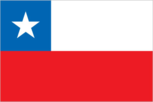
description: two equal horizontal bands of white (top) and red; a blue square sits in the top left corner of the flag, the same height as the white band; the square has a five-pointed white star in the center meaning: the star represents a guide to progress and honor; blue stands for the sky, white for the Andes Mountains, and red for the blood spilled to achieve independence
Government type
presidential republic
Independence
18 September 1810 (from Spain)
International law organization participation
has not submitted an ICJ jurisdiction declaration; accepts ICCt jurisdiction
International organization participation
APEC, BIS, CAN (associate), CD, CELAC, FAO, G-15, G-77, IADB, IAEA, IBRD, ICAO, ICC (national committees), ICCt, ICRM, IDA, IFAD, IFC, IFRCS, IHO, ILO, IMF, IMO, IMSO, Interpol, IOC, IOM, IPU, ISO, ITSO, ITU, ITUC (NGOs), LAES, LAIA, Mercosur (associate), MIGA, MINUSTAH, NAM, OAS, OECD (enhanced engagement), OPANAL, OPCW, Pacific Alliance, PCA, PROSUR, SICA (observer), UN, UNASUR, UNCTAD, UNESCO, UNFICYP, UNHCR, UNIDO, Union Latina, UNMOGIP, UNOOSA, UNTSO, UNWTO, UPU, WCO, WFTU (NGOs), WHO, WIPO, WMO, WTO
Judicial branch
- highest court(s)
- Supreme Court or Corte Suprema (consists of a court president and 20 members); Constitutional Court (consists of 10 members and is independent of the rest of the judiciary); Elections Qualifying Court (consists of 5 members)
- judge selection and term of office
- Supreme Court president and judges (ministers) appointed by the president of the republic and ratified by the Senate from lists of candidates provided by the court itself; judges appointed for life with mandatory retirement at age 70; Constitutional Court members appointed - 3 by the Supreme Court, 3 by the president of the republic, 2 by the Chamber of Deputies, and 2 by the Senate; members serve 9-year terms with partial membership replacement every 3 years (the court reviews constitutionality of legislation); Elections Qualifying Court members appointed by lottery - 1 by the former president or vice president of the Senate and 1 by the former president or vice president of the Chamber of Deputies, 2 by the Supreme Court, and 1 by the Appellate Court of Valparaiso; members appointed for 4-year terms
- subordinate courts
- Courts of Appeal; oral criminal tribunals; military tribunals; local police courts; specialized tribunals and courts in matters such as family, labor, customs, taxes, and electoral affairs
Legal system
civil law system influenced by several Western European civil legal systems; Constitutional Tribunal reviews legislative acts
Legislative branch
- legislative structure
- bicameral
- legislature name
- National Congress (Congreso Nacional)
Legislative branch - lower chamber
- chamber name
- Chamber of Deputies (Cámara de Diputados)
- electoral system
- proportional representation
- expected date of next election
- November 2025
- most recent election date
- 11/21/2021
- number of seats
- 155 (all directly elected)
- parties elected and seats per party
- Chile Podemos (Empowering Chile", CP +) (53); New Social Pact (NPS) (37); Approving Dignity (AD) (37); Christian Social Front (FSC) (15); Other (13)
- percentage of women in chamber
- 33.5%
- scope of elections
- full renewal
- term in office
- 4 years
Legislative branch - upper chamber
- chamber name
- Senate (Senado)
- electoral system
- proportional representation
- expected date of next election
- November 2025
- most recent election date
- 11/21/2021
- number of seats
- 50 (all directly elected)
- parties elected and seats per party
- Chile Podemos (Empowering Chile", CP +) (12); New Social Pact (NPS) (8); Approving Dignity (AD) (4); Independents (2); Other (1)
- percentage of women in chamber
- 32%
- scope of elections
- partial renewal
- term in office
- 8 years
National anthem(s)
- history
- music adopted 1828, original lyrics adopted 1818, adapted lyrics adopted 1847; under Augusto PINOCHET's military rule, a verse glorifying the army was added; some citizens refused to sing this verse as a protest, and it was removed when democracy was restored in 1990
- lyrics/music
- Eusebio LILLO Robles and Bernardo DE VERA y Pintado/Ramon CARNICER y Battle
- title
- "Himno Nacional de Chile" (National Anthem of Chile)
National color(s)
red, white, blue
National heritage
- selected World Heritage Site locales
- Rapa Nui National Park; Churches of Chiloe; Historic Valparaiso; Humberstone and Santa Laura Saltpeter Works; Sewell Mining Town; Qhapaq Ñan/Andean Road System; Chinchorro archeological sites
- total World Heritage Sites
- 7 (all cultural)
National holiday
Independence Day, 18 September (1810)
National symbol(s)
huemul (mountain deer), Andean condor
Political parties
Approve Dignity (Apruebo Dignidad) coalition or AD (included PC, FA, and FREVS); note - dissolved 2023 Broad Front Coalition (Frente Amplio) or FA (includes RD, CS, and Comunes) Chile We Can Do More (Chile Podemos Más) or ChP+ (coalition includes EVOPOLI, PRI, RN, UDI) Christian Democratic Party or PDC Common Sense Party or SC Commons (Comunes) Communist Party of Chile or PCCh Democratic Revolution or RD Democrats or PD Equality Party or PI Green Ecological Party or PEV (dissolved 7 February 2022) Green Popular Alliance or AVP Humanist Action Party or PAH Humanist Party or PH Independent Democratic Union or UDI Liberal Party (Partido Liberal de Chile) or PL National Libertarian Party or PNL National Renewal or RN New Social Pact or NPS (includes PDC, PL, PPD, PRSD, PS) Party for Democracy or PPD Party of the People or PDG Political Evolution or EVOPOLI Popular Party or PP Progressive Homeland Party or PRO Radical Party or PR Republican Party or PLR Social Christian Party or PSC Social Convergence or CS Social Green Regionalist Federation or FREVS Socialist Party or PS Yellow Movement for Chile or AMAR
Suffrage
18 years of age; universal
Economy
Agricultural products
grapes, milk, apples, wheat, tomatoes, potatoes, chicken, maize, sugar beets, pork (2023)
Average household expenditures
- on alcohol and tobacco
- 3.5% of household expenditures (2023 est.)
- on food
- 19.4% of household expenditures (2023 est.)
Budget
- expenditures
- $85.024 billion (2023 est.)
- revenues
- $77.003 billion (2023 est.)
Current account balance
- Current account balance 2022
- -$26.656 billion (2022 est.)
- Current account balance 2023
- -$10.497 billion (2023 est.)
- Current account balance 2024
- -$4.853 billion (2024 est.)
Economic overview
export-driven economy; leading copper producer; though hit by COVID-19, fairly quick rebound from increased liquidity and rapid vaccine rollouts; decreasing poverty but still lingering inequality; public debt rising but still manageable; recent political violence has had negative economic consequences
Exchange rates
- Currency
- Chilean pesos (CLP) per US dollar -
- Exchange rates 2020
- 792.727 (2020 est.)
- Exchange rates 2021
- 758.955 (2021 est.)
- Exchange rates 2022
- 873.314 (2022 est.)
- Exchange rates 2023
- 840.067 (2023 est.)
- Exchange rates 2024
- 943.572 (2024 est.)
Exports
- Exports 2022
- $107.039 billion (2022 est.)
- Exports 2023
- $103.256 billion (2023 est.)
- Exports 2024
- $111.123 billion (2024 est.)
Exports - commodities
copper ore, refined copper, fish, carbonates, pitted fruits (2023)
Exports - partners
China 39%, USA 16%, Japan 7%, S. Korea 6%, Brazil 4% (2023)
GDP - composition, by end use
- exports of goods and services
- 33.7% (2024 est.)
- government consumption
- 15.1% (2024 est.)
- household consumption
- 58.1% (2024 est.)
- imports of goods and services
- -30.1% (2024 est.)
- investment in fixed capital
- 23.5% (2024 est.)
- investment in inventories
- -0.3% (2024 est.)
GDP - composition, by sector of origin
- agriculture
- 3.9% (2024 est.)
- industry
- 30.1% (2024 est.)
- services
- 56.1% (2024 est.)
GDP (official exchange rate)
$330.267 billion (2024 est.)
Gini Index coefficient - distribution of family income
- Gini Index coefficient - distribution of family income 2022
- 43 (2022 est.)
Household income or consumption by percentage share
- highest 10%
- 34.5% (2022 est.)
- lowest 10%
- 2.3% (2022 est.)
Imports
- Imports 2022
- $118.928 billion (2022 est.)
- Imports 2023
- $100.082 billion (2023 est.)
- Imports 2024
- $99.239 billion (2024 est.)
Imports - commodities
refined petroleum, crude petroleum, cars, garments, trucks (2023)
Imports - partners
China 23%, USA 20%, Brazil 10%, Argentina 7%, Germany 5% (2023)
Industrial production growth rate
3.5% (2024 est.)
Industries
copper, lithium, other minerals, foodstuffs, fish processing, iron and steel, wood and wood products, transport equipment, cement, textiles
Inflation rate (consumer prices)
- Inflation rate (consumer prices) 2022
- 11.6% (2022 est.)
- Inflation rate (consumer prices) 2023
- 7.6% (2023 est.)
- Inflation rate (consumer prices) 2024
- 4.3% (2024 est.)
Labor force
10.088 million (2024 est.)
Population below poverty line
6.5% (2022 est.)
Public debt
- Public debt 2016
- 21% of GDP (2016 est.)
Real GDP (purchasing power parity)
- Real GDP (purchasing power parity) 2022
- $578.173 billion (2022 est.)
- Real GDP (purchasing power parity) 2023
- $581.187 billion (2023 est.)
- Real GDP (purchasing power parity) 2024
- $596.556 billion (2024 est.)
Real GDP growth rate
- Real GDP growth rate 2022
- 2.2% (2022 est.)
- Real GDP growth rate 2023
- 0.5% (2023 est.)
- Real GDP growth rate 2024
- 2.6% (2024 est.)
Real GDP per capita
- Real GDP per capita 2022
- $29,600 (2022 est.)
- Real GDP per capita 2023
- $29,600 (2023 est.)
- Real GDP per capita 2024
- $30,200 (2024 est.)
Remittances
- Remittances 2022
- 0% of GDP (2022 est.)
- Remittances 2023
- 0% of GDP (2023 est.)
- Remittances 2024
- 0% of GDP (2024 est.)
Reserves of foreign exchange and gold
- Reserves of foreign exchange and gold 2022
- $39.102 billion (2022 est.)
- Reserves of foreign exchange and gold 2023
- $46.377 billion (2023 est.)
- Reserves of foreign exchange and gold 2024
- $44.403 billion (2024 est.)
Taxes and other revenues
17.7% (of GDP) (2023 est.)
Unemployment rate
- Unemployment rate 2022
- 8.3% (2022 est.)
- Unemployment rate 2023
- 9.1% (2023 est.)
- Unemployment rate 2024
- 9.1% (2024 est.)
Youth unemployment rate (ages 15-24)
- female
- 24.9% (2024 est.)
- male
- 20.3% (2024 est.)
- total
- 22.3% (2024 est.)
Energy
Coal
- consumption
- 8.087 million metric tons (2023 est.)
- exports
- 63,000 metric tons (2023 est.)
- imports
- 7.589 million metric tons (2023 est.)
- production
- 474,000 metric tons (2023 est.)
- proven reserves
- 1.181 billion metric tons (2023 est.)
Electricity
- consumption
- 83.295 billion kWh (2023 est.)
- installed generating capacity
- 39.238 million kW (2023 est.)
- transmission/distribution losses
- 4.384 billion kWh (2023 est.)
Electricity access
- electrification - total population
- 100% (2022 est.)
Electricity generation sources
- biomass and waste
- 5.9% of total installed capacity (2023 est.)
- fossil fuels
- 35.6% of total installed capacity (2023 est.)
- geothermal
- 0.5% of total installed capacity (2023 est.)
- hydroelectricity
- 26.6% of total installed capacity (2023 est.)
- solar
- 20.6% of total installed capacity (2023 est.)
- wind
- 10.8% of total installed capacity (2023 est.)
Energy consumption per capita
- Total energy consumption per capita 2023
- 71.42 million Btu/person (2023 est.)
Natural gas
- consumption
- 6.5 billion cubic meters (2023 est.)
- exports
- 39.009 million cubic meters (2023 est.)
- imports
- 5.196 billion cubic meters (2023 est.)
- production
- 1.362 billion cubic meters (2023 est.)
- proven reserves
- 97.976 billion cubic meters (2021 est.)
Petroleum
- crude oil estimated reserves
- 150 million barrels (2021 est.)
- refined petroleum consumption
- 404,000 bbl/day (2024 est.)
- total petroleum production
- 11,000 bbl/day (2023 est.)
Communications
Broadband - fixed subscriptions
- subscriptions per 100 inhabitants
- 23 (2023 est.)
- total
- 4.52 million (2023 est.)
Broadcast media
national and local terrestrial TV channels, coupled with extensive cable TV networks; the state-owned Television Nacional de Chile (TVN) network is self-financed through commercial advertising and is not under direct government control; large number of privately owned TV stations; about 250 radio stations
Internet country code
.cl
Internet users
- percent of population
- 95% (2023 est.)
Telephones - fixed lines
- subscriptions per 100 inhabitants
- 8 (2024 est.)
- total subscriptions
- 1.74 million (2024 est.)
Telephones - mobile cellular
- subscriptions per 100 inhabitants
- 133 (2024 est.)
- total subscriptions
- 26.2 million (2024 est.)
Transportation
Airports
379 (2025)
Civil aircraft registration country code prefix
CC
Heliports
115 (2025)
Merchant marine
- by type
- bulk carrier 3, container ship 5, general cargo 66, oil tanker 14, other 161
- total
- 249 (2023)
Ports
- key ports
- Antofagasta, Bahia de Valdivia, Bahia de Valparaiso, Coronel, Iquique, Mejillones, Puerto Montt, Puerto San Antonio, Rada de Arica, Rada Punta Arenas, Talcahuano, Tocopilla
- large
- 0
- medium
- 2
- ports with oil terminals
- 25
- small
- 10
- total ports
- 39 (2024)
- very small
- 27
Railways
- broad gauge
- 3,428 km (2014) 1.676-m gauge (1,691 km electrified)
- narrow gauge
- 3,853.5 km (2014) 1.000-m gauge
- total
- 7,281.5 km (2014)
Military and Security
Military - note
the Chilean military's responsibilities are territorial defense, ensuring the country’s sovereignty, assisting with disaster and humanitarian relief, and providing some internal security duties such as border security or maintaining public order if required; a key focus in recent years has been assisting with securing the border area with Bolivia and Peru; it trains regularly and participates in bilateral and multinational training exercises, as well as international peacekeeping operations Chile and Argentina have a joint peacekeeping force known as the Combined Southern Cross Peacekeeping Force (FPC), designed to be made available to the UN; the FPC is made up of air, ground, and naval components, as well as a combined logistics support unit the Chilean Army was founded in 1810, but traces its origins back to the Army of the Kingdom of Chile, which was established by the Spanish Crown in the early 1600s; Chile's military aviation was inaugurated in 1913 with the creation of a military aviation school; the Navy traces its origins to 1817; it was first led by a British officer and the first ships were largely crewed by American, British, and Irish sailors; by the 1880s, the Chilean Navy was one of the most powerful in the Americas, and included the world’s first protected cruiser (a ship with an armored deck to protect vital machine spaces) (2025)
Military and security forces
Armed Forces of Chile (Fuerzas Armadas de Chile): Chilean Army (Ejército de Chile), Chilean Navy (Armada de Chile, includes Marine Corps and Maritime Territory and Merchant Marine Directorate or Directemar), Chilean Air Force (Fuerza Aerea de Chile, FACh) (2025)
Military and security service personnel strengths
approximately 70,000 active Armed Forces (40,000 Army; 20,000 Navy; 10,000 Air Force); approximately 50,000 Carabineros (2025)
Military equipment inventories and acquisitions
the Chilean military's inventory is comprised of a mix of mostly older foreign supplied armaments and some domestically produced weapons systems; significant foreign suppliers have included Australia, Brazil, Canada, France, Germany, Israel, the Netherlands, Spain, the UK, and the US; Chile's defense industry is active in the production of military aircraft, ships, and vehicles (2025)
Military expenditures
- Military Expenditures 2020
- 2% of GDP (2020 est.)
- Military Expenditures 2021
- 2% of GDP (2021 est.)
- Military Expenditures 2022
- 1.6% of GDP (2022 est.)
- Military Expenditures 2023
- 1.5% of GDP (2023 est.)
- Military Expenditures 2024
- 1.5% of GDP (2024 est.)
Military service age and obligation
18-24 for voluntary military service for men and women (17 for men with parental permission); selective compulsory service for men 18-24 (there are usually enough volunteers to make compulsory service unnecessary); service obligation is a maximum of 24 months (2025)
Transnational Issues
Refugees and internally displaced persons
- IDPs
- 8,323 (2024 est.)
- refugees
- 15,788 (2024 est.)
- stateless persons
- 1,688 (2024 est.)
Terrorism
Terrorist group(s)
Tren de Aragua (TdA)
Environment
Carbon dioxide emissions
- from coal and metallurgical coke
- 14.773 million metric tonnes of CO2 (2023 est.)
- from consumed natural gas
- 12.781 million metric tonnes of CO2 (2023 est.)
- from petroleum and other liquids
- 55.504 million metric tonnes of CO2 (2023 est.)
- total emissions
- 83.058 million metric tonnes of CO2 (2023 est.)
Environmental issues
air pollution from industrial and vehicle emissions; water pollution from raw sewage; noise pollution; improper garbage disposal; soil degradation; widespread deforestation; pollution and ecosystem degradation from mining; wildlife conservation
Geoparks
- global geoparks and regional networks
- Kutralkura (2023)
- total global geoparks and regional networks
- 1
International environmental agreements
- party to
- Antarctic-Environmental Protection, Antarctic-Marine Living Resources, Antarctic Seals, Antarctic Treaty, Biodiversity, Climate Change, Climate Change-Kyoto Protocol, Climate Change-Paris Agreement, Comprehensive Nuclear Test Ban, Desertification, Endangered Species, Environmental Modification, Hazardous Wastes, Law of the Sea, Marine Dumping-London Convention, Marine Dumping-London Protocol, Nuclear Test Ban, Ozone Layer Protection, Ship Pollution, Wetlands, Whaling
- signed, but not ratified
- none of the selected agreements
Particulate matter emissions
18.8 micrograms per cubic meter (2019 est.)
Total renewable water resources
923.06 billion cubic meters (2022 est.)
Total water withdrawal
- agricultural
- 29.42 billion cubic meters (2022 est.)
- industrial
- 1.66 billion cubic meters (2022 est.)
- municipal
- 1.29 billion cubic meters (2022 est.)
Waste and recycling
- municipal solid waste generated annually
- 6.517 million tons (2024 est.)
- percent of municipal solid waste recycled
- 1% (2022 est.)