1984 Edition
CIA World Factbook 1984 (Internet Archive)
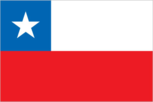
Geography
Agriculture
main crops — wheat, potatoes, corn, sugar beets, onions, beans, fruits; net agricultural importer
Airfields
- 65 total, 59 usable; 5 with permanent-surface runways; 1 with runways 2,440-3,659 m, 27 with runways 1,2202,439 m
- 373 total, 328 usable; 43 with permanent-surface runways; 13 with runways 2,440-3,659 m, 50 with runways 1,2202,439 m
Area
Malvinas) since 1833. Land Colony — 12,168 km2; area consists of some 200 small islands and two principal islands, East Falkland (6,680 km2) and West Falkland (5,276 km2); dependencies — South Sandwich Islands, South Georgia, and the Shag and Clerke Rocks Water
Branches
- Army, Air Army
- four-man Military-Police Junta, which exercises constituent and legislative powers and has delegated executive powers to President of Junta; the President has announced a plan for transition from military to civilian rule by 1 989; National Congress (Senate, House of Representatives) dissolved; civilian judiciary remains
- Army of the Nation, National Navy, Air Force of the Nation, Carabineros of Chile
Budget
$4. 1 billion revenues, $4.4 billion expenditures (1982)
Capital
Santiago
Civil air
- 3 major transport aircraft
- 24 major transport aircraft
Coastline
- 6,435 km People
- 1,288km People
Communists
248,000 when PCCh was legal in 1973; active militants now estimated at about 20,000
Crude steel
765.0 billion metric tons capacity (1980); 715,600 metric tons produced (1980)
Elections
prohibited by decree; all electoral registers were destroyed in 1974 Political parties and leaders: all political parties are officially recessed or outlawed, but they have been allowed to function on a very limited basis since 1982; National Party (PN), Patricio Philips; Independent Democratic Union (UDI), Sergio Fernandez; National Unity Movement (MUN), Andres Allamand; Movement of National Action (MAN), Federico Willoughby; Radical Party (PR), Enrique Silva Cimma; Social Democratic Party (PSD), Luis Bossay; Christian Democratic Party (PDC), Gabriel Valdes; Republican Right, Hugo Zepeda; Socialist Party, Ramon Silva Ulloa and Julio Stuardo (the PR, PSD, PDC, Republican Right, and some elements of the Socialist Party form the Democratic Alliance [AD]); Movement of Unitary Popular Action (MAPU); Movement of Unitary Popular Action — Workers/ Peasants (MAPU-OC), Bias Tomic and Oscar Garreton Purcell; Christian Left (1C), Luis Maira; Communist Party of Chile (PCCh), Luis Corvalan Lepe (in exile); Socialist Party— Almeyda faction (PSCh/Alm), Clodomiro Almeyda (in exile); Socialist Party— Altamirano faction (PSCh/Alt), Carlos Altamirano (in exile); Movement of the Revolutionary Left (MIR), Andres Pascal Allende (in exile; the MIR, PSCh/Alm, and PCCh form the leftist Popular Democratic Movement [MDP])
Electric power
3,200,000 kW capacity (1983); 12.0 billion kWh produced (1983), 1,045 kWh per capita
Ethnic divisions
- 95% European and European-Indian, 3% Indian, 2% other
- almost totally British
Exports
$3.7 billion (f.o.b., 1983); copper, molybdenum, iron ore, paper products, fishmeal, fruits, wood products
Fiscal year
- calendar year Communications
- calendar year Communications
Fishing
catch 4 million metric tons (1982); exports $339 million (1979)
GDP
$23.6 billion (1982), $2,178.1 per capita; 77% private consumption, 14.8% government consumption; 9.9% gross investment, — 1.7% net foreign balance; real growth rate -14.3% (1982)
Government leaders
Gen. Augusto PINOCHET Ugarte, President; Adm. Jose Toribio MERINO Castro, Air Force Maj. Gen. Fernando MATTHEI Aubel, Carabinero Gen. Cesar MENDOZA Duran, Army Lt. Gen. Cesar BENAVIDES Escobar, Junta members
Highways
- 27,505 km total; 242 km bituminous, 4,385 km gravel and laterite, and remainder unimproved
- 78,025 km total; 9,365 km paved, 37,700 km gravel, 32,000 km improved and unimproved earth
Imports
$2.7 billion (f.o.b., 1983); petroleum, sugar, wheat, capital goods, vehicles
Inland waterways
- approximately 2,000 km navigable
- 725 km
Labor force
- 3.0 million total employment (1982); 33% industry and commerce; 31% services; 9% agriculture, forestry, and fishing; 9% mining; 5% construction
- l,100(est); est. over 95% in agriculture, mostly sheepherding
Land boundaries
6,325 km Water
Language
- Spanish
- English
Legal system
based on Code 1857 derived from Spanish law and subsequent codes influenced by French and Austrian law; current constitution came into effect in March 1981; the constitution provides for continued direct rule until 1989, with a phased return to full civilian rule by 1997; judicial review of legislative acts in the Supreme Court; legal education at University of Chile, Catholic University, and several others; has not accepted compulsory ICJ jurisdiction
Limits of territorial waters (claimed)
- 3 nm (fishing 200 nm)
- 3 nm
Literacy
- 90% (1978)
- compulsory education up to age 14
Major industries
copper, other minerals, foodstuffs, fish processing, iron and steel, pulp, paper, and forestry products
Major trade partners
exports — 20.8% US, 11.5% Japan, 11.3% FRG, 8% Brazil, 5.3% UK (1980); imports— 26% US, 7.4% Venezuela, 7.3% Brazil, 6.5% Japan, 6% FRG (1982)
Member of
CIPEC, ECOSOC, FAO, G-77, GATT, IADB, IAEA, IBRD, ICAO, IDA, IDE — Inter-American Development Bank, IFAD, IFC, IHO, ILO, IMF, IMO, INTELSAT, INTERPOL, IPU, ITU, LAIA, OAS, PAHO, SELA, UN, UNESCO, UPU, WHO, WIPO, WMO, WSG, WTO Economy
Military budget
- for fiscal year ending 31 December 1977, $21.4 million; about 33% of total budget Land 759,871 km8; 47% barren mountain, desert, and urban; 29% forest; 15% permanent pasture, meadow; 7% other arable; 2% cultivated
- for fiscal year ending 31 December 1983, $900.1 million; 19.1% of central government budget
Military manpower
- males 15-49, 1,167,000; 603,000 fit for military service; about 48,000 reach military age (20) annually
- males 15-49, 3,079,000; 2,316,000 fit for military service; about 1 17,000 reach military age (19) annually
Monetary conversion rate
81 pesos=US$l (October 1983)
National holiday
Independence Day, 18 September
Nationality
- noun — Chilean(s); adjectiveChilean
- noun — Falkland Islanders); adjective — Falkland Island
Official name
Republic of Chile
Organized labor
12% of labor force organized into labor unions (1982) Government
Other political or pressure groups
United Democratic Command (CUD), a social grouping of 300 labor organizations and other groups, dominated by the PCCh; labor — National Workers Command (CNT), includes trade unionists from the country's five largest labor confederations; Roman Catholic Church
Pipelines
crude oil, 755 km; refined products, 785 km; natural gas, 320 km
Political subdivisions
12 regions plus one metropolitan district, 41 provincial subdivisions
Population
- 11, 655,000 (July 1984), average annual growth rate 1.5%
- 2,000 (July 1984), average annual growth rate —0.7%
Ports
10 major, 13 minor
Railroads
- none
- 8,478 km total; 4,257 km 1.676-meter gauge, 135 km 1.435-meter standard gauge, 4,221 km 1.000-meter gauge; electrification — 1,503 km, 1.676meter gauge, 79 km 1.000-meter gauge
Religion
- 89% Roman Catholic, 11% Protestant
- predominantly Anglican
Suffrage
none
Supply
primarily dependent on France
Telecommunications
- fair system of radiocommunication stations for intercity links; satellite ground station; 5,000 telephones (0. 1 per 100 popl.); 1 FM and 3 AM stations; most facilities inoperative Defense Forces
- modern telephone system based on extensive radio-relay facilities; 570,800 telephones (5.0 per 100 popl.); 2 Atlantic Ocean satellite stations; 2 domestic satellite stations; 151 AM, 81 FM, and 122 TV stations Defense Forces
Type
republic
Voting strength
(1970 presidential election) 36.6% Popular Unity coalition, 35.3% conservative independent, 28.1% Christian Democrat; (1973 congressional election) 44% Popular Unity coalition, 56% Democratic Confederation (PDC and PN)