2017 Edition
CIA World Factbook 2017 Archive (HTML)
Introduction
Background
Chad, part of France's African holdings until 1960, endured three decades of civil warfare, as well as invasions by Libya, before peace was restored in 1990. The government eventually drafted a democratic constitution and held flawed presidential elections in 1996 and 2001. In 1998, a rebellion broke out in northern Chad, which has sporadically flared up despite several peace agreements between the government and insurgents. In June 2005, President Idriss DEBY held a referendum successfully removing constitutional term limits and won another controversial election in 2006. Sporadic rebel campaigns continued throughout 2006 and 2007. The capital experienced a significant insurrection in early 2008, but has had no significant rebel threats since then, in part due to Chad's 2010 rapprochement with Sudan, which previously used Chadian rebels as proxies. In late 2015, the government imposed a state of emergency in the Lake Chad region following multiple attacks by the terrorist group Boko Haram throughout the year; Boko Haram also launched several bombings in N'Djamena in mid-2015. DEBY in 2016 was reelected to his fifth term in an election that was peaceful but flawed. In December 2015, Chad completed a two-year rotation on the UN Security Council. In January 2017, DEBY completed a one-year term as President of the African Union.
Geography
Area
- 1.284 million sq km 1,259,200 sq km 24,800 sq km
- land
- 1,259,200 sq km
- total
- 1.284 million sq km
- water
- 24,800 sq km
Area - comparative
almost nine times the size of New York state; slightly more than three times the size of California
Climate
tropical in south, desert in north
Coastline
0 km (landlocked)
Elevation
- 543 m lowest point: Djourab 160 m highest point: Emi Koussi 3,445 m
- elevation extremes
- lowest point: Djourab 160 m
- highest point
- Emi Koussi 3,445 m
- mean elevation
- 543 m
Environment - current issues
inadequate supplies of potable water; improper waste disposal in rural areas contributes to soil and water pollution; desertification
Environment - international agreements
- Biodiversity, Climate Change, Desertification, Endangered Species, Hazardous Wastes, Ozone Layer Protection, Wetlands Law of the Sea, Marine Dumping
- party to
- Biodiversity, Climate Change, Desertification, Endangered Species, Hazardous Wastes, Ozone Layer Protection, Wetlands
- signed, but not ratified
- Law of the Sea, Marine Dumping
Geographic coordinates
15 00 N, 19 00 E
Geography - note
- Chad is the largest of Africa's 16 landlocked countries not long ago - geologically speaking - what is today the Sahara was green savannah teeming with wildlife; during the African Humid Period, roughly 11,000 to 5,000 years ago, a vibrant animal community, including elephants, giraffes, hippos, and antelope lived there; the last remnant of the "Green Sahara" exists in the Lakes of Ounianga (oo-nee-ahn-ga) in northern Chad, a series of 18 interconnected freshwater, saline, and hypersaline lakes now protected as a World Heritage site Lake Chad, the most significant water body in the Sahel, is a remnant of a former inland sea, paleolake Mega-Chad; at its greatest extent, sometime before 5000 B.C., Lake Mega-Chad was the largest of four Saharan paleolakes that existed during the African Humid Period; it covered an area of about 400,000 sq km (150,000 sq mi), roughly the size of today's Caspian Sea
- note 1
- Chad is the largest of Africa's 16 landlocked countries
- note 2
- not long ago - geologically speaking - what is today the Sahara was green savannah teeming with wildlife; during the African Humid Period, roughly 11,000 to 5,000 years ago, a vibrant animal community, including elephants, giraffes, hippos, and antelope lived there; the last remnant of the "Green Sahara" exists in the Lakes of Ounianga (oo-nee-ahn-ga) in northern Chad, a series of 18 interconnected freshwater, saline, and hypersaline lakes now protected as a World Heritage site
- note 3
- Lake Chad, the most significant water body in the Sahel, is a remnant of a former inland sea, paleolake Mega-Chad; at its greatest extent, sometime before 5000 B.C., Lake Mega-Chad was the largest of four Saharan paleolakes that existed during the African Humid Period; it covered an area of about 400,000 sq km (150,000 sq mi), roughly the size of today's Caspian Sea
Irrigated land
300 sq km (2012)
Land boundaries
- 6,406 km Cameroon 1,116 km, Central African Republic 1,556 km, Libya 1,050 km, Niger 1,196 km, Nigeria 85 km, Sudan 1,403 km
- border countries (6)
- Cameroon 1,116 km, Central African Republic 1,556 km, Libya 1,050 km, Niger 1,196 km, Nigeria 85 km, Sudan 1,403 km
- total
- 6,406 km
Land use
- 39.6% arable land 3.9%; permanent crops 0%; permanent pasture 35.7% 9.1% 51.3% (2011 est.)
- agricultural land
- 39.6%
- forest
- 9.1%
- other
- 51.3% (2011 est.)
Location
Central Africa, south of Libya
Map references
Africa
Maritime claims
none (landlocked)
Natural hazards
hot, dry, dusty harmattan winds occur in north; periodic droughts; locust plagues
Natural resources
petroleum, uranium, natron, kaolin, fish (Lake Chad), gold, limestone, sand and gravel, salt
Population - distribution
the population is unevenly distributed due to contrasts in climate and physical geography; the highest density is found in the southwest, particularly around Lake Chad and points south; the dry Saharan zone to the north is the least densely populated
Terrain
broad, arid plains in center, desert in north, mountains in northwest, lowlands in south
People and Society
Age structure
- 43.02% (male 2,634,817/female 2,560,790) 21.46% (male 1,267,944/female 1,324,115) 28.62% (male 1,574,782/female 1,881,183) 3.88% (male 206,627/female 261,586) 3.02% (male 150,364/female 213,777) (2017 est.)
- 0-14 years
- 43.02% (male 2,634,817/female 2,560,790)
- 15-24 years
- 21.46% (male 1,267,944/female 1,324,115)
- 25-54 years
- 28.62% (male 1,574,782/female 1,881,183)
- 55-64 years
- 3.88% (male 206,627/female 261,586)
- 65 years and over
- 3.02% (male 150,364/female 213,777) (2017 est.)
Birth rate
35.6 births/1,000 population (2017 est.)
Children under the age of 5 years underweight
28.8% (2015)
Contraceptive prevalence rate
5.7% (2014/15)
Death rate
13.8 deaths/1,000 population (2017 est.)
Demographic profile
Despite the start of oil production in 2003, 40% of Chad’s population lives below the poverty line. The population will continue to grow rapidly because of the country’s very high fertility rate and large youth cohort – more than 65% of the populace is under the age of 25 – although the mortality rate is high and life expectancy is low. Chad has the world’s third highest maternal mortality rate. Among the primary risk factors are poverty, anemia, rural habitation, high fertility, poor education, and a lack of access to family planning and obstetric care. Impoverished, uneducated adolescents living in rural areas are most affected. To improve women’s reproductive health and reduce fertility, Chad will need to increase women’s educational attainment, job participation, and knowledge of and access to family planning. Only about a quarter of women are literate, less than 5% use contraceptives, and more than 40% undergo genital cutting. As of October 2017, more than 320,000 refugees from Sudan and more than 75,000 from the Central African Republic strain Chad’s limited resources and create tensions in host communities. Thousands of new refugees fled to Chad in 2013 to escape worsening violence in the Darfur region of Sudan. The large refugee populations are hesitant to return to their home countries because of continued instability. Chad was relatively stable in 2012 in comparison to other states in the region, but past fighting between government forces and opposition groups and inter-communal violence have left nearly 60,000 of its citizens displaced in the eastern part of the country.
Dependency ratios
- 100.2 95.2 4.9 20.3 (2015 est.)
- elderly dependency ratio
- 4.9
- potential support ratio
- 20.3 (2015 est.)
- total dependency ratio
- 100.2
- youth dependency ratio
- 95.2
Drinking water source
- urban: 71.8% of population rural: 44.8% of population total: 50.8% of population urban: 28.2% of population rural: 55.2% of population total: 49.2% of population (2015 est.)
- rural
- 55.2% of population
- total
- 49.2% of population (2015 est.)
- urban
- 28.2% of population
Education expenditures
2.9% of GDP (2013)
Ethnic groups
Sara (Ngambaye/Sara/Madjingaye/Mbaye) 29.9%, Kanembu/Bornu/Buduma 9.7%, Arab 9.6%, Wadai/Maba/Masalit/Mimi 7.5%, Gorane 5.8%, Masa/Musseye/Musgum 4.9%, Marba/Lele/Mesme 3.7%, Bulala/Medogo/Kuka 3.6%, Bidiyo/Migaama/Kenga/Dangleat 2.6%, Dadjo/Kibet/Muro 2.5%, Mundang 2.5%, Tupuri/Kera 2.1%, Gabri/Kabalaye/Nanchere/Somrai 2%, Fulani/Fulbe/Bodore 1.9%, Karo/Zime/Peve 1.3%, Zaghawa/Bideyat/Kobe 1.1%, Tama/Assongori/Mararit 1.1%, Baguirmi/Barma 1.1%, Mesmedje/Massalat/Kadjakse 0.8%, other Chadian ethnicities 3.2%, Chadians of foreign ethnicities 0.9%, foreign nationals 0.4%, unspecified 1.7% (2014-15 est.)
Health expenditures
3.6% of GDP (2014)
HIV/AIDS - adult prevalence rate
1.3% (2016 est.)
HIV/AIDS - deaths
2,800 (2016 est.)
HIV/AIDS - people living with HIV/AIDS
110,000 (2016 est.)
Infant mortality rate
- 85.4 deaths/1,000 live births 90.7 deaths/1,000 live births 79.8 deaths/1,000 live births (2017 est.)
- female
- 79.8 deaths/1,000 live births (2017 est.)
- male
- 90.7 deaths/1,000 live births
- total
- 85.4 deaths/1,000 live births
Languages
French (official), Arabic (official), Sara (in south), more than 120 different languages and dialects
Life expectancy at birth
- 50.6 years 49.4 years 51.9 years (2017 est.)
- female
- 51.9 years (2017 est.)
- male
- 49.4 years
- total population
- 50.6 years
Literacy
- age 15 and over can read and write French or Arabic 22.3% 31.3% 14% (2016 est.)
- definition
- age 15 and over can read and write French or Arabic
- female
- 14% (2016 est.)
- male
- 31.3%
- total population
- 22.3%
Major infectious diseases
- very high bacterial and protozoal diarrhea, hepatitis A and E, and typhoid fever malaria and dengue fever schistosomiasis meningococcal meningitis rabies (2016)
- animal contact disease
- rabies (2016)
- degree of risk
- very high
- food or waterborne diseases
- bacterial and protozoal diarrhea, hepatitis A and E, and typhoid fever
- respiratory disease
- meningococcal meningitis
- vectorborne diseases
- malaria and dengue fever
- water contact disease
- schistosomiasis
Major urban areas - population
N'DJAMENA (capital) 1.26 million (2015)
Maternal mortality rate
856 deaths/100,000 live births (2015 est.)
Median age
- 17.8 years 16.8 years 18.8 years (2017 est.)
- female
- 18.8 years (2017 est.)
- male
- 16.8 years
- total
- 17.8 years
Mother's mean age at first birth
- 17.9 years median age at first birth among women 25-29 (2014/15 est.)
- note
- median age at first birth among women 25-29 (2014/15 est.)
Nationality
- Chadian(s) Chadian
- adjective
- Chadian
- noun
- Chadian(s)
Net migration rate
-3.2 migrant(s)/1,000 population (2017 est.)
Obesity - adult prevalence rate
6.1% (2016)
Physicians density
0.04 physicians/1,000 population (2013)
Population
12,075,985 (July 2017 est.)
Population distribution
the population is unevenly distributed due to contrasts in climate and physical geography; the highest density is found in the southwest, particularly around Lake Chad and points south; the dry Saharan zone to the north is the least densely populated
Population growth rate
1.86% (2017 est.)
Religions
Muslim 52.1%, Protestant 23.9%, Roman Catholic 20%, animist 0.3%, other Christian 0.2%, none 2.8%, unspecified 0.7% (2014-15 est.)
Sanitation facility access
- urban: 31.4% of population rural: 6.5% of population total: 12.1% of population urban: 68.6% of population rural: 93.5% of population total: 87.9% of population (2015 est.)
- rural
- 93.5% of population
- total
- 87.9% of population (2015 est.)
- urban
- 68.6% of population
School life expectancy (primary to tertiary education)
- 7 years 9 years 6 years (2011)
- female
- 6 years (2011)
- male
- 9 years
- total
- 7 years
Sex ratio
- 1.04 male(s)/female 1.03 male(s)/female 0.95 male(s)/female 0.83 male(s)/female 0.79 male(s)/female 0.71 male(s)/female 0.93 male(s)/female (2016 est.)
- 0-14 years
- 1.03 male(s)/female
- 15-24 years
- 0.95 male(s)/female
- 25-54 years
- 0.83 male(s)/female
- 55-64 years
- 0.79 male(s)/female
- 65 years and over
- 0.71 male(s)/female
- at birth
- 1.04 male(s)/female
- total population
- 0.93 male(s)/female (2016 est.)
Total fertility rate
4.34 children born/woman (2017 est.)
Urbanization
- 22.8% of total population (2017) 3.7% annual rate of change (2015-20 est.)
- rate of urbanization
- 3.7% annual rate of change (2015-20 est.)
- urban population
- 22.8% of total population (2017)
Government
Administrative divisions
23 regions (regions, singular - region); Barh el Gazel, Batha, Borkou, Chari-Baguirmi, Ennedi-Est, Ennedi-Ouest, Guera, Hadjer-Lamis, Kanem, Lac, Logone Occidental, Logone Oriental, Mandoul, Mayo-Kebbi Est, Mayo-Kebbi Ouest, Moyen-Chari, Ouaddai, Salamat, Sila, Tandjile, Tibesti, Ville de N'Djamena, Wadi Fira
Capital
- N'Djamena 12 06 N, 15 02 E UTC+1 (6 hours ahead of Washington, DC, during Standard Time)
- geographic coordinates
- 12 06 N, 15 02 E
- name
- N'Djamena
- time difference
- UTC+1 (6 hours ahead of Washington, DC, during Standard Time)
Citizenship
- no both parents must be citizens of Chad Chadian law does not address dual citizenship 15 years
- citizenship by birth
- no
- citizenship by descent only
- both parents must be citizens of Chad
- dual citizenship recognized
- Chadian law does not address dual citizenship
- residency requirement for naturalization
- 15 years
Constitution
- several previous; latest approved by referendum 31 March 1996, entered into force 8 April 1996 proposed as a revision by the president of the republic after a Council of Ministers (cabinet) decision or by the National Assembly; approval for consideration of a revision requires at least three-fifths majority vote by the Assembly; passage requires approval by referendum or at least two-thirds majority vote by the Assembly; amended 2005, 2013 (2017)
- amendments
- proposed as a revision by the president of the republic after a Council of Ministers (cabinet) decision or by the National Assembly; approval for consideration of a revision requires at least three-fifths majority vote by the Assembly; passage requires approval by referendum or at least two-thirds majority vote by the Assembly; amended 2005, 2013 (2017)
- history
- several previous; latest approved by referendum 31 March 1996, entered into force 8 April 1996
Country name
- Republic of Chad Chad Republique du Tchad/Jumhuriyat Tshad Tchad/Tshad named for Lake Chad, which lies along the country's western border; the word "tsade" means "large body of water" or "lake" in several local native languages
- conventional long form
- Republic of Chad
- conventional short form
- Chad
- etymology
- named for Lake Chad, which lies along the country's western border; the word "tsade" means "large body of water" or "lake" in several local native languages
- local long form
- Republique du Tchad/Jumhuriyat Tshad
- local short form
- Tchad/Tshad
Diplomatic representation from the US
- Ambassador Geeta PASI (since September 2016) Avenue Felix Eboue, N'Djamena B. P. 413, N'Djamena [235] 2251-70-09 [235] 2251-56-54
- chief of mission
- Ambassador Geeta PASI (since September 2016)
- embassy
- Avenue Felix Eboue, N'Djamena
- FAX
- [235] 2251-56-54
- mailing address
- B. P. 413, N'Djamena
- telephone
- [235] 2251-70-09
Diplomatic representation in the US
- Ambassador Mahamat Nasser HASSANE (since 21 May 2014) 2401 Massachusetts Avenue NW, Washington, DC 20008 [1] (202) 652-1312 [1] (202) 758-0431
- chancery
- 2401 Massachusetts Avenue NW, Washington, DC 20008
- chief of mission
- Ambassador Mahamat Nasser HASSANE (since 21 May 2014)
- FAX
- [1] (202) 758-0431
- telephone
- [1] (202) 652-1312
Executive branch
- President Idriss DEBY Itno, Lt. Gen. (since 4 December 1990) Prime Minister Albert Pahimi PADACKE (since 15 February 2016) Council of Ministers; members appointed by the president on the recommendation of the prime minister president directly elected by absolute majority popular vote in 2 rounds if needed for a 5-year term (no term limits); election last held on 10 April 2016 (next to be held in April 2021); prime minister appointed by the president Lt. Gen. Idriss DEBY Itno reelected president in 1 round; percent of vote - Lt. Gen. Idriss DEBY (MPS) 61.6%, Saleh KEBZABO (UNDR) 12.8%, Laokein Kourayo MEDAR (CTPD) 10.7%, Djimrangar DADNADJI (CAP-SUR) 5.1%, other 9.8%
- cabinet
- Council of Ministers; members appointed by the president on the recommendation of the prime minister
- chief of state
- President Idriss DEBY Itno, Lt. Gen. (since 4 December 1990)
- election results
- Lt. Gen. Idriss DEBY Itno reelected president in 1 round; percent of vote - Lt. Gen. Idriss DEBY (MPS) 61.6%, Saleh KEBZABO (UNDR) 12.8%, Laokein Kourayo MEDAR (CTPD) 10.7%, Djimrangar DADNADJI (CAP-SUR) 5.1%, other 9.8%
- elections/appointments
- president directly elected by absolute majority popular vote in 2 rounds if needed for a 5-year term (no term limits); election last held on 10 April 2016 (next to be held in April 2021); prime minister appointed by the president
- head of government
- Prime Minister Albert Pahimi PADACKE (since 15 February 2016)
Flag description
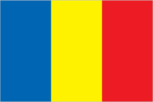
- three equal vertical bands of blue (hoist side), gold, and red; the flag combines the blue and red French (former colonial) colors with the red and yellow (gold) of the Pan-African colors; blue symbolizes the sky, hope, and the south of the country, which is relatively well-watered; gold represents the sun, as well as the desert in the north of the country; red stands for progress, unity, and sacrifice almost identical to the flag of Romania but with a darker shade of blue; also similar to the flags of Andorra and Moldova, both of which have a national coat of arms centered in the yellow band; design based on the flag of France
- note
- almost identical to the flag of Romania but with a darker shade of blue; also similar to the flags of Andorra and Moldova, both of which have a national coat of arms centered in the yellow band; design based on the flag of France
Government type
presidential republic
Independence
11 August 1960 (from France)
International law organization participation
has not submitted an ICJ jurisdiction declaration; accepts ICCt jurisdiction
International organization participation
ACP, AfDB, AU, BDEAC, CEMAC, EITI (compliant country), FAO, FZ, G-77, IAEA, IBRD, ICAO, ICCt, ICRM, IDA, IDB, IFAD, IFC, IFRCS, ILO, IMF, Interpol, IOC, IOM, IPU, ITSO, ITU, ITUC (NGOs), MIGA, MINUSMA, NAM, OIC, OIF, OPCW, UN, UN Security Council (temporary), UNCTAD, UNESCO, UNIDO, UNOCI, UNWTO, UPU, WCO, WHO, WIPO, WMO, WTO
Judicial branch
- Supreme Court (consists of the chief justice, 3 chamber presidents, and 12 judges or councilors and divided into 3 chambers); Constitutional Council (consists of 3 judges and 6 jurists) Supreme Court chief justice selected by the president; councilors - 8 designated by the president and 7 by the speaker of the National Assembly; chief justice and councilors appointed for life; Constitutional Council judges - 2 appointed by the president and 1 by the speaker of the National Assembly; jurists - 3 each by the president and by the speaker of the National Assembly; judges appointed for 9-year terms High Court of Justice; Courts of Appeal; tribunals; justices of the peace
- highest court(s)
- Supreme Court (consists of the chief justice, 3 chamber presidents, and 12 judges or councilors and divided into 3 chambers); Constitutional Council (consists of 3 judges and 6 jurists)
- judge selection and term of office
- Supreme Court chief justice selected by the president; councilors - 8 designated by the president and 7 by the speaker of the National Assembly; chief justice and councilors appointed for life; Constitutional Council judges - 2 appointed by the president and 1 by the speaker of the National Assembly; jurists - 3 each by the president and by the speaker of the National Assembly; judges appointed for 9-year terms
- subordinate courts
- High Court of Justice; Courts of Appeal; tribunals; justices of the peace
Legal system
mixed legal system of civil and customary law
Legislative branch
- unicameral National Assembly (188 seats; 118 directly elected in multi-seat constituencies by proportional representation vote and 70 directly elected in single-seat constituencies by absolute majority vote with a second round if needed; members serve 4-year terms) National Assembly - last held on 13 February and 6 May 2011 (next to be held in 2019) percent of vote by party - NA; seats by party - MPS 117, UNDR 10, RDP 9, URD 8, RNDT/Le Reveil 8, Viva-RNDP 5, FAR 4, PUR 2, UDR 2, PDSA 2, CTPD 2, other minor parties 19 the National Assembly mandate was extended, reportedly due to a lack of funding for the scheduled 2015 election
- description
- unicameral National Assembly (188 seats; 118 directly elected in multi-seat constituencies by proportional representation vote and 70 directly elected in single-seat constituencies by absolute majority vote with a second round if needed; members serve 4-year terms)
- election results
- percent of vote by party - NA; seats by party - MPS 117, UNDR 10, RDP 9, URD 8, RNDT/Le Reveil 8, Viva-RNDP 5, FAR 4, PUR 2, UDR 2, PDSA 2, CTPD 2, other minor parties 19
- elections
- National Assembly - last held on 13 February and 6 May 2011 (next to be held in 2019)
- note
- the National Assembly mandate was extended, reportedly due to a lack of funding for the scheduled 2015 election
National anthem
- "La Tchadienne" (The Chadian) Louis GIDROL and his students/Paul VILLARD adopted 1960
- lyrics/music
- Louis GIDROL and his students/Paul VILLARD
- name
- "La Tchadienne" (The Chadian)
- note
- adopted 1960
National holiday
Independence Day, 11 August (1960)
National symbol(s)
- goat (north), lion (south); national colors: blue, yellow, red
- goat (north), lion (south); national colors
- blue, yellow, red
Political parties and leaders
Chadian Convention for Peace and Development or CTPD [Laoukein Kourayo MEDAR] Federation Action for the Republic or FAR [Ngarledjy YORONGAR] Framework of Popular Action for Solidarity and Unity of the Republic or CAP-SUR [Joseph Djimrangar DADNADJI] National Rally for Development and Progress or Viva-RNDP [Dr. Nouradine Delwa Kassire COUMAKOYE] National Union for Democracy and Renewal or UNDR [Saleh KEBZABO] Party for Liberty and Development or PLD [Mahamat Allahou TAHER] Party for Unity and Reconciliation Patriotic Salvation Movement or MPS [Idriss DEBY] Rally for Democracy and Progress or RDP [Mahamat Allahou TAHER] RNDT/Le Reveil Social Democratic Party for a Change-over of Power or PDSA Union for Renewal and Democracy or URD [Sande NGARYIMBE]
Political pressure groups and leaders
NA
Suffrage
18 years of age; universal
Economy
Agriculture - products
cotton, sorghum, millet, peanuts, sesame, corn, rice, potatoes, onions, cassava (manioc, tapioca), cattle, sheep, goats, camels
Budget
- $1.055 billion $1.522 billion (2016 est.)
- expenditures
- $1.522 billion (2016 est.)
- revenues
- $1.055 billion
Budget surplus (+) or deficit (-)
-4.6% of GDP (2016 est.)
Central bank discount rate
4.25% (31 December 2009) 4.75% (31 December 2008)
Commercial bank prime lending rate
15.5% (31 December 2016 est.) 15.5% (31 December 2015 est.)
Current account balance
$-927 million (2016 est.) $-1.346 billion (2015 est.)
Debt - external
$1.281 billion (31 December 2016 est.) $1.617 billion (31 December 2015 est.)
Distribution of family income - Gini index
43.3 (2011 est.)
Economy - overview
Chad’s landlocked location results in high transportation costs for imported goods and dependence on neighboring countries. Oil and agriculture are mainstays of Chad’s economy. Oil provides about 60% of export revenues, while cotton, cattle, livestock, and gum arabic provide the bulk of Chad's non-oil export earnings. The services sector contributes about one-third of GDP and has attracted foreign investment mostly through telecommunications and banking. Nearly all of Chad’s fuel is provided by one domestic refinery, and unanticipated shutdowns occasionally result in shortages. The country regulates the price of domestic fuel, providing an incentive for black market sales. Although high oil prices and strong local harvests supported the economy in the past, low oil prices now stress Chad’s fiscal position. Chad relies on foreign assistance and foreign capital for most of its public and private sector investment. Investment in Chad is difficult due to its limited infrastructure, lack of trained workers, extensive government bureaucracy, and corruption. Chad obtained a three-year extended credit facility from the IMF in 2014 and was granted debt relief under the Heavily Indebted Poor Countries Initiative in April 2015. In 2017, economic policy will be driven by efforts that started in 2016 to reverse the recession and to repair damage to public finances and exports. The government is implementing an emergency action plan to counterbalance the drop in oil revenue and to diversify the economy. Multinational partners, such as the African Development Bank, the EU, and the World Bank are likely to continue budget support in 2017, but Chad will remain at high debt risk, given its dependence on oil revenue and pressure to spend on subsidies and security.
Exchange rates
Cooperation Financiere en Afrique Centrale francs (XAF) per US dollar - 593.01 (2016 est.) 593.01 (2015 est.) 591.45 (2014 est.) 494.42 (2013 est.) 510.53 (2012 est.)
Exports
$2.187 billion (2016 est.) $2.629 billion (2015 est.)
Exports - commodities
oil, livestock, cotton, sesame, gum arabic, shea butter
Exports - partners
US 57%, India 8.9%, China 6.7%, France 6.4%, UAE 4.3%, Japan 4.1% (2016)
Fiscal year
calendar year
GDP - composition, by end use
- 74.1% 4.6% 32.5% 0.4% 29.2% -40.8% (2016 est.)
- exports of goods and services
- 29.2%
- government consumption
- 4.6%
- household consumption
- 74.1%
- imports of goods and services
- -40.8% (2016 est.)
- investment in fixed capital
- 32.5%
- investment in inventories
- 0.4%
GDP - composition, by sector of origin
- 57.8% 13.9% 28.3% (2016 est.)
- agriculture
- 57.8%
- industry
- 13.9%
- services
- 28.3% (2016 est.)
GDP - per capita (PPP)
- $2,400 (2016 est.) $2,700 (2015 est.) $2,700 (2014 est.) data are in 2016 dollars
- note
- data are in 2016 dollars
GDP - real growth rate
-6.4% (2016 est.) 1.8% (2015 est.) 6.9% (2014 est.)
GDP (official exchange rate)
$10.1 billion (2016 est.)
GDP (purchasing power parity)
- $28.96 billion (2016 est.) $30.56 billion (2015 est.) $29.71 billion (2014 est.) data are in 2016 dollars
- note
- data are in 2016 dollars
Gross national saving
7.5% of GDP (2016 est.) 14.6% of GDP (2015 est.) 21.5% of GDP (2014 est.)
Household income or consumption by percentage share
- 2.6% 30.8% (2003)
- highest 10%
- 30.8% (2003)
- lowest 10%
- 2.6%
Imports
$1.988 billion (2016 est.) $2.572 billion (2015 est.)
Imports - commodities
machinery and transportation equipment, industrial goods, foodstuffs, textiles
Imports - partners
France 19.8%, China 15.7%, Cameroon 15.1%, India 6.1%, US 5.4%, Belgium 4.4% (2016)
Industrial production growth rate
-5% (2016 est.)
Industries
oil, cotton textiles, brewing, natron (sodium carbonate), soap, cigarettes, construction materials
Inflation rate (consumer prices)
-1.1% (2016 est.) 3.7% (2015 est.)
Labor force
5.443 million (2016 est.)
Labor force - by occupation
- 80% 20% (2006 est.)
- agriculture
- 80%
- industry and services
- 20% (2006 est.)
Market value of publicly traded shares
$NA
Population below poverty line
46.7% (2011 est.)
Public debt
59% of GDP (2016 est.) 49.8% of GDP (2015 est.)
Reserves of foreign exchange and gold
$20.92 million (31 December 2016 est.) $380.7 million (31 December 2015 est.)
Stock of broad money
$1.418 billion (31 December 2016 est.) $1.608 billion (31 December 2015 est.)
Stock of direct foreign investment - abroad
$NA
Stock of direct foreign investment - at home
$4.5 billion (2006 est.)
Stock of domestic credit
$2.387 billion (31 December 2016 est.) $1.898 billion (31 December 2015 est.)
Stock of narrow money
$1.241 billion (31 December 2016 est.) $1.457 billion (31 December 2015 est.)
Taxes and other revenues
10.4% of GDP (2016 est.)
Unemployment rate
NA%
Energy
Carbon dioxide emissions from consumption of energy
300,000 Mt (2013 est.)
Crude oil - exports
105,000 bbl/day (2014 est.)
Crude oil - imports
0 bbl/day (2014 est.)
Crude oil - production
110,200 bbl/day (2016 est.)
Crude oil - proved reserves
1.5 billion bbl (1 January 2017 es)
Electricity - consumption
200 million kWh (2015 est.)
Electricity - exports
0 kWh (2016 est.)
Electricity - from fossil fuels
100% of total installed capacity (2015 est.)
Electricity - from hydroelectric plants
0% of total installed capacity (2015 est.)
Electricity - from nuclear fuels
0% of total installed capacity (2015 est.)
Electricity - from other renewable sources
0% of total installed capacity (2015 est.)
Electricity - imports
0 kWh (2016 est.)
Electricity - installed generating capacity
47,000 kW (2015 est.)
Electricity - production
215 million kWh (2015 est.)
Electricity access
- 10,477,071 4% 14% 1% (2013)
- electrification - rural areas
- 1% (2013)
- electrification - total population
- 4%
- electrification - urban areas
- 14%
- population without electricity
- 10,477,071
Natural gas - consumption
0 cu m (2013 est.)
Natural gas - exports
0 cu m (2013 est.)
Natural gas - imports
0 cu m (2013 est.)
Natural gas - production
0 cu m (2013 est.)
Natural gas - proved reserves
0 cu m (1 January 2014 es)
Refined petroleum products - consumption
2,200 bbl/day (2015 est.)
Refined petroleum products - exports
0 bbl/day (2014 est.)
Refined petroleum products - imports
2,215 bbl/day (2014 est.)
Refined petroleum products - production
0 bbl/day (2014 est.)
Communications
Broadcast media
1 state-owned TV station; 2 privately-owned TV stations; state-owned radio network, Radiodiffusion Nationale Tchadienne (RNT), operates national and regional stations; over 10 private radio stations; some stations rebroadcast programs from international broadcasters (2017)
Internet country code
.td
Internet users
- 592,623 5.0% (July 2016 est.)
- percent of population
- 5.0% (July 2016 est.)
- total
- 592,623
Telephone system
- inadequate system of radiotelephone communication stations with high maintenance costs and low telephone density fixed-line connections for less than 1 per 100 persons coupled with mobile-cellular subscribership base of about 40 per 100 persons country code - 235; satellite earth station - 1 Intelsat (Atlantic Ocean) (2016)
- domestic
- fixed-line connections for less than 1 per 100 persons coupled with mobile-cellular subscribership base of about 40 per 100 persons
- general assessment
- inadequate system of radiotelephone communication stations with high maintenance costs and low telephone density
- international
- country code - 235; satellite earth station - 1 Intelsat (Atlantic Ocean) (2016)
Telephones - fixed lines
- 14,000 less than 1 (July 2016 est.)
- subscriptions per 100 inhabitants
- less than 1 (July 2016 est.)
- total subscriptions
- 14,000
Telephones - mobile cellular
- 6,231,009 53 (July 2016 est.)
- subscriptions per 100 inhabitants
- 53 (July 2016 est.)
- total
- 6,231,009
Transportation
Airports
59 (2013)
Airports - with paved runways
- 1 (2017)
- 1,524 to 2,437 m
- 2
- 2,438 to 3,047 m
- 4
- over 3,047 m
- 2
- total
- 9
- under 914 m
- 1 (2017)
Airports - with unpaved runways
- 11 (2013)
- 1,524 to 2,437 m
- 14
- 2,438 to 3,047 m
- 2
- 914 to 1,523 m
- 22
- over 3,047 m
- 1
- total
- 50
- under 914 m
- 11 (2013)
National air transport system
- 28,332 mt-km (2015)
- annual freight traffic on registered air carriers
- mt-km (2015)
- annual passenger traffic on registered air carriers
- 28,332
- inventory of registered aircraft operated by air carriers
- 1
- number of registered air carriers
- 1
Pipelines
oil 582 km (2013)
Roadways
- 40,000 km consists of 25,000 km of national and regional roads and 15,000 km of local roads; 206 km of urban roads are paved (2011)
- note
- consists of 25,000 km of national and regional roads and 15,000 km of local roads; 206 km of urban roads are paved (2011)
- total
- 40,000 km
Waterways
(Chari and Legone Rivers are navigable only in wet season) (2012)
Military and Security
Military branches
- Chadian National Army (Armee Nationale du Tchad, ANT): Ground Forces (l'Armee de Terre, AdT), Chadian Air Force (l'Armee de l'Air Tchadienne, AAT), National Gendarmerie, National and Nomadic Guard of Chad (GNNT) (2013)
- Chadian National Army (Armee Nationale du Tchad, ANT)
- Ground Forces (l'Armee de Terre, AdT), Chadian Air Force (l'Armee de l'Air Tchadienne, AAT), National Gendarmerie, National and Nomadic Guard of Chad (GNNT) (2013)
Military expenditures
2.79% of GDP (2016) 2.03% of GDP (2015) 2.82% of GDP (2014) 5.61% of GDP (2013)
Military service age and obligation
20 is the legal minimum age for compulsory military service, with a 3-year service obligation; 18 is the legal minimum age for voluntary service; no minimum age restriction for volunteers with consent from a parent or guardian; women are subject to 1 year of compulsory military or civic service at age 21; while provisions for military service have not been repealed, they have never been fully implemented (2015)
Transnational Issues
Disputes - international
since 2003, ad hoc armed militia groups and the Sudanese military have driven hundreds of thousands of Darfur residents into Chad; Chad wishes to be a helpful mediator in resolving the Darfur conflict, and in 2010 established a joint border monitoring force with Sudan, which has helped to reduce cross-border banditry and violence; only Nigeria and Cameroon have heeded the Lake Chad Commission's admonition to ratify the delimitation treaty, which also includes the Chad-Niger and Niger-Nigeria boundaries
Refugees and internally displaced persons
- 322,866 (Sudan); 75,635 (Central African Republic); 9,191 (Nigeria) (refugees and asylum seekers) (2017) 118,804 (majority are in the east) (2017)
- IDPs
- 118,804 (majority are in the east) (2017)
- refugees (country of origin)
- 322,866 (Sudan); 75,635 (Central African Republic); 9,191 (Nigeria) (refugees and asylum seekers) (2017)