1988 Edition
CIA World Factbook 1988 (Internet Archive)
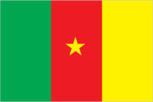
Geography
Administrative divisions
10 provinces divided into departments, arrondissements, districts, led by provincial governors appointed by President
Boundary disputes
none; maritime disputes with France, US
Branches
executive (President), legislative (National Assembly), and judicial (Supreme Court)
Capital
Yaounde
Climate
- varies from temperate in south to subarctic and arctic in north
- temperate; warm, dry, summer precipitation very erratic
- tropical marine with warm summers and cool winters
Coastline
- 243,791 km
- 965 km
- 160 km
Communists
no Communist party or significant number of sympathizers
Comparative area
- slightly larger than US
- slightly larger than Rhode Island
- less than twice the size of Washington, D. C.
Continental shelf
200 meters or to depth of exploitation
Elections
parliamentary elections held May 1983; presidential elections held January 1984 Cameroon (continued) Canada Political parties and leaders: Cameroon People's Democratic Movement (known as the Cameroon People's National Union during 1966-85), Paul Biya, President
Environment
- 80% of population concentrated within 160 km of US border; continuous permafrost in north a serious obstacle to development
- subject to prolonged droughts; harmattan wind can obscure visibility; volcanically and seismically active; deforestation; overgrazing
- within the Caribbean hurricane belt, but rarely affected
Ethnic divisions
45% British Isles origin, 29% French origin, 23% other European, 1.5% indigenous Indian and Eskimo
Exclusive fishing zone
- 200 nm
- 200 nm
Extended economic zone
200 nm
Government leader
Paul BIYA, President (since November 1982)
Infant mortality rate
9.1/1,000 (1982)
Labor force
12.88 million (1986 average); 68% services (37% government, 23% trade and finance, 8% transportation), 18% manufacturing, 6% construction, 3.8% agriculture, 4.2% other; 9.6% unemployment (1986 average)
Land boundaries
9,010 km total
Land use
- 5% arable land; NEGL% permanent crops; 3% meadows and pastures; 35% forest and woodland; 57% other; includes NEGL% irrigated
- 9% arable land; NEGL% permanent crops; 6% meadows and pastures; NEGL% forest and woodland; 85% other; includes 1% irrigated
- 0% arable land; 0% permanent crops; 8% meadows and pastures; 23% forest and woodland; 69% other
Language
English and French (official)
Legal system
based on French civil law system, with common law influence; unitary constitution adopted 1972; judicial review by Supreme Court when a question of constitutionality is referred to it by the President; has not accepted compulsory ICJ jurisdiction
Life expectancy
men 71.9, women 79
Literacy
99%
Maritime claim
(measured from claimed archipelagic baselines)
Member of
AfBD, KAMA, ECA, EIB (associate), FAO, G-77, GATT, IAEA, IBRD, ICAC, ICAO, ICO, IDA, IDE— Islamic Development Bank, IFAD, IFC, ILO, IMF, IMO, INTELSAT, INTERPOL, IPU, ISO, ITU, Lake Chad Basin Commission, NAM, Niger River Commission, OAU, QIC, UDEAC, UN, UNESCO, UPU, WHO, WIPO, WMO, WTO
National holiday
National Day, 20 May
Nationality
noun — Canadian(s); adjective— Canadian
Organized labor
30.6% of labor force; 39.6% of nonagricultural paid workers
Other political or pressure groups
Cameroon People's Union (UPC), remains an illegal group with its factional leaders in exile
Population
25,857,943 (July 1987), average annual growth rate 0.91%
Religion
46% Roman Catholic, 16% United Church, 10% Anglican
Special notes
- second largest country in world; strategic location between USSR and US via polar route
- strategic location 500 km from African coast near major north-south sea routes; important communications station; important sea and air refueling site
- important location between Cuba and Central America
Suffrage
universal over age 21
Terrain
- mostly plains with mountains in west and lowlands in southeast
- steep, rugged, rocky, volcanic
- low lying limestone base surrounded by coral reefs
Territorial sea
- 12 nm
- 12 nm
- 3 nm
Total area
- 9,976,140 km2; land area: 9,220,970 km2
- 4,030 km2; land area: 4,030 km2
- 260 km2; land area: 260 km2
Type
unitary republic; one-party presidential regime
People and Society
Ethnic divisions
- about 71% Creole (mulatto), 28% African, 1% European
- 40% mixed, 20% white, 20% black, 20% expatriates of various ethnic groups
Infant mortality rate
60/1,000 (1983)
Labor force
- bulk of population engaged in subsistence agriculture
- 8,061; 18.7% service workers, 18.6% clerical, 12.5% construction, 6.7% finance and investment, 5.9% directors and business managers (1979)
Language
- Portuguese and Crioulo, a blend of Portuguese and West African words
- English
Life expectancy
61
Literacy
- 37%
- 97.5%
Nationality
- noun — Cape Verdean(s); adjective — Cape Verdean
- noun — Caymanian(s); adjective— Caymanian
Organized labor
Global Seaman's Union; Cayman All Trade Union
Population
- 344,282 (July 1987), average annual growth rate 2.61%
- 23,192 (July 1987), average annual growth rate 3.46%
Religion
- Catholicism fused with indigenous beliefs
- United Church (Presbyterian and Congregational), Anglican, Baptist, Roman Catholic, Church of God, other Protestant denominations
Government
Administrative divisions
- 10 provinces and 2 territories
- 2 distritos subdivided into 14 concelhos
- 8 electoral districts
Branches
- federal executive power vested in cabinet collectively responsible to House of Commons and headed by Prime Minister; federal legislative authority resides in Parliament (282 seats) consisting of Queen represented by Governor General, Senate, and House of Commons; judges appointed by Governor General on the advice of the government; Supreme Court is highest tribunal
- 56-member National People's Assembly; the official party is the supreme political organization
- executive — Governor and Executive Council (3 appointed official members and 4 elected members chosen by the Legislative Assembly from its elected members); legislative — unicameral Legislative Assembly (12 elected members and 3 appointed by Governor); judicial — Summary Court, Grand Court, Cayman Islands Court of Appeal, Her Majesty's Privy Council
Capital
- Ottawa
- Praia
- George Town
Communists
- 2,000
- a few Communists and some sympathizers
- none
Elections
- legal limit of five years but in practice usually held within four years; last election September 1984; 75% voter turnout Political parties and leaders: Liberal, John Turner; Progressive Conservative, Brian Mulroney; New Democratic, Edward Broadbent
- National Assembly election held December 1985, the second since independence Political parties and leaders: only legal party, African Party for Independence of Cape Verde (PAICV), led by Aristides Pereira, secretary general; PAICV established in January 1981 to replace the former ruling party in both Cape Verde and Guinea-Bissau, the African Party for the Independence of Guinea-Bissau and Cape Verde (PAIGC), in protest of the November 1980 coup in Guinea-Bissau
- elections held every four years Political parties and leaders: no formal political parties
Government leader
George Peter LLOYD, Governor and President of the Executive Council (since 1982)
Government leaders
- Brian MULRONEY, Prime Minister (since September 1984); Jeanne SAUVE, Governor General (since May 1984)
- Aristides PEREIRA, President (since July 1975); Pedro PIRES, Prime Minister (since July 1975)
Legal system
- based on English common law, except in Quebec, where civil law system based on French law prevails; constitution as of 1982 (formerly British North America Act of 1867 and various amendments); accepts compulsory ICJ jurisdiction, with reservations
- based on constitution
- British common law and local statutes
Member of
- ADB, Colombo Plan, Commonwealth, DAC, FAO, GATT, IAEA, IBRD, ICAO, ICES, ICO, ICRC, IDA, IDE — Inter-American Development Bank, IEA, IFAD, IFC, IHO, ILO, International Lead and Zinc Study Group, IMF, IMO, INTELSAT, INTERPOL, IPU, ISO, ITC, ITU, IWC— International Whaling Commission, IWC — International Wheat Council, NATO, OAS (observer), OECD, PAHO, UN, UNCTAD, UNESCO, UPU, WHO, WIPO, WMO, WSG
- FAO, G-77, GATT (de facto), IBRD, ICAO, IDA, IFAD, ILO, IMF, IMO, IPU, ITU, NAM, OAU, UN, UNESCO, UPU, WHO, WMO
- Commonwealth
National holiday
- Canada Day, 1 July
- Independence Day, 5 July
- Constitution Day, 8 July
Official name
- Canada
- Republic of Cape Verde
- Cayman Islands
Suffrage
- universal over age 18
- universal over age 15
- universal adult over age 18
Type
- federal state recognizing Elizabeth II as sovereign
- republic
- British dependent territory
Voting strength
(1984 election) Progressive Conservative, 50%; Liberal, 28%; New Democratic Party, 19%; parliamentary seats as of December 1986 — Progressive Conservative 209, Liberal 40, New Democratic Party 30, vacant 3
Economy
Agriculture
- commercial and food crops — coffee, cocoa, timber, cotton, rubber, bananas, peanuts, palm oil and palm kernels; root starches, livestock, millet, sorghum, and rice
- livestock, grains (principally wheat), dairy products, feedgrains, oilseeds, tobacco; food shortages — fresh fruits and vegetables
- main crops — bananas, coffee, sugarcane, corn, beans
- minor production of vegetables and livestock, turtle farming
Aid
US, including Ex-Im Bank (FY70-84), $1.9 billion; ODA and OOF economic aid commitments (1970-84), $18.5 billion
Budget
- revenues, $1.6 billion; current expenditures, $2.3 billion (1986-87 projected)
- total revenues $61.32 billion; current expenditures $84.91 billion; budget deficit $23.59 billion (1985)
- public revenues, $20.4 million; current expenditures, $26.7 million (1984)
Crude steel
15.0 million metric tons produced (1985); 590 kg per capita
Electric power
- 604,000 kW capacity; 4,200 million kWh produced, 2,540 kWh per capita (1986)
- 99,298,000 kW capacity; 448,840 million kWh produced, 17,500 kWh per capita (1986)
- 14,000 kW capacity; 18 million kWh produced, 56 kWh per capita (1986)
- 29,000 kW capacity; 90 million kWh produced, 4,090 kWh per capita (1986) Cayman Islands (continued)
Exports
- $855.2 million (f.o.b., 1984); crude oil, cocoa, coffee, timber, aluminum, cotton, natural rubber, bananas, peanuts, tobacco, tea, mineral products, food, alcohol, metal and metal products, textiles, wood products
- $88.1 billion (f.o.b., 1985); principal items — transportation equipment; wood and wood products, including paper; ferrous and nonferrous ores; crude petroleum; wheat; Canada is a major food exporter
- $1.6 million (f.o.b., 1983); fish, bananas, salt, flour
Fiscal year
- 1 July-30 June
- 1 April-31 March
- calendar year
Fishing
- 75,000 metric tons (1984)
- catch 1.25 million metric tons (1984)
- catch 13,205 metric tons (1983); largely undeveloped but provides major source of export earnings
GDP
- $7.3 billion (1983-84), about $770 per capita; average annual growth rate 6.5% (1984); average inflation rate 15% (1984)
- $366.0 billion, $14,280 per capita; 61.4% consumption, 19.7% investment, 17.2% government, 0.8% net foreign trade; no change in inventories (1986); real growth rate 3.0% (1985-86); inflation rate 4.2% (1986)
- $225.0 million, $10,227 per capita (1982)
GNP
$110 million, $320 per capita (1983) Cayman Islands
Imports
- $1.101 billion (f.o.b., 1984); consumer goods, machinery, transport equipment, alumina for refining, petroleum products, food, beverages, electrical equipment, chemical products
- $75.3 billion (f.o.b., 1985); principal items — transportation equipment, machinery, crude petroleum, communication equipment, textiles, steel, fabricated metals, office machines, fruits and vegetables
- $68.1 million (c.i.f., 1983); petroleum products, corn, rice, machinery, textiles
Major industries
- crude oil production, small aluminum plant, food processing, light consumer goods industries; sawmills
- processed and unprocessed minerals, food products, wood and paper products, transportation equipment, chemicals, fish products, petroleum and natural gas
- salt mining
- tourism, banking, insurance and finance, real estate and construction
Major trade partners
- most trade with France, other EC countries, and the US
- imports— 71.6% US, 5.9% Japan, 3.0% UK; exports— 78.5% US, 4.9% Japan, 2.0% UK, 1.3% USSR (1985)
- Portugal, UK, Japan, Angola, Zaire
Monetary conversion rate
- 331.24 Communaute Financiere Africaine francs=US$l (November 1986)
- C$1.373=US$1 (8 January 1987)
- 89.21 escudos=US$l (December 1985)
Natural resources
- oil, natural gas, bauxite, iron ore, timber
- nickel, zinc, copper, gold, lead, molybdenum, potash, silver, fish, forests, wildlife
- salt, basalt rock, pozzolana, limestone, kaolin
Shortages
rubber, fruits, precision instruments
Communications
Airfields
- 63 total, 58 usable; 9 with permanent-surface runways; 5 with runways 2,440-3,659 m, 25 with runways 1,220-2,439 m
- 1,407 total, 1,076 usable; 412 with permanent-surface runways; 4 with runways over 3,659 m, 30 with runways 2,440-3,659 m, 306 with runways 1,220-2,439 m Canada (continued) Cape Verde
- 6 total, 6 usable; 4 with permanent-surface runways; 1 with runways 2,440-3,659 m, 4 with runways 1,220-2,439 m
Branches
- Army, Navy, Air Force; paramilitary Gendarmerie
- Mobile Command, Maritime Command, Air Command, Communications Command, Canadian Forces Europe, Training Command
- People's Revolutionary Armed Forces (FARP); Army, Navy, and Air Force are separate components of FARP
Civil air
- 7 major transport aircraft
- 636 major transport aircraft
- 2 major transport aircraft
Highways
- about 65,000 km total; includes 2,682 km bituminous, 30,000 km unimproved earth, 32,318 km gravel, earth, and improved earth
- 884,272 km total; 712,936 km surfaced (250,023 km paved), 171,336 km earth
Inland waterways
- 2,090 km; of decreasing importance
- 3,000 km, including St. Lawrence Seaway
Military budget
- for fiscal year ending 30 June 1987, $153.6 million; 6.5% of central government budget 1200km Vancouver Calgary Set regional map II iTTAWA 'oronto
- for fiscal year ending 31 March 1986, $8.0 billion; about 10.3% of central government budget 75 km North At/antic Ocean Mtio ^PRAIA Stfo Tiego
- for fiscal year ending 31 December 1980, $15 million; about 5% of central government budget Caribbean Sea Cayman Brae* Little" Cayman <J r&£.nd Cayman GEORGETOWN Caribbean Sea
Military manpower
- males 15-49, 2,345,000; 1,181,000 fit for military service; 111,000 reach military age (18) annually
- males 15-49, 7,036,000; 6,183,000 fit for military service; 189,000 reach military age (17) annually
- males 15-49, 64,000; 38,000 fit for military service
Pipelines
oil, 23,564 km total crude and refined; natural gas, 74,980 km
Ports
- 1 major (Douala), 3 minor
- over 250 ports of which 25 are sizeable deep water ports
- 2 major (Mindelo and Praia), 2 minor
Railroads
- 1,173 km total; 858 km 1.000meter gauge, 145 km 0.600-meter gauge
- 81,088 km total; 79,917 km 1.435-meter standard gauge, 129 km electrified; 1,171 km 1.067-meter gauge (in Newfoundland); 178 km 0.915-meter gauge (unused)
Telecommunications
- good system of open wire and radio-relay; 26,000 telephones (0.2 per 100 popl.); 10 AM, 1 FM, and 1 TV stations; 1 Atlantic Ocean satellite station Defense Forces
- excellent service provided by modern telecom media; 18.0 million telephones (66.4 per 100 popl.); countrywide AM, FM, and TV coverage, including 900 AM, 80 FM, 1,100 TV stations; 6 coaxial submarine cables; 3 satellite stations with a total of 5 antennas and 300 domestic satellite stations Defense Forces
- interisland radiorelay system, high frequency radio to mainland Portugal and Guinea-Bissau; about 1,740 telephones (0.6 per 100 pop!.); 2 FM, 5 AM stations; 1 small TV station; 2 coaxial submarine cables; 1 Atlantic Ocean satellite ground station Defense Forces