1983 Edition
CIA World Factbook 1983 (Internet Archive)
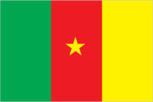
Geography
Agriculture
- major cash crops — coffee, cotton, tea; main food crops — manioc, yams, corn, sorghum, bananas, haricot beans; marginally self-sufficient
- commercial and food crops — cocoa, coffee, timber, cotton, rubber, bananas, peanuts, palm oil and palm kernels; root starches, livestock, millet, sorghum, and rice
Airfields
- 8 total, 7 usable; 1 with permanentsurface runways; 1 with runways 2,4403,659m
- 57 total, 52 usable; 7 with permanent-surface runways; 3 with runways 2,440-3,659 m, 19 with runways 1,2202,439 m
Branches
- Army (including naval and air units); paramilitary Gendarmerie
- executive (President), legislative (National Assembly), and judicial (Supreme Court)
- Army, Navy, Air Force
Budget
- (1982) revenue $126.5 million, expenditure $23.9 million
- (1981-82) revenues $1,002 million, current expenditures $644 million, development expenditures $275 million
Capital
Yaounde
Civil air
- 1 major transport aircraft
- 7 major transport aircraft
Coastline
402 km People
Communists
no Communist party or significant number of sympathizers
Elections
parliamentary elections held May 1983; presidential elections held January Political parties and leaders: single party, Cameroon National Union (UNC), instituted in 1966, Paul Biya, president
Electric power
- 27,000 kW capacity; 4 million kWh produced (1983), 30 million kWh imported from Zaire, 1 kWh per capita (1983)
- 575,000 kW capacity (1983); 1.7 billion kWh produced (1983), 185 kWh per capita
Ethnic divisions
about 200 tribes of widely differing background; 31 % Cameroon Highlanders, 19% Equatorial Bantu, 11% Kirdi, 10% Fulani, 8% Northwestern Bantu, 7% Eastern Nigritic, 13% other African, less than 1% non-African
Exports
- $86 million (f.o.b., 1982); coffee ), tea, cotton, hides, skins
- $12.64 million (f.o.b., 1982); crude oil, cocoa, coffee, timber, aluminum, cotton, natural rubber, bananas, peanuts, tobacco, and tea
Fiscal year
- calendar year Communications
- 1 July-30 June Communications
Fishing
109,500 metric tons (1980/81); fish and shrimp
GDP
- about $1.2 billion (1982), $272 per capita; 6% real growth rate (1982)
- $7.0 billion (1981), about $845 per capita; real annual growth rate, 6.0-7.0% (1981)
Government leader
Paul BIYA, President
Highways
- 5,950 km total; 2,500 km gravel, or laterite; 3,000 km improved or unimproved earth
- approximately 59,000 km total; including 2,682 km bituminous, 7,000 km gravel and earth, 7,400 km improved earth, 42,000 km unimproved
Imports
- $214 million (c.i.f., 1982); textiles, foodstuffs, transport equipment, petroleum products
- $1.198 billion (f.o.b., 1982); consumer goods, machinery, transport equipment, alumina for refining, petroleum products, food and beverages
Inland waterways
- Lake Tanganyika navigable for lake steamers and barges; 1 lake port at Bujumbura
- 2,090 km; of decreasing importance
Labor force
(1983) 83% agriculture, 14% industry and commerce, 3% tertiary sector
Land boundaries
4,554 km Water
Language
English and French (official), 24 major African language groups
Legal system
based on French civil law system, with common law influence; unitary constitution adopted 1972; judicial review in Supreme Court, when a question of constitutionality is referred to it by the President of the Republic; has not accepted compulsory ICJ jurisdiction
Limits of territorial waters (claimed)
50 nm
Literacy
65%
Major industries
- light consumer goods such as blankets, shoes, soap; assembly of imports; public works construction; beverages
- crude oil; small aluminum plant, food processing, and light consumer goods industries; sawmills
Major trade partners
- US, EEC countries
- most trade with France, other EC countries, and the US
Member of
- AfDB, EAMA, EGA, FAO, G-77, GATT, IBRD, ICAO, ICO, IDA, IFAD, IFC, ILO, IMF, INTERPOL, ITU, NAM, OAU, UN, UNESCO, UPU, WHO, WIPO, WMO, WTO Economy
- Af BD, KAMA, EGA, EIB (associate), FAO, G-77, GATT, IAEA, IBRD, ICAC, ICAO, ICO, IDA, IDB— Islamic Development Bank, IFAD, IFC, ILO, IMF, IMO, INTELSAT, INTERPOL, IPU, ISO, ITU, Lake Chad Basin Commission, NAM, Niger River Commission, OAU, OIC, UDEAC, UN, UNESCO, UPU, WHO, WIPO, WMO, WTO Economy
Military budget
- for fiscal year ending 31 December 1983, $50 million; about 22.1% of central government budget Land 475,439 km2; 50% forest; 18% meadow; 13% fallow; 4% cultivated; 15% other
- for fiscal year ending 30 June 1984, $85.4 million; 10.7% of central government budget
Military manpower
- males 15-49, 1,070,000; 556,000 fit for military service; 52,000 reach military age (16) annually
- males 15-49, 2,115,000; 1,064,000 fit for military service; about 88,000 reach military age (18) annually
Monetary conversion rate
- 90 Burundi francs=US$l (October 1983)
- 397.45 Communaute Financiere Africaine francs=US$l (October 1983)
National holiday
National Day, 20 May
Nationality
noun — Cameroonian(s); adjective — Cameroonian
Official name
United Republic of Cameroon
Organized labor
under 45% of wage labor force Government
Other political or pressure groups
Cameroon People's Union (UPC), remains an illegal group with its factional leaders in exile
Political subdivisions
10 provinces further divided into departments, arrondissements, districts
Population
9,506,000 (July 1984), average annual growth rate 2.7%
Ports
1 major (Douala), 3 minor
Railroads
- none
- 1,173 km total; 858 km 1.000meter gauge, 145 km 0.600-meter gauge
Religion
about one-half indigenous beliefs, one-third Christian, one-sixth Muslim
Suffrage
universal over age 21
Telecommunications
- sparse system of wire and low-capacity radio-relay links; about 6,000 telephones (0.1 per 100 popl.); 2 AM and 2 FM stations; no TV station; 1 Indian Ocean satellite ground station Defense Forces
- good system of open wire and radio relay; 30,000 telephones (0.3 per 100 popl.); 10 AM, 1 FM, and no TV stations; 1 Atlantic Ocean satellite station; planned TV network Defense Forces
Type
unitary republic; one-party presidential regime