1985 Edition
CIA World Factbook 1985 (Internet Archive)
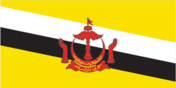
Geography
Agriculture
main crops — rice, pepper; must import most food
Airfields
- 3,975 total, 2,989 usable; 300 with permanent-surface runways; 1 with runways over 3,659 m; 22 with runways 2,440-3,659 m; 410 with runways 1,220-2,439 m
- 2 total, 2 usable; 1 with permanentsurface runways; 1 with runways over 3,659 m; 1 with runways 1,220-2,439 m
Branches
- Brazilian Army, Navy of Brazil, Brazilian Air Force
- chief of state is Sultan (advised by appointed Privy Council), who appoints Executive Council and Legislative Council
- Royal Brunei Armed Forces, including air wing, navy, and ground forces; British Gurkha Battalion; Royal Brunei Police; Gurkha Reserve Unit
Budget
- (1983 est.) revenues, $19.6 billion; expenditures, $19.6 billion (Treasury budget only)
- (1979) revenues $883 million, expenditures $500 million, surplus $383 million; 35% defense
Capital
Bandar Seri Begawan
Civil air
176 major transport aircraft
Coastline
161 km People
Communists
information not available (January 1985)
Elections
last elections — March 1965; further elections postponed indefinitely Political parties and leaders: antigovernment, exiled Brunei People's Party, A. M N. Azahari, chairman
Electric power
153,000 kW capacity (1984); 470 million kWh produced (1984), 2,156 kWh per capita
Ethnic divisions
70% Malay, 25% Chinese, 5% other
Exports
$18.6 billion (f.o.b., 1981 est); 95% crude oil, liquefied natural gas, and petroleum products
Fiscal year
- calendar year Communications
- calendar year Communications
GDP
$4.3 billion (1981 est.), $21,625 per capita (1981)
Government leader
Sir HASSANAL Bolkiah, Sultan (since August 1968)
Highways
- 1,399,440 km total; 83,965 km paved, 1,315,475 km gravel or earth
- 1,090 km total; 370 km paved (bituminous treated), with another 52 km under construction, 720 km gravel or unimproved
Imports
$2.7 billion (c.i.f., 1981 est.); includes machinery and transport equipment, manufactured goods, food, chemicals, beverages and tobacco, mineral fuels and lubricants, rice and other agricultural goods
Inland waterways
- 50,000 km navigable
- 209 km; navigable by craft drawing less than 1.2 meters
Labor force
68, 1 28 (includes members of the Army); 63% trade and services; 23% manufacturing and construction; 11% agriculture, forestry, fishing, and mining (1981)
Land boundaries
381 km Water
Language
Malay official; English and Chinese
Legal system
based on Islamic law; constitution promulgated by the Sultan in 1959
Limits of territorial waters (claimed)
12 nm (200 nm fishing zone)
Literacy
45%
Major industry
crude petroleum, liquefied natural gas, construction
Major trade partners
- exports— 23% US, 7% Japan, 6% Netherlands, 5% FRG, 5% Italy, 4% France (1983 est); imports— 16% US, 14% Saudi Arabia, 13% Iraq, 5% Mexico, 5% FRG, 4% Venezuela, 4% Japan (1983)
- exports of crude petroleum and liquefied natural gas to Japan; imports from Japan 30%, US 24%, UK 15%, Singapore 9%
Member of
ASEAN, INTERPOL, QIC, UN Civil air: 3 major transport aircraft Economy
Military budget
- estimated for fiscal year ending 31 December 1985, $3.5 billion; 8.5% of central government budget • See regional mip IX Land 5,765 km2; slightly larger than Delaware; 75% forest; 22% industry, waste, urban, or other; 3% cultivable (of which only 10% is cultivated)
- for fiscal year ending 31 December 1984, $161 million; about 13.1% of central government budget
Military manpower
- males 15-49, 34,539,000; 23,363,000 fit for military service; 1,465,000 reach military age (18) annually
- males 15-49, 56,000; 34,000 fit for military service; about 3,000 reach military age (18) annually
Monetary conversion rate
- 2622 cruzeiros=US$l (31 October 1984)
- 2.163 Brunei dollars=US$ 1 (Setember 1984)
National holiday
National Day, 23 February
Nationality
noun — Bruneian(s); adjective — Bruneian
Official name
State of Brunei Darussalam
Organized labor
2% of labor force Government
Pipelines
- crude oil, 2,000 km; refined products, 465 km; natural gas, 257 km
- crude oil, 135 km; refined products, 418 km; natural gas, 920 km
Political subdivisions
four administrative districts
Population
221,000 (July 1985), average annual growth rate 3.3%
Ports
- 8 major, 23 significant minor
- 1 major (Muara), 4 minor
Railroads
- 24,600 km total; 22,450 km 1.000meter gauge, 1,750km 1.600-meter gauge (890 km Carajasore line to open in 1985), 200 km 1.435-meter standard gauge, 200 km 0.760-meter gauge; 879 km electrified
- 13 km 0.610-meter narrow gauge private line
Religion
60% Muslim (Islam official religion); 8% Christian; 32% other (Buddhist and animist)
Suffrage
universal age 21 and over; threetiered system of indirect elections; popular vote cast for lowest level (district councilors)
Telecommunications
- good telecom system; extensive radio relay facilities; 2 Atlantic Ocean INTELSAT stations with total of 3 antennas; 60 domestic satellite stations; 8.54 million telephones (6.3 per 100 popl.); 1,485 AM, 150 FM, 200 TV stations; 3 coaxial submarine cables Defense Forces
- service throughout country is adequate for present needs; international service good to adjacent Sabah and Sarawak; radiobroadcast coverage good; 17,930 telephones (8.0 per 100 popl.); Radio Brunei broadcasts from 6 AM/FM stations and 1 TV station; 32,000 radio receivers; 1 satellite station Defense Forces
Type
became independent 1 January 1984; constitutional sultanate