1981 Edition
CIA World Factbook 1981 (Internet Archive)
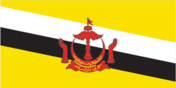
Geography
Area
5,776 km2; 3% cultivated; 22% industry, waste, urban or other; 75% forested
Coastline
161 km
Land boundaries
381 km
Limits of territorial waters (claimed)
3 inn
People and Society
Ethnic divisions
65% Malays, 24% Chinese, 11% other
Labor force
32,155; 30.5% agriculture; 32.8% industry, manufacturing, and construction; 33.8% trade, transport, services; 2.9% other
Language
Malay and English official, Chinese
Literacy
45%
Nationality
noun — Bruneian(s); adjective — Bruneian
Organized labor
8.4% of labor force
Population
252,000 (July 1982), average annual growth rate 5.6%
Religion
60% Muslim (Islam official religion); 8% Christian; 32% other (Buddhist and animist)
Government
Branches
Chief of State is Sultan (advised by appointed Privy Council) who appoints Executive Council and Legislative Council
Capital
Bandar Seri Begawan
Communists
information not available
Elections
last elections — March 1965; further elections postponed indefinitely Political parties and leaders: antigovernment, exiled Brunei People's Party, Chairman A. M. N. Azahari
Government leader
Sultan Hassanal BOLKIAH
Legal system
based on Islamic law; constitution promulgated by the Sultan in 1959
Official name
State of Brunei
Political subdivisions
four administrative districts
Suffrage
universal age 21 and over; three-tiered system of indirect elections; popular vote cast for lowest level (district councilors)
Type
British protectorate; constitutional sultanate
Economy
Agriculture
main crops — rubber, rice, pepper, must import most food
Budget
(1979) revenues $1 billion, expenditures $507 million, surplus $493 million; 70% defense
Electric power
147,000 kW capacity (1981); 404 million kWh produced (1981), 1,740 kWh per capita
Exports
$1,900 million (f.o.b., 1978); 95% crude petroleum and liquefied natural gas
Fiscal year
calendar year
GNP
$460 million (1975 est), $2,970 per capita
Imports
$261 million (c.i.f., 1978); 25% machinery and transport equipment, 46% manufactured goods, 16% food
Major industry
crude petroleum, liquefied natural gas
Major trade partners
exports of crude petroleum and liquefied natural gas to Japan; imports from Japan 30%, US 24%, UK 15%, Singapore 9%
Monetary conversion rate
2.2 Brunei dollars=US$l
Communications
Airfields
3 total, 2 usable; 1 with permanent-surface runways; 1 with runways over 3,659 m; 1 with runways 1,220-2,439 m
Civil air
4 major transport aircraft
Highways
1,090 km total; 370 km paved (bituminous treated), with another 52 km under construction, 720 km gravel or unimproved
Inland waterways
209 km; navigable by craft drawing less than 1.2 meters
Military manpower
males 15-49, 62,000; 36,000 fit for military service; about 2,600 reach military age (18) annually
Pipelines
crude oil, 135 km; refined products, 56 km; natural gas, 56 km; crude oil and natural gas, 241 km under construction
Ports
1 major (Muara), 4 minor
Railroads
13 km narrow gauge (0.610 m) private line
Telecommunications
service throughout country is adequate for present needs; international service good to adjacent Sabah and Sarawak; radiobroadcast coverage good; 15,672 telephones (8.8 per 100 popl.); Radio Brunei broadcasts from 6 AM/FM stations and 1 TV station DEFENSE FORCES