1996 Edition
CIA World Factbook 1996 (Project Gutenberg)
Introduction
Description
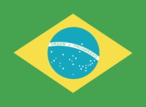
green with a large yellow diamond in the center bearing a blue celestial globe with 27 white five-pointed stars (one for each state and the Federal District) arranged in the same pattern as the night sky over Brazil; the globe has a white equatorial band with the motto ORDEM E PROGRESSO (Order and Progress)
Location
10 00 S, 55 00 W -- Eastern South America, bordering the Atlantic Ocean Flag ----
Geography
Area
- comparative area
- slightly smaller than the US
- land area
- 8,456,510 sq km
- note
- includes Arquipelago de Fernando de Noronha, Atol das Rocas, Ilha da Trindade, Ilhas Martin Vaz, and Penedos de Sao Pedro e Sao Paulo
- total area
- 8,511,965 sq km
Climate
mostly tropical, but temperate in south
Coastline
7,491 km
Environment
- current issues
- deforestation in Amazon Basin destroys the habitat and endangers the existence of a multitude of plant and animal species indigenous to the area; air and water pollution in Rio de Janeiro, Sao Paulo, and several other large cities; land degradation and water pollution caused by improper mining activities
- international agreements
- party to - Antarctic-Environmental Protocol, Antarctic Treaty, Biodiversity, Climate Change, Endangered Species, Environmental Modification, Hazardous Wastes, Law of the Sea, Marine Dumping, Nuclear Test Ban, Ozone Layer Protection, Ship Pollution, Tropical Timber 83, Wetlands, Whaling; signed, but not ratified - Desertification
- natural hazards
- recurring droughts in northeast; floods and occasional frost in south
Geographic coordinates
10 00 S, 55 00 W
Geographic note
largest country in South America; shares common boundaries with every South American country except Chile and Ecuador
International disputes
short section of the boundary with Paraguay, just west of Salto das Sete Quedas (Guaira Falls) on the Rio Parana, is in dispute; two short sections of boundary with Uruguay are in dispute - Arroio Invernada (Arroyo de la Invernada) area of the Rio Quarai (Rio Cuareim) and the islands at the confluence of the Rio Quarai and the Uruguay River
Irrigated land
27,000 sq km (1989 est.)
Land boundaries
- border countries
- Argentina 1,224 km, Bolivia 3,400 km, Colombia 1,643 km, French Guiana 673 km, Guyana 1,119 km, Paraguay 1,290 km, Peru 1,560 km, Suriname 597 km, Uruguay 985 km, Venezuela 2,200 km
- total
- 14,691 km
Land use
- arable land
- 7%
- forest and woodland
- 67%
- meadows and pastures
- 19%
- other
- 6%
- permanent crops
- 1%
Location
Eastern South America, bordering the Atlantic Ocean
Map references
South America
Maritime claims
- contiguous zone
- 24 nm
- continental shelf
- 200 nm
- exclusive economic zone
- 200 nm
- territorial sea
- 12 nm
Natural resources
bauxite, gold, iron ore, manganese, nickel, phosphates, platinum, tin, uranium, petroleum, hydropower, timber
Terrain
- mostly flat to rolling lowlands in north; some plains, hills, mountains, and narrow coastal belt
- highest point
- Pico da Neblina 3,014 m
- lowest point
- Atlantic Ocean 0 m
People and Society
Age structure
0-14 years: 31% (male 25,286,278; female 24,422,897) 15-64 years: 65% (male 52,232,435; female 53,094,724) 65 years and over: 4% (male 3,072,720; female 4,552,160) (July 1996 est.)
Birth rate
20.8 births/1,000 population (1996 est.)
Death rate
9.19 deaths/1,000 population (1996 est.)
Ethnic divisions
white (includes Portuguese, German, Italian, Spanish, Polish) 55%, mixed white and African 38%, African 6%, other (includes Japanese, Arab, Amerindian) 1%
Infant mortality rate
55.3 deaths/1,000 live births (1996 est.)
Languages
Portuguese (official), Spanish, English, French
Life expectancy at birth
- female
- 66.81 years (1996 est.)
- male
- 56.67 years
- total population
- 61.62 years
Literacy
- age 15 and over can read and write (1995 est.)
- female
- 83.2%
- male
- 83.3%
- total population
- 83.3%
Nationality
- adjective
- Brazilian
- noun
- Brazilian(s)
Net migration rate
0 migrant(s)/1,000 population (1996 est.)
Population
162,661,214 (July 1996 est.)
Population growth rate
1.16% (1996 est.)
Religions
Roman Catholic (nominal) 70%
Sex ratio
- all ages
- 0.98 male(s)/female (1996 est.)
- at birth
- 1.05 male(s)/female
- under 15 years
- 1.04 male(s)/female 15-64 years: 0.98 male(s)/female 65 years and over: 0.68 male(s)/female
Total fertility rate
2.34 children born/woman (1996 est.)
Government
Administrative divisions
26 states (estados, singular - estado) and 1 federal district* (distrito federal); Acre, Alagoas, Amapa, Amazonas, Bahia, Ceara, Distrito Federal*, Espirito Santo, Goias, Maranhao, Mato Grosso, Mato Grosso do Sul, Minas Gerais, Para, Paraiba, Parana, Pernambuco, Piaui, Rio de Janeiro, Rio Grande do Norte, Rio Grande do Sul, Rondonia, Roraima, Santa Catarina, Sao Paulo, Sergipe, Tocantins
Capital
Brasilia
Chamber of Deputies (Camara dos Deputados)
- election last held 3 October 1994 (next to be held October 1998); results - PMDB 21%, PFL 18%, PDT 7%, PSDB 12%, PPR 10%, PTB 6%, PT 10%, other 16%; seats - (517 total) seats by party NA
- note
- party totals since Fall 1994 have changed considerably due to extensive party-switching
Constitution
5 October 1988
Data code
BR
Diplomatic representation in US
- chancery
- 3006 Massachusetts Avenue NW, Washington, DC 20008
- chief of mission
- Ambassador Paulo Tarso FLECHA de LIMA
- telephone
- [1] (202) 745-2700
Executive branch
- cabinet
- Cabinet was appointed by the president
- chief of state and head of government
- President Fernando Henrique CARDOSO (since 1 January 1995) was elected for a four-year term by popular vote; election last held 3 October 1994; (next to be held October 1998); results - Fernando Henrique CARDOSO 53%, Luis Inacio LULA da Silva 26%, Eneas CARNEIRO 7%, Orestes QUERCIA 4%, Leonel BRIZOLA 3%, Espiridiao AMIN 3%; note - second direct presidential election since 1960; Vice President Marco MARCIEL (since NA)
FAX
- [1] (202) 745-2827
- [55] (61) 225-9136
- consulate(s)
- Houston
- consulate(s)
- Porto Alegre, Recife
- consulate(s) general
- Boston, Chicago, Los Angeles, Miami, New York, San Juan (Puerto Rico), and San Francisco
- consulate(s) general
- Rio de Janeiro, Sao Paulo
Federal Senate (Senado Federal)
election last held 3 October 1994 for two-thirds of Senate (next to be held October 1996 for one-third of the Senate); results - PMBD 28%, PFL 22%, PSDB 12%, PPR 7%, PDT 7%, PT 6%, PTB 6%, other 12%; seats - (81 total) seats by party NA
Flag
green with a large yellow diamond in the center bearing a blue celestial globe with 27 white five-pointed stars (one for each state and the Federal District) arranged in the same pattern as the night sky over Brazil; the globe has a white equatorial band with the motto ORDEM E PROGRESSO (Order and Progress)
Independence
7 September 1822 (from Portugal)
International organization participation
AfDB, AG (observer), CCC, ECLAC, FAO, G-11, G-15, G-19, G-24, G-77, IADB, IAEA, IBRD, ICAO, ICC, ICFTU, ICRM, IDA, IFAD, IFC, IFRCS, ILO, IMF, IMO, Inmarsat, Intelsat, Interpol, IOC, IOM (observer), ISO, ITU, LAES, LAIA, Mercosur, MTCR, NAM (observer), OAS, OPANAL, PCA, RG, UN, UNAVEM III, UNCRO, UNCTAD, UNESCO, UNHCR, UNIDO, UNPREDEP, UNPROFOR, UNU, UPU, WCL, WFTU, WHO, WIPO, WMO, WToO, WTrO
Judicial branch
Supreme Federal Tribunal, judges are appointed for life by the Senate
Legal system
based on Roman codes; has not accepted compulsory ICJ jurisdiction
Legislative branch
bicameral National Congress (Congresso Nacional)
Name of country
- conventional long form
- Federative Republic of Brazil
- conventional short form
- Brazil
- local long form
- Republica Federativa do Brasil
- local short form
- Brasil
National holiday
Independence Day, 7 September (1822)
Other political or pressure groups
left wing of the Catholic Church and labor unions allied to leftist Workers' Party are critical of government's social and economic policies
Political parties and leaders
National Reconstruction Party (PRN), Daniel TOURINHO, president; Brazilian Democratic Movement Party (PMDB), Paes DE ANDRADE, president; Liberal Front Party (PFL), Jorge BORNHAUSEN, president; Workers' Party (PT), Jose DIRCEU, president; Brazilian Workers' Party (PTB), Rodrigues PALMA, president; Democratic Labor Party (PDT), Leonel BRIZOLA, president; Brazilian Progressive Party (PPB), Espiridiao AMIN, president; Brazilian Social Democracy Party (PSDB), Artur DA TAVOLA, president; Popular Socialist Party (PPS), Roberto FREIRE, president; Communist Party of Brazil (PCdoB), Joao AMAZONAS, chairman; Liberal Party (PL), Alvaro VALLE, president
Suffrage
voluntary between 16 and 18 years of age and over 70; compulsory over 18 and under 70 years of age
Type of government
federal republic
US diplomatic representation
- chief of mission
- Ambassador Melvyn LEVITSKY
- embassy
- Avenida das Nacoes, Lote 3, Brasilia, Distrito Federal
- mailing address
- Unit 3500, APO AA 34030
- telephone
- [55] (61) 321-7272
Economy
Agriculture
coffee, soybeans, wheat, rice, corn, sugarcane, cocoa, citrus; beef
Budget
- expenditures
- $54.9 billion, including capital expenditures of $NA (1994)
- revenues
- $58.7 billion
Currency
1 real (R$) = 100 centavos
Economic aid
- recipient
- ODA, $107 million (1993)
Economic overview
With its large and well-developed agricultural, mining, manufacturing, and service sectors, Brazil has South America's largest GDP by far and has the potential to become a major player in the world economy. Prior to the institution of a stabilization plan in mid-1994, stratospheric inflation rates had devastated the economy and discouraged foreign investment. Since then, tight monetary policy has apparently brought inflation under control - consumer prices increased by 23% in 1995 compared to more than 1,000% in 1994. At the same time, GDP growth slowed from 5.7% to 4.2% as credit was tightened and the steadily appreciating real encouraged imports while depressing export growth. The increased stability of the Brazilian economy allowed it to weather the fallout from the Mexican peso crisis relatively well, with foreign funds flowing in during the second half of 1995 to swell official foreign exchange reserves past the $50 billion mark. Stock market indices in Sao Paulo and Rio de Janeiro, however, ended 26% lower in 1995. President CARDOSO remains committed to further reducing inflation in 1996 while boosting growth, but he faces key challenges. Servicing domestic debt has become dramatically more burdensome for both public and private sector entities because of very high real interest rates which are contributing to growing budget deficits and a surge in bankruptcies. Fiscal reforms, many of which require constitutional amendments, are proceeding at a slow pace through the Brazilian legislature; in their absence, the government is maintaining its strict monetary policy. Brazil's natural resources remain a major, long-run economic strength.
Electricity
- capacity
- 55,130,000 kW
- consumption per capita
- 1,589 kWh (1993)
- production
- 241.4 billion kWh
Exchange rates
- R$ per US$1 - 0.975 (January 1996), 0.918 (1995), 0.639 (1994); CR$ per US$1 - 390.845 (January 1994), 88.449 (1993), 4.513 (1992), 0.407 (1991)
- note
- on 1 August 1993 the cruzeiro real (CR$), equal to 1,000 cruzeiros, was introduced; another new currency, the real (R$) was introduced on 1 July 1994, equal to 2,750 cruzeiro reals
Exports
- $46.5 billion (f.o.b., 1995)
- commodities
- iron ore, soybean bran, orange juice, footwear, coffee, motor vehicle parts
- partners
- EU 27.6%, Latin America 21.8%, US 17.4%, Japan 6.3% (1993)
External debt
$94 billion (1995 est.)
Fiscal year
calendar year
GDP
purchasing power parity - $976.8 billion (1995 est.)
GDP composition by sector
- agriculture
- 16%
- industry
- 25%
- services
- 59% (1994)
GDP per capita
$6,100 (1995 est.)
GDP real growth rate
4.2% (1995)
Illicit drugs
illicit producer of cannabis, coca cultivation in the Amazon region has diminished in recent years because of its low alkaloid content, mostly for domestic consumption; government has a large-scale eradication program to control cannabis; important transshipment country for Bolivian and Colombian cocaine headed for the US and Europe
Imports
- $49.7 billion (f.o.b., 1995)
- commodities
- crude oil, capital goods, chemical products, foodstuffs, coal
- partners
- US 23.3%, EU 22.5%, Middle East 13.0%, Latin America 11.8%, Japan 6.5% (1993)
Industrial production growth rate
3.5% (1995 est.)
Industries
textiles, shoes, chemicals, cement, lumber, iron ore, tin, steel, aircraft, motor vehicles and parts, other machinery and equipment
Inflation rate (consumer prices)
23% (1995)
Labor force
- 57 million (1989 est.)
- by occupation
- services 42%, agriculture 31%, industry 27%
Unemployment rate
5% (1995 est.)
Communications
Radio broadcast stations
AM 1,223, FM 0, shortwave 151
Radios
60 million (1993 est.)
Telephone system
- good working system
- domestic
- extensive microwave radio relay system and a domestic satellite system with 64 earth stations
- international
- 3 coaxial submarine cables; satellite earth stations - 3 Intelsat (Atlantic Ocean), 1 Inmarsat (Atlantic Ocean Region East)
Telephones
14,426,673 (1992 est.)
Television broadcast stations
- 112
- note
- Brazil has the world's fourth largest television broadcasting system
Televisions
30 million (1993 est.)
Transportation
Airports
- total
- 2,950
- with paved runways 1 524 to 2 437 m
- 122
- with paved runways 2 438 to 3 047 m
- 19
- with paved runways 914 to 1 523 m
- 295
- with paved runways over 3 047 m
- 5
- with paved runways under 914 m
- 1,298
- with unpaved runways 1 524 to 2 437 m
- 66
- with unpaved runways 914 to 1 523 m
- 1,145 (1995 est.)
Highways
- paved
- 142,919 km
- total
- 1,661,850 km
- unpaved
- 1,518,931 km (1992 est.)
Merchant marine
- ships by type
- bulk 48, cargo 29, chemical tanker 11, combination ore/oil 12, container 14, liquefied gas tanker 11, multifunction large-load carrier 1, oil tanker 64, passenger-cargo 5, refrigerated cargo 1, roll-on/roll-off cargo 11 (1995 est.)
- total
- 207 ships (1,000 GRT or over) totaling 5,108,543 GRT/8,477,760 DWT
Pipelines
crude oil 2,000 km; petroleum products 3,804 km; natural gas 1,095 km
Ports
Belem, Fortaleza, Ilheus, Imbituba, Manaus, Paranagua, Porto Alegre, Recife, Rio de Janeiro, Rio Grande, Salvador, Santos, Vitoria
Railways
- broad gauge
- 5,730 km 1.600-m gauge
- dual gauge
- 523 km 1.000-m and 1.600-m gauges
- narrow gauge
- 20,958 km 1.000-m gauge; 13 km 0.760-m gauge
- standard gauge
- 194 km 1.440-m gauge
- total
- 27,418 km (1,750 km electrified)
Waterways
50,000 km navigable