1986 Edition
CIA World Factbook 1986 (Internet Archive)
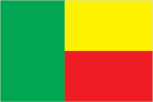
Geography
Agriculture
main crops — peanuts, cotton, cocoa, rubber, yams, cassava, sorghum, palm kernels, millet, corn, rice; livestock; an illegal producer of cannabis for the international drug trade
Airfields
41 total, 36 usable; 4 with permanent-surface runways; 3 with runways 1,220-2,439 m
Area
923,768 km2; more than twice the size of California; 35% forest; 24% arable (13% of total land area under cultivation); 41% desert, waste, urban, or other
Branches
- British Forces Belize, Belize Defense Force, Police Department
- Revolutionary National Assembly, National Executive Council
- Armed Forces Ruling Council; National Council of Ministers and National Council of States; judiciary headed by Supreme Court
Budget
(1985) revenues, $12.3 billion; current expenditures, $6.0 billion; capital expenditure $6.4 billion
Capital
- Porto-Novo (official), Cotonou (de facto)
- Lagos
Civil air
no major transport aircraft
Coastline
- 121 km People
- 853 km People
Communists
- PRPB espouses MarxismLeninism
- the pro-Communist underground comprises a fraction of the small Nigerian left; leftist leaders are prominent in the country's central labor organization but have little influence on government
Elections
- National Assembly elections were held in November 1979; Assembly then formally elected Kerekou President in February 1980
- last national elections under civilian rule held August-September 1983 Political parties and leaders: all political parties banned after 31 December 1983
Electric power
3,732,900 kW capacity (1985); 8. 175 billion kWh produced (1985), 80 kWh per capita
Ethnic divisions
- 99% African (42 ethnic groups, most important being Fon, Adja, Yoruba, Bariba); 5,500 Europeans
- of the more than 250 tribal groups, the Hausa and Fulani of the north, the Yoruba of the southwest, and the Ibos of the southeast comprise 65% of the population; about 27,000 nonAfricans
Exports
$11.2 billion (f.o.b., 1984); oil (98%), cocoa, palm products, rubber, timber, tin
Fishing
catch 512,000 metric tons (1982); imports nonprocessed and processed fish
GDP
$63 billion (1984), $630 per capita; -0.6% growth rate (1984 est.); 40% inflation rate (August 1985)
Government leader
- Brig. Gen. Mathieu KEREKOU, President and Chief of State (since 1972)
- Ibrahim BABANGIDA, President and Commander in Chief of Armed Forces (since August 1985)
Highways
2,575 km total; 340 km paved, 1,190 km gravel, 735 km improved earth, and 310 km unimproved earth
Imports
$9.5 billion (f.o.b., 1984); machinery and transport equipment, manufactured goods, chemicals, wheat
Infant mortality rate
- 45/1,000 (1984)
- 157/1,000(1981)
Inland waterways
825 km river network used by shallow-draft craft; seasonally navigable
Labor force
- 1.5 million (1982); 70% of labor force employed in agriculture; less than 2% of the labor force work in the industrial sector, and the remainder are employed in transport, commerce, and public services
- est. 35-40 million (1984); 56% agriculture; 17% industry, commerce, and services; 15% government
Land boundaries
- 1,963 km Water
- 4,034 km Water
Language
- French (official); Fon and Yoruba most common vernaculars in south; at least six major tribal languages in north
- English (official); Hausa, Yoruba, Ibo, Fulani, and several other languages also widely used
Legal system
- based on French civil law and customary law; legal education generally obtained in France; has not accepted compulsory ICJ jurisdiction
- based on English common law and Islamic and tribal law
Life expectancy
- 46.9
- men 45.9, women 49.2
Limits of territorial waters (claimed)
- 200 nm
- 30 nm (200 nm exclusive economic zone)
Literacy
- 20%
- 25-30%
Major industries
mining — crude oil, natural gas, coal, tin, columbite; processing industries— oil palm, peanut, cotton, rubber, petroleum, wood, hides, skins; manufacturing industries — textiles, cement, building materials, food products, footwear, chemical, printing, ceramics
Major trade partners
UK, EC, US
Member of
- AfDB, CEAO, EAMA, ECA, ECOWAS, Entente, FAO, G-77, GATT, IBRD, ICAO, ICO, IDA, IFAD, ILO, IMF, IMO, INTERPOL, ITU, NAM, Niger River Commission, OAU, OCAM, UN, UNESCO, UPU, WFTU, WHO, WIPO, WMO, WTO
- AfDB, APC, Commonwealth, EGA, ECOWAS, FAO, G-77, GATT, IAEA, IBRD, ICAO, ICO, IDA, IFAD, IFC, ILO, IMO, IMF, INTELSAT, INTERPOL, IRC, ISO, ITC, ITU, IWC— International Wheat Council, Lake Chad Basin Commission, Niger River Commission, NAM, OAU, OPEC, UN, UNESCO, UPU, WHO, WMO, WTO Economy
Military budget
for fiscal year ending 31 March 1986, $3.5 million; 3.3% of central government budget 150km PORTO-NOVO Set regional map VII Bight of Benin Land 112,622 km2; slightly smaller than Pennsylvania; southern third of country is most fertile; 80% arable land (11% actually cultivated); 19% forest and game preserves; 1% nonarable
Military manpower
males 15-49, 41,000; 25,000 fit for military service; 1,800 reach military age (18) annually; the nucleus of the Belize Defense Force (BDF) is the former Special Force of the Belize Police, which was transferred intact to the new organization; the bulk of the early recruits were drawn from the Belize Volunteer Guard, a home guard force that had previously acted as a police reserve; the BDF currently consists of full-time soldiers known as the "Regulars" and an essentially reserve group, which has maintained the "Volunteer Guard" name; recruitment is voluntary and the terms of service vary
Monetary conversion rate
.98 naira=US$l (December 1985)
National holiday
- 30 November
- Independence Day, 1 October
Nationality
- noun — Beninese (sing., pi.); adjective — Beninese
- noun — Nigerian(s); adjective — Nigerian
Natural resources
petroleum, tin, columbite, iron ore, coal, limestone, lead, zinc
Official name
- People's Republic of Benin
- Federal Republic of Nigeria
Organized labor
- approximately 75% of wage earners, divided among two major and several minor unions Government
- 3.52 million wage earners belong to one of 42 recognized trade unions, which are under a single national labor federation, the Nigerian Labor Congress (NLC) Government
Political parties
People's Revolutionary Party of Benin (PRPB) is sole party
Political subdivisions
- 6 provinces, 84 districts
- 19 states, headed by appointed military governors
Population
- 4,141,000 (July 1986), average annual growth rate 3. 1 %
- 105,448,000 (July 1986), average annual growth rate 2.6%
Ports
2 major (Belize City, Belize City Southwest), 5 minor
Railroads
none
Religion
- 70% indigenous beliefs, 15% Muslim, 15% Christian
- no exact figures on religious breakdown, but about 50% Muslim, 30% Christian, and 20% indigenous beliefs
Suffrage
- universal adult
- none
Telecommunications
8,650 telephones; (4.5 per 100 popl.); above average system based on radio-relay; 5 AM and 5 FM stations; 1 Atlantic Ocean INTELSAT station Defense Forces
Type
- Soviet-modeled civilian government
- military government since 31 December 1983