2017 Edition
CIA World Factbook 2017 Archive (HTML)
Introduction
Background
Belgium became independent from the Netherlands in 1830; it was occupied by Germany during World Wars I and II. The country prospered in the past half century as a modern, technologically advanced European state and member of NATO and the EU. Political divisions between the Dutch-speaking Flemish of the north and the French-speaking Walloons of the south have led in recent years to constitutional amendments granting these regions formal recognition and autonomy. Its capital, Brussels, is home to numerous international organizations including the EU and NATO.
Geography
Area
- 30,528 sq km 30,278 sq km 250 sq km
- land
- 30,278 sq km
- total
- 30,528 sq km
- water
- 250 sq km
Area - comparative
about the size of Maryland
Climate
temperate; mild winters, cool summers; rainy, humid, cloudy
Coastline
66.5 km
Elevation
- 181 m lowest point: North Sea 0 m highest point: Botrange 694 m
- elevation extremes
- lowest point: North Sea 0 m
- highest point
- Botrange 694 m
- mean elevation
- 181 m
Environment - current issues
- intense pressures from human activities: urbanization, dense transportation network, industry, extensive animal breeding and crop cultivation; air and water pollution also have repercussions for neighboring countries
- intense pressures from human activities
- urbanization, dense transportation network, industry, extensive animal breeding and crop cultivation; air and water pollution also have repercussions for neighboring countries
Environment - international agreements
- Air Pollution, Air Pollution-Nitrogen Oxides, Air Pollution-Persistent Organic Pollutants, Air Pollution-Sulfur 85, Air Pollution-Sulfur 94, Air Pollution-Volatile Organic Compounds, Antarctic-Environmental Protocol, Antarctic-Marine Living Resources, Antarctic Seals, Antarctic Treaty, Biodiversity, Climate Change, Climate Change-Kyoto Protocol, Desertification, Endangered Species, Environmental Modification, Hazardous Wastes, Law of the Sea, Marine Dumping, Marine Life Conservation, Ozone Layer Protection, Ship Pollution, Tropical Timber 83, Tropical Timber 94, Wetlands, Whaling none of the selected agreements
- party to
- Air Pollution, Air Pollution-Nitrogen Oxides, Air Pollution-Persistent Organic Pollutants, Air Pollution-Sulfur 85, Air Pollution-Sulfur 94, Air Pollution-Volatile Organic Compounds, Antarctic-Environmental Protocol, Antarctic-Marine Living Resources, Antarctic Seals, Antarctic Treaty, Biodiversity, Climate Change, Climate Change-Kyoto Protocol, Desertification, Endangered Species, Environmental Modification, Hazardous Wastes, Law of the Sea, Marine Dumping, Marine Life Conservation, Ozone Layer Protection, Ship Pollution, Tropical Timber 83, Tropical Timber 94, Wetlands, Whaling
- signed, but not ratified
- none of the selected agreements
Geographic coordinates
50 50 N, 4 00 E
Geography - note
crossroads of Western Europe; most West European capitals are within 1,000 km of Brussels, the seat of both the European Union and NATO
Irrigated land
230 sq km (2012)
Land boundaries
- 1,297 km France 556 km, Germany 133 km, Luxembourg 130 km, Netherlands 478 km
- border countries (4)
- France 556 km, Germany 133 km, Luxembourg 130 km, Netherlands 478 km
- total
- 1,297 km
Land use
- 44.1% arable land 27.2%; permanent crops 0.8%; permanent pasture 16.1% 22.4% 33.5% (2011 est.)
- agricultural land
- 44.1%
- forest
- 22.4%
- other
- 33.5% (2011 est.)
Location
Western Europe, bordering the North Sea, between France and the Netherlands
Map references
Europe
Maritime claims
- 12 nm 24 nm geographic coordinates define outer limit median line with neighbors
- contiguous zone
- 24 nm
- continental shelf
- median line with neighbors
- exclusive economic zone
- geographic coordinates define outer limit
- territorial sea
- 12 nm
Natural hazards
flooding is a threat along rivers and in areas of reclaimed coastal land, protected from the sea by concrete dikes
Natural resources
construction materials, silica sand, carbonates, arable land
Population - distribution
most of the population concentrated in the northern two-thirds of the country; the southeast is more thinly populated; considered to have one of the highest population densities in the world; approximately 97% live in urban areas
Terrain
flat coastal plains in northwest, central rolling hills, rugged mountains of Ardennes Forest in southeast
People and Society
Age structure
- 17.16% (male 1,010,201/female 961,994) 11.34% (male 665,483/female 637,700) 40.05% (male 2,320,845/female 2,281,411) 12.86% (male 732,062/female 746,212) 18.58% (male 929,594/female 1,205,844) (2017 est.)
- 0-14 years
- 17.16% (male 1,010,201/female 961,994)
- 15-24 years
- 11.34% (male 665,483/female 637,700)
- 25-54 years
- 40.05% (male 2,320,845/female 2,281,411)
- 55-64 years
- 12.86% (male 732,062/female 746,212)
- 65 years and over
- 18.58% (male 929,594/female 1,205,844) (2017 est.)
Birth rate
11.3 births/1,000 population (2017 est.)
Contraceptive prevalence rate
- 66.8% percent of women aged 15-54 (2013)
- note
- percent of women aged 15-54 (2013)
Death rate
9.7 deaths/1,000 population (2017 est.)
Dependency ratios
- 54.2 26.2 3.6 (2015 est.)
- elderly dependency ratio
- 28
- potential support ratio
- 3.6 (2015 est.)
- total dependency ratio
- 54.2
- youth dependency ratio
- 26.2
Drinking water source
- urban: 100% of population rural: 100% of population total: 100% of population urban: 0% of population rural: 0% of population total: 0% of population (2015 est.)
- rural
- 0% of population
- total
- 0% of population (2015 est.)
- urban
- 0% of population
Education expenditures
6.4% of GDP (2011)
Ethnic groups
Belgian 75%, Italian 4.1%, Moroccan 3.7%, French 2.4%, Turkish 2%, Dutch 2%, other 12.8% (2011 est.)
Health expenditures
10.6% of GDP (2014)
HIV/AIDS - adult prevalence rate
NA
HIV/AIDS - deaths
NA
HIV/AIDS - people living with HIV/AIDS
NA
Hospital bed density
6.5 beds/1,000 population (2012)
Infant mortality rate
- 3.4 deaths/1,000 live births 3.8 deaths/1,000 live births 3 deaths/1,000 live births (2017 est.)
- female
- 3 deaths/1,000 live births (2017 est.)
- male
- 3.8 deaths/1,000 live births
- total
- 3.4 deaths/1,000 live births
Languages
Dutch (official) 60%, French (official) 40%, German (official) less than 1%
Life expectancy at birth
- 81.1 years 78.5 years 83.8 years (2017 est.)
- female
- 83.8 years (2017 est.)
- male
- 78.5 years
- total population
- 81.1 years
Major urban areas - population
BRUSSELS (capital) 2.045 million; Antwerp 994,000 (2015)
Maternal mortality rate
7 deaths/100,000 live births (2015 est.)
Median age
- 41.4 years 40.2 years 42.7 years (2017 est.)
- female
- 42.7 years (2017 est.)
- male
- 40.2 years
- total
- 41.4 years
Mother's mean age at first birth
28.6 years (2013 est.)
Nationality
- Belgian(s) Belgian
- adjective
- Belgian
- noun
- Belgian(s)
Net migration rate
5.4 migrant(s)/1,000 population (2017 est.)
Obesity - adult prevalence rate
22.1% (2016)
Physicians density
2.97 physicians/1,000 population (2014)
Population
11,491,346 (July 2017 est.)
Population distribution
most of the population concentrated in the northern two-thirds of the country; the southeast is more thinly populated; considered to have one of the highest population densities in the world; approximately 97% live in urban areas
Population growth rate
0.7% (2017 est.)
Religions
Roman Catholic 50%, Protestant and other Christian 2.5%, Muslim 5%, Jewish 0.4%, Buddhist 0.3%, atheist 9.2%, none 32.6% (2009 est.)
Sanitation facility access
- urban: 99.5% of population rural: 99.4% of population total: 99.5% of population urban: 0.5% of population rural: 0.6% of population total: 0.5% of population (2015 est.)
- rural
- 0.6% of population
- total
- 0.5% of population (2015 est.)
- urban
- 0.5% of population
School life expectancy (primary to tertiary education)
- 20 years 19 years 21 years (2014)
- female
- 21 years (2014)
- male
- 19 years
- total
- 20 years
Sex ratio
- 1.05 male(s)/female 1.05 male(s)/female 1.04 male(s)/female 1.02 male(s)/female 0.98 male(s)/female 0.76 male(s)/female 0.97 male(s)/female (2016 est.)
- 0-14 years
- 1.05 male(s)/female
- 15-24 years
- 1.04 male(s)/female
- 25-54 years
- 1.02 male(s)/female
- 55-64 years
- 0.98 male(s)/female
- 65 years and over
- 0.76 male(s)/female
- at birth
- 1.05 male(s)/female
- total population
- 0.97 male(s)/female (2016 est.)
Total fertility rate
1.78 children born/woman (2017 est.)
Unemployment, youth ages 15-24
- 22.1% 23.8% 20% (2015 est.)
- female
- 20% (2015 est.)
- male
- 23.8%
- total
- 22.1%
Urbanization
- 97.9% of total population (2017) 0.36% annual rate of change (2015-20 est.)
- rate of urbanization
- 0.36% annual rate of change (2015-20 est.)
- urban population
- 97.9% of total population (2017)
Government
Administrative divisions
- 3 regions (French: regions, singular - region; Dutch: gewesten, singular - gewest); Brussels-Capital Region, also known as Brussels Hoofdstedelijk Gewest (Dutch), Region de Bruxelles-Capitale (French long form), Bruxelles-Capitale (French short form); Flemish Region (Flanders), also known as Vlaams Gewest (Dutch long form), Vlaanderen (Dutch short form), Region Flamande (French long form), Flandre (French short form); Walloon Region (Wallonia), also known as Region Wallone (French long form), Wallonie (French short form), Waals Gewest (Dutch long form), Wallonie (Dutch short form) as a result of the 1993 constitutional revision that furthered devolution into a federal state, there are now three levels of government (federal, regional, and linguistic community) with a complex division of responsibilities; the 2012 sixth state reform transferred additional competencies from the federal state to the regions and linguistic communities
- 3 regions (French
- regions, singular - region; Dutch: gewesten, singular - gewest); Brussels-Capital Region, also known as Brussels Hoofdstedelijk Gewest (Dutch), Region de Bruxelles-Capitale (French long form), Bruxelles-Capitale (French short form); Flemish Region (Flanders), also known as Vlaams Gewest (Dutch long form), Vlaanderen (Dutch short form), Region Flamande (French long form), Flandre (French short form); Walloon Region (Wallonia), also known as Region Wallone (French long form), Wallonie (French short form), Waals Gewest (Dutch long form), Wallonie (Dutch short form)
- note
- as a result of the 1993 constitutional revision that furthered devolution into a federal state, there are now three levels of government (federal, regional, and linguistic community) with a complex division of responsibilities; the 2012 sixth state reform transferred additional competencies from the federal state to the regions and linguistic communities
Capital
- Brussels 50 50 N, 4 20 E UTC+1 (6 hours ahead of Washington, DC, during Standard Time) +1hr, begins last Sunday in March; ends last Sunday in October
- daylight saving time
- +1hr, begins last Sunday in March; ends last Sunday in October
- geographic coordinates
- 50 50 N, 4 20 E
- name
- Brussels
- time difference
- UTC+1 (6 hours ahead of Washington, DC, during Standard Time)
Citizenship
- no at least one parent must be a citizen of Belgium yes 5 years
- citizenship by birth
- no
- citizenship by descent only
- at least one parent must be a citizen of Belgium
- dual citizenship recognized
- yes
- residency requirement for naturalization
- 5 years
Constitution
- drafted 25 November 1830, approved 7 February 1831, entered into force 26 July 1831, revised 14 July 1993 (creating a federal state) "revisions" proposed as declarations by the federal government in accord with the king or by Parliament followed by dissolution of Parliament and new elections; adoption requires two-thirds majority vote of a two-thirds quorum in both houses of the next elected Parliament; amended many times, last in 2014 (2016)
- amendments
- "revisions" proposed as declarations by the federal government in accord with the king or by Parliament followed by dissolution of Parliament and new elections; adoption requires two-thirds majority vote of a two-thirds quorum in both houses of the next elected Parliament; amended many times, last in 2014 (2016)
- history
- drafted 25 November 1830, approved 7 February 1831, entered into force 26 July 1831, revised 14 July 1993 (creating a federal state)
Country name
- Kingdom of Belgium Belgium Royaume de Belgique (French)/Koninkrijk Belgie (Dutch)/Koenigreich Belgien (German) Belgique/Belgie/Belgien the name derives from the Belgae, an ancient Celtic tribal confederation that inhabited an area between the English Channel and the west bank of the Rhine in the first centuries B.C.
- conventional long form
- Kingdom of Belgium
- conventional short form
- Belgium
- etymology
- the name derives from the Belgae, an ancient Celtic tribal confederation that inhabited an area between the English Channel and the west bank of the Rhine in the first centuries B.C.
- local long form
- Royaume de Belgique (French)/Koninkrijk Belgie (Dutch)/Koenigreich Belgien (German)
- local short form
- Belgique/Belgie/Belgien
Diplomatic representation from the US
- Ambassador (vacant); Charge d'Affaires Matthew LUSSENHOP (since 20 January 2017) 27 Boulevard du Regent [Regentlaan], B-1000 Brussels PSC 82, Box 002, APO AE 09710 [32] (2) 811-4000 [32] (2) 811-4500
- chief of mission
- Ambassador (vacant); Charge d'Affaires Matthew LUSSENHOP (since 20 January 2017)
- embassy
- 27 Boulevard du Regent [Regentlaan], B-1000 Brussels
- FAX
- [32] (2) 811-4500
- mailing address
- PSC 82, Box 002, APO AE 09710
- telephone
- [32] (2) 811-4000
Diplomatic representation in the US
- Ambassador Dirk Jozef M. WOUTERS (since 16 September 2016) 3330 Garfield Street NW, Washington, DC 20008 [1] (202) 333-6900 [1] (202) 333-3079 Atlanta, Los Angeles, New York
- chancery
- 3330 Garfield Street NW, Washington, DC 20008
- chief of mission
- Ambassador Dirk Jozef M. WOUTERS (since 16 September 2016)
- consulate(s) general
- Atlanta, Los Angeles, New York
- FAX
- [1] (202) 333-3079
- telephone
- [1] (202) 333-6900
Executive branch
- King PHILIPPE (since 21 July 2013); Heir Apparent Princess ELISABETH, daughter of the monarch Prime Minister Charles MICHEL (since 11 October 2014); Deputy Prime Ministers Alexander DE CROO (since 22 October 2012), Jan JAMBON (since 11 October 2014), Kris PEETERS, Didier REYNDERS (since 30 December 2008) Council of Ministers formally appointed by the monarch the monarchy is hereditary and constitutional; following legislative elections, the leader of the majority party or majority coalition usually appointed prime minister by the monarch and approved by Parliament
- cabinet
- Council of Ministers formally appointed by the monarch
- chief of state
- King PHILIPPE (since 21 July 2013); Heir Apparent Princess ELISABETH, daughter of the monarch
- elections/appointments
- the monarchy is hereditary and constitutional; following legislative elections, the leader of the majority party or majority coalition usually appointed prime minister by the monarch and approved by Parliament
- head of government
- Prime Minister Charles MICHEL (since 11 October 2014); Deputy Prime Ministers Alexander DE CROO (since 22 October 2012), Jan JAMBON (since 11 October 2014), Kris PEETERS, Didier REYNDERS (since 30 December 2008)
Flag description
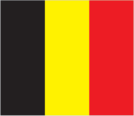
three equal vertical bands of black (hoist side), yellow, and red; the vertical design was based on the flag of France; the colors are those of the arms of the duchy of Brabant (yellow lion with red claws and tongue on a black field)
Government type
federal parliamentary democracy under a constitutional monarchy
Independence
4 October 1830 (a provisional government declared independence from the Netherlands); 21 July 1831 (King LEOPOLD I ascended to the throne)
International law organization participation
accepts compulsory ICJ jurisdiction with reservations; accepts ICCt jurisdiction
International organization participation
ADB (nonregional members), AfDB (nonregional members), Australia Group, Benelux, BIS, CD, CE, CERN, EAPC, EBRD, ECB, EIB, EITI (implementing country), EMU, ESA, EU, FAO, FATF, G-9, G-10, IADB, IAEA, IBRD, ICAO, ICC (national committees), ICCt, ICRM, IDA, IEA, IFAD, IFC, IFRCS, IGAD (partners), IHO, ILO, IMF, IMO, IMSO, Interpol, IOC, IOM, IPU, ISO, ITSO, ITU, ITUC (NGOs), MIGA, MONUSCO, NATO, NEA, NSG, OAS (observer), OECD, OIF, OPCW, OSCE, Pacific Alliance (observer), Paris Club, PCA, Schengen Convention, SELEC (observer), UN, UNCTAD, UNESCO, UNHCR, UNIDO, UNIFIL, UNRWA, UNTSO, UPU, WCO, WHO, WIPO, WMO, WTO, ZC
Judicial branch
- Constitutional Court or Grondwettelijk Hof in Dutch and Cour constitutionelle in French (consists of 12 judges - 6 Dutch-speaking and 6 French-speaking); Supreme Court of Justice or Hof van Cassatie in Dutch and Cour de Cassation in French (court organized into 3 chambers: civil and commercial; criminal; social, fiscal, and armed forces; each chamber includes a Dutch division and a French division, each with a chairperson and 5-6 judges) Constitutional Court judges appointed by the monarch from candidates submitted by Parliament; judges appointed for life with mandatory retirement at age 70; Supreme Court judges appointed by the monarch from candidates submitted by the High Council of Justice, a 44-member independent body of judicial and non-judicial members; judges appointed for life Courts of Appeal; regional courts; specialized courts for administrative, commercial, labor, immigration, and audit issues; magistrate's courts; justices of the peace
- highest court(s)
- Constitutional Court or Grondwettelijk Hof in Dutch and Cour constitutionelle in French (consists of 12 judges - 6 Dutch-speaking and 6 French-speaking); Supreme Court of Justice or Hof van Cassatie in Dutch and Cour de Cassation in French (court organized into 3 chambers: civil and commercial; criminal; social, fiscal, and armed forces; each chamber includes a Dutch division and a French division, each with a chairperson and 5-6 judges)
- judge selection and term of office
- Constitutional Court judges appointed by the monarch from candidates submitted by Parliament; judges appointed for life with mandatory retirement at age 70; Supreme Court judges appointed by the monarch from candidates submitted by the High Council of Justice, a 44-member independent body of judicial and non-judicial members; judges appointed for life
- subordinate courts
- Courts of Appeal; regional courts; specialized courts for administrative, commercial, labor, immigration, and audit issues; magistrate's courts; justices of the peace
Legal system
civil law system based on the French Civil Code; note - Belgian law continues to be modified in conformance with the legislative norms mandated by the European Union; judicial review of legislative acts
Legislative branch
- bicameral Parliament consists of the Senate or Senaat (in Dutch), Senat (in French) (60 seats; 50 members indirectly elected by the community and regional parliaments based on their election results, and 10 elected by the 50 other senators; members serve 5-year terms) and the Chamber of Representatives or Kamer van Volksvertegenwoordigers (in Dutch), Chambre des Representants (in French) (150 seats; members directly elected in multi-seat constituencies by proportional representation vote; members serve 5-year terms) the 1993 constitutional revision that further devolved Belgium into a federal state created three levels of government (federal, regional, and linguistic community) with a complex division of responsibilities; this reality leaves six governments, each with its own legislative assembly; changes above occurred since the sixth state reform Chamber of Representatives - last held on 25 May 2014 (next to be held in May 2019); note - elections will coincide with the EU's elections Chamber of Representatives - percent of vote by party - N-VA 20.3%, PS 11.7%, CD&V 11.6%, Open VLD 9.8%, MR 9.6%, SP.A 8.8%, Groen! 5.3%, CDH 5.0% Workers' Party 3.7%, VB 3.7%, Ecolo 3.3%, Defi 1.8%, PP 1.5%, other 3.9%; seats by party - N-VA 33, PS 23, MR 20, CD&V 18, Open VLD 14, SP.A 13, Groen! 6, CDH 9, Workers' Party 2, VB 3, Ecolo 6, Defi 2, PP 1
- description
- bicameral Parliament consists of the Senate or Senaat (in Dutch), Senat (in French) (60 seats; 50 members indirectly elected by the community and regional parliaments based on their election results, and 10 elected by the 50 other senators; members serve 5-year terms) and the Chamber of Representatives or Kamer van Volksvertegenwoordigers (in Dutch), Chambre des Representants (in French) (150 seats; members directly elected in multi-seat constituencies by proportional representation vote; members serve 5-year terms)
- election results
- Chamber of Representatives - percent of vote by party - N-VA 20.3%, PS 11.7%, CD&V 11.6%, Open VLD 9.8%, MR 9.6%, SP.A 8.8%, Groen! 5.3%, CDH 5.0% Workers' Party 3.7%, VB 3.7%, Ecolo 3.3%, Defi 1.8%, PP 1.5%, other 3.9%; seats by party - N-VA 33, PS 23, MR 20, CD&V 18, Open VLD 14, SP.A 13, Groen! 6, CDH 9, Workers' Party 2, VB 3, Ecolo 6, Defi 2, PP 1
- elections
- Chamber of Representatives - last held on 25 May 2014 (next to be held in May 2019); note - elections will coincide with the EU's elections
- note
- the 1993 constitutional revision that further devolved Belgium into a federal state created three levels of government (federal, regional, and linguistic community) with a complex division of responsibilities; this reality leaves six governments, each with its own legislative assembly; changes above occurred since the sixth state reform
National anthem
- "La Brabanconne" (The Song of Brabant) Louis-Alexandre DECHET[French] Victor CEULEMANS [Dutch]/Francois VAN CAMPENHOUT adopted 1830; according to legend, Louis-Alexandre DECHET, an actor at the theater in which the revolution against the Netherlands began, wrote the lyrics with a group of young people in a Brussels cafe
- lyrics/music
- Louis-Alexandre DECHET[French] Victor CEULEMANS [Dutch]/Francois VAN CAMPENHOUT
- name
- "La Brabanconne" (The Song of Brabant)
- note
- adopted 1830; according to legend, Louis-Alexandre DECHET, an actor at the theater in which the revolution against the Netherlands began, wrote the lyrics with a group of young people in a Brussels cafe
National holiday
Belgian National Day (ascension to the throne of King LEOPOLD I), 21 July (1831)
National symbol(s)
- golden rampant lion; national colors: red, black, yellow
- golden rampant lion; national colors
- red, black, yellow
Political parties and leaders
Christian Democratic and Flemish or CD&V [Wouter BEKE] Flemish Liberals and Democrats or Open VLD [Gwendolyn RUTTEN] Groen! [Meyrem ALMACI] (formerly AGALEV, Flemish Greens) New Flemish Alliance or N-VA [Bart DE WEVER] Social Progressive Alternative or SP.A [John CROMBEZ] Vlaams Belang (Flemish Interest) or VB [Tom VAN GRIEKEN] Ecolo (Francophone Greens) [Patrick DUPRIEZ and Zakia KHATTABI] Francophone Federalist Democrats or Defi [Olivier MAINGAIN] Humanist and Democratic Center or CDH [Benoit LUTGEN] People's Party or PP [Mischael MODRIKAMEN] Reform Movement or MR [Olivier CHASTEL] Socialist Party or PS [Elio DI RUPO] Workers' Party or PTB [Peter MERTENS] other minor parties
Political pressure groups and leaders
- Belgian General Federation of Labor or ABVV or FGTB [Rudy DE LEEUW, Marc GOBLET] Confederation of Christan Trade Unions or ACV or CSC [Marc LEEMANS, Marie-Helene SKA] Federation of Enterprises in Belgium or VBO or FEB [Pieter TIMMERMANS, Bernard GILLIOT] numerous other associations representing bankers, manufacturers, middle-class artisans, and the legal and medical professions; trade unions; various organizations representing the cultural interests of Flanders and Wallonia; various peace groups such as BEPax and groups representing immigrants
- other
- numerous other associations representing bankers, manufacturers, middle-class artisans, and the legal and medical professions; trade unions; various organizations representing the cultural interests of Flanders and Wallonia; various peace groups such as BEPax and groups representing immigrants
Suffrage
18 years of age; universal and compulsory
Economy
Agriculture - products
sugar beets, fresh vegetables, fruits, grain, tobacco; beef, veal, pork, milk
Budget
- $236.9 billion $249.1 billion (2016 est.)
- expenditures
- $249.1 billion (2016 est.)
- revenues
- $236.9 billion
Budget surplus (+) or deficit (-)
-2.6% of GDP (2016 est.)
Central bank discount rate
- 0.25% (31 December 2016) 0.3% (31 December 2010) this is the European Central Bank's rate on the marginal lending facility, which offers overnight credit to banks in the euro area
- note
- this is the European Central Bank's rate on the marginal lending facility, which offers overnight credit to banks in the euro area
Commercial bank prime lending rate
2.01% (31 December 2016 est.) 2.46% (31 December 2015 est.)
Current account balance
$-1.849 billion (2016 est.) $1.936 billion (2015 est.)
Debt - external
$1.281 trillion (31 March 2016 est.) $1.214 trillion (31 March 2015 est.)
Distribution of family income - Gini index
25.9 (2013 est.) 28.7 (1996)
Economy - overview
Belgium’s central geographic location and highly developed transport network have helped develop a well-diversified economy, with a broad mix of transport, services, manufacturing, and high tech. Industry is concentrated mainly in the more heavily-populated region of Flanders in the north. Belgium is 100% reliant on foreign sources of fossil fuels, and the planned closure of its seven nuclear plants by 2025 should increase its dependence on foreign energy. Its role as a regional logistical hub makes its economy vulnerable to shifts in foreign demand, particularly with EU trading partners. Roughly three-quarters of Belgium's trade is with other EU countries. Belgium’s GDP grew by 1.4% in 2016, unemployment at yearend was 8.4%, and the budget deficit was 2.7% of GDP. The economy largely recovered from the March 2016 terrorist attacks, which mainly impacted the Brussels region tourist and hospitality industry. Prime Minister Charles MICHEL's center-right government has pledged to further reduce the deficit in response to EU pressure to decrease Belgium's high public debt of about 107% of GDP, but such efforts could also dampen economic growth. In addition to restrained public spending, low wage growth and higher inflation promise to curtail a more robust recovery in private consumption. The government has pledged to pursue a reform program to improve Belgium’s competitiveness, including changes to tax policy, labor market rules, and welfare benefits. These changes have generally made Belgian wages more competitive regionally, but risk worsening tensions with trade unions and triggering extended strikes.
Exchange rates
euros (EUR) per US dollar - 0.9214 (2016 est.) 0.885 (2015 est.) 0.885 (2014 est.) 0.7634 (2013 est.) 0.7752 (2012 est.)
Exports
$277.7 billion (2016 est.) $254.8 billion (2015 est.)
Exports - commodities
chemicals, machinery and equipment, finished diamonds, metals and metal products, foodstuffs
Exports - partners
Germany 16.7%, France 15.4%, Netherlands 11.2%, UK 8.9%, US 5.8%, Italy 5.2% (2016)
Fiscal year
calendar year
GDP - composition, by end use
- 51.2% 23.6% 23% -0.2% 84.5% -82.1% (2016 est.)
- exports of goods and services
- 84.5%
- government consumption
- 23.6%
- household consumption
- 51.2%
- imports of goods and services
- -82.1% (2016 est.)
- investment in fixed capital
- 23%
- investment in inventories
- -0.2%
GDP - composition, by sector of origin
- 0.7% 22.3% 77% (2016 est.)
- agriculture
- 0.7%
- industry
- 22.3%
- services
- 77% (2016 est.)
GDP - per capita (PPP)
- $45,000 (2016 est.) $44,800 (2015 est.) $44,300 (2014 est.) data are in 2016 dollars
- note
- data are in 2016 dollars
GDP - real growth rate
1.2% (2016 est.) 1.5% (2015 est.) 1.6% (2014 est.)
GDP (official exchange rate)
$466.6 billion (2016 est.)
GDP (purchasing power parity)
- $509 billion (2016 est.) $496.7 billion (2015 est.) $484.2 billion (2014 est.) data are in 2016 dollars
- note
- data are in 2016 dollars
Gross national saving
22.3% of GDP (2016 est.) 23.6% of GDP (2015 est.) 22.4% of GDP (2014 est.)
Household income or consumption by percentage share
- 3.4% 28.4% (2006)
- highest 10%
- 28.4% (2006)
- lowest 10%
- 3.4%
Imports
$271.2 billion (2016 est.) $251.9 billion (2015 est.)
Imports - commodities
raw materials, machinery and equipment, chemicals, raw diamonds, pharmaceuticals, foodstuffs, transportation equipment, oil products
Imports - partners
Netherlands 16.1%, Germany 13.6%, France 9.5%, US 8.1%, UK 4.8%, Ireland 4.5%, China 4.3% (2016)
Industrial production growth rate
2.2% (2016 est.)
Industries
engineering and metal products, motor vehicle assembly, transportation equipment, scientific instruments, processed food and beverages, chemicals, pharmaceuticals, base metals, textiles, glass, petroleum
Inflation rate (consumer prices)
1.8% (2016 est.) 0.6% (2015 est.)
Labor force
5.291 million (2016 est.)
Labor force - by occupation
- 1.3% 18.6% 80.1% (2013 est.)
- agriculture
- 1.3%
- industry
- 18.6%
- services
- 80.1% (2013 est.)
Market value of publicly traded shares
$414.6 billion (31 December 2015 est.) $378.5 billion (31 December 2014 est.) $374.3 billion (31 December 2013 est.)
Population below poverty line
15.1% (2013 est.)
Public debt
- 106% of GDP (2016 est.) 106% of GDP (2015 est.) data cover general government debt, and includes debt instruments issued (or owned) by government entities other than the treasury; the data include treasury debt held by foreign entities; the data include debt issued by subnational entities, as well as intra-governmental debt; intra-governmental debt consists of treasury borrowings from surpluses in the social funds, such as for retirement, medical care, and unemployment; debt instruments for the social funds are not sold at public auctions; general government debt is defined by the Maastricht definition and calculated by the National Bank of Belgium as consolidated gross debt; the debt is defined in European Regulation EC479/2009 concerning the implementation of the protocol on the excessive deficit procedure annexed to the Treaty on European Union (Treaty of Maastricht) of 7 February 1992; the sub-sectors of consolidated gross debt are: federal government, communities and regions, local government, and social security funds
- note
- data cover general government debt, and includes debt instruments issued (or owned) by government entities other than the treasury; the data include treasury debt held by foreign entities; the data include debt issued by subnational entities, as well as intra-governmental debt; intra-governmental debt consists of treasury borrowings from surpluses in the social funds, such as for retirement, medical care, and unemployment; debt instruments for the social funds are not sold at public auctions; general government debt is defined by the Maastricht definition and calculated by the National Bank of Belgium as consolidated gross debt; the debt is defined in European Regulation EC479/2009 concerning the implementation of the protocol on the excessive deficit procedure annexed to the Treaty on European Union (Treaty of Maastricht) of 7 February 1992; the sub-sectors of consolidated gross debt are: federal government, communities and regions, local government, and social security funds
Reserves of foreign exchange and gold
$23.57 billion (31 December 2016 est.) $24.1 billion (31 December 2015 est.)
Stock of broad money
$525.8 billion (31 December 2016 est.) $524.9 billion (31 December 2015 est.)
Stock of direct foreign investment - abroad
$1.016 trillion (31 December 2016 est.) $1.012 trillion (31 December 2015 est.)
Stock of direct foreign investment - at home
$1.054 trillion (31 December 2016 est.) $1.034 trillion (31 December 2015 est.)
Stock of domestic credit
$684.8 billion (31 December 2016 est.) $661.2 billion (31 December 2015 est.)
Stock of narrow money
- $198 billion (31 December 2016 est.) $181.6 billion (31 December 2015 est.) see entry for the European Union for money supply for the entire euro area; the European Central Bank (ECB) controls monetary policy for the 18 members of the Economic and Monetary Union (EMU); individual members of the EMU do not control the quantity of money circulating within their own borders
- note
- see entry for the European Union for money supply for the entire euro area; the European Central Bank (ECB) controls monetary policy for the 18 members of the Economic and Monetary Union (EMU); individual members of the EMU do not control the quantity of money circulating within their own borders
Taxes and other revenues
50.7% of GDP (2016 est.)
Unemployment rate
7.9% (2016 est.) 8.5% (2015 est.)
Energy
Carbon dioxide emissions from consumption of energy
93.62 million Mt (2013 est.)
Crude oil - exports
0 bbl/day (2016 est.)
Crude oil - imports
639,500 bbl/day (2016 est.)
Crude oil - production
0 bbl/day (2016 est.)
Crude oil - proved reserves
0 bbl (1 January 2017 es)
Electricity - consumption
81.96 billion kWh (2015 est.)
Electricity - exports
8.465 billion kWh (2016 est.)
Electricity - from fossil fuels
34.8% of total installed capacity (2015 est.)
Electricity - from hydroelectric plants
0.5% of total installed capacity (2015 est.)
Electricity - from nuclear fuels
28% of total installed capacity (2015 est.)
Electricity - from other renewable sources
32.1% of total installed capacity (2015 est.)
Electricity - imports
14.65 billion kWh (2016 est.)
Electricity - installed generating capacity
21.15 million kW (2015 est.)
Electricity - production
64.78 billion kWh (2015 est.)
Electricity access
- 100% (2016)
- electrification - total population
- 100% (2016)
Natural gas - consumption
23.01 billion cu m (2015 est.)
Natural gas - exports
1.694 billion cu m (2015 est.)
Natural gas - imports
18.81 billion cu m (2015 est.)
Natural gas - production
0 cu m (2014 est.)
Natural gas - proved reserves
0 cu m (1 January 2014 es)
Refined petroleum products - consumption
662,400 bbl/day (2016 est.)
Refined petroleum products - exports
597,000 bbl/day (2016 est.)
Refined petroleum products - imports
585,700 bbl/day (2016 est.)
Refined petroleum products - production
701,700 bbl/day (2016 est.)
Communications
Broadcast media
a segmented market with the three major communities (Flemish, French, and German-speaking) each having responsibility for their own broadcast media; multiple TV channels exist for each community; additionally, in excess of 90% of households are connected to cable and can access broadcasts of TV stations from neighboring countries; each community has a public radio network coexisting with private broadcasters (2009)
Internet country code
.be
Internet users
- 9,870,734 86.5% (July 2016 est.)
- percent of population
- 86.5% (July 2016 est.)
- total
- 9,870,734
Telephone system
- highly developed, technologically advanced, and completely automated domestic and international telephone and telegraph facilities nationwide mobile-cellular telephone system; extensive cable network; limited microwave radio relay network country code - 32; landing point for a number of submarine cables that provide links to Europe, the Middle East, and Asia; satellite earth stations - 7 (Intelsat - 3) (2015)
- domestic
- nationwide mobile-cellular telephone system; extensive cable network; limited microwave radio relay network
- general assessment
- highly developed, technologically advanced, and completely automated domestic and international telephone and telegraph facilities
- international
- country code - 32; landing point for a number of submarine cables that provide links to Europe, the Middle East, and Asia; satellite earth stations - 7 (Intelsat - 3) (2015)
Telephones - fixed lines
- 4,371,055 38 (July 2016 est.)
- subscriptions per 100 inhabitants
- 38 (July 2016 est.)
- total subscriptions
- 4,371,055
Telephones - mobile cellular
- 12,457,820 109 (July 2016 est.)
- subscriptions per 100 inhabitants
- 109 (July 2016 est.)
- total
- 12,457,820
Transportation
Airports
41 (2013)
Airports - with paved runways
- 8 (2017)
- 1,524 to 2,437 m
- 2
- 2,438 to 3,047 m
- 9
- 914 to 1,523 m
- 1
- over 3,047 m
- 6
- total
- 26
- under 914 m
- 8 (2017)
Airports - with unpaved runways
- 15 (2013)
- total
- 15
- under 914 m
- 15 (2013)
Civil aircraft registration country code prefix
OO (2016)
Heliports
1 (2013)
Merchant marine
- bulk carrier 23, cargo 15, chemical tanker 5, container 4, liquefied gas 23, passenger 2, petroleum tanker 8, roll on/roll off 7 15 (Denmark 4, France 7, Russia 1, UK 2, US 1) 107 (Bahamas 6, Cambodia 1, Cyprus 3, France 7, Gibraltar 1, Greece 17, Hong Kong 26, Liberia 1, Luxembourg 11, Malta 7, Marshall Islands 1, Mozambique 2, North Korea 1, Panama 1, Portugal 8, Russia 4, Saint Kitts and Nevis 1, Saint Vincent and the Grenadines 7, Singapore 1, Vanuatu 1) (2010)
- by type
- bulk carrier 23, cargo 15, chemical tanker 5, container 4, liquefied gas 23, passenger 2, petroleum tanker 8, roll on/roll off 7
- foreign-owned
- 15 (Denmark 4, France 7, Russia 1, UK 2, US 1)
- registered in other countries
- 107 (Bahamas 6, Cambodia 1, Cyprus 3, France 7, Gibraltar 1, Greece 17, Hong Kong 26, Liberia 1, Luxembourg 11, Malta 7, Marshall Islands 1, Mozambique 2, North Korea 1, Panama 1, Portugal 8, Russia 4, Saint Kitts and Nevis 1, Saint Vincent and the Grenadines 7, Singapore 1, Vanuatu 1) (2010)
- total
- 87
National air transport system
- 11,193,023 1,464,316,900 mt-km (2015)
- annual freight traffic on registered air carriers
- 1,464,316,900 mt-km (2015)
- annual passenger traffic on registered air carriers
- 11,193,023
- inventory of registered aircraft operated by air carriers
- 117
- number of registered air carriers
- 7
Pipelines
gas 3,139 km; oil 154 km; refined products 535 km (2013)
Ports and terminals
- Oostende, Zeebrugge Antwerp, Gent (Schelde River); Brussels (Senne River); Liege (Meuse River) Antwerp (9,654,000), Zeebrugge (1,569,000) (2015) Zeebrugge
- container port(s) (TEUs)
- Antwerp (9,654,000), Zeebrugge (1,569,000) (2015)
- LNG terminal(s) (import)
- Zeebrugge
- major seaport(s)
- Oostende, Zeebrugge
- river port(s)
- Antwerp, Gent (Schelde River); Brussels (Senne River); Liege (Meuse River)
Railways
- 3,592 km 3,592 km 1.435-m gauge (2,960 km electrified) (2014)
- standard gauge
- 3,592 km 1.435-m gauge (2,960 km electrified) (2014)
- total
- 3,592 km
Roadways
- 154,012 km 120,514 km (includes 1,756 km of expressways) 33,498 km (2010)
- paved
- 120,514 km (includes 1,756 km of expressways)
- total
- 154,012 km
- unpaved
- 33,498 km (2010)
Waterways
2,043 km (1,528 km in regular commercial use) (2012)
Military and Security
Military branches
- Belgian Armed Forces: Land Operations Command, Naval Operations Command, Air Operations Command (2012)
- Belgian Armed Forces
- Land Operations Command, Naval Operations Command, Air Operations Command (2012)
Military expenditures
0.87% of GDP (2016) 0.93% of GDP (2015) 0.97% of GDP (2014) 1.01% of GDP (2013) 1.04% of GDP (2012)
Military service age and obligation
18 years of age for male and female voluntary military service; conscription abolished in 1994 (2012)
Transnational Issues
Disputes - international
none
Illicit drugs
growing producer of synthetic drugs and cannabis; transit point for US-bound ecstasy; source of precursor chemicals for South American cocaine processors; transshipment point for cocaine, heroin, hashish, and marijuana entering Western Europe; despite a strengthening of legislation, the country remains vulnerable to money laundering related to narcotics, automobiles, alcohol, and tobacco; significant domestic consumption of ecstasy
Refugees and internally displaced persons
- 9,080 (Syria) (2016) 2,630 (2016)
- refugees (country of origin)
- 9,080 (Syria) (2016)
- stateless persons
- 2,630 (2016)