2017 Edition
CIA World Factbook 2017 Archive (HTML)
Introduction
Background
In 1783, the Sunni Al-Khalifa family took power in Bahrain. In order to secure these holdings, it entered into a series of treaties with the UK during the 19th century that made Bahrain a British protectorate. The archipelago attained its independence in 1971. A steady decline in oil production and reserves since 1970 prompted Bahrain to take steps to diversify its economy, in the process developing successful petroleum processing and refining, aluminum production, and hospitality and retail sectors, and also to become a leading regional banking center, especially with respect to Islamic finance. Bahrain's small size, central location among Gulf countries, and proximity to Iran require it to play a delicate balancing act in foreign affairs among its larger neighbors. The Sunni-led government has long struggled to manage relations with its large Shia-majority population. In early 2011, amid Arab uprisings elsewhere in the region, the Bahraini Government confronted similar pro-democracy and reform protests at home with police and military action, including deploying Gulf Cooperation Council security forces to Bahrain. Political talks throughout 2014 between the government and opposition and loyalist political groups failed to reach an agreement, prompting opposition political societies to boycott parliamentary and municipal council elections in late 2014. Ongoing dissatisfaction with the political status quo continues to factor into sporadic clashes between demonstrators and security forces.
Geography
Area
- 760 sq km 760 sq km 0 sq km
- land
- 760 sq km
- total
- 760 sq km
- water
- 0 sq km
Area - comparative
3.5 times the size of Washington, DC
Climate
arid; mild, pleasant winters; very hot, humid summers
Coastline
161 km
Elevation
- NA lowest point: Persian Gulf 0 m highest point: Jabal ad Dukhan 135 m
- elevation extremes
- lowest point: Persian Gulf 0 m
- highest point
- Jabal ad Dukhan 135 m
- mean elevation
- NA
Environment - current issues
desertification resulting from the degradation of limited arable land, periods of drought, and dust storms; coastal degradation (damage to coastlines, coral reefs, and sea vegetation) resulting from oil spills and other discharges from large tankers, oil refineries, and distribution stations; lack of freshwater resources (groundwater and seawater are the only sources for all water needs)
Environment - international agreements
- Biodiversity, Climate Change, Climate Change-Kyoto Protocol, Desertification, Hazardous Wastes, Law of the Sea, Ozone Layer Protection, Wetlands none of the selected agreements
- party to
- Biodiversity, Climate Change, Climate Change-Kyoto Protocol, Desertification, Hazardous Wastes, Law of the Sea, Ozone Layer Protection, Wetlands
- signed, but not ratified
- none of the selected agreements
Geographic coordinates
26 00 N, 50 33 E
Geography - note
close to primary Middle Eastern petroleum sources; strategic location in Persian Gulf, through which much of the Western world's petroleum must transit to reach open ocean
Irrigated land
40 sq km (2012)
Land boundaries
0 km
Land use
- 11.3% arable land 2.1%; permanent crops 3.9%; permanent pasture 5.3% 0.7% 88% (2011 est.)
- agricultural land
- 11.3%
- forest
- 0.7%
- other
- 88% (2011 est.)
Location
Middle East, archipelago in the Persian Gulf, east of Saudi Arabia
Map references
Middle East
Maritime claims
- 12 nm 24 nm extending to boundaries to be determined
- contiguous zone
- 24 nm
- continental shelf
- extending to boundaries to be determined
- territorial sea
- 12 nm
Natural hazards
periodic droughts; dust storms
Natural resources
oil, associated and nonassociated natural gas, fish, pearls
Population - distribution
smallest population of the Gulf States, but urbanization rate exceeds 90%; largest settlement concentration is found on the far northern end of the island in and around Manamah and Al Muharraq
Terrain
mostly low desert plain rising gently to low central escarpment
People and Society
Age structure
- 19.08% (male 136,669/female 132,493) 15.65% (male 124,906/female 95,881) 56.04% (male 516,064/female 274,604) 6.28% (male 56,671/female 31,983) 2.95% (male 20,656/female 21,015) (2017 est.)
- 0-14 years
- 19.08% (male 136,669/female 132,493)
- 15-24 years
- 15.65% (male 124,906/female 95,881)
- 25-54 years
- 56.04% (male 516,064/female 274,604)
- 55-64 years
- 6.28% (male 56,671/female 31,983)
- 65 years and over
- 2.95% (male 20,656/female 21,015) (2017 est.)
Birth rate
13.3 births/1,000 population (2017 est.)
Death rate
2.8 deaths/1,000 population (2017 est.)
Dependency ratios
- 30.2 27.1 33.1 (2015 est.)
- elderly dependency ratio
- 3
- potential support ratio
- 33.1 (2015 est.)
- total dependency ratio
- 30.2
- youth dependency ratio
- 27.1
Drinking water source
- urban: 100% of population rural: 100% of population total: 100% of population urban: 0% of population rural: 0% of population total: 0% of population (2015 est.)
- rural
- 0% of population
- total
- 0% of population (2015 est.)
- urban
- 0% of population
Education expenditures
2.6% of GDP (2012)
Ethnic groups
Bahraini 46%, Asian 45.5%, other Arab 4.7%, African 1.6%, European 1%, other 1.2% (includes Gulf Co-operative country nationals, North and South Americans, and Oceanians) (2010 est.)
Health expenditures
5% of GDP (2014)
Hospital bed density
2.1 beds/1,000 population (2012)
Infant mortality rate
- 8.9 deaths/1,000 live births 9.9 deaths/1,000 live births 7.9 deaths/1,000 live births (2017 est.)
- female
- 7.9 deaths/1,000 live births (2017 est.)
- male
- 9.9 deaths/1,000 live births
- total
- 8.9 deaths/1,000 live births
Languages
Arabic (official), English, Farsi, Urdu
Life expectancy at birth
- 79 years 76.8 years 81.3 years (2017 est.)
- female
- 81.3 years (2017 est.)
- male
- 76.8 years
- total population
- 79 years
Literacy
- age 15 and over can read and write 95.7% 96.9% 93.5% (2015 est.)
- definition
- age 15 and over can read and write
- female
- 93.5% (2015 est.)
- male
- 96.9%
- total population
- 95.7%
Major urban areas - population
MANAMA (capital) 411,000 (2015)
Maternal mortality rate
15 deaths/100,000 live births (2015 est.)
Median age
- 32.3 years 33.8 years 29.5 years (2017 est.)
- female
- 29.5 years (2017 est.)
- male
- 33.8 years
- total
- 32.3 years
Nationality
- Bahraini(s) Bahraini
- adjective
- Bahraini
- noun
- Bahraini(s)
Net migration rate
12.1 migrant(s)/1,000 population (2017 est.)
Obesity - adult prevalence rate
29.8% (2016)
Physicians density
0.94 physicians/1,000 population (2014)
Population
- 1,410,942 (July 2017 est.) immigrants make up approximately 50% of the total population, according to UN data (2015)
- note
- immigrants make up approximately 50% of the total population, according to UN data (2015)
Population distribution
smallest population of the Gulf States, but urbanization rate exceeds 90%; largest settlement concentration is found on the far northern end of the island in and around Manamah and Al Muharraq
Population growth rate
2.26% (2017 est.)
Religions
Muslim 70.3%, Christian 14.5%, Hindu 9.8%, Buddhist 2.5%, Jewish 0.6%, folk religion
Sanitation facility access
- urban: 99.2% of population rural: 99.2% of population total: 99.2% of population urban: 0.8% of population rural: 0.8% of population total: 0.8% of population (2015 est.)
- rural
- 0.8% of population
- total
- 0.8% of population (2015 est.)
- urban
- 0.8% of population
Sex ratio
- 1.03 male(s)/female 1.03 male(s)/female 1.3 male(s)/female 1.88 male(s)/female 1.81 male(s)/female 0.95 male(s)/female 1.54 male(s)/female (2016 est.)
- 0-14 years
- 1.03 male(s)/female
- 15-24 years
- 1.3 male(s)/female
- 25-54 years
- 1.88 male(s)/female
- 55-64 years
- 1.81 male(s)/female
- 65 years and over
- 0.95 male(s)/female
- at birth
- 1.03 male(s)/female
- total population
- 1.54 male(s)/female (2016 est.)
Total fertility rate
1.75 children born/woman (2017 est.)
Unemployment, youth ages 15-24
- 5.3% 2.6% 12.2% (2012 est.)
- female
- 12.2% (2012 est.)
- male
- 2.6%
- total
- 5.3%
Urbanization
- 88.9% of total population (2017) 1.77% annual rate of change (2015-20 est.)
- rate of urbanization
- 1.77% annual rate of change (2015-20 est.)
- urban population
- 88.9% of total population (2017)
Government
Administrative divisions
- 4 governorates (muhafazat, singular - muhafazah); Asimah (Capital), Janubiyah (Southern), Muharraq, Shamaliyah (Northern) each governorate administered by an appointed governor
- note
- each governorate administered by an appointed governor
Capital
- Manama 26 14 N, 50 34 E UTC+3 (8 hours ahead of Washington, DC, during Standard Time)
- geographic coordinates
- 26 14 N, 50 34 E
- name
- Manama
- time difference
- UTC+3 (8 hours ahead of Washington, DC, during Standard Time)
Citizenship
- no the father must be a citizen of Bahrain no 25 years; 15 years for Arab nationals
- citizenship by birth
- no
- citizenship by descent only
- the father must be a citizen of Bahrain
- dual citizenship recognized
- no
- residency requirement for naturalization
- 25 years; 15 years for Arab nationals
Constitution
- adopted 14 February 2002 proposed by the king or by at least 15 members of either chamber of the National Assembly followed by submission to an Assembly committee for review and, if approved, submitted to the government for restatement as drafts; passage requires a two-thirds majority vote by the membership of both chambers and validation by the king; constitutional articles on the state religion (Islam), state language (Arabic), and the monarchy and “inherited rule” cannot be amended; amended 2012, 2017 (2017)
- amendments
- proposed by the king or by at least 15 members of either chamber of the National Assembly followed by submission to an Assembly committee for review and, if approved, submitted to the government for restatement as drafts; passage requires a two-thirds majority vote by the membership of both chambers and validation by the king; constitutional articles on the state religion (Islam), state language (Arabic), and the monarchy and “inherited rule” cannot be amended; amended 2012, 2017 (2017)
- history
- adopted 14 February 2002
Country name
- Kingdom of Bahrain Bahrain Mamlakat al Bahrayn Al Bahrayn Dilmun, State of Bahrain the name means "the two seas" in Arabic and refers to the water bodies surrounding the archipelago
- conventional long form
- Kingdom of Bahrain
- conventional short form
- Bahrain
- etymology
- the name means "the two seas" in Arabic and refers to the water bodies surrounding the archipelago
- former
- Dilmun, State of Bahrain
- local long form
- Mamlakat al Bahrayn
- local short form
- Al Bahrayn
Diplomatic representation from the US
- Ambassador William V. ROEBUCK (since 14 January 2015) Building PSC 451, Box 660, FPO AE 09834-5100; international mail: American Embassy, Box 26431, Manama [973] 1724-2700 [973] 1727-2594
- chief of mission
- Ambassador William V. ROEBUCK (since 14 January 2015)
- embassy
- Building
- FAX
- [973] 1727-2594
- mailing address
- PSC 451, Box 660, FPO AE 09834-5100; international mail: American Embassy, Box 26431, Manama
- telephone
- [973] 1724-2700
Diplomatic representation in the US
- Ambassador Abdulla bin Rashid AL KHALIFA (since 21 July 2017) 3502 International Drive NW, Washington, DC 20008 [1] (202) 342-1111 [1] (202) 362-2192 New York
- chancery
- 3502 International Drive NW, Washington, DC 20008
- chief of mission
- Ambassador Abdulla bin Rashid AL KHALIFA (since 21 July 2017)
- consulate(s) general
- New York
- FAX
- [1] (202) 362-2192
- telephone
- [1] (202) 342-1111
Executive branch
- King HAMAD bin Isa Al-Khalifa (since 6 March 1999); Crown Prince SALMAN bin Hamad Al-Khalifa (son of the monarch, born 21 October 1969) Prime Minister KHALIFA bin Salman Al-Khalifa (since 1971); First Deputy Prime Minister SALMAN bin Hamad Al Khalifa (since 11 March 2013); Deputy Prime Ministers MUHAMMAD bin Mubarak Al-Khalifa (since September 2005), Jawad bin Salim al-ARAIDH, ALI bin Khalifa bin Salman Al-Khalifa (since 11 December 2006), KHALID bin Abdallah Al Khalifa (since November 2010) Cabinet appointed by the monarch the monarchy is hereditary; prime minister appointed by the monarch
- cabinet
- Cabinet appointed by the monarch
- chief of state
- King HAMAD bin Isa Al-Khalifa (since 6 March 1999); Crown Prince SALMAN bin Hamad Al-Khalifa (son of the monarch, born 21 October 1969)
- elections/appointments
- the monarchy is hereditary; prime minister appointed by the monarch
- head of government
- Prime Minister KHALIFA bin Salman Al-Khalifa (since 1971); First Deputy Prime Minister SALMAN bin Hamad Al Khalifa (since 11 March 2013); Deputy Prime Ministers MUHAMMAD bin Mubarak Al-Khalifa (since September 2005), Jawad bin Salim al-ARAIDH, ALI bin Khalifa bin Salman Al-Khalifa (since 11 December 2006), KHALID bin Abdallah Al Khalifa (since November 2010)
Flag description
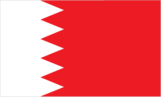
- red, the traditional color for flags of Persian Gulf states, with a white serrated band (five white points) on the hoist side; the five points represent the five pillars of Islam until 2002 the flag had eight white points, but this was reduced to five to avoid confusion with the Qatari flag
- note
- until 2002 the flag had eight white points, but this was reduced to five to avoid confusion with the Qatari flag
Government type
constitutional monarchy
Independence
15 August 1971 (from the UK)
International law organization participation
has not submitted an ICJ jurisdiction declaration; non-party state to the ICCt
International organization participation
ABEDA, AFESD, AMF, CAEU, CICA, FAO, G-77, GCC, IAEA, IBRD, ICAO, ICC (national committees), ICRM, IDA, IDB, IFC, IFRCS, IHO, ILO, IMF, IMO, IMSO, Interpol, IOC, IOM (observer), IPU, ISO, ITSO, ITU, ITUC (NGOs), LAS, MIGA, NAM, OAPEC, OIC, OPCW, PCA, UN, UNCTAD, UNESCO, UNIDO, UNWTO, UPU, WCO, WFTU (NGOs), WHO, WIPO, WMO, WTO
Judicial branch
- Court of Cassation or Supreme Court of Appeal (consists of the chairman and 3 judges); Constitutional Court (consists of the president and 6 members); High Sharia Court of Appeal (court sittings include the president and at least one judge); appeals beyond the High Sharia Court of Appeal are heard by the Supreme Court of Appeal the judiciary of Bahrain is divided into civil law courts and sharia law courts; sharia courts(involving personal status and family law) are further divided into Sunni Muslim and Shia Muslim Court of Cassation judges appointed by royal decree and serve for a specified tenure; Constitutional Court president and members appointed by the Higher Judicial Council, a body chaired by the monarch and includes judges from the Court of Cassation, sharia law courts, and Civil High Courts of Appeal; members serve 9-year terms; High Sharia Court of Appeal member appointment and tenure NA Civil High Courts of Appeal; middle and lower civil courts; High Sharia Court of Appeal; Senior Sharia Court; military courts
- highest court(s)
- Court of Cassation or Supreme Court of Appeal (consists of the chairman and 3 judges); Constitutional Court (consists of the president and 6 members); High Sharia Court of Appeal (court sittings include the president and at least one judge); appeals beyond the High Sharia Court of Appeal are heard by the Supreme Court of Appeal
- judge selection and term of office
- Court of Cassation judges appointed by royal decree and serve for a specified tenure; Constitutional Court president and members appointed by the Higher Judicial Council, a body chaired by the monarch and includes judges from the Court of Cassation, sharia law courts, and Civil High Courts of Appeal; members serve 9-year terms; High Sharia Court of Appeal member appointment and tenure NA
- note
- the judiciary of Bahrain is divided into civil law courts and sharia law courts; sharia courts(involving personal status and family law) are further divided into Sunni Muslim and Shia Muslim
- subordinate courts
- Civil High Courts of Appeal; middle and lower civil courts; High Sharia Court of Appeal; Senior Sharia Court; military courts
Legal system
mixed legal system of Islamic law, English common law, Egyptian civil, criminal, and commercial codes; customary law
Legislative branch
- bicameral National Assembly consists of the Consultative Council or Majlis al Shura (40 seats; members appointed by the king) and the Council of Representatives or Majlis al Nuwab (40 seats; members directly elected in single-seat constituencies by absolute majority vote in 2 rounds if needed; members serve 4-year renewable terms) Council of Representatives - last held in two rounds on 23 and 29 November 2014 (next to be held in November 2018) Council of Representatives - percent of vote by society - NA; seats by society - Al-Asalah (Sunni Salafi) 2, Islamic Minbar (Sunni Muslim Brotherhood) 1, independent 37; note - Bahrain has societies rather than parties
- description
- bicameral National Assembly consists of the Consultative Council or Majlis al Shura (40 seats; members appointed by the king) and the Council of Representatives or Majlis al Nuwab (40 seats; members directly elected in single-seat constituencies by absolute majority vote in 2 rounds if needed; members serve 4-year renewable terms)
- election results
- Council of Representatives - percent of vote by society - NA; seats by society - Al-Asalah (Sunni Salafi) 2, Islamic Minbar (Sunni Muslim Brotherhood) 1, independent 37; note - Bahrain has societies rather than parties
- elections
- Council of Representatives - last held in two rounds on 23 and 29 November 2014 (next to be held in November 2018)
National anthem
- "Bahrainona" (Our Bahrain) unknown adopted 1971; although Mohamed Sudqi AYYASH wrote the original lyrics, they were changed in 2002 following the transformation of Bahrain from an emirate to a kingdom
- lyrics/music
- unknown
- name
- "Bahrainona" (Our Bahrain)
- note
- adopted 1971; although Mohamed Sudqi AYYASH wrote the original lyrics, they were changed in 2002 following the transformation of Bahrain from an emirate to a kingdom
National holiday
National Day, 16 December (1971); note - 15 August 1971 was the date of independence from the UK, 16 December 1971 was the date of independence from British protection
National symbol(s)
- a red field surmounted by a white serrated band with five white points; national colors: red, white
- a red field surmounted by a white serrated band with five white points; national colors
- red, white
Political parties and leaders
- political parties are prohibited, but political societies were legalized under a July 2005 law Arab Islamic Center Society [Abdulrahman AL-BAKER] Constitutional Gathering Society [Abdulrahman AL-BAKER] Islamic Asalah [Abd al-Halim MURAD] Islamic Saff Society [Abdullah Khalil BU GHAMAR] Islamic Shura Society Movement of National Justice Society [Muhi al-Din KHAN] National Action Charter Society [Muhammad AL-BUAYNAYN] National Democratic Action Society or Wa'ad [Fouad SEYADI] National Democratic Assembly [Hasan AL-ALI] National Dialogue Society National Fraternity Society [Musa AL-ANSARI] National Islamic Minbar [Ali AHMAD] National Progressive Tribune [Abd al-Nabi SALMAN] National Unity Gathering [Abdullatif AL-MAHMOOD] Unitary National Democratic Assemblage [Fadhil ABBAS]
- note
- political parties are prohibited, but political societies were legalized under a July 2005 law
Political pressure groups and leaders
none
Suffrage
20 years of age; universal; note - Bahraini Cabinet in May 2011 endorsed a draft law lowering eligibility to 18 years
Economy
Agriculture - products
fruit, vegetables; poultry, dairy products; shrimp, fish
Budget
- $5.047 billion $9.394 billion (2016 est.)
- expenditures
- $9.394 billion (2016 est.)
- revenues
- $5.047 billion
Budget surplus (+) or deficit (-)
-13.6% of GDP (2016 est.)
Commercial bank prime lending rate
5.2% (31 December 2016 est.) 4.78% (31 December 2015 est.)
Current account balance
$-1.493 billion (2016 est.) $-752.1 million (2015 est.)
Debt - external
$42.55 billion (31 December 2016 est.) $40.07 billion (31 December 2015 est.)
Economy - overview
Low oil prices have generated a budget deficit of at least a $4 billion deficit in 2016, nearly 14% of GDP. Bahrain has few options for covering this deficit, with meager foreign assets and a constrained borrowing ability. In the last year the three major US credit agencies downgraded Bahrain’s sovereign debt rating to “junk” status, citing persistently low oil prices and the government’s inability to more effectively cut spending. Oil comprises 86% of Bahraini budget revenues, despite past efforts to diversify its economy and to build communication and transport facilities for multinational firms with business in the Gulf. As part of its diversification plans, Bahrain implemented a Free Trade Agreement (FTA) with the US in August 2006, the first FTA between the US and a Gulf state. Other major economic activities are production of aluminum - Bahrain's second biggest export after oil - finance, and construction. Bahrain continues to seek new natural gas supplies as feedstock to support its expanding petrochemical and aluminum industries. In 2011, Bahrain experienced economic setbacks as a result of domestic unrest driven by the majority Shia population; however, the economy recovered in 2012-15, partly as a result of improved tourism. In addition to addressing its current fiscal woes, Bahraini authorities face the long-term challenge of boosting Bahrain’s regional competitiveness — especially regarding industry, finance, and tourism — and reconciling revenue constraints with popular pressure to maintain generous state subsidies and a large public sector. Over the past year, the government lifted subsidies on meat, diesel, kerosene, and gasoline and announced new higher prices for electricity and water, although it plans to roll these increases out more gradually than previous subsidy cuts.
Exchange rates
Bahraini dinars (BHD) per US dollar - 0.376 (2016 est.) 0.376 (2015 est.) 0.376 (2014 est.) 0.376 (2013 est.) 0.376 (2012 est.)
Exports
$12.78 billion (2016 est.) $16.54 billion (2015 est.)
Exports - commodities
petroleum and petroleum products, aluminum, textiles
Exports - partners
Saudi Arabia 18.3%, UAE 17.5%, US 11.1%, Japan 8.7%, Qatar 4.8%, China 4.2% (2016)
Fiscal year
calendar year
GDP - composition, by end use
- 45.6% 16% 25.2% 2.9% 75.9% -65.6% (2016 est.)
- exports of goods and services
- 75.9%
- government consumption
- 16%
- household consumption
- 45.6%
- imports of goods and services
- -65.6% (2016 est.)
- investment in fixed capital
- 25.2%
- investment in inventories
- 2.9%
GDP - composition, by sector of origin
- 0.3% 37.3% 62.3% (2016 est.)
- agriculture
- 0.3%
- industry
- 37.3%
- services
- 62.3% (2016 est.)
GDP - per capita (PPP)
- $50,700 (2016 est.) $50,200 (2015 est.) $49,800 (2014 est.) data are in 2016 dollars
- note
- data are in 2016 dollars
GDP - real growth rate
3% (2016 est.) 2.9% (2015 est.) 4.4% (2014 est.)
GDP (official exchange rate)
$31.86 billion (2016 est.)
GDP (purchasing power parity)
- $66.92 billion (2016 est.) $64.17 billion (2015 est.) $61.71 billion (2014 est.) data are in 2016 dollars
- note
- data are in 2016 dollars
Gross national saving
21% of GDP (2016 est.) 22% of GDP (2015 est.) 31.4% of GDP (2014 est.)
Household income or consumption by percentage share
- NA% NA%
- highest 10%
- NA%
- lowest 10%
- NA%
Imports
$13.59 billion (2016 est.) $15.71 billion (2015 est.)
Imports - commodities
crude oil, machinery, chemicals
Imports - partners
China 9.7%, US 8.6%, UAE 7.4%, Japan 6.1%, Saudi Arabia 5.5% (2016)
Industrial production growth rate
2.8% (2016 est.)
Industries
petroleum processing and refining, aluminum smelting, iron pelletization, fertilizers, Islamic and offshore banking, insurance, ship repairing, tourism
Inflation rate (consumer prices)
2.8% (2016 est.) 1.8% (2015 est.)
Labor force
- 808,900 excludes unemployed; 44% of the population in the 15-64 age group is non-national (2016 est.)
- note
- excludes unemployed; 44% of the population in the 15-64 age group is non-national (2016 est.)
Labor force - by occupation
- 1% 32% 67% (2004 est.)
- agriculture
- 1%
- industry
- 32%
- services
- 67% (2004 est.)
Market value of publicly traded shares
$19.25 billion (31 December 2015 est.) $22.07 billion (31 December 2014 est.) $18.57 billion (31 December 2013 est.)
Population below poverty line
NA%
Public debt
72% of GDP (2016 est.) 60.3% of GDP (2015 est.)
Reserves of foreign exchange and gold
$3.094 billion (31 December 2016 est.) $3.387 billion (31 December 2015 est.)
Stock of broad money
$27.36 billion (31 December 2016 est.) $27.02 billion (31 December 2015 est.)
Stock of direct foreign investment - abroad
$10.5 billion (31 December 2016 est.) $10.33 billion (31 December 2015 est.)
Stock of direct foreign investment - at home
$21.56 billion (31 December 2016 est.) $21.28 billion (31 December 2015 est.)
Stock of domestic credit
$29.08 billion (31 December 2016 est.) $28.29 billion (31 December 2015 est.)
Stock of narrow money
$9.157 billion (31 December 2016 est.) $9.105 billion (31 December 2015 est.)
Taxes and other revenues
15.8% of GDP (2016 est.)
Unemployment rate
- 3.7% (2016 est.) 4.3% (2013 est.) official estimate; actual rate is higher
- note
- official estimate; actual rate is higher
Energy
Carbon dioxide emissions from consumption of energy
37 million Mt (2013 est.)
Crude oil - exports
0 bbl/day (2014 est.)
Crude oil - imports
223,900 bbl/day (2014 est.)
Crude oil - production
50,000 bbl/day (2016 est.)
Crude oil - proved reserves
124.6 million bbl (1 January 2017 es)
Electricity - consumption
26.09 billion kWh (2015 est.)
Electricity - exports
213 million kWh (2015 est.)
Electricity - from fossil fuels
99.8% of total installed capacity (2015 est.)
Electricity - from hydroelectric plants
0% of total installed capacity (2015 est.)
Electricity - from nuclear fuels
0% of total installed capacity (2015 est.)
Electricity - from other renewable sources
0.2% of total installed capacity (2015 est.)
Electricity - imports
205 million kWh (2015 est.)
Electricity - installed generating capacity
3.928 million kW (2015 est.)
Electricity - production
26.78 billion kWh (2015 est.)
Electricity access
- 41,317 98% 98% 93% (2012)
- electrification - rural areas
- 93% (2012)
- electrification - total population
- 98%
- electrification - urban areas
- 98%
- population without electricity
- 41,317
Natural gas - consumption
21.92 billion cu m (2015 est.)
Natural gas - exports
0 cu m (2013 est.)
Natural gas - imports
0 cu m (2013 est.)
Natural gas - production
15.5 billion cu m (2015 est.)
Natural gas - proved reserves
92.03 billion cu m (1 January 2017 es)
Refined petroleum products - consumption
58,000 bbl/day (2015 est.)
Refined petroleum products - exports
244,500 bbl/day (2014 est.)
Refined petroleum products - imports
13,320 bbl/day (2014 est.)
Refined petroleum products - production
270,100 bbl/day (2014 est.)
Communications
Broadcast media
state-run Bahrain Radio and Television Corporation (BRTC) operates 5 terrestrial TV networks and several radio stations; satellite TV systems provide access to international broadcasts; 1 private FM station directs broadcasts to Indian listeners; radio and TV broadcasts from countries in the region are available (2009)
Internet country code
.bh
Internet users
- 1,351,326 98.0% (July 2016 est.)
- percent of population
- 98.0% (July 2016 est.)
- total
- 1,351,326
Telephone system
- modern system modern fiber-optic integrated services; digital network with rapidly growing use of mobile-cellular telephones country code - 973; landing point for the Fiber-Optic Link Around the Globe (FLAG) submarine cable network that provides links to Asia, Middle East, Europe, and US; tropospheric scatter to Qatar and UAE; microwave radio relay to Saudi Arabia; satellite earth station - 1 (2016)
- domestic
- modern fiber-optic integrated services; digital network with rapidly growing use of mobile-cellular telephones
- general assessment
- modern system
- international
- country code - 973; landing point for the Fiber-Optic Link Around the Globe (FLAG) submarine cable network that provides links to Asia, Middle East, Europe, and US; tropospheric scatter to Qatar and UAE; microwave radio relay to Saudi Arabia; satellite earth station - 1 (2016)
Telephones - fixed lines
- 287,203 21 (July 2016 est.)
- subscriptions per 100 inhabitants
- 21 (July 2016 est.)
- total subscriptions
- 287,203
Telephones - mobile cellular
- 2,994,865 217 (July 2016 est.)
- subscriptions per 100 inhabitants
- 217 (July 2016 est.)
- total
- 2,994,865
Transportation
Airports
4 (2013)
Airports - with paved runways
- 1 (2017)
- 914 to 1,523 m
- 1 (2017)
- over 3,047 m
- 3
- total
- 4
Civil aircraft registration country code prefix
A9C (2016)
Heliports
1 (2013)
Merchant marine
- bulk carrier 2, container 4, petroleum tanker 2 5 (Kuwait 5) 5 (Honduras 5) (2010)
- by type
- bulk carrier 2, container 4, petroleum tanker 2
- foreign-owned
- 5 (Kuwait 5)
- registered in other countries
- 5 (Honduras 5) (2010)
- total
- 8
National air transport system
- 5,313,756 240,107,004 mt-km (2015)
- annual freight traffic on registered air carriers
- 240,107,004 mt-km (2015)
- annual passenger traffic on registered air carriers
- 5,313,756
- inventory of registered aircraft operated by air carriers
- 42
- number of registered air carriers
- 6
Pipelines
gas 20 km; oil 54 km (2013)
Ports and terminals
- Mina' Salman, Sitrah
- major seaport(s)
- Mina' Salman, Sitrah
Roadways
- 4,122 km 3,392 km 730 km (2010)
- paved
- 3,392 km
- total
- 4,122 km
- unpaved
- 730 km (2010)
Military and Security
Military branches
- Bahrain Defense Force (BDF): Royal Bahraini Army (RBA), Royal Bahraini Navy (RBN), Royal Bahraini Air Force (RBAF), Royal Bahraini Air Defense Force (RBADF) (2013)
- Bahrain Defense Force (BDF)
- Royal Bahraini Army (RBA), Royal Bahraini Navy (RBN), Royal Bahraini Air Force (RBAF), Royal Bahraini Air Defense Force (RBADF) (2013)
Military expenditures
4.59% of GDP (2015) 4.42% of GDP (2014) 4.14% of GDP (2013) 3.84% of GDP (2012) 3.59% of GDP (2011)
Military service age and obligation
18 years of age for voluntary military service; 15 years of age for NCOs, technicians, and cadets; no conscription (2012)
Transnational Issues
Disputes - international
none