1987 Edition
CIA World Factbook 1987 (Internet Archive)
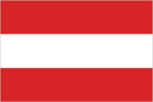
Geography
Boundary disputes
none; South Tyrol question with Italy
Climate
- temperate; continental, cloudy; cold winters with frequent rain in lowlands and snow in mountains; cool summers with occasional showers
- tropical marine; moderated by warm waters of Gulf Stream
Coastline
3,542 km
Comparative area
- slightly smaller than Maine
- about the size of Connecticut
Continental shelf
200 meters or to depth of exploitation
Environment
- due to steep slopes, poor soils, and cold temperatures, population is concentrated on eastern lowlands
- subject to hurricanes and other tropical storms; archipelago of about 700 islands and keys
Exclusive fishing zone
200 nm
Land boundaries
2,582 km total
Land use
- 17% arable land; 1% permanent crops; 24% meadows and pastures; 39% forest and woodland; 19% other; includes NEGL® irrigated
- 1% arable land; NEGL% permanent crops; NEGL% meadows and pastures; 32% forest and woodland; 67% other
Special notes
- landlocked; strategic location at the crossroads of central Europe with many easily traversable Alpine passes and valleys
- strategic location adjacent to US and Cuba
Terrain
- mostly mountains with Alps in west and south; low local relief and gentle slopes along eastern and northern margins
- long, flat, coral formations with some low, rounded hills
Territorial sea
3 nm
Total area
- 150 km 2fansbruck
- 83,850 km?; land area: 82,730 km?
- 13,940 km?; land area: 10,070 km?
People and Society
Ethnic divisions
- 99.4% German, 0.3% Croatian, 0.2% Slovene, 0.1% other
- 85% black, 15% white
Infant mortality rate
- 16/1,000 (1983)
- 20.20/1,000 (1984)
Labor force
- 2.9 million (est. 1985); 41.10% industry and crafts, 57.55% services, 1.35% agriculture and forestry; 4.8% unemployed (est. 1985); an estimated 200,000 Austrians are employed in other European countries; foreign laborers in Austria number 138,700, about 5.4% of labor force (1984)
- 82,000 (1982); 30% government, 25% hotels and restaurants, 10% business services, 5% agriculture; 30% unemployment (1983)
Language
- German
- English; some Creole among Haitian immigrants
Life expectancy
- 73
- men 64, women 70
Literacy
- 98%
- 89%
Nationality
- noun—Austrian(s); adjective— Austrian Austria (continued)
- noun—Bahamian(s); adjective—Bahamian
Organized labor
- 1,672,820 members of Austrian Trade Union Federation (1984)
- 25% of labor force
Population
- 7,569,283 (July 1987), average annual growth rate 0.09%
- 238,817 (July 1987), average annual growth rate 1.75%
Religion
- 88% Roman Catholic, 6% Protestant, 6% none or other
- Baptist 29%, Anglican 23%, Roman Catholic 22%, smaller groups of other Protestants, Greek Orthodox, and Jews
Government
Administrative divisions
9 states (lander)
Branches
bicameral legislature (Federal Assembly—Federal Council, National Council), directly elected President whose functions are largely representational, independent federal judiciary
Capital
Vienna
Communists
membership 15,000 est.; activists 7,000-8,000
Elections
presidential, every six years (next 1992); parliamentary, every four years (next 1990) Political parties and leaders: Socialist Party of Austria (SPO), Fred Sinowatz, chairman; Austrian People’s Party (OVP), Alois Mock, chairman; Freedom Party of Austria (FPO), Jorg Haider, chairman; Communist Party (KPO), Franz Muhri, chairman; Green Alternative List (GAL), Freda Meissner-Blau
Government leaders
Kurt WALDHEIM, President (since July 1986); Franz VRANITZKY, Chancellor (since June 1986)
Legal system
civil law system with Roman law origin; constitution adopted 1920, repromulgated 1945; judicial review of legislative acts by a Constitutional Court; separate administrative and civil/penal supreme courts; has not accepted compulsory ICJ jurisdiction
Member of
ADB, Council of Europe, DAC, ECE, EFTA, EMA, ESRO (observer), FAO, GATT, IAEA, IDB—InterAmerican Development Bank, IBRD, ICAC, ICAO, IDA, IEA, IFAD, IFC, ILO, International Lead and Zinc Study Group, IMF, IMO, INTELSAT, INTERPOL, ITU, IWC—International Wheat Council, OECD, UN, UNESCO, UPU, WFTU, WHO, WIPO, WMO, WTO, WSG
National holiday
26 October
Official name
- Republic of Austria
- The Commonwealth of
Other political or pressure groups
Federal Chamber of Commerce and Industry; Austrian Trade Union Federation (primarily Socialist); three composite leagues of the Austrian People’s Party (OVP) representing business, labor, and farmers; OVPoriented League of Austrian Industrialists; Roman Catholic Church, including its chief lay organization, Catholic Action
Suffrage
universal over age 19; compulsory for presidential elections
Type
federal republic
Voting strength
1986 parliamentary election—SPO 43.1%, OVP 41.3%, FPO 9.7%, GAL 4.8%, KPO .7%, other .32%; 1986 presidential election—(53.9% of 4.7 million votes cast) SPO 80 seats, OVP 77 seats, FPO 18 seats, GAL 8 seats
Economy
Agriculture
livestock, forest products, cereals, potatoes, sugar beets; 84% selfsufficient
Budget
expenditures, $22.10 billion; revenues, $18.80 billion; deficit, $3.3 billion (1986)
Crude steel
5.8 million metric tons produced (1984)
Electric power
15,846,000 kW capacity; 46,460 million kWh produced, 6,160 kWh per capita (1986)
Exports
$17.1 billion (f.0.b., 1985); iron and steel products, machinery and equipment, lumber, textiles, paper products, chemicals
Fiscal year
calendar year
Imports
$20.8 billion (c.i.f., 1984); machinery and equipment, chemicals, textiles and clothing, petroleum, foodstuffs, vehicles, office machines, pharmaceuticals
Major industries
foods, iron and steel, machinery, textiles, chemicals, electrical, paper and pulp
Major trade partners
(1984) imports— 41% FRG, 8.2% Italy, 7.3% East Europe (excluding USSR), 4.5% Switzerland, 4.4% USSR, 3.7% US; exports—30.1% FRG, 9.6% East Europe (excluding USSR), 9.0% Italy, 6.7% Switzerland, 6.0% OPEC, 4.7% US Aid; donor—ODA and OOF economic aid commitments (1970-84), $1.4 billion
Monetary conversion rate
14.26 schillings=US$I (November 1986)
Natural resources
iron ore, petroleum, timber, magnesite, aluminum, coal, lignite, cement, copper
Communications
Airfields
56 total, 54 usable; 19 with permanent-surface runways; 5 with runways 2,440-3,659 m, 5 with runways 1,220-2,439 m
Civil air
25 major transport aircraft
Highways
95,412 km total; 34,612 are the classified network (including 1,012 km of autobahn, 10,400 km of federal, and 23,200 km of provincial roads); of this number, 21,812 km are paved and 12,800 km are unpaved; additionally, there are 60,800 km of communal roads (mostly gravel, crushed stone, earth)
Inland waterways
446 km
Pipelines
554 km crude oil; 2,611 km natural gas; 17] km refined products
Ports
2 major river (Vienna, Linz)
Railroads
6,497 km total; 5.857 km government owned; 5,403 km 1.435-meter standard gauge of which 3,017 km electrified and 1,520 km double tracked; 454 km 0.760-meter narrow gauge of which 91 km electrified; 640 km privately owned J.435and ].000-meter gauge
Telecommunications
highly developed and efficient; extensive TV and radiobroadcast systems with 6 AM, 693 FM, 910 TV stations; 1 INTELSAT (for Atlantic and Indian regions); 3.72 million telephones (45.9 per 100 popl.)
Military and Security
Branches
Army, Flying Division
Military budget
for fiscal year ending 31 December 1986, $1.18 billion; about 4.2% of the proposed federal budget The Bahamas 200 ken Meaton, By North - @Great Abaco Atlantic i ‘ Ocean NASSAU& “x Eleuthers ay " : _.qCat Island Cay Sal andros 2 me \ aa island ¢ " ‘ > a eo fre Long Island North a ” oxy Atlantic Lee ne Ocean ‘ . ° Great inagua
Military manpower
males 15-49, 1,964,000; 1,655,000 fit for military service; 57,000 reach military age (19) annually