2004 Edition
CIA World Factbook 2004 (Project Gutenberg)
Introduction
Background
Aboriginal settlers arrived on the continent from Southeast Asia about 40,000 years before the first Europeans began exploration in the 17th century. No formal territorial claims were made until 1770, when Capt. James COOK took possession in the name of Great Britain. Six colonies were created in the late 18th and 19th centuries; they federated and became the Commonwealth of Australia in 1901. The new country took advantage of its natural resources to rapidly develop its agricultural and manufacturing industries and to make a major contribution to the British effort in World Wars I and II. In recent decades, Australia has transformed itself into an internationally competitive, advanced market economy. Long-term concerns include pollution, particularly depletion of the ozone layer, and management and conservation of coastal areas, especially the Great Barrier Reef. A referendum to change Australia's status, from a commonwealth headed by the British monarch to a republic, was defeated in 1999.
Geography
Area
- land
- 7,617,930 sq km
- note
- includes Lord Howe Island and Macquarie Island
- total
- 7,686,850 sq km
- water
- 68,920 sq km
Area - comparative
slightly smaller than the US contiguous 48 states
Climate
generally arid to semiarid; temperate in south and east; tropical in north
Coastline
25,760 km
Elevation extremes
- highest point
- Mount Kosciuszko 2,229 m
- lowest point
- Lake Eyre -15 m
Environment - current issues
soil erosion from overgrazing, industrial development, urbanization, and poor farming practices; soil salinity rising due to the use of poor quality water; desertification; clearing for agricultural purposes threatens the natural habitat of many unique animal and plant species; the Great Barrier Reef off the northeast coast, the largest coral reef in the world, is threatened by increased shipping and its popularity as a tourist site; limited natural fresh water resources
Environment - international agreements
- Resources, Antarctic Seals, Antarctic Treaty, Biodiversity, Climate Change, Desertification, Endangered Species, Environmental Modification, Hazardous Wastes, Law of the Sea, Marine Dumping, Marine Life Conservation, Ozone Layer Protection, Ship Pollution, Tropical Timber 83, Tropical Timber 94, Wetlands, Whaling
- party to
- Antarctic-Environmental Protocol, Antarctic-Marine Living
- signed, but not ratified
- Climate Change-Kyoto Protocol
Geographic coordinates
27 00 S, 133 00 E
Geography - note
world's smallest continent but sixth-largest country; population concentrated along the eastern and southeastern coasts; regular, tropical, invigorating, sea breeze known as "the Doctor" occurs along the west coast in the summer
Irrigated land
24,000 sq km (1998 est.)
Land boundaries
0 km
Land use
- cultivated grassland)
- arable land
- 6.55% (includes about 27 million hectares of
- other
- 93.41% (2001)
- permanent crops
- 0.04%
Location
Oceania, continent between the Indian Ocean and the South Pacific Ocean
Map references
Oceania
Maritime claims
- contiguous zone
- 24 nm
- continental shelf
- 200 nm or to the edge of the continental margin
- exclusive economic zone
- 200 nm
- territorial sea
- 12 nm
Natural hazards
cyclones along the coast; severe droughts; forest fires
Natural resources
bauxite, coal, iron ore, copper, tin, gold, silver, uranium, nickel, tungsten, mineral sands, lead, zinc, diamonds, natural gas, petroleum
Terrain
mostly low plateau with deserts; fertile plain in southeast
People and Society
Age structure
0-14 years: 20.1% (male 2,044,449; female 1,948,574) 15-64 years: 67.2% (male 6,747,687; female 6,623,995) 65 years and over: 12.8% (male 1,121,522; female 1,426,917) (2004 est.)
Birth rate
12.4 births/1,000 population (2004 est.)
Death rate
7.38 deaths/1,000 population (2004 est.)
Ethnic groups
Caucasian 92%, Asian 7%, aboriginal and other 1%
HIV/AIDS - adult prevalence rate
0.1% (2003 est.)
HIV/AIDS - deaths
less than 200 (2003 est.)
HIV/AIDS - people living with HIV/AIDS
14,000 (2003 est.)
Infant mortality rate
- female
- 4.34 deaths/1,000 live births (2004 est.)
- male
- 5.16 deaths/1,000 live births
- total
- 4.76 deaths/1,000 live births
Languages
English, native languages
Life expectancy at birth
- female
- 83.27 years (2004 est.)
- male
- 77.4 years
- total population
- 80.26 years
Literacy
- definition
- age 15 and over can read and write
- female
- 100% (1980 est.)
- male
- 100%
- total population
- 100%
Median age
- female
- 37.1 years (2004 est.)
- male
- 35.5 years
- total
- 36.3 years
Nationality
- adjective
- Australian
- noun
- Australian(s)
Net migration rate
3.98 migrant(s)/1,000 population (2004 est.)
Population
19,913,144 (July 2004 est.)
Population growth rate
0.9% (2004 est.)
Religions
Anglican 26.1%, Roman Catholic 26%, other Christian 24.3%, non-Christian 11%, other 12.6%
Sex ratio
- 15-64 years: 1.02 male(s)/female 65 years and over: 0.79 male(s)/female
- at birth
- 1.05 male(s)/female
- total population
- 0.99 male(s)/female (2004 est.)
- under 15 years
- 1.05 male(s)/female
Total fertility rate
1.76 children born/woman (2004 est.)
Government
Administrative divisions
6 states and 2 territories*; Australian Capital Territory*, New South Wales, Northern Territory*, Queensland, South Australia, Tasmania, Victoria, Western Australia
Capital
Canberra
Constitution
9 July 1900, effective 1 January 1901
Country name
- conventional long form
- Commonwealth of Australia
- conventional short form
- Australia
Dependent areas
Ashmore and Cartier Islands, Christmas Island, Cocos (Keeling) Islands, Coral Sea Islands, Heard Island and McDonald Islands, Norfolk Island
Diplomatic representation from the US
- Territory 2600
- FAX: [61] (02) 6214-5970
- chief of mission
- Ambassador J. Thomas SCHIEFFER
- consulate(s) general
- Melbourne, Perth, Sydney
- embassy
- Moonah Place, Yarralumla, Canberra, Australian Capital
- mailing address
- APO AP 96549
- telephone
- [61] (02) 6214-5600
Diplomatic representation in the US
- York, and San Francisco FAX: [1] (202) 797-3168
- chancery
- 1601 Massachusetts Avenue NW, Washington, DC 20036
- chief of mission
- Ambassador Michael J. THAWLEY
- consulate(s) general
- Atlanta, Chicago, Honolulu, Los Angeles, New
- telephone
- [1] (202) 797-3000
Executive branch
- 1952), represented by Governor General Maj. Gen. (Ret.) Michael JEFFERY (since 11 August 2003)
- March 1996); Deputy Prime Minister John ANDERSON (since 20 July 1999)
- list of candidates to serve as government ministers; from this list, the governor general swears in the final selections for the Cabinet
- appointed by the monarch on the recommendation of the prime minister; following legislative elections, the leader of the majority party or leader of a majority coalition is sworn in as prime minister by the governor general
- cabinet
- Parliament nominates and selects, from among its members, a
- chief of state
- Queen of Australia ELIZABETH II (since 6 February
- elections
- none; the monarch is hereditary; governor general
- head of government
- Prime Minister John Winston HOWARD (since 11
- note
- government coalition - Liberal Party and National Party
Flag description
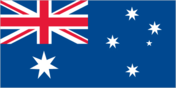
blue with the flag of the UK in the upper hoist-side quadrant and a large seven-pointed star in the lower hoist-side quadrant known as the Commonwealth Star, representing the federation of the colonies of Australia in 1901; the star depicts one point for each of the six original states and one representing all of Australia's internal and external territories; the remaining half is a representation of the Southern Cross constellation in white with one small five-pointed star and four larger, seven-pointed stars
Government type
democratic, federal-state system recognizing the British monarch as sovereign
Independence
1 January 1901 (federation of UK colonies)
International organization participation
ANZUS, APEC, ARF, AsDB, ASEAN (dialogue partner), Australia Group, BIS, C, CP, EBRD, FAO, IAEA, IBRD, ICAO, ICC, ICCt, ICFTU, ICRM, IDA, IEA, IFAD, IFC, IFRCS, IHO, ILO, IMF, IMO, Interpol, IOC, IOM, ISO, ITU, MIGA, NAM (guest), NEA, NSG, OECD, OPCW, Paris Club, PCA, PIF, Sparteca, UN, UNCTAD, UNESCO, UNHCR, UNMEE, UNMISET, UNTSO, UPU, WCO, WFTU, WHO, WIPO, WMO, WTO, WToO, ZC
Judicial branch
High Court (the chief justice and six other justices are appointed by the governor general)
Legal system
based on English common law; accepts compulsory ICJ jurisdiction, with reservations
Legislative branch
- bicameral Federal Parliament consists of the Senate (76 seats - 12 from each of the six states and two from each of the two mainland territories; one-half of the members elected every three years by popular vote to serve six-year terms) and the House of Representatives (150 seats - this is up from 148 seats in 2001 election; members elected by popular vote on the basis of preferential representation to serve three-year terms; no state can have fewer than five representatives)
- later than June 2008); House of Representatives - last held 9 October 2004 (next to be held not later than November 2007)
- party (as of 1 July 2003) - Liberal Party-National Party coalition 34, Australian Labor Party 28, Australian Democrats 7, Green Party 2, One Nation Party 1, Country Liberal Party 1, Australian Progressive Alliance 1, independent 2; House of Representatives - percent of vote by party - NA%; seats by party - Liberal Party-National Party coalition 86, Australian Labor Party 60, Country Liberal Party 1, independent and other 3
- election results
- Senate - percent of vote by party - NA%; seats by
- elections
- Senate - last held 9 October 2004 (next to be held not
National holiday
Australia Day, 26 January (1788)
Political parties and leaders
Australian Democrats [Andrew BARTLETT]; Australian Labor Party [Mark LATHAM]; Australian Progressive Alliance [Meg LEES]; Country Liberal Party [Terry MILLS]; Australian Greens [Bob BROWN]; Liberal Party [John Winston HOWARD]; The Nationals [John ANDERSON]; One Nation Party [Len HARRIS]
Political pressure groups and leaders
Australian Monarchist League [leader NA]; Australian Republican Movement [leader NA]
Suffrage
18 years of age; universal and compulsory
Economy
Agriculture - products
wheat, barley, sugarcane, fruits; cattle, sheep, poultry
Budget
- (2003)
- expenditures
- $181 billion, including capital expenditures of NA
- revenues
- $185 billion
Currency
Australian dollar (AUD)
Currency code
AUD
Current account balance
$-30.14 billion (2003)
Debt - external
$233.5 billion (2003 est.)
Distribution of family income - Gini index
35.2 (1994)
Economic aid - donor
ODA, $894 million (FY99/00)
Economy - overview
Australia has an enviable Western-style capitalist economy, with a per capita GDP on par with the four dominant West European economies. Rising output in the domestic economy has been offsetting the global slump, and business and consumer confidence remains robust. Australia's emphasis on reforms, low inflation, and growing ties with China are other key factors behind the economy's strength. The impact of drought, weak foreign demand, and strong import demand pushed the trade deficit up to $18 billion in 2003 and to $20 billion in 2004 from $8 billion in 2002. One other concern is the domestic housing bubble.
Electricity - consumption
184.4 billion kWh (2001)
Electricity - exports
0 kWh (2001)
Electricity - imports
0 kWh (2001)
Electricity - production
198.2 billion kWh (2001)
Exchange rates
Australian dollars per US dollar - 1.5419 (2003), 1.8406 (2002), 1.9334 (2001), 1.7248 (2000), 1.55 (1999)
Exports
$68.67 billion (2003 est.)
Exports - commodities
coal, gold, meat, wool, alumina, iron ore, wheat, machinery and transport equipment
Exports - partners
Japan 18.1%, US 8.7%, China 8.4%, South Korea 7.4%, New Zealand 7.4%, UK 6.7% (2003)
Fiscal year
1 July - 30 June
GDP
purchasing power parity - $571.4 billion (2003 est.)
GDP - composition by sector
- agriculture
- 3.5%
- industry
- 26.3%
- services
- 70.2% (2003 est.)
GDP - per capita
purchasing power parity - $29,000 (2003 est.)
GDP - real growth rate
3% (2003 est.)
Household income or consumption by percentage share
- highest 10%
- 25.4% (1994)
- lowest 10%
- 2%
Imports
$82.91 billion (2003 est.)
Imports - commodities
machinery and transport equipment, computers and office machines, telecommunication equipment and parts; crude oil and petroleum products
Imports - partners
US 16%, Japan 12.5%, China 11%, Germany 6.1%, UK 4.2% (2003) Reserves of foreign exchange & gold: $33.26 billion (2003)
Industrial production growth rate
-0.1% (2003 est.)
Industries
mining, industrial and transportation equipment, food processing, chemicals, steel
Inflation rate (consumer prices)
2.8% (2003 est.)
Investment (gross fixed)
24.8% of GDP (2003)
Labor force
10.19 million (37256)
Labor force - by occupation
agriculture 5%, industry 22%, services 73% (1997 est.)
Natural gas - consumption
23.33 billion cu m (2001 est.)
Natural gas - exports
9.744 billion cu m (2001 est.)
Natural gas - imports
0 cu m (2001 est.)
Natural gas - production
33.08 billion cu m (2001 est.)
Natural gas - proved reserves
2.407 trillion cu m (1 January 2002)
Oil - consumption
796,500 bbl/day (2001 est.)
Oil - exports
523,400 bbl/day (2001)
Oil - imports
530,800 bbl/day (2001)
Oil - production
731,000 bbl/day (2001 est.)
Oil - proved reserves
3.664 billion bbl (1 January 2002)
Population below poverty line
NA
Public debt
18.2% of GDP (2003)
Unemployment rate
6% (2003)
Communications
Internet country code
.au
Internet hosts
2,847,763 (2003)
Internet Service Providers (ISPs)
571 (2002)
Internet users
9.472 million (2002)
Radio broadcast stations
AM 262, FM 345, shortwave 1 (1998)
Radios
25.5 million (1997)
Telephone system
- areas of low population density; rapid growth of mobile cellular telephones
- Papua New Guinea, and Indonesia; satellite earth stations - 10 Intelsat (4 Indian Ocean and 6 Pacific Ocean), 2 Inmarsat (Indian and Pacific Ocean regions) (1998)
- domestic
- domestic satellite system; much use of radiotelephone in
- general assessment
- excellent domestic and international service
- international
- country code - 61; submarine cables to New Zealand,
Telephones - main lines in use
10.815 million (2003)
Telephones - mobile cellular
14.347 million (2003)
Television broadcast stations
104 (1997)
Televisions
10.15 million (1997)
Transportation
Airports
444 (2003 est.)
Airports - with paved runways
- 2,438 to 3,047 m: 12 1,524 to 2,437 m: 131 914 to 1,523 m: 139
- over 3,047 m
- 10
- total
- 305
- under 914 m
- 13 (2004 est.)
Airports - with unpaved runways
- 1,524 to 2,437 m: 17 914 to 1,523 m: 112
- total
- 143
- under 914 m
- 14 (2004 est.)
Highways
- paved
- 314,090 km (including 18,619 km of expressways)
- total
- 811,603 km
- unpaved
- 497,513 km (1999 est.)
Merchant marine
- container 3, liquefied gas 4, passenger 2, petroleum tanker 7, roll on/roll off 6
- by type
- bulk 20, cargo 5, chemical tanker 3, combination bulk 2,
- foreign-owned
- United Kingdom 2, United States 12
- registered in other countries
- 60 (2004 est.)
- total
- 52 ships (1,000 GRT or over) 1,531,461 GRT/1,999,409 DWT
Pipelines
condensate/gas 492 km; gas 28,680 km; liquid petroleum gas 240 km; oil 4,773 km; oil/gas/water 110 km (2004)
Ports and harbors
Adelaide, Brisbane, Cairns, Darwin, Devonport (Tasmania), Fremantle, Geelong, Hobart (Tasmania), Launceston (Tasmania), Mackay, Melbourne, Sydney, Townsville
Railways
- broad gauge
- 1,957 km 1.600-m gauge
- dual gauge
- 213 km dual gauge (2003)
- narrow gauge
- 14,957 km 1.067-m gauge (2,462 km electrified)
- standard gauge
- 27,095 km 1.435-m gauge (2,828 km electrified)
- total
- 44,015 km (5,290 km electrified)
Waterways
2,000 km (mainly used for recreation on Murray and Murray-Darling river systems) (2004)
Military and Security
Military branches
Australian Army, Royal Australian Navy, Royal Australian Air Force, new Special Operations Command (announced in December 2002)
Military expenditures - dollar figure
$14,120.1 million (2003)
Military expenditures - percent of GDP
2.8% (2003)
Military manpower - availability
- males age 15-49
- 5,061,810 (2004 est.)
Military manpower - fit for military service
- males age 15-49
- 4,356,671 (2004 est.)
Military manpower - military age and obligation
16 years of age for voluntary service (2001)
Military manpower - reaching military age annually
- males
- 140,182 (2004 est.)
Transnational Issues
Disputes - international
the 1999 maritime delimitation established partial maritime boundaries with East Timor over part of the Timor Gap but temporary resource-sharing agreements over an unreconciled area grant Australia 90% share of exploited gas reserves and hamper creation of a southern maritime boundary with Indonesia (see Ashmore and Cartier Islands disputes); Australia asserts a territorial claim to Antarctica and to its continental shelf (see Antarctica)
Illicit drugs
Tasmania is one of the world's major suppliers of licit opiate products; government maintains strict controls over areas of opium poppy cultivation and output of poppy straw concentrate This page was last updated on 10 February, 2005 @Austria