1986 Edition
CIA World Factbook 1986 (Internet Archive)
Geography
Agriculture
- cotton (main crop), sugar, livestock
- main products — cereals, oilseed, livestock products; major world exporter of temperate zone foodstuffs
- little production
Aid
economic — bilateral commitments, ODA and OOF (1970-80) from Western (non-US) countries, $20 million; no military aid
Aircraft
none 1000 km Land 2,766,889 km2; four times the size of Texas; 57% agricultural (46% natural meadow, 11% crop, improved pasture, and fallow); 25% forest; 18% mountain, urban, or waste
Airfield
government-owned airport east of Oranjestad
Airfields
- 2 total, 1 usable; 1 with permanent-surface runways; 1 with runways 2,440-3,659 m
- 1,827 total, 1,663 usable; 125 with permanent-surface runways; 1 with runways over 3,695 m, 32 with runways 2,440-3,659 m, 327 with runways 1,2202,439 m
Branches
- Antigua and Barbuda Defense Force, Royal Antigua and Barbuda Police Force
- executive (President, Vice President, Cabinet); legislative (National Congress— Senate, Chamber of Deputies); national judiciary
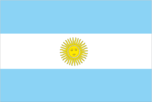
- Argentine Army, Navy of the Argentine Republic, Argentine Air Force, National Gendarmerie, Argentine Naval Prefecture, National Aeronautical Police
Budget
- (current) revenues, $40 million (1984); expenditures, $44 million (1984)
- (1984) general government revenues $16.9 billion; expenditures $21.7 billion at official exchange rate
Capital
Buenos Aires
Civil air
- 10 major transport aircraft
- 54 major transport aircraft
Coastline
4,989 km People
Communists
some 70,000 members in various party organizations, including a small nucleus of activists
Elections
general elections held 30 October 1983; Senate elections scheduled for 1986
Electric power
- 27,000 kW capacity (1985); 60.5 million kWh produced (1985), 756 kWh per capita
- 15,210,000 kW capacity (1985); 40.5 billion kWh produced (1985), 1, 319 kWh per capita
Ethnic divisions
- approximately 85% white, 15% mestizo, Indian, or other nonwhite groups
- 85% mixed African; remainder Carib Indian, European, Latin, and Oriental
Exports
- $41 million (1984 prelim.); clothing, rum, lobsters
- $8.1 billion (f.o.b., 1984); wheat, corn, oilseed, hides, wool
Fiscal year
- 1 April-30 March Communications
- calendar year Communications
Fishing
catch 290,000 metric tons (1984); exports $139.7 million (1984)
GDP
- $158 million (1984), $1,990 per capita
- $74.4 billion (1984), $2,470 per capita; 80% consumption, 15% investment; 5% net exports; 2.0% real GDP growth rate (1984)
Government leader
Felipe TROMP, Governor (since January 1986); Henny EMAN, Prime Minister (since January 1986)
Government leaders
Raul ALFONSIN, President (since December 1983); Victor MARTINEZ, Vice President (since December 1983)
Highways
- 240 km main
- 208,100 km total, of which 47,550 km paved, 39,500 km gravel, 101,000 km improved earth, 20,300 km unimproved earth
Imports
- $146.9 million (c.i.f., 1984 prelim.); fuel, food, machinery
- $4.1 billion (f.o.b., 1984); chemical products, machinery, metallurgical products, fuel and lubricants
Infant mortality rate
36/1,000 (1983)
Inland waterways
1 1,000 km navigable
Labor force
- 16.8 million (1984 prelim.); 15.9% agriculture, 24.3% manufacturing, 13.2% commerce, 11.5% transport and communications, 7.7% finance and banking, 4.4% utilities, 3.6% construction, 2.7% mining, 16.8% services and other; 4.6% unemployment (1984)
- 30% oil refining; 10% unemployment Government
Land boundaries
9,414 km Water
Language
- Spanish (official), English, Italian, German, French
- Dutch (official), Papiamento (a Spanish, Portuguese, Dutch, English dialect), English (widely spoken), Spanish
Legal system
- mixture of US and West European legal systems; constitution adopted 1853 is in effect; legal education at University of Buenos Aires and other public and private universities; has not accepted compulsory ICJ jurisdiction
- based on Dutch civil law system, with some English common law influence
Life expectancy
68
Limits of territorial waters (claimed)
200 nm (continental shelf, including sovereignty over superjacent waters); overflight and navigation permitted beyond 12 nm
Literacy
- 94%
- 95%
Main town
Oranjestad
Major ground units
Defense Force
Major industries
- tourism 15.2%, construction 7.7%, manufacturing 0.5%
- food processing (especially meat packing), motor vehicles, consumer durables, textiles, chemicals, printing, and metallurgy
- petrochemicals, oil refining, petroleum transshipment facilities, tourism, light manufacturing Communications
Major trade partners
- exports — 47% Trinidad and Tobago, 8% Barbados, 1% US (1983); imports— 49% US, 13% UK, 4% Jamaica, 2% Trinidad and Tobago (1983)
- (1984) exports— 15% USSR, 11% Netherlands, 11% US, 6% Brazil, 5% Italy, 4% FRG, 3% Japan; imports— 20% US, 19% Brazil, 12% FRG, 9% Bolivia, 8% Japan, 5% France
Member of
- CARICOM, Commonwealth, FAO, G-77, IBRD, ICAO, ILO, IMF, ISO, OAS, UN, UNESCO, WHO, WMO Economy
- FAO, G-77, GATT, IADB, IAEA, IBRD, ICAC, ICAO, IDA, IDE— Inter-American Development Bank, IFAD, IFC, IHO, ILO, IMF, IMO, INTELSAT, INTERPOL, IOOC, ISO, ITU, IWC— International Whaling Commission, IWC — International Wheat Council, LAIA, NAM, OAS, PAHO, SELA, UN, UNESCO, UPU, WFTU, WHO, WMO, WTO, WSG Economy
Military budget
revised defense budget for fiscal year ending 31 December 1985, $1.0 billion; 7% of central government budget Caribbean Sea ORANJESTAD regional roip III Land 193 km2; larger than Washington, D.C. People
Military manpower
males 15-49, 7,719,000; 6,264,000 fit for military service; 255,000 reach military age (20) annually
Monetary conversion rate
- 2.70 East Caribbean (EC)dollars=US$l (February 1984)
- 0.8 australes=US$l (December 1985); Argentina introduced a new currency, the austral, in June 1985; new currency to be exchanged for the peso argentine at 1,000 pesos to the austral
National holiday
Independence Day, 25 May
Nationality
- noun — Argentine(s); adjective— Argentine
- noun — Aruban(s); adjective — Aruban
Natural resources
- negligible
- pampas, lead, zinc, tin, copper, iron, manganese, oil, uranium
Official name
- Argentine Republic
- Aruba
Organized labor
3 million; about 33% of labor force (est.) Government
Other political or pressure groups
Peronistdominated labor movement, General Confederation of Labor (Peronist-leaning association of small businessmen), Argentine Industrial Union (manufacturers' association), Argentine Rural Society (large landowners' association), business organizations, students, the Catholic Church
Pipelines
4,090 km crude oil; 2,200 km refined products; 9,918 km natural gas
Political parties
operate under statute passed in 1983 that sets out criteria for participation in national elections; Radical Civic Union (UCR) — moderately left of center; Justicialist Party (JP) — Peronist umbrella political organization; Movement for Industrial Development (MID); Intransigent Party (PI); several provincial parties
Political subdivisions
22 provinces, 1 district (Federal Capital), and 1 territory
Population
- 31, 186,000 (July 1986), average annual growth rate 1.5%
- 67,014 (1986 est.)
Ports
- 1 major (St. John's), 1 minor
- 1 major, 30 minor
- 2 (Oranjestad, Sint Nicolaas)
Railroads
- 64 km 0.760-meter narrow gauge, 13 km 0.610-meter gauge, employed almost exclusively for handling cane
- 35,476 km total; 3,086 km 1.435meter standard gauge, 22,788 km 1.676meter broad gauge, 13,461 km 1.000-meter gauge, 403 km 0.750-meter gauge; of total in country, 142 km are electrified
Religion
- 90% nominally Roman Catholic (less than 20% practicing), 2% Protestant, 2% Jewish, 6% other
- 82% Roman Catholic, 8% Protestant; also small Hindu, Muslim, Confucian, and Jewish minority
Steel
2.6 million metric tons produced (1984)
Suffrage
universal over age 18 Political parties and leaders: People's Electoral Movement (MEP), G. F. "Betico" Croes; Aruban Patriotic Party (PPA), Benny Nisbet; Aruban People's Party (A VP), Henny Eman; Democratic Party of Aruba (PDA), Dr. Leo Berlinski; National Democratic Action Party (ADN), John Booi Economy
Telecommunications
- good automatic telephone system; 6,700 telephones (9.2 per 100 popl.); tropospheric scatter links with Saba and Guadeloupe; 6 AM and 2 FM stations; 1 TV station; 1 coaxial submarine cable; 1 satellite ground station Defense Forces
- extensive modern system; 3.23 million telephones (10.3 per 100 popl.), radio relay widely used; 2 satellite stations with 3 Atlantic Ocean antennas; 163 AM and 190 TV stations; 30-station domestic satellite network Aruba Defense Forces
- facilities, which include extensive interisland radio-relay links, are generally adequate; 49,600 telephones Defense Defense is the responsibility of the Netherlands until 1996
Type
- republic
- self-governing until complete independence from the Netherlands is granted in