2009 Edition
CIA World Factbook 2009 (Project Gutenberg)
Introduction
Background
The Siboney were the first to inhabit the islands of Antigua and Barbuda in 2400 B.C., but Arawak Indians populated the islands when COLUMBUS landed on his second voyage in 1493. Early settlements by the Spanish and French were succeeded by the English who formed a colony in 1667. Slavery, established to run the sugar plantations on Antigua, was abolished in 1834. The islands became an independent state within the British Commonwealth of Nations in 1981.
Geography
Area
total: 442.6 sq km (Antigua 280 sq km; Barbuda 161 sq km) country comparison to the world: 199 land: 442.6 sq km water: 0 sq km note: includes Redonda, 1.6 sq km
Area - comparative
2.5 times the size of Washington, DC
Climate
tropical maritime; little seasonal temperature variation
Coastline
153 km
Elevation extremes
lowest point: Caribbean Sea 0 m highest point: Boggy Peak 402 m
Environment - current issues
water management - a major concern because of limited natural fresh water resources - is further hampered by the clearing of trees to increase crop production, causing rainfall to run off quickly
Environment - international agreements
party to: Biodiversity, Climate Change, Climate Change-Kyoto Protocol, Desertification, Endangered Species, Environmental Modification, Hazardous Wastes, Law of the Sea, Marine Dumping, Ozone Layer Protection, Ship Pollution, Wetlands, Whaling signed, but not ratified: none of the selected agreements
Freshwater withdrawal (domestic/industrial/agricultural)
total: 0.005 cu km/yr (60%/20%/20%) per capita: 63 cu m/yr (1990)
Geographic coordinates
17 03 N, 61 48 W
Geography - note
Antigua has a deeply indented shoreline with many natural harbors and beaches; Barbuda has a large western harbor
Irrigated land
NA
Land boundaries
0 km
Land use
arable land: 18.18% permanent crops: 4.55% other: 77.27% (2005)
Location
Caribbean, islands between the Caribbean Sea and the North Atlantic Ocean, east-southeast of Puerto Rico
Map references
Central America and the Caribbean
Maritime claims
territorial sea: 12 nm contiguous zone: 24 nm exclusive economic zone: 200 nm continental shelf: 200 nm or to the edge of the continental margin
Natural hazards
hurricanes and tropical storms (July to October); periodic droughts
Natural resources
NEGL; pleasant climate fosters tourism
Terrain
mostly low-lying limestone and coral islands, with some higher volcanic areas
Total renewable water resources
0.1 cu km (2000)
People and Society
Age structure
0-14 years: 26.8% (male 11,660/female 11,303) 15-64 years: 66.6% (male 26,597/female 30,414) 65 years and over: 6.6% (male 2,456/female 3,202) (2009 est.)
Birth rate
16.59 births/1,000 population (2009 est.) country comparison to the world: 128
Death rate
5.94 deaths/1,000 population (July 2009 est.) country comparison to the world: 164
Education expenditures
3.9% of GDP (2002) country comparison to the world: 106
Ethnic groups
black 91%, mixed 4.4%, white 1.7%, other 2.9% (2001 census)
HIV/AIDS - adult prevalence rate
NA
HIV/AIDS - deaths
NA
HIV/AIDS - people living with HIV/AIDS
NA
Infant mortality rate
total: 16.25 deaths/1,000 live births country comparison to the world: 120 male: 18.76 deaths/1,000 live births female: 13.62 deaths/1,000 live births (2009 est.)
Languages
English (official), local dialects
Life expectancy at birth
total population: 74.76 years country comparison to the world: 87 male: 72.81 years female: 76.81 years (2009 est.)
Literacy
definition: age 15 and over has completed five or more years of schooling total population: 85.8% male: NA female: NA (2003 est.)
Median age
total: 29.7 years male: 28.2 years female: 31.1 years (2009 est.)
Nationality
noun: Antiguan(s), Barbudan(s) adjective: Antiguan, Barbudan
Net migration rate
2.38 migrant(s)/1,000 population (2009 est.) country comparison to the world: 36
Population
85,632 (July 2009 est.) country comparison to the world: 198
Population growth rate
1.303% (2009 est.) country comparison to the world: 103
Religions
Anglican 25.7%, Seventh Day Adventist 12.3%, Pentecostal 10.6%, Moravian 10.5%, Roman Catholic 10.4%, Methodist 7.9%, Baptist 4.9%, Church of God 4.5%, other Christian 5.4%, other 2%, none or unspecified 5.8% (2001 census)
Sex ratio
at birth: 1.05 male(s)/female under 15 years: 1.03 male(s)/female 15-64 years: 0.87 male(s)/female 65 years and over: 0.77 male(s)/female total population: 0.91 male(s)/female (2009 est.)
Total fertility rate
2.07 children born/woman (2009 est.) country comparison to the world: 124
Urbanization
urban population: 30% of total population (2008) rate of urbanization: 0.9% annual rate of change (2005-10 est.)
Government
Administrative divisions
6 parishes and 2 dependencies*; Barbuda*, Redonda*, Saint George, Saint John, Saint Mary, Saint Paul, Saint Peter, Saint Philip
Capital
name: Saint John's geographic coordinates: 17 07 N, 61 51 W time difference: UTC-4 (1 hour ahead of Washington, DC during Standard Time)
Constitution
1 November 1981
Country name
conventional long form: none conventional short form: Antigua and Barbuda
Diplomatic representation from the US
the US does not have an embassy in Antigua and Barbuda; the US Ambassador to Barbados is accredited to Antigua and Barbuda
Diplomatic representation in the US
chief of mission: Ambassador Deborah Mae LOVELL chancery: 3216 New Mexico Avenue NW, Washington, DC 20016 telephone: [1] (202) 362-5122
Executive branch
chief of state: Queen ELIZABETH II (since 6 February 1952); represented by Governor General Louisse LAKE-TACK (since 17 July 2007) head of government: Prime Minister Winston Baldwin SPENCER (since 24 March 2004) cabinet: Council of Ministers appointed by the governor general on the advice of the prime minister elections: the monarch is hereditary; governor general chosen by the monarch on the advice of the prime minister; following legislative elections, the leader of the majority party or the leader of the majority coalition is usually appointed prime minister by the governor general
FAX
[1] (202) 362-5225 consulate(s) general: Miami, New York
Flag description
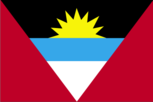
red, with an inverted isosceles triangle based on the top edge of the flag; the triangle contains three horizontal bands of black (top), light blue, and white, with a yellow rising sun in the black band; the sun symbolizes the dawn of a new era, black represents the African heritage of most of the population, blue is for hope, and red is for the dynamism of the people; the "V" stands for victory; the successive yellow, blue, and white coloring is also meant to evoke the country's tourist attractions of sun, sea, and sand
Government type
constitutional monarchy with a parliamentary system of government and a Commonwealth realm
Independence
1 November 1981 (from the UK)
International organization participation
ACP, C, Caricom, CDB, FAO, G-77, IBRD, ICAO, ICCt, ICRM, IDA, IFAD, IFC, IFRCS, ILO, IMF, IMO, Interpol, IOC, ISO (subscriber), ITU, ITUC, MIGA, NAM, OAS, OECS, OPANAL, OPCW, UN, UNCTAD, UNESCO, UPU, WCL, WFTU, WHO, WIPO, WMO, WTO
Judicial branch
Eastern Caribbean Supreme Court consisting of a High Court of Justice and a Court of Appeal (based in Saint Lucia; two judges of the Supreme Court are residents of the islands and preside over the Court of Summary Jurisdiction); Magistrates' Courts; member of the Caribbean Court of Justice
Legal system
based on English common law
Legislative branch
bicameral Parliament consists of the Senate (17 seats; members appointed by the governor general) and the House of Representatives (17 seats; members are elected by proportional representation to serve five-year terms) elections: House of Representatives - last held 12 March 2009 (next to be held in 2014) election results: percent of vote by party - UPP 50.9%, ALP 47.2%, BPM 1.1%; seats by party - UPP 9, ALP 7, BPM 1
National holiday
Independence Day (National Day), 1 November (1981)
Political parties and leaders
Antigua Labor Party or ALP [Lester Bryant BIRD]; Barbudans for a Better Barbuda [Ordrick SAMUEL]; Barbuda People's Movement or BPM [Thomas H. FRANK]; Barbuda People's Movement for Change [Arthur NIBBS]; United Progressive Party or UPP [Baldwin SPENCER] (a coalition of three parties - Antigua Caribbean Liberation Movement or ACLM, Progressive Labor Movement or PLM, United National Democratic Party or UNDP)
Political pressure groups and leaders
Antigua Trades and Labor Union or ATLU [William ROBINSON]; People's Democratic Movement or PDM [Hugh MARSHALL]
Suffrage
18 years of age; universal
Economy
Agriculture - products
cotton, fruits, vegetables, bananas, coconuts, cucumbers, mangoes, sugarcane; livestock
Budget
revenues: $123.7 million expenditures: $145.9 million (2000 est.)
Central bank discount rate
6.5% (31 December 2008) country comparison to the world: 57 6.5% (31 December 2007)
Commercial bank prime lending rate
10.43% (31 December 2008) country comparison to the world: 80 10.44% (31 December 2007)
Current account balance
-$211 million (2007 est.) country comparison to the world: 89
Debt - external
$359.8 million (June 2006) country comparison to the world: 169
Economy - overview
Antigua has a relatively high GDP per capita in comparison to most other Caribbean nations. The economy experienced solid growth from 2003 to 2007, reaching over 12% in 2006 driven by a construction boom in hotels and housing associated with the Cricket World Cup. Growth dropped off in 2008 with the end of the boom. Tourism continues to dominate the economy, accounting for nearly 60% of GDP and 40% of investment. The dual-island nation's agricultural production is focused on the domestic market and constrained by a limited water supply and a labor shortage stemming from the lure of higher wages in tourism and construction. Manufacturing comprises enclave-type assembly for export with major products being bedding, handicrafts, and electronic components. Prospects for economic growth in the medium term will continue to depend on tourist arrivals from the US, Canada, and Europe and potential damages from natural disasters. Since taking office in 2004, the SPENCER government has adopted an ambitious fiscal reform program, and has been successful in reducing its public debt-to-GDP ratio from 120% to about 90%.
Electricity - consumption
102.3 million kWh (2007 est.) country comparison to the world: 189
Electricity - exports
0 kWh (2008 est.)
Electricity - imports
0 kWh (2008 est.)
Electricity - production
110 million kWh (2007 est.) country comparison to the world: 188
Exchange rates
East Caribbean dollars (XCD) per US dollar - 2.7 (2007), 2.7 (2006), 2.7 (2005), 2.7 (2004), 2.7 (2003) note: fixed rate since 1976
Exports
$84.3 million (2007 est.) country comparison to the world: 196
Exports - commodities
petroleum products, bedding, handicrafts, electronic components, transport equipment, food and live animals
GDP - composition by sector
agriculture: 3.8% industry: 22% services: 74.3% (2002 est.)
GDP - per capita (PPP)
$19,400 (2008 est.) country comparison to the world: 64 $19,100 (2007 est.) $18,100 (2006 est.) note: data are in 2008 US dollars
GDP - real growth rate
2.8% (2008 est.) country comparison to the world: 133 6.9% (2007 est.) 12.4% (2006 est.)
GDP (official exchange rate)
$1.224 billion (2008 est.)
GDP (purchasing power parity)
$1.639 billion (2008 est.) country comparison to the world: 189 $1.594 billion (2007 est.) $1.491 billion (2006 est.) note: data are in 2008 US dollars
Household income or consumption by percentage share
lowest 10%: NA% highest 10%: NA%
Imports
$522.8 million (2007 est.) country comparison to the world: 186
Imports - commodities
food and live animals, machinery and transport equipment, manufactures, chemicals, oil
Industrial production growth rate
NA%
Industries
tourism, construction, light manufacturing (clothing, alcohol, household appliances)
Inflation rate (consumer prices)
1.5% (2007 est.) country comparison to the world: 12
Labor force
30,000 (1991) country comparison to the world: 197
Labor force - by occupation
agriculture: 7% industry: 11% services: 82% (1983)
Natural gas - consumption
0 cu m (2008 est.) country comparison to the world: 209
Natural gas - exports
0 cu m (2008) country comparison to the world: 207
Natural gas - imports
0 cu m (2008 est.) country comparison to the world: 206
Natural gas - production
0 cu m (2008 est.) country comparison to the world: 209
Natural gas - proved reserves
0 cu m (1 January 2009 est.) country comparison to the world: 207
Oil - consumption
5,000 bbl/day (2008 est.) country comparison to the world: 162
Oil - exports
219 bbl/day (2007 est.) country comparison to the world: 129
Oil - imports
4,690 bbl/day (2007 est.) country comparison to the world: 159
Oil - production
0 bbl/day (2008 est.) country comparison to the world: 115
Oil - proved reserves
0 bbl (1 January 2009 est.) country comparison to the world: 209
Population below poverty line
NA%
Stock of domestic credit
$1.13 billion (31 December 2008) country comparison to the world: 107 $1.002 billion (31 December 2007)
Stock of money
$296.4 million (31 December 2008) country comparison to the world: 101 $294.8 million (31 December 2007)
Stock of quasi money
$939.9 million (31 December 2008) country comparison to the world: 97 $902 million (31 December 2007)
Unemployment rate
11% (2001 est.) country comparison to the world: 127
Communications
Internet country code
.ag
Internet hosts
7,421 (2009) country comparison to the world: 127
Internet users
65,000 (2008) country comparison to the world: 166
Radio broadcast stations
AM 4, FM 2, shortwave 0 (1998)
Telephone system
general assessment: NA domestic: good automatic telephone system international: country code - 1-268; landing point for the East Caribbean Fiber System (ECFS) submarine cable with links to 13 other islands in the eastern Caribbean extending from the British Virgin Islands to Trinidad; satellite earth stations - 2; tropospheric scatter to Saba (Netherlands Antilles) and Guadeloupe (2007)
Telephones - main lines in use
38,000 (2008) country comparison to the world: 171
Telephones - mobile cellular
136,600 (2008) country comparison to the world: 177
Television broadcast stations
2 (1997)
Transportation
Airports
3 (2009) country comparison to the world: 190
Airports - with paved runways
total: 2 2,438 to 3,047 m: 1 under 914 m: 1 (2009)
Airports - with unpaved runways
total: 1 under 914 m: 1 (2009)
Merchant marine
total: 1,146 country comparison to the world: 7 by type: barge carrier 2, bulk carrier 50, cargo 651, carrier 4, chemical tanker 5, container 392, liquefied gas 12, petroleum tanker 1, refrigerated cargo 9, roll on/roll off 20 foreign-owned: 1,113 (Australia 1, Colombia 2, Cyprus 18, Denmark 19, Estonia 23, France 1, Germany 941, Greece 3, Iceland 12, Italy 1, Latvia 13, Lithuania 5, Netherlands 20, NZ 2, Norway 8, Poland 2, Russia 4, Slovenia 6, Sweden 1, Switzerland 8, Turkey 6, UK 9, US 8) (2008)
Ports and terminals
Saint John's
Roadways
total: 1,165 km country comparison to the world: 181 paved: 384 km unpaved: 781 km (2002)
Military and Security
Manpower available for military service
males age 16-49: 19,560 females age 16-49: 18,977 (2008 est.)
Manpower fit for military service
males age 16-49: 17,271 females age 16-49: 19,586 (2009 est.)
Manpower reaching militarily significant age annually
male: 744 female: 743 (2009 est.)
Military branches
Royal Antigua and Barbuda Defense Force (2009)
Military expenditures
NA
Military service age and obligation
18 years of age for voluntary military service; no conscription (2008)
Transnational Issues
Disputes - international
none
Illicit drugs
considered a minor transshipment point for narcotics bound for the US and Europe; more significant as an offshore financial center page last updated on November 11, 2009