1981 Edition
CIA World Factbook 1981 (Internet Archive)
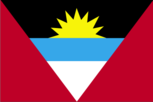
Geography
Area
280 km2; 54% arable, 5% pasture, 14% forested, 9% unused but potentially productive, 18% wasteland and built on; the islands of Redonda (less than 2.6 km2 and uninhabited) and Barbuda (161 km2) are dependencies
Coastline
153 km
Limits of territorial waters (claimed)
3 nm (fishing 12 nm)
People and Society
Ethnic divisions
almost entirely African Negro
Language
English
Literacy
about 88%
Nationality
noun — Antiguan(s); adjective — Antiguan
Organized labor
18,000, 18% unemployment (est.)
Population
77,000 (July 1982), average annual growth rate 1.3%
Religion
Church of England (predominant), other Protestant sects, and some Roman Catholic
Government
Branches
legislative, 21-member popularly elected House of Representatives; executive, Prime Minister and Cabinet
Capital
St. Johns
Communists
negligible
Elections
every five years; last general election 24 April Political parties and leaders: Antigua Labor Party (ALP), Vere C. Bird, Sr., Lester Bird; Progressive Labor Movement (PLM), George Herbert Walter; Antigua People's Party (APP), J. Rowan Henry
Government leaders
Prime Minister Vere C. BIRD, Sr.; Deputy Prime Minister Lester BIRD; Governor Sir Wilfred Ebenezer JACOBS
Legal system
based on English law; British Caribbean Court of Appeal has exclusive original jurisdiction and an appellate jurisdiction, consists of Chief Justice and five justices
Member of
CARICOM, ISO
Official name
Antigua and Barbuda
Other political or pressure groups
Antigua Caribbean Liberation Movement (ACLM), a small leftist nationalist group led by Timothy Hector
Political subdivisions
6 parishes, 2 dependencies (Barbuda, Redonda)
Suffrage
universal suffrage age 18 and over
Type
independent state since 1 November 1981; recognizes Elizabeth II as Chief of State
Voting strength
(1980 election) House of Representatives; ALP, 13 seats; PLM, 3 seats; independent, 1 seat
Economy
Agriculture
main crop, cotton
Aid
economic — bilateral commitments, ODA and OOF (1970-79) from Western (non-US) countries, $20 million; no military aid
Budget
(current) revenues, $24 million (1980 prelim.); current expenditures, $33 million (1980 prelim.)
Electric power
28,000 kW capacity (1981); 55 million kWh produced (1981), 714 kWh per capita
Exports
$21 million (f.o.b., 1980 est.); clothing, rum, lobsters
Fiscal year
1 April-30 March
GDP
$73 million (1978 est.), $1,000 per capita; 3% real growth in 1980
Imports
$76 million (c.i.f., 1980 est.); fuel, food, machinery
Major industry
tourism
Major trade partners
30% UK, 25% US, 18% Commonwealth Caribbean countries (1975)
Monetary conversion rate
2.70 East Caribbean (EC) dollar=US$l (1980)
Communications
Airfields
3 total, 2 usable; 2 with permanent-surface runways; 1 with runways 2,440-3,659 m
Civil air
10 major transport aircraft, including 2 leased in
Highways
380 km total; 240 km main, 140 km secondary
Ports
1 major (St. Johns), 1 minor
Railroads
78 km narrow gauge (0.760 m), employed almost exclusively for handling cane
Telecommunications
automatic telephone system; 4,000 telephones (5.4 per 100 popl.); tropospheric scatter links with Tortola and St. Lucia; 3 AM, 2 FM, and 2 TV stations; 1 coaxial submarine cable ARGENTINA BRAZIt Pacific Ocean CHILE I 7 Buenos Aires