1987 Edition
CIA World Factbook 1987 (Internet Archive)
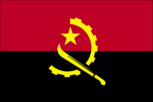
Geography
Climate
semiarid in south and along coast to Luanda; north has cool, dry season (May to October) and hot, rainy season (November to April)
Coastline
1,600 km
Comparative area
almost twice the size of Texas
Environment
locally heavy rainfall causes periodic flooding on plateau; desertification
Exclusive fishing zone
200 nm
Land boundaries
5,070 km total
Land use
2% arable land; NEGL% permanent crops; 23% meadows and pastures; 43% forest and woodland; 31% other
Special notes
Cabinda is separated from rest of country by Zaire
Terrain
narrow coastal plain rises abruptly to vast interior plateau
Territorial sea
20 nm
Total area
- <¢ 300 km Cabinda South Atlantic Ocean
- 1,246,700 km?; land area: 1,246,700 km?
People and Society
Ethnic divisions
37% Ovimbundu, 25% Kimbundu, 13% Bakongo, 2% Mestico, 1% European
Infant mortality rate
148/1,000 (1983)
Labor force
2,783,000 economically active (mid-1985 est.); 85% agriculture, 15% industry
Language
Portuguese (official); various Bantu dialects
Life expectancy
men 40.6, women 42.9
Literacy
20%
Nationality
noun—Angolan(s), adjective— Angolan
Organized labor
about 450,695 (1980)
Population
7,950,244 (July 1987), average annual growth rate 2.86%; includes Cabinda 109,802, average annual growth rate 6.64%
Religion
68% Roman Catholic, 20% Protestant, about 12% indigenous beliefs
Government
Administrative divisions
18 provinces
Branches
the official party is the supreme political institution; legislative—National People’s Assembly
Capital
Luanda
Elections
none held to date Political parties and leaders: Popular Movement for the Liberation of Angola - Labor Party (MPLA - Labor Party), led by dos Santos, is the only legal party; National Union for the Total Independence of Angola (UNITA), lost to the MPLA in immediate postindependence struggle, now carrying out insurgency
Government leader
José Eduardo dos SANTOS, President (since September 1979)
Legal system
formerly based on Portuguese civil law system and customary law; being modified along socialist model
Member of
AfDB, FAO, G-77, GATT (de facto), ICAO, IFAD, ILO, 1MO, INTELSAT, ITU, NAM, OAU, SADCC, UN, UNESCO, UNICEF, UPU, WFTU, WHO, WMO
National holiday
Independence Day, 11 November
Official name
People’s Republic of Angola
Suffrage
to be determined
Type
Marxist people’s republic
Economy
Agriculture
cash crops—coffee, sisal, corn cotton, sugar, manioc, and tobacco; food crops—cassava, corn, vegetables, plantains bananas, and other local foodstuffs; disruptions caused by civil war require food imports
Budget
total expenditures $2.7 billion (1986 est.)
Electric power
540,000 kW capacity; 851 million kWh produced, 100 kWh per capita (1986)
Exports
$1.2 billion (f.0.b., 1986 est.) oil, coffee, diamonds, sisal, fish and fish products, timber, and cotton
Fiscal year
calendar year
Fishing
catch 112,000 metric tons (1982)
GDP
$3.0 billion, $390 per capita, 0% real growth (1986 est.)
Imports
$1.4 billion (f.0.b., 1986 est.); capital equipment (machinery and electrical equipment), food, vehicles and spare parts, textiles and clothing, medicines; substantial military deliveries
Major industries
mining (oil, diamonds), fish processing, brewing, tobacco, sugar processing, textiles, cement, food processing plants, building construction
Major trade partners
US, USSR, Cuba, Portugal, and Brazil
Monetary conversion rate
official rate 80.214 kwanza=US$1; black market rate reportedly 1,200-1,500 kwanza=US$1 (December 1986)
Natural resources
petroleum, diamonds, iron, phosphates, copper, feldspar, gold, bauxite, uranium
Communications
Airfields
349 total, 252 usable; 25 with permanent-surface runways; 1 with runways over 3,659 m, 12 with runways 2,440-3,659 m, 7] with runways 1,220-2,489 m
Civil air
30 major transport aircraft
Highways
73,828 km total; 8,577 km bituminous-surface treatment, 29,350 km crushed stone, gravel, or improved earth, remainder unimproved earth
Inland waterways
1,295 km navigable
Pipelines
crude oil, 179 km
Ports
8 major (Luanda, Lobito, Namibe), 5 minor
Railroads
3,189 km total; 2,879 km 1.067 meter gauge, 310 km 0.600-meter gauge
Telecommunications
fair system of wire, radio-relay, and troposcatter routes; high frequency used extensively for military / Cuban links; 2 Atlantic Ocean satellite stations; 40,300 telephones (0.5 per 100 popl.); 16 AM, 13 FM, 2 TV stations
Military and Security
Branches
Army, Navy, Air Force/Air Defense; paramilitary forces—People’s Defense Organization and Territorial Troops, Frontier Guard, Popular Vigilance Brigades
Military budget
for fiscal year ending 31 December 1983, $587 million; 25% of central government budget Anguilla ° ‘ombrero Caribbean Sea Scrub island ? THE VALLEY; Blowing Point
Military manpower
males 15-49, 1,933,000; 972,000 fit for military service; 85,000 reach military age (18) annually