1985 Edition
CIA World Factbook 1985 (Internet Archive)
Geography
Agriculture
- cash crops — coffee, sisal, corn, cotton, sugar, manioc, and tobacco; food crops — cassava, corn, vegetables, plantains, bananas, and other local foodstuffs; largely self-sufficient in food
- pigeon peas, corn, sweet potatoes, sheep, goats, pigs, cattle, poultry
Airfields
354 total, 272 usable; 26 with permanent-surface runways; 1 with runways over 3,659 m, 11 with runways 2,440-3,659 m, 68 with runways 1,220-2,439 m Anguilla
Area
1,246,700 km2; larger than California and Texas combined; 44% forest; 22% meadow and pasture; 1 % cultivated; 33% other (including fallow)
Branches
- the official party is the supreme political institution; legislative — National People's Assembly
- Army, Navy, Air Force/Air Defense; paramilitary forces — Peoples' Police Corps, Peoples' Defense Organization, Frontier Guard
- 11-member House of Assembly, seven-member Executive Council
Budget
- (1981) est. reserve $2.0 billion; est. total expenditures $3.5 billion
- revenue, EC $9,899,801 (1982); expenditure, EC $10,759,868 (1982); grant-inaid, EC $1,081,000 (1982)
Capital
- Luanda
- The Valley
Civil air
22 major transport aircraft
Coastline
1,600km People
Communists
none
Elections
- none held to date Political parties and leaders: Popular Movement for the Liberation of Angola-Labor Party (MPLA-Labor Party), led by dos Santos, only legal party; National Union for the Total Independence of Angola (UNITA), defeated in civil war, carrying out insurgen-
- general election, March 1984 Political parties and leaders: Anguilla National Alliance (ANA), Emile Gumbs; Anguillan People's Party (APP), Ronald Webster
Electric power
- 630,000 kW capacity (1984); 1.650 billion kWh produced (1984), 212 kWh per capita
- 1,500,000 kW capacity (1984); 2 million kWh produced (1984), 285 kWh per capita
Ethnic divisions
- 38% Ovimbundu, 23% Kimbundu, 13% Bakongo, 2% Mestico, 1% European
- mainly of African Negro descent
Exports
- est. $1.6 billion (f.o.b., 1983); oil, coffee, diamonds, sisal, fish and fish products, iron ore, timber, corn, and cotton
- lobsters
Fiscal year
- calendar year Communications
- probably calendar
Fishing
- catch 1 12,000 metric tons (1982)
- inshore and reef fishing; catch unknown
GDP
- $4.2 billion (1981 est.), $550 per capita, 0.1% real growth (1981)
- unknown (January 1985)
Government leader
Jose Eduardo dos SANTOS, President (since September 1979)
Government leaders
Allistair BAILLE, Governor (since February 1984); Emile GUMBS, Chief Minister (since March 1984)
Highways
73,828 km total; 8,577 km bituminous-surface treatment, 29,350 km crushed stone, gravel, or improved earth, remainder unimproved earth
Imports
est. $1.5 billion (f.o.b., 1983); capital equipment (machinery and electrical equipment), wines, bulk iron and ironwork, steel and metals, vehicles and spare parts, textiles and clothing, medicines; military deliveries partially offset drop in imports in 1975-77
Inland waterways
1,165 km navigable
Labor force
- 1,865,000 economically active (mid-1980 est); 60% agriculture, 15% industry
- 2,000 Anguillans living overseas send remittances home; high unemployment (40% in 1977)
Land boundaries
5,070 km Water
Language
- Portuguese (official); various Bantu dialects '
- English (official)
Legal system
- formerly based on Portuguese civil law system and customary law; being modified along "socialist" model
- based on English common law; constitution came into effect on 1 April 1982
Limits of territorial waters (claimed)
20 nm (fishing 200 nm)
Literacy
- 20%
- 80%
Major industries
- mining (oil, diamonds), fish processing, brewing, tobacco, sugar processing, textiles, cement, food processing plants, building construction
- lobster exports, tourism, salt
Major trade partners
Cuba, USSR, Portugal, and US
Member of
- Af DB, FAO, G-77, GATT (de facto), ICAO, IFAD, ILO, IMO, INTELSAT, ITU, NAM, OAU, SADCC, UN, UNESCO, UNICEF, UPU, WFTU, WHO, WMO Economy
- Commonwealth Economy
Military manpower
males 15-49, 1,757,000; 885,000 fit for military service; 74,000 reach military age (20) annually Prickly Pear Cays THE VALLEY Caribbean Sea See rpRionil map III Land Anguilla, 91 km2; about one-half the size of Washington, D.C.; Sombrero, 5 km2 People
Monetary conversion rate
- 30.214 kwanza=US$l (December 1984)
- 2.70 East Caribbean dollars=$USl (February 1984)
National holiday
Independence Day, 11 November
Nationality
- noun — Angolan(s); adjecti Angolan
- noun — Anguillan(s); adjective— Anguillan
Official name
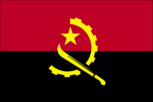
- People's Republic of Angola
- Anguilla
Organized labor
- approx. 450,695 (1980) Government
- none Government
Pipelines
crude oil, 179 km
Political subdivisions
18 provinces including the coastal exclave of Cabinda
Population
- 7,953,000, including Cabinda (July 1985), average annual growth rate 2.7%; Cabinda, 129,000(July 1985), average annual growth rate 3.2%
- 7,000 (1982 est.)
Ports
3 major (Luanda, Lobito, Namibe), 5 minor
Railroads
3,189 km total; 2,879 km 1.067meter gauge, 310 km 0.600-meter gauge
Religion
- 68% Roman Catholic, 20% Protestant, about 10% indigenous beliefs
- Anglican and Methodist
Suffrage
- to be determined
- native born; resident before separation from St. Christopher-Nevis; 15 years residence for "belonger" status
Telecommunications
fair system of wire, radio-relay and troposcatter routes; HF used extensively for military /Cuban links; 2 Atlantic Ocean satellite stations; 40,300 telephones (0.7 per lOOpopl.); 16AM, 13 FM, and 2 TV stations Defense Forces
Type
- people's republic
- British dependent territory
Voting strength
ANA, 4 seats; APP, 2 seats; 1 independent