1981 Edition
CIA World Factbook 1981 (Internet Archive)
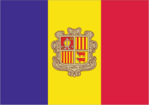
Geography
Area
1,245,790 km*; 1% cultivated, 44% forested, 22% meadows and pastures, 33% other (including fallow)
Coastline
1,600 km
Communists
negligible
Elections
half of General Council chosen every two years, last election December 1979 Political parties and leaders: political parties not yet legally recognized; traditionally no political parties but only partisans for particular independent candidates for the General Council, on the basis of competence, personality, and orientation toward Spain or France; various small pressure groups developed in 1972; first formal political party — Andorran Democratic Association — formed in November 1976; as of March 1980, newly formed Partit Democrata Andorra, which had applied for legal status, must await final approval of a new law covering associations
Land boundaries
5,070 km
Limits of territorial waters (claimed)
20 nm (fishing 200 nm)
Member of
UNESCO
People and Society
Ethnic divisions
93% African, 5% European, 1% mestizo
Labor force
2.6 million economically active (1964); 531,000 wage workers (1967)
Language
Portuguese (official); many native dialects
Literacy
10-15%
Nationality
noun — Angolan(s); adjective — Angolan
Organized labor
approx. 65,000 (1967)
Population
7,000,000, including Cabinda (July 1982), average annual growth rate 2.5%; Cabinda, 117,000 (July 1982), average annual growth rate 3.3%
Religion
about 84% animist, 12% Roman Catholic, 4% Protestant
Government
Branches
the official party is the supreme political institution
Capital
Luanda
Elections
none held to date Political parties and leaders: Popular Movement for the Liberation of Angola-Labor Party (MPLA-Labor Party), led by dos Santos, only legal party; National Front for the Liberation of Angola (FNLA) and National Union for the Total Independence of Angola (UNITA), defeated in civil war, carrying out insurgencies
Government leader
Jose Eduardo DOS SANTOS, President
Legal system
formerly based on Portuguese civil law system and customary law; being modified along "socialist" model
Member of
FAO, G-77, GATT (de facto), ICAO, ILO, IMCO, ITU, NAM, OAU, UN, UNESCO, UNICEF, UPU, WHO, WMO
National holiday
Independence Day, 11 November ANGOLA (Continued)
Official name
People's Republic of Angola
Political subdivisions
17 provinces including the coastal exclave of Cabinda
Suffrage
to be determined
Type
republic; achieved independence from Portugal in November 1975; constitution promulgated 1975; government formed after civil war which ended in early 1976
Economy
Agriculture
- sheep raising; small quantities of tobacco, rye, wheat, barley, oats, and some vegetables (less than 4% of land is arable)
- cash crops — coffee, sisal, corn, cotton, sugar, manioc, and tobacco; food crops — cassava, corn, vegetables, plantains, bananas, and other local foodstuffs; largely selfsufficient in food
Budget
(1975) balanced at about $740 million by former Portuguese administration; budget not yet published by new government
Electric power
- 25,000 kW capacity (1981); 100 million kWh produced (1981), 3,450 kWh per capita; power is mainly exported to Spain and France
- 600,000 kW capacity (1980); 1.4 billion kWh produced (1980), 206 kWh per capita
Exports
est. $1,900 million (f.o.b., 1980); oil, coffee, diamonds, sisal, fish and fish products, iron ore, timber, corn, and cotton; exports down sharply 1975-77
Fiscal year
calendar year
Fishing
catch 106,073 metric tons (1979)
GDP
$3.9 billion (1980 est), $591 per capita, 0.0% real growth (1980)
Imports
est. $1,350 million (f.o.b., 1980); capital equipment (machinery and electrical equipment), wines, bulk iron and ironwork, steel and metals, vehicles and spare parts, textiles and clothing, medicines; military deliveries partially offset drop in imports in 1975-77
Major industries
- tourism, sheep, timber, tobacco, and smuggling
- mining (oil, diamonds), fish processing, brewing, tobacco, sugar processing, textiles, cement, food processing plants, building construction
Major trade partners
- Spain, France
- Cuba, USSR, Portugal, and US
Monetary conversion rate
27.6 kwanza=US$l as of September 1981
Communications
Airfields
- none
- 389 total, 367 usable; 27 with permanentsurface runways; 1 with runways over 3,660 m, 9 with runways 2,440-3,659 m, 100 with runways 1,220-2,439 m
Civil air
- no major transport aircraft
- 26 major transport aircraft
Highways
- about 96 km
- 73,828 km total; 8,577 km bituminous-surface treatment, 28,723 km crushed stone, gravel, or improved earth, remainder unimproved earth
Inland waterways
1,165 km navigable
Military manpower
males 15-49, 1,536,000; 773,000 fit for military service; 62,000 reach military age (20) annually
Pipelines
crude oil, 179 km
Ports
3 major (Luanda, Lobito, Mocamedes), 5 minor
Railroads
- none
- 3,189 km total; 2,879 km 1.067-meter gauge, 310 km 0.600-meter gauge
Telecommunications
- international landline circuits to Spain and France; 2 AM stations, 1 FM station, and 1 TV station; about 11,720 telephones (39.0 per 100 popl.) DEFENSE FORCES Andorra has no defense forces; Spain and France are responsible for protection as needed
- fair system of wire and radio relay; troposcatter/radio-relay system under construction; HF used extensively for military/Cuban links; 1 Atlantic Ocean satellite station; 29,100 telephones (0.5 per 100 popl.); 15 AM and 5 FM stations; 1 TV station DEFENSE FORCES